

Strawberries are a rewarding crop for both home gardeners and commercial farmers, offering a range of propagation methods to suit different goals and resources. Whether starting from seed, runners, plant division, or tissue culture, each approach has its advantages and limitations. Here’s an overview of the most common strawberry propagation methods, their benefits, and the steps involved in each.
1. Growing Strawberries from Seed
Growing strawberries from seeds is not recommended for commercial production. However, amateur gardeners may choose to grow strawberries from seeds they will harvest from ripened strawberries or by purchasing certified, disease-free strawberry seeds from a reputable nursery.
In the first case, once the fruit is ripe (28-30 days after the first bloom), you can harvest it and gently rub it through your fingers until the seeds come off. After harvesting the seeds from a ripe strawberry, they wash them very well to remove any pulp residue. Afterward, they place the seeds on paper or in a shallow box, and after they have dried, they put them in the freezer for 3 months. This procedure is done because the seeds need low temperatures to break their lethargy before planting them.
After the stratification, you can sow the seeds into seed beds or trays and fill them with clean potting mix soil. Then, you can open little holes in the soil with your fingers and sow 1-2 seeds in each seedbed or tray. You are advised to cover the seeds thoroughly with a layer of potting mix soil and water. It is best to place the trays or seed beds indoors in spring until the danger of frost has passed. After 15-20 days, the seeds will germinate. You can transplant the seedlings into bigger pots or containers when they have 3-5 true leaves.
It is important to ensure the pots have holes at the bottom. You can place some gravel in them for better drainage. Because strawberries love well-drained and rich soil, you can add organic compost. A good potting mix comprises of 50% garden soil, 40% organic compost, and 10% raw sand or perlite. Mix everything and fill the pots. Many producers will say that adding mycorrhizae will dramatically increase fruit production. You are adviced to apply mycorrhizae at the roots and add some to the hole you dug. Place the strawberry seedlings just below the crown. After that, you can sprinkle with water very gently and regularly.
2. Propagation Through Runners
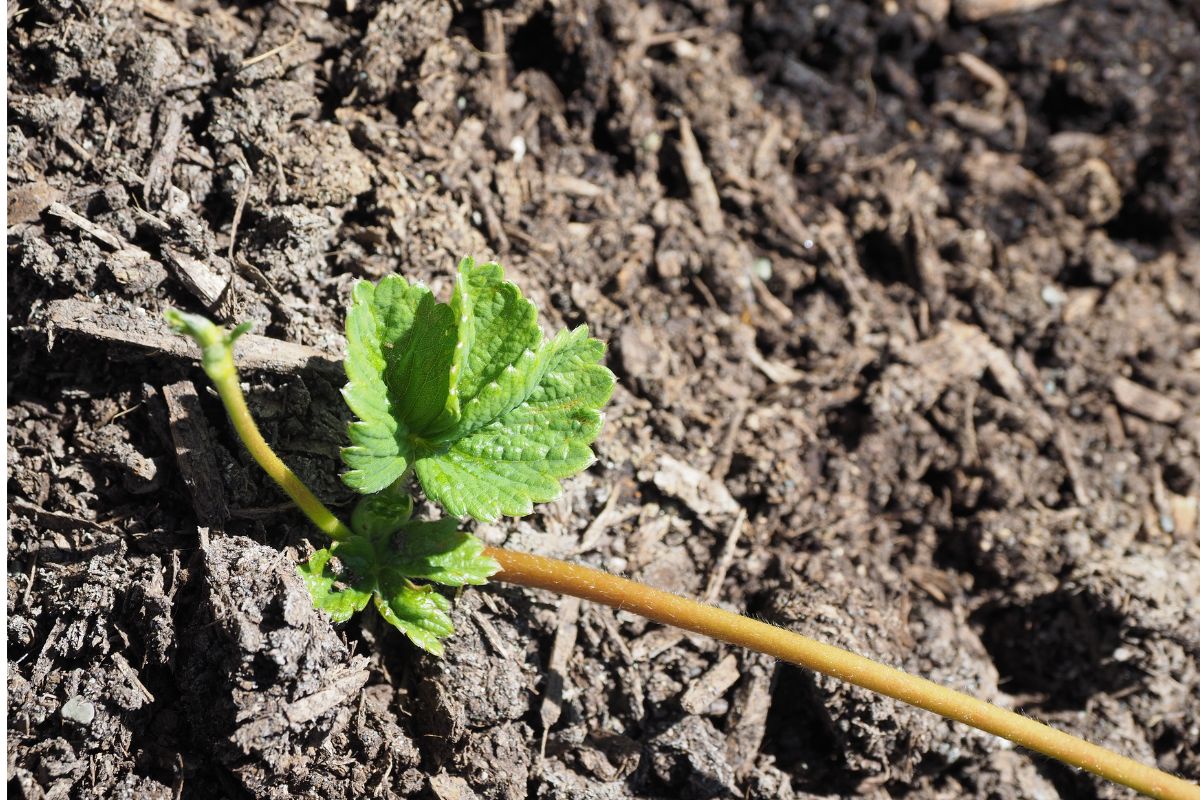
Runners, also known as “stolons,” are a natural way strawberries reproduce, making this method popular among both home and commercial growers. Runners are horizontal stems that extend from the main plant, eventually producing daughter plants that root and grow independently.
Benefits and Techniques for Propagating with Runners
This method is low-cost and allows strawberries to spread and populate new areas easily.
- In summer, allow runners to grow and root naturally near the mother plant.
- You can encourage healthier runner growth by pruning excess stems and removing flowers.
- Once the runner plant has rooted, you can carefully detach it from the mother plant and replant as needed.
- Runners are commonly managed in commercial settings using a “matted-row” system, which allows for high-density planting and simplifies harvesting.
This technique is especially beneficial in cooler climates and is highly efficient in strawberry renovation systems, where managing rows and removing older stems encourages new growth and future yield.
3. Plant Division for Small-Scale Propagation
Plant division involves separating new crowns from the mother plant. This method is less common due to its labor-intensive nature, but it’s effective for smaller, less invasive propagation on a modest scale.
Steps for Propagation by Division:
- Identification of Healthy Crowns: You need to select mature plants with multiple lateral crowns in late summer or early fall.
- Crowns separation: It is important to carefully divide the crowns, ensuring each division has its own root system. Avoid damaging the main plant during this process.
- Replanting: The divided crowns should be planted in prepared soil or containers. This approach allows each new plant to establish more vigorously than those from runners alone.
This method can rejuvenate older plants, giving rise to new plants with strong growth potential. However, it requires skill and caution to avoid injuring the parent plant.
4. Tissue Culture Techniques
Tissue culture is a laboratory method that uses small plant cells to produce disease-free, genetically identical strawberry plants. While primarily used in commercial nurseries, tissue culture is also valuable for researchers developing new strawberry varieties.
- Disease-Free Plants: Tissue culture allows for the propagation of clean, disease-free plants, reducing losses from pests and pathogens.
- Uniformity and Control: This method is ideal for large-scale commercial production, providing uniform plant quality and predictable growth.
However, tissue culture requires specialized equipment and expertise, making it impractical for home gardeners.
Tips for Successful Strawberry Propagation
- Select High-Quality Starting Material: Whether using seeds, runners, or crowns, always start with disease-free, vigorous material. This ensures stronger growth and reduces the risk of transmitting pathogens to new plants.
- Provide Optimal Growing Conditions: Strawberries thrive in well-drained, slightly acidic soil with full sun exposure. Regular watering and nutrient supplementation are essential, especially for young plants.
- Use Mulch for Protection: Mulching around strawberry plants helps retain soil moisture, suppresses weeds, and protects shallow roots from temperature extremes.
Strawberry propagation offers diverse methods to suit various needs. From simple seed germination to advanced tissue culture, each propagation approach has unique benefits. For home gardeners, growing from runners or seeds is often rewarding and budget-friendly, while commercial growers benefit from the efficiency of runner management or the consistency of tissue-cultured plants. No matter the method, patience and proper care are key to cultivating a bountiful strawberry crop.
Reference
- Strawberry Plant Propagation Dr Tohid Nooralvandi – Linkedin
- https://cales.arizona.edu/strawberry/Hydroponic_Strawberry_Information_Website/Propagation.html
- Doc (PDF) – Cornell
- NC State Strawberry Production Information Portal
- Cea Strawberry Runner Propagation for Deep Water Culture – Cornell
Further reading
- 10 Health Benefits of Strawberries
- 15 Interesting facts about strawberries
- History, Global Production, and Key Varieties of Strawberries
- How to Grow Strawberries in Your Garden or Balcony
- Strawberry Soil Requirements, Cultivation Systems, and Plant Density
- How and Why to cultivate Strawberries in a Hydroponic system
- Strawberry Propagation Methods
- When and How to Irrigate Strawberries
- Heat Stress in Strawberry Production: Effects, Cultivar Variability, and Solutions
- How to Fertilize Strawberry Plants
- How to Prune Strawberries
- The Most Important Strawberry Pests & Diseases and Management Strategies
- Strawberry Yield, Harvest, and Storage