




Weekly Olive Oil Market Updates
Market Updates in Europe
The European olive oil market appears to be stabilizing after a period of continuous rainfall, which has led to declining prices and cautious buying behavior. While the market is beginning to show signs of life, it’s crucial to monitor its trajectory as we approach Easter and the end of the harvest season. In our weekly analysis, we’ve included insights from Wikifarmer’s commercial activities, along with price trends from our “Price Insights” tool, which supports data-driven decision-making with real-time information.
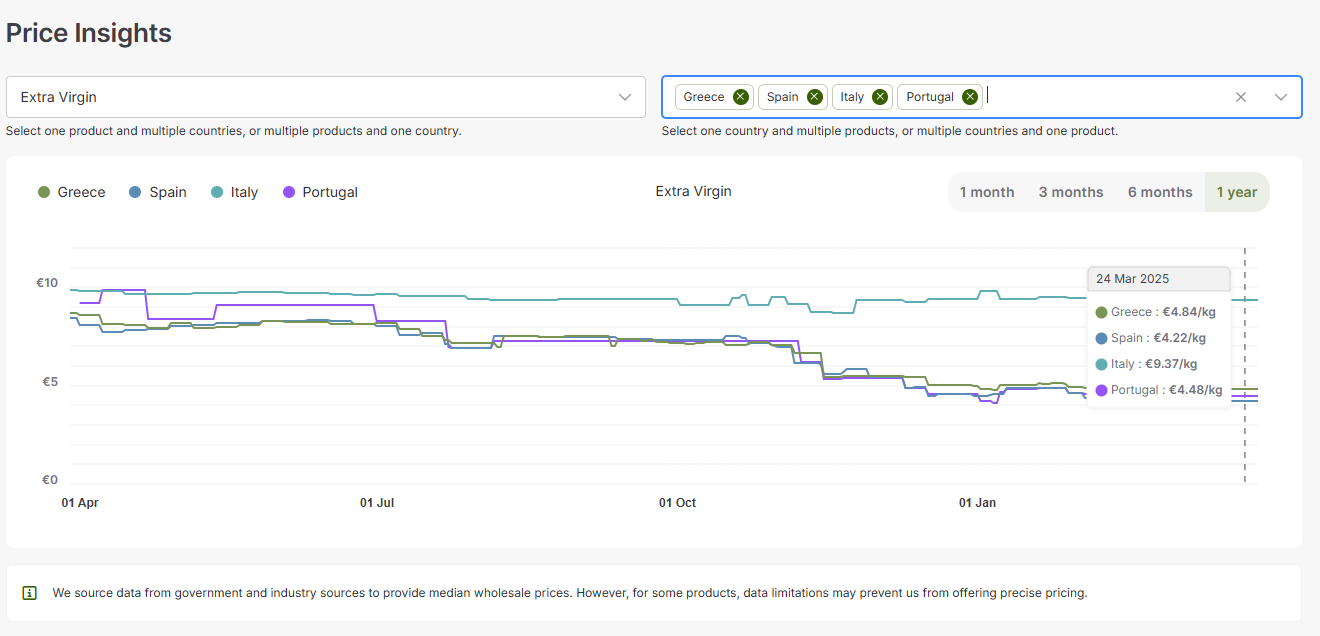
The heavy rain in Spain, particularly in Andalusia, has ceased, and prices have stabilized following a period of decline. Buyers are beginning to make purchases again, though at a moderate pace. It is crucial that all orders placed from now on are delivered before the Easter holidays, as traditional olive oil-producing countries in Europe will halt operations during that time.
The industry is approaching a significant milestone with the upcoming flowering period of the olive trees, set to begin in April and continue into May. A successful bloom during this time could serve as a key indicator for the next crop, suggesting a larger yield for the 2025-26 season.
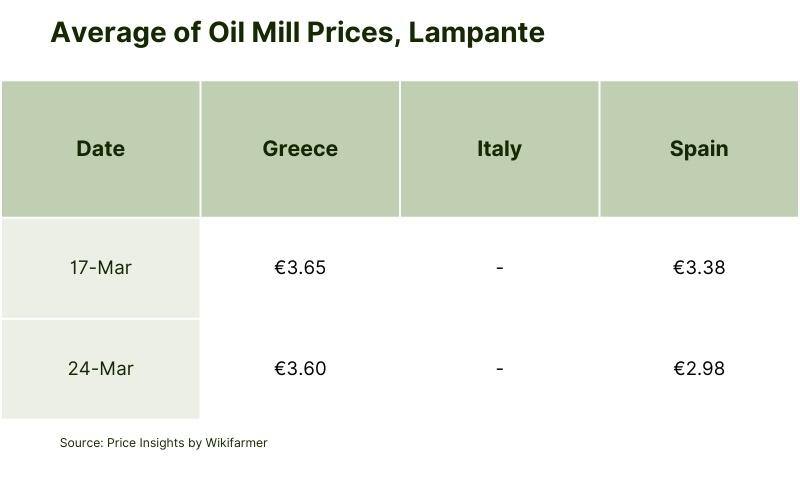
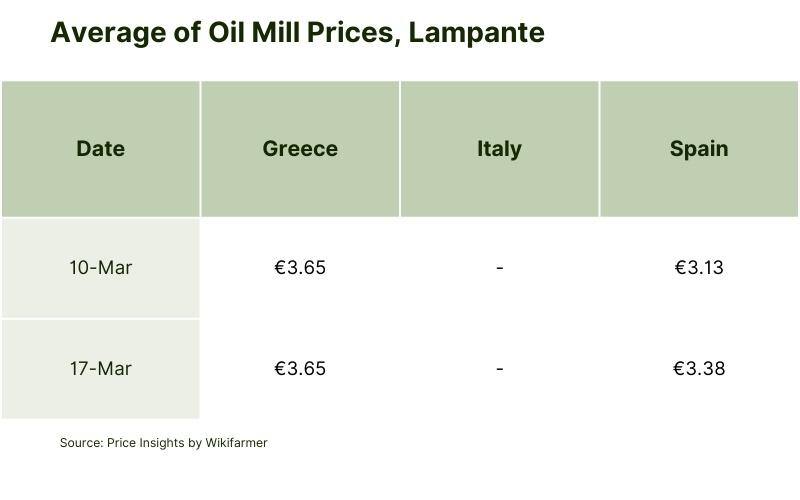
In Greece, prices have stabilized at a lower level compared to the previous period. It's important to note that prices vary between exports and the domestic market. Greek companies looking to buy from local producers are not driving prices down; instead, they seek high-quality Greek olive oil and aim to support national production. Conversely, transactions at lower prices are primarily for exports, highlighting a difference in the quality of olive oil.
Predictions for the upcoming week's market
After significant price declines earlier this year, we may see prices stabilize due to increased production volumes. However, retail prices are unlikely to drop immediately as older, high-cost inventories are still being sold. Additionally, non-EU producers like Tunisia and Turkey have increased their output, which is putting further downward pressure on European prices.
Buyers remain cautious and wait for further price reductions before making purchases. This could result in slower trading activity next week. However, EU exports are expected to rise by 10%, fueled by competitive pricing and growing demand from North America and Asia.
As prices gradually decrease, consumer demand for olive oil is anticipated to rebound, particularly with the rising popularity of organic products and Mediterranean diets.
Overall, next week’s market is likely to experience cautious trading activity amid stabilizing prices and improving supply conditions while external competition continues to influence pricing strategies.
How might US tariffs impact the overall European olive oil market?
Mexico and Canada are already affected by Trump's strategy of imposing tariffs on imports from these countries. Additionally, potential fees on imports of spirits and wines from the EU have raised concerns within the European Union and sparked discussions about the possibility of imposing tariffs on other products, such as olive oil, as reported at the beginning of the season.
Tariffs may significantly reduce European olive oil exports to the U.S. In the first half of 2024, Spain, the world's top producer, shipped 70,000 tons to the U.S., capturing 35.45% of the market share by volume. These tariffs could disrupt the U.S. domestic market, likely driving up prices for American consumers and decreasing demand for European olive oil.
Producers in Europe, particularly from Spain and Italy, could see a sharp decline in revenue. In 2022, Spain alone exported olive oil worth €641,569,820 to the U.S. With the U.S. being the second-largest olive oil consumer globally, with an annual consumption of 390,000 tons, European producers risk losing valuable market share.
To offset potential losses in the U.S. market, European producers may need to seek alternative markets. Some have already taken steps to adapt by establishing bottling and distribution facilities in the U.S. to package bulk exports under new American brands.
Tariffs could also lead to higher olive oil prices in the U.S., which may impact consumer demand. Given the current high prices due to supply constraints, exporters might have some flexibility to absorb part of the tariff to stay competitive in the U.S. market.
While the full impact of these tariffs is still uncertain, they could significantly disrupt the European olive oil market, affecting producers, exporters, and U.S. consumers alike. All stakeholders in the European olive oil industry should closely monitor the situation and consider potential adaptation strategies.
References
Olive oil tariffs to raise prices for U.S. customers: Spanish industry representative — Xinhua
How the US Elections Threaten Spains Olive Oil MarketOlive Oil Market Report February 2025Trump II tariffs and the EU agri-food sector — CAP ReformOlive Oil Trends in 2025What to Expect from Olive Oil Markets in 2025Olive Oil Market Report February 2025
Europe Olive Oil MarketTrump’s tariff proposals would sting U.S. olive oil consumers — Olive Oil Times
Powerful solutions for you
-webp.webp)
Impactful data: our price insights tool 📈
Analyze historical trends and compare prices across countries or categories.
.jpg)
Education to support sourcing decisions 🎓
Online course: Sustainable Olive Oil Production, Quality, and Economics