
Philodendrons are among the most forgiving houseplants you can grow, which is why they turn up in homes, offices and shady corners everywhere. They cope with low light, tolerate the occasional missed watering, and root so easily from a cutting that one plant quickly becomes several. This guide covers how to care for a philodendron indoors, from light and watering to propagation and common problems, and emphasises that every philodendron is toxic to pets and people.
Philodendron is one of the largest groups in the arum family (Araceae), with hundreds of species native to the rainforests of Central and South America. That range is why the plants sold under the name look so different from one another, from small trailing vines to large, upright specimens, and it also causes some confusion at the plant shop, which is worth clearing up first.
What is a philodendron?
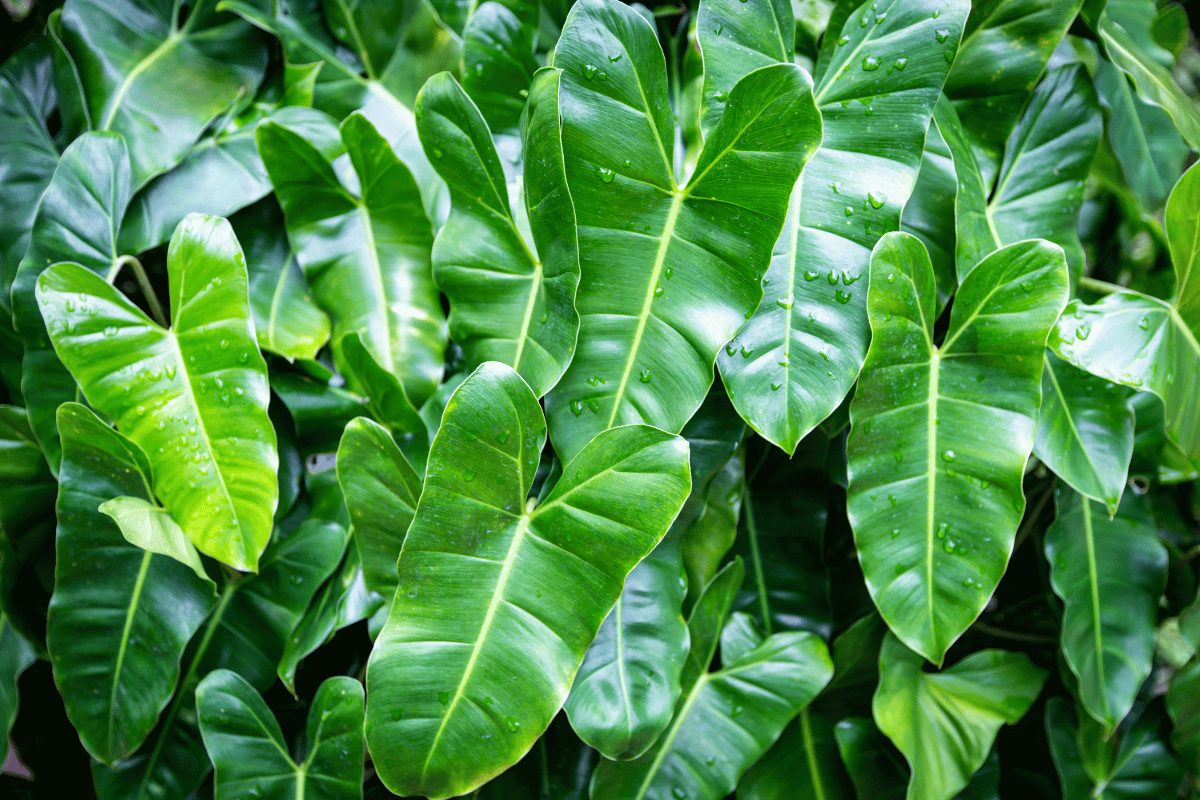
Philodendrons grow in two very different ways, and knowing which type you have shapes how you use it. Climbing or vining philodendrons, such as the popular heartleaf philodendron (Philodendron hederaceum), the lime-striped 'Brasil' and the velvety 'Micans', trail from a shelf or climb a moss pole. Self-heading philodendrons, such as Xanadu and the selloum types, do not climb but grow as a large, upright rosette that fills a floor-standing pot.
Philodendrons are constantly mistaken for pothos, since both are trailing aroids with heart-shaped leaves. The tell is in the leaf and the new growth. A philodendron has thinner, softer, truly heart-shaped leaves that taper to a fine point, and its new leaves emerge from a papery sheath called a cataphyll, often tinged brown or red before they green up. A pothos has thicker, waxier, slightly more angular leaves, and its new leaves unfurl straight from the previous leaf with no papery sheath. Their care is almost identical, so a mix-up does no harm, but the new growth is the giveaway.
Light and placement indoors
Philodendrons do best in bright, indirect light, near an east- or west-facing window or set back from a brighter one. They are famously tolerant of low light, which is why they survive in dim offices and hallways, but in too little light they grow leggy, with long bare stems and small leaves. Direct midday sun has the opposite effect and scorches the foliage, leaving pale or brown patches. A bright spot out of the direct beam keeps the plant compact and full.
How often to water a philodendron
Water a philodendron when the top 2 to 3 cm of the soil feels dry, then water thoroughly until it drains from the bottom and empty the saucer so the pot never sits in water. The most common way to lose one is overwatering, which rots the roots, so it is always safer to let the surface dry a little than to keep the soil constantly wet. Watering slows in winter, when the plant is growing little and the soil stays wet longer.
As rainforest plants, philodendrons enjoy higher humidity than most homes provide, and dry air is a common cause of brown leaf tips. Grouping plants together, standing the pot on a tray of damp pebbles, or keeping it out of the path of heaters all help. Yellowing leaves are almost always a watering signal, usually too much rather than too little.
Feeding and repotting
Feed a philodendron with a balanced houseplant fertiliser about once a month through spring and summer, and stop over winter when growth slows. Too much feed shows up as a white crust of salts on the soil surface, which you can flush out by watering thoroughly a few times and letting it drain.
Repot every one to two years, or when roots start to circle the pot or grow out of the drainage holes, moving up just one pot size and refreshing the compost. A well-draining potting mix, ideally one lightened with bark or perlite, keeps the roots healthy and reduces the risk of rot.
How to propagate a philodendron from cuttings
Vining philodendrons are among the easiest of all houseplants to propagate, and it costs nothing. Take a stem cutting just below a node, the small bump where a leaf meets the stem, since that is the only place roots will form, and make sure the cutting has a node and a leaf or two.
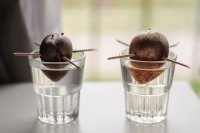
To root in water, stand the cutting in a glass of water in bright, indirect light, change the water weekly, and wait until the roots are a few centimetres long before potting it up in a light mix. To root in soil, push the cutting straight into moist potting mix and keep it warm and humid until new growth appears. Water rooting is easier to watch and slightly slower, while soil rooting skips the transplant step. Self-heading types do not produce trailing stems and are usually increased from offsets or by division instead.
Common problems
- Yellow leaves: usually overwatering. Let the soil dry further between waterings, check that the pot drains freely, and ease off in winter
- Leggy growth with small leaves and long gaps between them: too little light. Move the plant somewhere brighter and pinch back the long stems to encourage bushier growth
- Brown, crispy leaf tips: dry air, underwatering or a build-up of fertiliser salts. Raise the humidity, water more evenly, and flush the soil if salts have accumulated
- Pests: aphids, spider mites, mealybugs and scale can appear. Wipe them off or treat with insecticidal soap, and check new plants before bringing them home
Is philodendron toxic to cats, dogs and humans
Every philodendron is toxic. According to the ASPCA, all species contain insoluble calcium oxalate crystals and are toxic to cats, dogs and horses, and they are toxic to people too. When the leaves or stems are chewed, these microscopic crystals cause immediate burning and irritation of the mouth, lips and tongue, drooling, difficulty swallowing and vomiting.
Reactions are usually painful rather than life-threatening and tend to settle within a day or two, but a trailing philodendron dangling from a shelf is exactly what a curious cat or dog reaches for, so keep the plant well out of reach of pets and children. If a pet chews any part of one, do not try to make it vomit, since that worsens the irritation, and contact your vet. As a group of easy houseplants, philodendrons are similar in care to dracaena, which shares the same warning about pet toxicity.
Frequently asked questions
How often should I water a philodendron? When the top 2 to 3 cm of soil feels dry, watering thoroughly and letting it drain. Overwatering is the main danger, so err on the drier side, especially in winter.
Why are my philodendron's leaves turning yellow? Yellow leaves are almost always a sign of overwatering. Let the soil dry more between waterings and make sure the pot drains freely.
How do I make my philodendron bushier? Give it brighter light and pinch back the longest stems just above a leaf node, which encourages branching. You can root the trimmings to fill out the pot.
What is the difference between a philodendron and a pothos? A philodendron has thinner, heart-shaped leaves and new leaves that emerge from a papery sheath, while a pothos has thicker, waxier leaves that unfurl from the previous leaf. Their care is almost the same.
Is philodendron toxic to cats and dogs? Yes. All philodendrons contain calcium oxalate crystals and are toxic to cats, dogs and people, causing mouth irritation, drooling and vomiting if chewed.
Important notes
Every home and every plant is unique, and conditions vary with light, humidity and the variety you are growing. The guidance above is a general starting point.
Because all philodendrons are toxic to pets and people if chewed, keep them out of reach of cats, dogs and young children, and wash your hands after taking cuttings, since the sap can irritate the skin. If your plant shows persistent problems that don't respond to the basic care, it's worth consulting a horticulturist or your local nursery.
References
- NC State Extension. Philodendron hederaceum.
- Royal Horticultural Society. Philodendron.
- ASPCA Animal Poison Control. Toxic and Non-Toxic Plants: Heartleaf Philodendron.