Dracaena is one of the most popular houseplants in the world. You see it everywhere, in homes, offices, hotels and shopping centres. There's a reason for that. It's tough, long-lived, copes with low light, and forgives the occasional missed watering. The slender woody trunk topped with a fountain of long, strap-like leaves gives it a sculptural, almost tropical presence in any room.
The two species you'll most often find in shops are the Madagascar dragon tree (Dracaena marginata) and the corn plant (Dracaena fragrans). There are also several variegated varieties that have become popular in recent years.
This guide covers care, propagation and the most common problems. It also covers two important points worth knowing about: toxicity to pets and a clear-eyed look at the famous NASA Clean Air Study and what it really means for your home.
Botanical characteristics
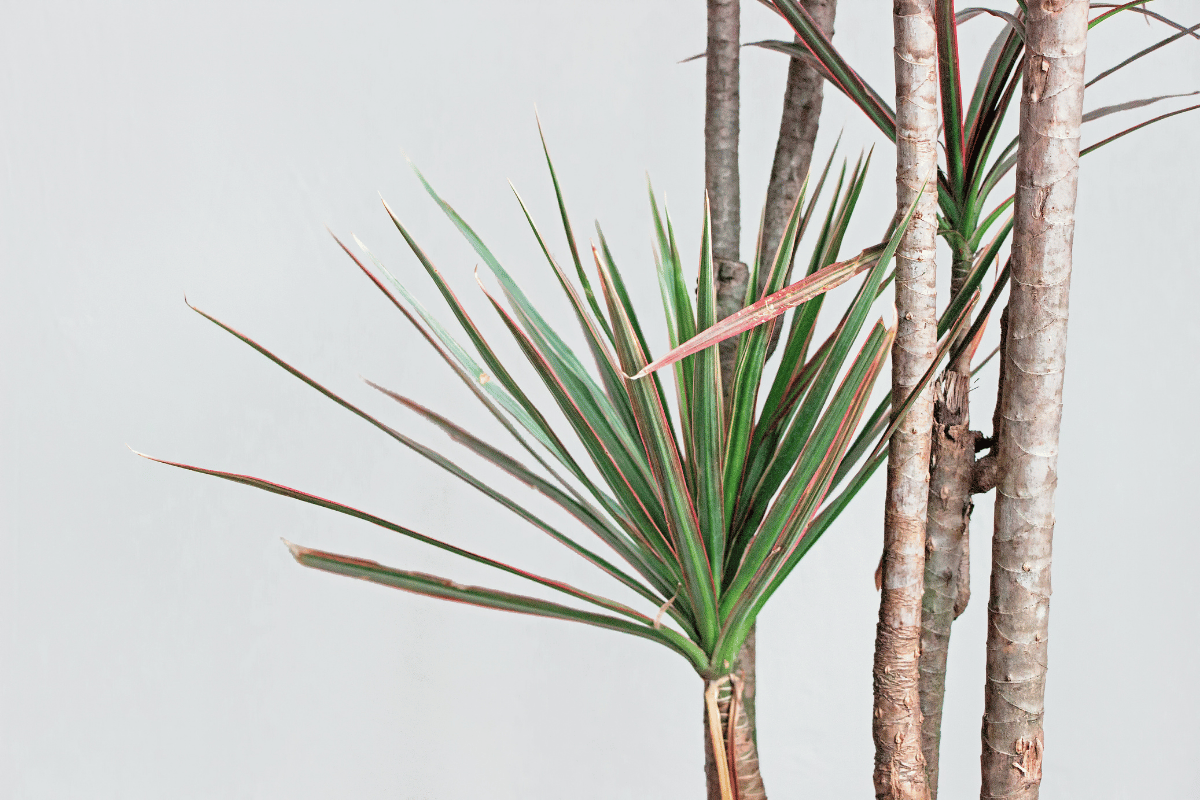
Dracaenas are evergreen plants with upright, slender woody stems topped by rosettes of strap-shaped leaves. In the wild, they can reach 6 meters or more, while as houseplants, they rarely exceed 2-3 meters even after many years, because their growth is slow.
The leaves are long, lance-shaped, and linear, and their appearance varies significantly between species and cultivars. Some are narrow and arching, others broader and more glossy, with colours ranging from deep green to stripes of yellow, white, pink or red.
Flowering is rare in indoor cultivation. When it does happen, small fragrant cream-yellow flowers appear in upright panicles, usually on mature plants that have been kept for many years.
After recent DNA research, the genus Dracaena now includes the snake plant (formerly Sansevieria, now Dracaena trifasciata). This guide focuses on the woody-stemmed dracaenas with the classic upright trunk, not the snake plant.
Popular varieties
Of the roughly 120 species in the genus, only a handful are widely grown as houseplants.
- Dracaena marginata (Madagascar dragon tree): the most popular variety. Slender trunk, narrow dark green leaves with red edges. Holds an RHS Award of Garden Merit. Popular cultivars include 'Tricolor' with cream stripes and pink edges, 'Colorama' with intense pink variegation, and 'Tarzan' with broader leaves
- Dracaena fragrans (corn plant): glossier, broader leaves up to 40 cm long. The 'Massangeana' cultivar has a golden central stripe and is probably the most recognisable form. 'Lemon Lime' has bright green and yellow stripes (RHS AGM)
- Dracaena fragrans 'Janet Craig': solid dark green leaves. One of the most tolerant of low light
- Dracaena fragrans 'Warneckei': leaves with white stripes, arching growth habit (RHS AGM)
- Dracaena reflexa (Song of India): shorter-stemmed variety with golden-green stripes and bushier growth
Where to place dracaena
Dracaenas prefer bright but indirect light. In direct midday sun, especially during the warmer months, the leaves scorch and develop brown patches or bleach out.
The ideal position is near an east- or west-facing window, or set back from a south-facing one. Dracaenas tolerate lower light than most houseplants, but variegated cultivars like 'Tricolor' or 'Lemon Lime' will lose their bright variegation in shady spots. To keep their colours strong, they need a brighter position.
Room temperature suits dracaenas well. The ideal range is 18-26°C. They don't tolerate temperatures below 13-15°C, so if you've had your dracaena outside during the summer, bring it back indoors before night temperatures drop in autumn. Also avoid positions next to radiators, air conditioning vents, or cold draughts from doors and windows.
Potting mix
Dracaena wants a well-draining potting mix. A standard houseplant compost with about 20% added perlite works well. The RHS suggests a slightly acidic mix, similar to what's used for ericaceous plants, but this isn't essential for the plant to thrive.
Good drainage is the most critical factor. Dracaena roots rot easily in waterlogged compost.
Watering
The most common mistake with dracaena is overwatering. It's a plant that prefers being slightly on the dry side rather than too wet. Beginner gardeners often kill it with kindness, watering far too often.
The general rule is to water when the top 2-3 cm of compost feels dry. At home, that usually means every 7-10 days in spring and summer, and every 14-21 days in winter. Check with your finger before watering.
When you do water, water thoroughly until water runs out of the drainage holes, then empty the saucer. Water shouldn't sit pooled at the base of the pot.
Tap water in many areas contains chlorine and fluoride. Dracaena is one of the most sensitive houseplants to these, and the symptoms show up as brown, crispy leaf tips. The RHS recommends rainwater or filtered water where possible. Alternatively, let tap water stand in an open container for 24 hours before using.
Air humidity
Dracaenas handle average household humidity better than many tropical houseplants. They don't necessarily need a humidifier or daily misting.
In very dry conditions, though, like homes with central heating in winter, the leaves may start to brown at the tips. In that case, a pebble tray with water under the pot or grouping with other plants helps maintain local humidity around the foliage.
Feeding
Dracaena has moderate feeding needs. A liquid houseplant fertiliser at half strength, once a month during the growing season (spring and summer) is enough. In winter, stop or minimise feeding.
Don't overfeed. Dracaena is sensitive to salt build-up, and excess fertiliser causes the classic symptoms, brown leaf tips and yellowing. Once a year, it's a good idea to flush the potting mix with plenty of water to wash out accumulated salts.
Repotting
Dracaena grows slowly and only needs repotting every 2-3 years. Repot in spring into a pot only 2-3 cm larger in diameter. Don't choose an oversized pot, as the larger volume of damp compost around the roots significantly increases the risk of rot.
In the years between repotting, you can simply refresh the top 5 cm of compost with fresh material.
Pruning
Dracaena doesn't need regular pruning, but tolerates harder cuts very well. This is useful when the plant has grown too tall for the space.
You can cut the trunk of a dracaena at whatever height you want, even reducing a tall plant by half. New shoots will appear from the cut point, usually 2-3 new branches that create a fuller crown. Pruning is best done in spring when the plant is entering active growth.
Also remove any yellowing or dried leaves at the base from time to time. This is natural ageing and not a sign of trouble.
Propagation
Dracaena is one of the easiest plants to propagate. The trunk you cut during pruning doesn't have to be thrown away. It can become a new plant.
From tip cuttings
- Cut the top of the plant (about 15-20 cm with the foliage) with a clean, sharp knife or scissors
- Let the cut end dry for a few hours
- Dip the base in rooting hormone
- Plant in a mix of peat-free compost and perlite, or place in a glass of water
- Keep in a bright but shaded position
Roots appear in 3-6 weeks.
From stem cuttings
When you prune a tall plant, the remaining trunk can be cut into 10-15 cm sections. Mark which end is the "top" of each section. Plant in propagation mix with the correct orientation, and they will produce both roots and new growth from dormant buds.
Common problems
Brown leaf tips: the most common symptom. Usually caused by hard tap water with chlorine and fluoride, or by very dry indoor air. Switch to rainwater, filtered or distilled water and increase humidity around the plant. You can trim off brown tips with scissors, following the natural shape of the leaf.
Yellow leaves at the base that fall off: natural ageing. Old lower leaves gradually yellow and drop as the plant grows taller. No action needed.
Many yellow leaves at once, soft to the touch: almost always overwatering and root rot. Stop watering, check the roots, repot into fresh compost if needed.
Scorched patches on the leaves: direct sun damage. Move to a position with indirect light.
Leaves losing their variegation: insufficient light, particularly in variegated cultivars like 'Tricolor' or 'Lemon Lime'. Move to a brighter position.
New leaves are smaller and paler: usually low light or lack of nutrients. Increase light and feed according to package instructions.
Pests and diseases
Dracaena is fairly tough but can attract common houseplant pests.
Spider mites: in dry, warm air. Leaves develop fine yellow stippling and tiny webs appear on the undersides. Raise humidity and spray with water under pressure.
Scale insects: small brown or whitish scales on stems and leaves. For small infestations, remove with a cotton bud dipped in rubbing alcohol. For larger ones, spray with horticultural oil.
Mealybugs: white cottony patches in leaf joints and at the base of leaves. Treat with a cotton bud dipped in rubbing alcohol or spray with insecticidal soap.
Thrips: tiny sucking insects that cause silvery stippling on the leaves and black dots (excrement). Remove affected leaves and spray with insecticidal soap.
Root rot: caused by overwatering. The most serious problem. Prevention through proper drainage and careful watering is everything.
Is dracaena toxic?
Dracaena is toxic to dogs and cats. According to the American Society for the Prevention of Cruelty to Animals (ASPCA), all species in the genus Dracaena contain saponins, chemical compounds toxic to pets if ingested. Symptoms of poisoning in dogs and cats include vomiting (sometimes with blood), diarrhoea, excessive drooling, loss of appetite, weakness and depression. In cats there can also be dilated pupils (mydriasis).
For humans, dracaena isn't considered seriously toxic, but it shouldn't be eaten, and the sap can irritate skin. Wear gloves when pruning.
If your pet has eaten part of the plant, contact your veterinarian immediately or call an animal poison control hotline. Keep dracaena in a position where pets can't easily reach the leaves.
Does dracaena clean the air?
Dracaena was included in the well-known NASA Clean Air Study of 1989, led by Dr. Bill Wolverton. The study found that several dracaenas (including D. marginata and D. fragrans) could absorb volatile organic compounds like formaldehyde, benzene and trichloroethylene from the air under laboratory conditions.
However, more recent scientific analyses have shown that the NASA study was conducted in sealed chambers with specific pollutant concentrations. In a normally ventilated home, the contribution of plants to air purification is practically negligible compared to natural ventilation. Hundreds of plants in a small room would be needed to make a meaningful difference.
This doesn't mean dracaena isn't worth keeping. The real benefits are aesthetic, the connection to nature, and the psychological wellbeing they bring, not measurable air purification.
Frequently asked questions
How long does a dracaena live? Under good conditions, a dracaena can live several decades indoors, even 40-50 years. It's one of the longest-lived houseplants.
Why does my dracaena have brown leaf tips? It's the most common symptom and usually comes from hard tap water containing chlorine and fluoride, or from very dry indoor air. Switch to rainwater, filtered or distilled water, and check the humidity in the room.
How often should I water my dracaena? Not often. Usually every 7-10 days in spring and summer, and every 14-21 days in winter. Always check with your finger before watering, and only water when the top 2-3 cm of compost feels dry.
My dracaena has grown too tall. Can I cut it? Yes, and it's quite easy. You can cut the trunk at any height you want. The plant will produce new shoots from the cut point, usually giving a fuller crown. The cut piece can also be rooted to make a new plant.
Can I put my dracaena outside in summer? In a shaded or partly shaded position protected from direct sun and strong wind, yes. Bring it back indoors as soon as night temperatures drop below 13-15°C in autumn.
Does dracaena really clean the air? In a normal home, barely. The original NASA study was conducted in sealed chambers, and its findings don't translate to meaningful benefits in ventilated spaces. Dracaena is still an excellent plant for aesthetic and psychological reasons, though.
Is it safe for pets? No. Dracaena is toxic to dogs and cats due to the saponins it contains. If you have pets that chew plants, place it somewhere they can't reach.
Important notes
Every plant and every space is unique. Conditions vary significantly depending on light, water quality and the overall health of the plant. The guidance above is general and a starting point rather than a strict rule.
Given the toxicity of the Dracaena genus to pets, if you have dogs or cats in the household, assess whether it's the right plant for you or place it somewhere they can't reach. In case of accidental ingestion by a pet, contact your veterinarian immediately.
Use plant protection products with care. Try non-chemical methods first wherever possible (cultural practices, insecticidal soap, horticultural oil). When chemical intervention is needed, use only products approved for indoor plants and follow the dosage on the label exactly.
References
- Royal Horticultural Society. How to grow dracaena.
- Royal Horticultural Society. Dracaena marginata plant details.
- Royal Horticultural Society. Dracaena fragrans plant details.
- Missouri Botanical Garden. Dracaena marginata plant finder.
- ASPCA Animal Poison Control. Toxic and Non-Toxic Plants: Dracaena.
- Wolverton, B. C., Johnson, A., & Bounds, K. (1989). Interior Landscape Plants for Indoor Air Pollution Abatement (NASA Technical Report TM-101766). NASA.
- Cummings, B. E., & Waring, M. S. (2020). Potted plants do not improve indoor air quality: a review and analysis of reported VOC removal efficiencies. Journal of Exposure Science & Environmental Epidemiology, 30, 253-261.