Feeding the world’s growing population sustainably is a major challenge, but new technologies are providing solutions. Innovations like precision agriculture, vertical farming, and lab-grown meat are increasing food production while reducing environmental harm. Smart farming uses sensors and artificial intelligence (AI) to optimize water and fertilizer use, thereby improving efficiency. Plant-based and insect-based proteins offer sustainable alternatives to traditional livestock farming, which contributes heavily to greenhouse gas emissions.
Reducing food waste is another key focus, with edible coatings and blockchain-based traceability helping extend shelf life and improve supply chain efficiency. Digital tools like AI and the Internet of Things (IoT) can enhance food distribution and ensure safer and more reliable access. However, these technologies must be affordable, scalable, and accepted by consumers to succeed. Governments and industries must invest in research and supportive policies to make these innovations widely available. We can ensure food security for future generations without harming the planet by combining technology with sustainable practices.
The Evolution of Food Technology
The global food system is under immense pressure due to population growth, climate change, and resource depletion. By 2050, food production must increase by 70% to meet demand (Floros et al., 2010; Gadzama et al., 2025a). Traditional farming methods, while productive, contribute to 30% of global greenhouse gas emissions (World Resources Institute, 2019) and 86% of species threats (Hamilton, 2023).
Historically, food production evolved from manual labor to mechanized farming during the Industrial Revolution. The Green Revolution (mid-20th century) introduced high yield crops and synthetic fertilizers, boosting productivity but causing environmental damage (De Coene, 2024). Today, the focus has shifted to sustainable intensification, using technology to produce more with fewer resources (Gadzama & Ray, 2024; Gadzama, 2025a).
Recent advancements include:
- Precision agriculture, using drones and AI to optimize farming (foodHQ, 2024; Gadzama, 2025a).
- Alternative proteins, such as plant-based and lab-grown meats (Hamilton, 2023).
- Circular food systems, where waste is repurposed into new products (Valoppi et al., 2021; Gadzama, 2025b).
- Digital supply chains, improving traceability with blockchain (D’Angelo, 2022).

Key Innovations in Food Technology
1. Precision Agriculture: Optimizing Resource Use
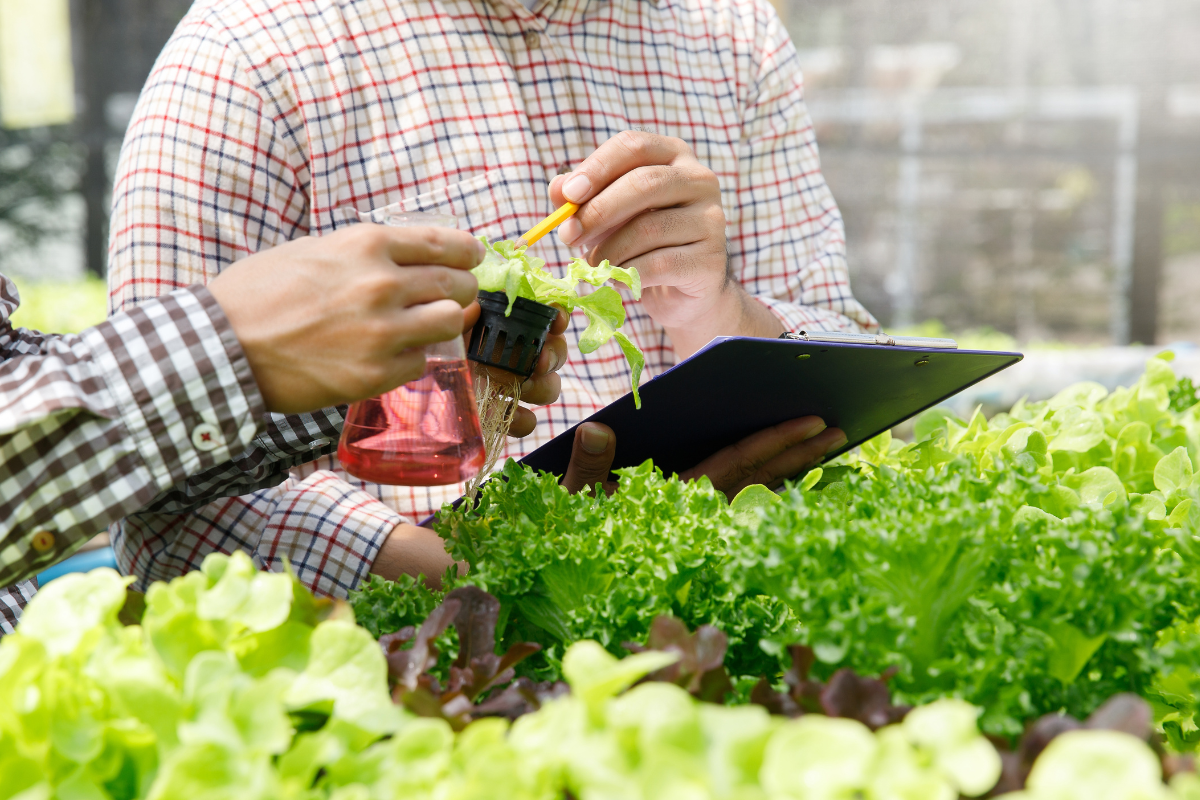
Precision agriculture integrates IoT sensors, drones, and AI to monitor crops and animals in real-time (foodHQ, 2024; Gadzama & Ray, 2024). Studies show:
- 20–30% reduction in water usage through smart irrigation (CNN, 2023).
- AI-driven pest detection improves yields by 83.5% (Mazloumian et al., 2020).
- Automated weed control cuts herbicide use by 60–70% (De Coene, 2024).
Challenges: High costs limit adoption in developing nations (Magdin, 2024).
Implications: Precision farming boosts yields sustainably but requires investment and training.

2. Alternative Proteins: Reducing Environmental Footprint
Traditional livestock farming contributes 14.5% of global emissions (Hamilton, 2023; Gadzama, 2024a). Alternatives include:
- Plant-based meat (e.g., Beyond Meat) uses 90% less land than beef (Tony Blair Institute, 2020; Gadzama, 2025c).
- Lab-grown meat reduces emissions by 80% but remains expensive (Valoppi et al., 2021).
- Insect protein (e.g., crickets, yellow mealworms, black soldier fly larvae) requires minimal resources (CNN, 2023; Gadzama, 2024b; Gadzama et al., 2025b).
Challenges: Consumer acceptance is a major hurdle (La Barbera et al., 2018; Gadzama, 2025c).
Implications: Alternative proteins could significantly lower agriculture’s environmental impact if adopted widely.
3. Reducing Food Waste with Technology
About 40% of food is wasted globally (Hamilton, 2023). Solutions include:
- Edible coatings (e.g., Apeel) extend shelf life by 2x (CNN, 2023).
- Blockchain traceability reduces food fraud by 50% (Kamath, 2018).
- AI-powered supply chains cut retail waste by 20% (Gupta et al., 2019).
- Insect protein. Insects, particularly black soldier fly larvae, offer a promising solution for reducing food waste by converting it into valuable resources like protein and fertilizer, contributing to a circular economy and reducing environmental impact (Gadzama et al., 2025a).
Implications: Cutting waste could feed 1 billion more people (World Resources Institute, 2019).

Source: Harnessing technology to combat food waste — Frozenet
4. Vertical Farming and Controlled Environments
- Uses 95% less water than traditional farming (Tony Blair Institute, 2020; Tilako et al., 2024).
- Year-round production unaffected by weather (Valoppi et al., 2021; Tilako et al., 2024).
Challenges: High energy costs for LED lighting (De Coene, 2024).
Implications: Ideal for urban areas but needs renewable energy integration.

Source: What is Vertical Farming the Future of Farming
Implications for a Sustainable Future
The advancements in food science and technology discussed in this article hold profound implications for achieving global food security and sustainability. The circular economy model (Jørgensen & Pedersen, 2018; Valoppi et al., 2021) fundamentally shifts from wasteful linear practices to a more regenerative approach. The successful valorization of food by-products not only reduces waste and environmental impact (Papargyropoulou et al., 2014) but also creates new value streams and potential for novel food ingredients (Smithers, 2008; Toldrá et al., 2012; Gadzama et al., 2025b). The widespread adoption of circular economy principles across the food industry could significantly mitigate the 30% global food loss and waste figure (FAO, 2019), moving towards a more efficient utilization of resources.

UrbanKisaan: a vertical farming company in India — Medium
The emergence of alternative food sources like cellular agriculture, insects, and algae addresses the limitations and environmental burdens associated with traditional agriculture (Valoppi et al., 2021; van Huis & Oonincx, 2017; Gadzama et al., 2025a,c). Cultured meat (Post, 2014; Bhat & Fayaz, 2011), while still facing scalability and consumer acceptance challenges, presents a pathway to reduce land use and greenhouse gas emissions. The nutritional and production efficiency of insects and microalgae (Duda et al., 2019; Sathasivam et al., 2019; Gadzama et al., 2025a,c) positions them as valuable components of future diets, particularly if consumer neophobia can be addressed through innovative food design and processing (La Barbera et al., 2018; Melgar-Lalanne et al., 2019).

Source: Cellular agriculture — Office of the Prime Minister’s Chief Science Advisor (NZ)

Source: Algae Alternative Chlorella Studied as Protein Source in Tilapia Feeds
Food design acts as a critical bridge in translating technological innovations into consumer-acceptable products (Olsen, 2015; Valoppi et al., 2021). Recognizing the significant role of sensorial properties in food choice (Mela, 2006; Hoek et al., 2011), the integration of food science with design thinking is essential for creating sustainable and healthy foods that are also palatable and appealing. The exploration of digital taste and other sensory modulation techniques (Green & Nachtigal, 2015; Ranasinghe et al., 2019) further enhances the potential to create satisfying food experiences with novel ingredients or reduced levels of less desirable components like salt.
Digitalization offers a transformative layer across the entire food system (Salah et al., 2019; Valoppi et al., 2021). The demonstrated capabilities of AI in areas ranging from waste classification (Mazloumian et al., 2020) and supply chain monitoring (Alfian et al., 2020) to biodiversity conservation (Ahlswede et al., 2021) and disease prediction in agriculture (Ryan et al., 2021; Xiao et al., 2021; Gadzama, 2025a) highlight its potential to optimize efficiency and sustainability. Blockchain technology's ability to enhance traceability and transparency (Kamath, 2018; Kamilaris et al., 2019) can build consumer trust and improve the overall accountability of the food supply chain.
However, the successful realization of these technological advancements requires a concerted global effort, supported by appropriate policies and consumer education (Valoppi et al., 2021). The COVID-19 pandemic underscored the vulnerabilities of the current food system (Bakalis et al., 2020; Galanakis, 2020), further emphasizing the need for resilient, decentralized, and technologically empowered food production and distribution networks. By embracing these innovations and fostering collaboration across disciplines and nations, a future where food security is achieved sustainably for all becomes a tangible possibility.
Barriers to Adoption
- Cost: High initial investment for vertical farms (De Coene, 2024).
- Regulatory hurdles: Lab-grown meat faces strict safety reviews (Stephens et al., 2018).
- Consumer resistance: Cultural hesitancy toward insect-based foods (Melgar-Lalanne et al., 2019).
Policy Recommendations
- Subsidies for agri-tech adoption in developing nations (Magdin, 2024).
- Standardized regulations for novel foods (Valoppi et al., 2021).
- Public awareness campaigns to promote sustainable diets (Siegrist & Hartmann, 2020).
Conclusion
The convergence of precision agriculture, alternative proteins, and digital supply chains offers a pathway to sustainable food security. The growing interest and investment in alternative proteins, including insect protein and plant-based options, are consistently presented as sustainable alternatives to conventional animal agriculture, offering a lower environmental footprint (Valoppi et al., 2021; CNN, 2023; Hamilton, 2023). Cellular agriculture, while still facing scalability challenges, is recognized for its potential to significantly reduce land and resource use in producing animal-derived foods (Valoppi et al., 2021; D’Angelo, 2022; Hamilton, 2023).
Digital technologies like AI and blockchain are consistently shown to enhance efficiency, traceability, and food safety across the supply chain (Valoppi et al., 2021; foodHQ, 2024; Gadzama, 2025a). The implications of these findings highlight an urgent need for the continued and accelerated embrace of technological innovation in agriculture and food production. Overcoming resistance to new technologies, investing in research and infrastructure, and developing supportive policies are crucial steps in ensuring a resilient and sustainable food future.
References
- Ahlswede, S., Asam, S., & Röder, A. (2021). Hedgerow object detection in very high-resolution satellite images using convolutional neural networks. Journal of Applied Remote Sensing, 15(1), 018501.
- Alfian, G., Syafrudin, M., Farooq, U., Ma’arif, M. R., Syaekhoni, M. A., Fitriyani, N. L., ... & Lee, J. M. (2020). Improving efficiency of RFID-based traceability system for perishable food by utilizing IoT sensors and machine learning model. Food Control, 110, 107016.
- Bakalis, S., Valdramidis, V. P., Argyropoulos, D., Ahrne, L., Chen, J., Cullen, P. J., ... & Koutsoumanis, K. (2020). Perspectives from co+re: how COVID-19 changed our food systems and food security paradigms. Current Research in Food Science, 3, 166–172.
- Bhat, Z. F., & Fayaz, H. (2011). Prospectus of cultured meat—advancing meat alternatives. Journal of Food Science and Technology, 48(2), 125–140.
- CNN. (2023). Six innovations that can help feed the world. CNN. Retrieved from Innovations Feed the World Scn Spc Intl
- De Coene, I. (2024). Feeding the future: the role of technology in modern farming. Degroof Petercam Asset Management. Retrieved from
- Duda, A., Adamczak, J., Chełmińska, P., Juszkiewicz, J., & Kowalczewski, P. (2019). Quality and nutritional/textural properties of durum wheat pasta enriched with cricket powder. Foods, 8(2), 46.
- D’Angelo, L. (2022). How Food Technology May Help Feed the World | GLG. Retrieved from How Food Technology May Help Feed the World
- FAO (2019). The State of Food and Agriculture 2019. Moving Forward on Food Loss and Waste Reduction. The State of Food and Agriculture 2019
- Floros, J. D., Newsome, R., Fisher, W., Barbosa-Cánovas, G. V., Chen, H. D., Dunne, C. P., ... & Ziegler, G. R. (2010). Feeding the world today and tomorrow: The importance of food science and technology an IFT scientific review. Comprehensive Reviews in Food Science and Food Safety, 9(6), 572–599.
- Gadzama, I. U., Ray, S., Méité, R., Mugweru, I. M., Gondo, T., Rahman, M. A., Redoy, M. R. A., Rohani, M. F., Kholif, A. E., Salahuddin, M., & Brito, A. F. (2025a). Chlorella vulgaris as a Livestock Supplement and Animal Feed: A Comprehensive Review. Animals, 15(6), 879.
- Gadzama, I. U., Mugweru, I. M., Makombe, W. S., Madungwe, C., Hina, Q., Omofunmilola, E. O., Panuel, P., Olanrewaju, T. J., & Ray, S. (2025b). Improving poultry production with black soldier fly larvae. Acta Scientific Agriculture, 9(1), 60–77. Available online: Acta Scientific Agriculture 8 (PDF) (accessed on 30 March 2025).
- Gadzama, I. U., Hoffman, L. C., Holman, B. W. B., Chaves, A. V., & Meale, S. J. (2024c). Effects of supplementing a feedlot diet with microalgae (Chlorella vulgaris) on the performance, carcass traits and meat quality of lambs. Livestock Science, 288, 105552.
- Gadzama, I. U. (2025a). How AI is Revolutionizing Animal Farming: Benefits, Applications, and Challenges. Wikifarmer. Retrieved from How AI is Revolutionizing Animal Farming Benefits Applications and Challenges — ResearchGate
- Gadzama, I. U. (2025b). Cashew Nut Shell (Anacardium occidentale L.) Extract: A Natural Solution for Reducing Methane Emissions in Ruminants. Wikifarmer. Retrieved from https://wikifarmer.com/library/en/article/cashew-nut-shell-anacardium-occidentale-l-extract-a-natural-solution-for-reducing-methane-emissions-in-ruminants
- Gadzama, I. U. (2025c). Consumer Acceptance and Challenges of Plant-Based Meat Alternatives. Wikifarmer. Retrieved from https://www.researchgate.net/publication/390066247_Consumer_Acceptance_and_Challenges_of_Plant-Based_Meat_Alternatives
- Gadzama, I. U. (2024a). Evaluation of fresh microalgae in ruminant nutrition: impact on rumen fermentation, productive performance and meat quality. MPhil Thesis, School of Agriculture and Food Sustainability, The University of Queensland.
- Gadzama, I. U. (2024b). Influence of Rearing Substrate on Black Soldier Fly Larvae Nutritional Value for Animal Feed. Wikifarmer. Influence of Rearing Substrate on Black Soldier Fly Larvae Nutritional Value for Animal Feed — ResearchGate
- Galanakis, C. M. (2020). The food systems in the era of the coronavirus (COVID-19) pandemic crisis. Foods, 9(4), 523. The Food Systems in the Era of the Coronavirus (COVID-19) Pandemic Crisis — Foods
- Green, B. G., & Nachtigal, D. (2015). Temperature affects human sweet taste via at least two mechanisms. Chemical Senses, 40(6), 391–399. Temperature Affects Human Sweet Taste via At Least Two Mechanisms — Chemical Senses
- Gupta, P. K., Shree, V., Hiremath, L., & Rajendran, S. (2019). “The use of modern technology in smart waste management and recycling: artificial intelligence and machine learning,” in Recent Advances in Computational Intelligence, eds R. Kumar and U. K. Wiil (Cham: Springer International Publishing), 173–188. The Use of Modern Technology in Smart Waste Management and Recycling: Artificial Intelligence and Machine Learning — Studies in Computational Intelligence
- Hamilton, R. (2023). 5 emerging technologies set to transform the global food system. Food Dive. Retrieved from Five Emerging Technologies Set to Transform the Global Food System
- Hoek, A. C., Luning, P. A., Weijzen, P., Engels, W., Kok, F. J., & de Graaf, C. (2011). Replacement of meat by meat substitutes. A survey on person-and product-related factors in consumer acceptance. Appetite, 56(3), 662–673.
- Jørgensen, S., & Pedersen, L. J. T. (2018). “The circular rather than the linear economy,” in Restart Sustainable Business Model Innovation, eds S. Jørgensen and L. J. T. Pedersen (London: Palgrave Macmillan), 103–120.
- Kamath, R. (2018). Food traceability on blockchain: Walmart’s pork and mango pilots with IBM. Journal of the British Blockchain Association, 1(1), 47–53. Food Traceability on Blockchain: Walmart’s Pork and Mango Pilots with IBM — The Journal of the British Blockchain Association
- Kamilaris, A., Fonts, A., & Prenafeta-Boldú, F. X. (2019). The rise of blockchain technology in agriculture and food supply chains. Trends in Food Science & Technology, 91, 640–652.
- La Barbera, F., Verneau, F., Amato, M., & Grunert, K. (2018). Understanding westerners’ disgust for the eating of insects: The role of food neophobia and implicit associations. Food Quality and Preference, 64, 120–125. Understanding Westerners’ disgust for the eating of insects: The role of food neophobia and implicit associations — Food Quality and Preference
- Magdin, R. (2024). OpinionWhere agriculture and technology will meet to feed the world. Emerging Europe. Retrieved from Where Agriculture and Technology Will Meet to Feed the World
- Mazloumian, A., Rosenthal, M., & Gelke, H. (2020). Deep Learning for Classifying Food Waste. arXiv preprint.
- Mela, D. J. (2006). Eating for pleasure or just wanting to eat? Reconsidering sensory hedonic responses as a driver of obesity. Appetite, 47(1), 10–17.
- Melgar-Lalanne, G., Hernández-Álvarez, A. J., & Salinas-Castro, A. (2019). Edible insects processing: Traditional and innovative technologies. Comprehensive Reviews in Food Science and Food Safety, 18(4), 1166–1191.
- Olsen, N. V. (2015). Design thinking and food innovation. Trends in Food Science & Technology, 41(2), 182–187.
- Papargyropoulou, E., Lozano, R., Steinberger, J. K., Wright, N., & bin Ujang, Z. (2014). The food waste hierarchy as a framework for the management of food surplus and food waste. Journal of Cleaner Production, 76, 106–115. The food waste hierarchy as a framework for the management of food surplus and food waste — Journal of Cleaner Production
- Post, M. J. (2014). Cultured beef: medical technology to produce food. Journal of the Science of Food and Agriculture, 94(6), 1039–1041.
- Ranasinghe, N., Tolley, D., Nguyen, T. N. T., Yan, L., Chew, B., & Do, E. Y. (2019). Augmented flavours: modulation of flavour experiences through electric taste augmentation. Food Research International, 117, 60–68.
- Ryan, C., Gúeret, C., Berry, D., Corcoran, M., Keane, M. T., & Mac Namee, B. (2021). Predicting Illness for a Sustainable Dairy Agriculture: Predicting and Explaining the Onset of Mastitis in Dairy Cows. arXiv preprint.
- Salah, K., Rehman, M. H. U., Nizamuddin, N., & Al-Fuqaha, A. (2019). Blockchain for AI: Review and open research challenges. IEEE Access, 7, 10127–10149. Blockchain for AI: Review and Open Research Challenges — IEEE Access
- Sathasivam, R., Radhakrishnan, R., Hashem, A., & Abd Allah, E. F. (2019). https://doi.org/10.1016/j.sjbs.2017.11.003. Saudi Journal of Biological Sciences, 26(4), 709–722.
- Siegrist, M., & Hartmann, C. (2020). Consumer acceptance of novel food technologies. Nature Food, 1(7), 343–350.
- Smithers, G. W. (2008). Whey and whey proteins—from ‘gutter-to-gold’. International Dairy Journal, 18(7), 695–704. Whey and whey proteins—From ‘gutter-to-gold’ — International Dairy Journal
- Stephens, N., Di Silvio, L., Dunsford, I., Ellis, M., Glencross, A., & Sexton, A. (2018). Bringing cultured meat to market: technical, socio-political, and regulatory challenges in cellular agriculture. Trends in Food Science & Technology, 78, 155–166.
- Tilako, F.B. Ray. S. & Gadzama, I. U. (2024). Hydroponic fodder production: Best legume species for sustainable livestock feed. Wikifarmer. Retrieved from https://www.researchgate.net/publication/387137140_Hydroponic_fodder_production_Best_legume_species_for_sustainable_livestock_feed
- Toldrá, F., Aristoy, M. C., Mora, L., & Reig, M. (2012). Innovations in value-addition of edible meat by-products. Meat Science, 92(3), 290–296.
- Tony Blair Institute for Global Change (2020). Technology to Feed the World. Retrieved from [Insert Actual URL if Available, otherwise state "Tony Blair Institute for Global Change Website"]. Technology Feed World
- Valoppi, F., Agustin, M., Abik, F., Morais de Carvalho, D., Sithole, J., Bhattarai, M., ... & Mikkonen, K. S. (2021). Insight on Current Advances in Food Science and Technology for Feeding the World Population. Frontiers in Sustainable Food Systems, 5, 626227.
- World Resources Institute (2019). 10 Breakthrough Technologies Can Help Feed the World Without Destroying It. Retrieved from Breakthrough Technologies Can Help Feed World Without Destroying
- Xiao, Y., Chen, C., Wang, B., Mao, Z., Xu, H., Zhong, Y., ... & McClements, D. J. (2018). In vitro digestion of oil-in-water emulsions stabilized by regenerated chitin. Journal of Agricultural and Food Chemistry, 66(46), 12344–12352.
- foodHQ. (2024). How Tech is Revolutionizing the Food Industry. Retrieved from How Tech is Revolutionizing the Food Industry
- van Huis, A., & Oonincx, D. G. A. B. (2017). The environmental sustainability of insects as food and feed. A review. Agronomy for Sustainable Development, 37(5), 43.