Edible insects as a solution to global malnutrition and food insecurity
The increasing global population and widespread malnutrition, particularly in Africa, Asia, and the Middle East, necessitate the development of alternative food sources to ensure nutritional security (Atinmo et al., 2009; Adeyeye et al., 2023). Traditionally consumed in many rural communities, edible insects offer a nutrient-dense solution, providing essential fats and proteins. Insects contain between 10 to 50 g/100 g of fats (dry matter basis), with a substantial proportion being PUFAs such as linoleic (omega-6) and α-linolenic (omega-3) acids, which are indispensable for human health (Adli, 2021). Given that humans and most livestock cannot synthesize these fatty acids endogenously, insects serve as a critical dietary supplement (Kinyuru et al., 2013; Dobermann et al., 2017).
This review highlights the substantial potential of edible insects as a sustainable and nutrient-dense source of fats and essential fatty acids for both human and animal diets. The review also highlights the health benefits of insect-derived oils, the factors influencing their lipid composition, and the effects of various processing techniques on their nutritional quality. Additionally, it discusses the evolving regulatory landscape, particularly the European Union’s approval of insects as food, which has spurred research and commercialization efforts (Żuk-Gołaszewska et al., 2022).
Lipid composition and fatty acid profiles of edible insects
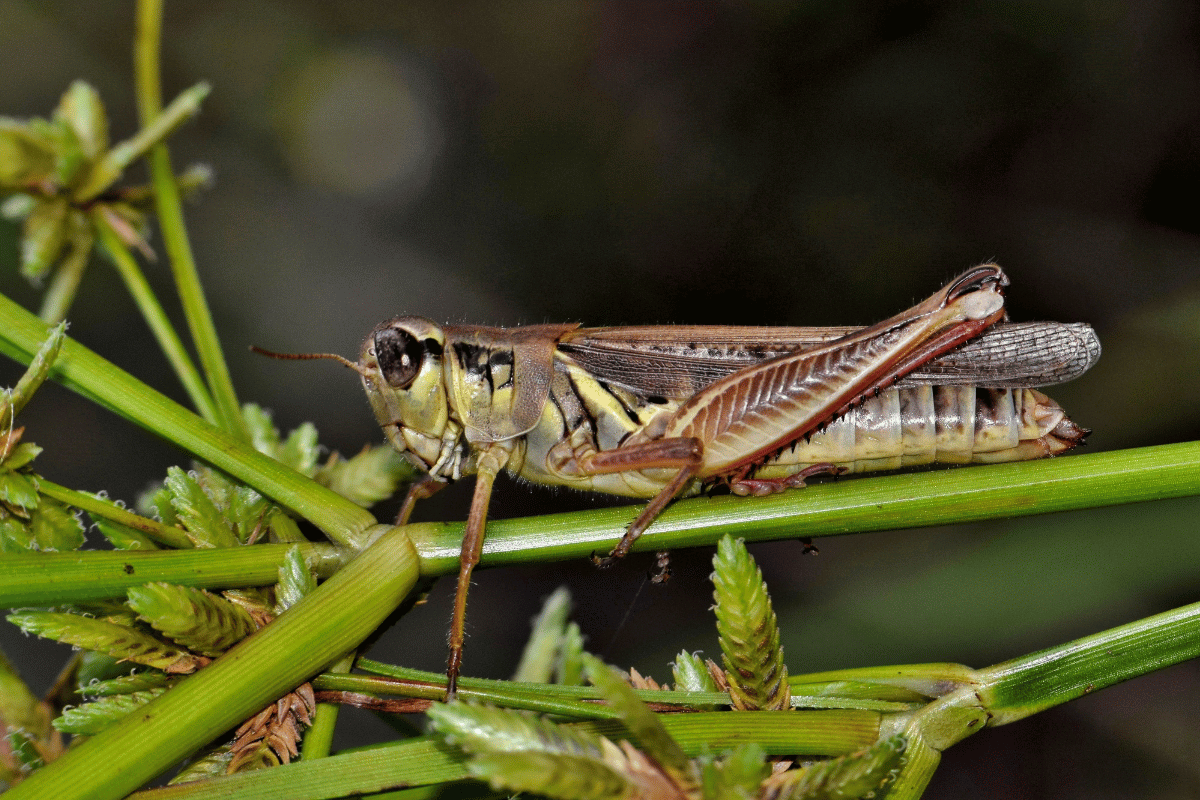
The lipid fraction of edible insects primarily consists of phospholipids and triglycerides, similar to those found in animal tissues (Figure 1). Phospholipids, including phosphatidylcholine and phosphatidylethanolamine, facilitate the absorption of fat-soluble compounds and maintain membrane integrity. The fatty acid profile is categorized into saturated fatty acids (SFAs, e.g., palmitic and stearic acids), monounsaturated fatty acids (MUFAs; e.g., oleic acid), and polyunsaturated fatty acids (PUFAs, e.g., linoleic and α-linolenic acids) (Kouřimská & Adámková, 2016; Akullo et al., 2018) (Figure 2). Among these, oleic acid (MUFA) and linoleic acid (PUFA) are the predominant fatty acids in many insect species, making them nutritionally comparable to conventional oils (Kinyuru et al., 2013; Musundire et al., 2016).
.PNG)
Figure 1. Fat composition of edible insect (e.g., grasshopper). Source: Adapted from: Fats and major fatty acids present in edible insects utilised as food and livestock feed — Veterinary and Animal Science
The fat content of insects varies significantly across species, influenced by biological and environmental factors such as developmental stage, diet, and processing methods (Kinyuru et al., 2013). For instance, caterpillars and termites exhibit higher fat levels (11.49–69.78 g/100 g) compared to other insects, with larvae and pupae containing more lipids than adults. Additionally, soft-bodied insects, such as termites, accumulate more lipids than hard-bodied species, like locusts (Dobermann et al., 2017).

Figure 2. Lipid map showing omega-3 and omega-6 fatty acids. Adapted from (Pandohee, 2022)
Health benefits of insect-derived fats and oils
Human health applications
Edible insects serve as an excellent source of energy (Figure 3), particularly in regions where malnutrition is prevalent (Hlongwane et al., 2020). Unlike conventional animal fats, insect oils contain lower levels of SFAs, reducing cardiovascular risks (Kinyuru et al., 2013). The PUFAs in insects, particularly omega-3 and omega-6 fatty acids, exhibit hypocholesterolemic properties, mitigating atherosclerosis and other cardiovascular diseases (Musundire et al., 2016). Oleic acid, abundant in insects, contributes to blood pressure regulation and possesses anti-inflammatory properties. Furthermore, α-linolenic acid (omega-3) supports neuroprotection and skin health (Tang et al., 2019).

Figure 3. Nutritional composition of edible insects. Source: Adapted from Encapsulation of protein-based bioactive from black soldier fly for ruminant feeding — Journal of Agriculture and Food Research
Livestock nutrition and product quality
Incorporating insect meal into livestock diets enhances meat quality by elevating essential fatty acid concentrations. Insects serve as a sustainable alternative to plant-based oils, supplying PUFAs that are otherwise deficient in conventional feed ingredients. Dietary inclusion of insect-derived lipids has been shown to improve animal health by exerting hypocholesterolemic and anti-inflammatory effects (Musundire et al., 2016). However, excessive lipid oxidation in insect-based feeds can compromise meat quality, necessitating the use of balanced formulations (Kinyuru et al., 2013).
Impact of processing techniques on lipid stability
Processing methods have a significant influence on the nutritional quality of insect-derived lipids (Fombong et al., 2021). Freeze-drying, while preserving fatty acid content, accelerates lipid oxidation, leading to undesirable odors and reduced shelf life (Hernández-Álvarez et al., 2021). Conversely, slow cooking and smoke-drying stabilize lipid content in species like the African palm weevil (Musundire et al., 2016). Oven-drying reduces unsaturated fatty acids (UFAs) while increasing SFAs, as observed in mopane worms. Optimal processing techniques, such as oil extraction, enhance PUFA retention and minimize oxidation (El Hajj et al., 2023).
Regulatory developments and future research directions
The European Union’s 2017 approval of select insect species for human consumption has catalyzed market growth (Żuk-Gołaszewska et al., 2022). However, regulatory frameworks in Africa remain underdeveloped (Grabowski et al., 2020). Future research should focus on optimizing insect inclusion levels in diets and refining processing techniques to maximize nutritional benefits (Kinyuru et al., 2013).
Conclusion
Edible insects represent a sustainable and nutrient-rich alternative to conventional lipid sources, offering significant health benefits for humans and livestock. Their high PUFA content, coupled with evolving regulatory acceptance, positions them as a key solution to global food security challenges. Further research is essential to optimize processing methods and dietary applications, ensuring their full potential is realized.
References
- Adeyeye, S. A. O., Ashaolu, T. J., Bolaji, O. T., Abegunde, T. A., & Omoyajowo, A. O. (2023). Africa and the Nexus of poverty, malnutrition and diseases. Critical Reviews in Food Science and Nutrition, 63(5), 641–656.
- Adli, D. N. (2021). Use of insects in poultry feed as a replacement for soybean meal and fish meal in developing countries: A systematic review. Livestock Research for Rural Development, 33(10).
- Akullo, J., Agea, J. G., Obaa, B. B., Okwee-Acai, J., & Nakimbugwe, D. (2018). Nutrient composition of commonly consumed edible insects in the Lango sub-region of northern Uganda. International Food Research Journal, 25(1), 159–165.
- Atinmo, T., Mirmiran, P., Oyewole, O. E., Belahsen, R., & Serra-Majem, L. (2009). Breaking the poverty/malnutrition cycle in Africa and the Middle East. Nutrition Reviews, 67(Suppl. 1), S40–S46.
- Dobermann, D., Swift, J. A., & Field, L. M. (2017). Opportunities and hurdles of edible insects for food and feed. Nutrition Bulletin, 42(4), 293–308.
- Elahi, U., Xu, C., Wang, J., Lin, J., Wu, S., Zhang, H., & Qi, G. (2022). Insect meal as a feed ingredient for poultry. Animal Bioscience, 35(2), 332–346.
- Fombong, F., Kinyuru, J. N., Ng’ang’a, J., Ayieko, M. A., Tanga, C. M., Vanden Broeck, J., & Van Der Borght, M. (2021). Affordable processing of edible orthopterans provides a highly nutritive source of food ingredients. Foods, 10(1), 144.
- Grabowski, N. T., Tchibozo, S., Abdulmawjood, A., Acheuk, F., M’Saad Guerfali, M., Sayed, W. A., & Plötz, M. (2020). Edible insects in Africa in terms of food, wildlife resource, and pest management legislation. Foods, 9(4), 502.
- Hernández-Álvarez, A. J., Mondor, M., Piña-Domínguez, I. A., Sánchez-Velázquez, O. A., & Melgar Lalanne, G. (2021). Drying technologies for edible insects and their derived ingredients. Drying Technology, 39(13), 1991–2009.
- Hlongwane, Z. T., Slotow, R., & Munyai, T. C. (2020). Nutritional composition of edible insects consumed in Africa: A systematic review. Nutrients, 12(9), 2786.
- Kinyuru, J. N., Konyole, S. O., Roos, N., Onyango, C. M., Owino, V. O., Owuor, B. O., ... & Kenji, G. M. (2013). Nutrient composition of four species of winged termites consumed in western Kenya. Journal of Food Composition and Analysis, 30(2), 120–124.
- Kouřimská, L., & Adámková, A. (2016). Nutritional and sensory quality of edible insects. NFS Journal, 4, 22–26.
- Musundire, R., Osuga, I. M., Cheseto, X., Irungu, J., & Torto, B. (2016). Aflatoxin contamination detected in nutrient and anti-oxidant rich edible stink bug stored in recycled grain containers. PLOS ONE, 11(1), e0145914.
- Pandohee, J. (2022). Lipids: Structure, function, and metabolism. Biochemistry and Molecular Biology Education, 50(1), 12-25.
- Żuk-Gołaszewska, K., Gałęcki, R., Obremski, K., Smetana, S., Figiel, S., & Gołaszewski, J. (2022). Edible insect farming in the context of the EU regulations and marketing—An overview. Insects, 13(5), 446.