

A blueberry plantation established in a clean field with healthy plantlets and grown vigorously with sufficient water, nutrients, and aeration will probably not have significant problems due to pests and diseases. However, the grower should be aware of the risks, take preventive measures, and follow the direction of the regional authorities and agronomists.
Which are the most important pests of blueberries
The most common insects that can attack blueberries are the Blueberry flea, Japanese beetles, blueberry maggot fly, blueberry tip borer, spotted wing drosophila, aphids, thrips, and mites.
The blueberry flea beetle (Altica sylvia Malloch) lays eggs on both sides of the leaf. Adults emerge in the spring and, with all the larvae stages, feed on the foliage of the blueberry plants. When the insect is present in large numbers, usually during flowering, it can cause defoliation of the plants and result in crop loss. To avoid that, the farmer needs to closely monitor his/her plants from the end of spring until mid-summer. You can use an insect sweep net and take staples from the canopy area of your crop. Take at least 3 samples within an area of 5 hectares (12 acres). If you find more than 75 to 125 blueberry flea beetles (adults or larvae) per sample (action threshold), you should apply a control measure. It is best to consult your local licensed agronomist to choose the most suitable insecticide that will not harm the pollinators.
Japanese beetles or white crabs (Phyllophaga spp. or Popillia japonica) have an extended host list (e.g., roses, grapes, apples, soybeans, etc.) and, if left uncontrolled, can cause significant damage and yield loss in blueberries. The larvae and the adults feed on the leaves, while the larvae can infest the plant's roots and the adults the berries (feed on the berries' skin). More extensive problems are observed in young plants grown on lighter (sandy) soils. The adults become active (emerging from the ground) early to mid-summer.
You can scout the field regularly and check the soil around the root to see if you observe wilting or dead plants. While there is no action threshold, it is essential to highlight that even a few insects can harm the plants. You can apply cultural measures (weeding, hoeing, mulching), mass trapping, biological (natural enemies), and chemical control measures. If you plan to use preventive insecticides (in infested fields), you can apply them around the root before egg-laying (early in the summer).
Birds can be a significant problem for blueberries, as they eat them in the summer and autumn. They can consume all the fruits from a small field in a short period. Plastic or cloth netting with a small mesh size, covering the bushes or supported on a framework, may be needed to be placed when the blueberries begin to ripe.
Which are the most important diseases in blueberries, and how to control them
Two of the most serious fungal diseases that attack Blueberries' foliage are Valdensinia leaf spot (Valdensinia heterodoxa) and Mummy berry disease (Monilinia vaccinii-corymbosi), causing significant yield loss. Some damages have been reported from other diseases like anthracnose, phomopsis, and fusicoccum canker when the blueberry growers took no preventive or control measures.
Valdensinia overwinters in infected leaves on the ground and can survive for at least 2 years. This fungus causes leaf spotting and blighting of shoots and flowers, which can be confused for frost damage. The first symptoms may appear in spring and early summer. An infection from the pathogen can lead to early leaf drop (in low-bush blueberries) and decrease next year's production (reduced number of flower buds formed). It can spread by wind, water, machinery, and footwear, and 6-8 hours of wet/rainy weather are required for the spores to infect new leaves.
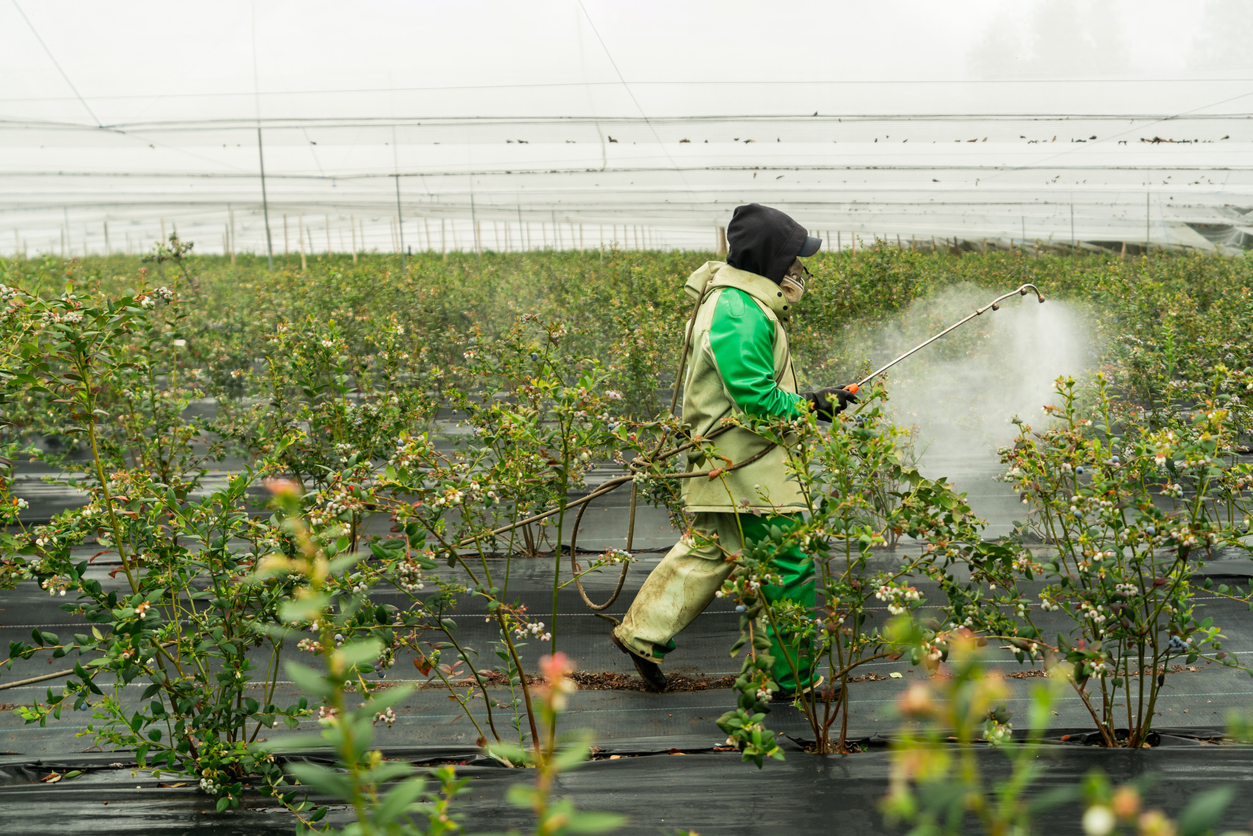
To prevent the infection and/or limit the spread of the disease, the farmer needs to clean all equipment when moving from one field to another. When the disease is diagnosed in an area of the field, you should avoid entering and walking around the field when it is wet, always clean your shoes and vehicle tires from dead leaves (lying on the ground), and remove and destroy the infected plants. You can apply suitable and certified fungicides when needed and avoid over-fertilization (nitrogen) of the blueberry fields.
Monilia Blight or Mummy Berry (Monilinia vaccinii-corymbosi) is an important and common disease in most regions where blueberries are cultivated. The fungus overwinters in mummified berries. It can be spread by wind or water. Mummy berry disease has two phases, the shoot blight and fruit infection, and can cause leaves, flowers, and fruit to wilt, rot, and fall. Once the fungus infects the plant, it takes only 4 days for the infected part to die and collapse. Any green fruit will first turn pink and later will wrinkle. Both diseases result in significant crop losses.
You are advised to avoid using susceptible varieties like Northsky, Reka, Northblue, Bluegold, Bluejay, Weymouth, Patriot, Berkley, Herbert, Lateblue, Bluehaven, Elliot, Elizabeth, and Blueray. Instead, you should choose resistant cultivars like Reka, Liberty, and Olympia. You can scout your field during fall and winter, remove any mummified berries (on the plants and ground) and prepare your control plan for the following spring. There are several fungicides suitable for use against this disease, but it is strongly suggested to take the advice of an agronomist before applying any chemicals to your crop. The first spray is usually applied when the earliest cultivars are in the bud break stage.
Because of the acidic soil requirements of blueberries, they are more likely to have nutrient deficiency problems rather than pest and disease issues. To avoid that, you can perform a soil analysis every 2-4 years and an annual leaf analysis to be aware of the nutrient availability and adjust your fertilization program accordingly. You can read more in the article about "Blueberry Fertilization," which can be found in the table of contents below.
Weed management in blueberries
Weeds compete with blueberries for resources and can host dangerous crop pests and diseases. As a result, the farmer should take action and limit their presence in the field, especially right before planting and in the next couple of years when the blueberry plants are still young and more sensitive.
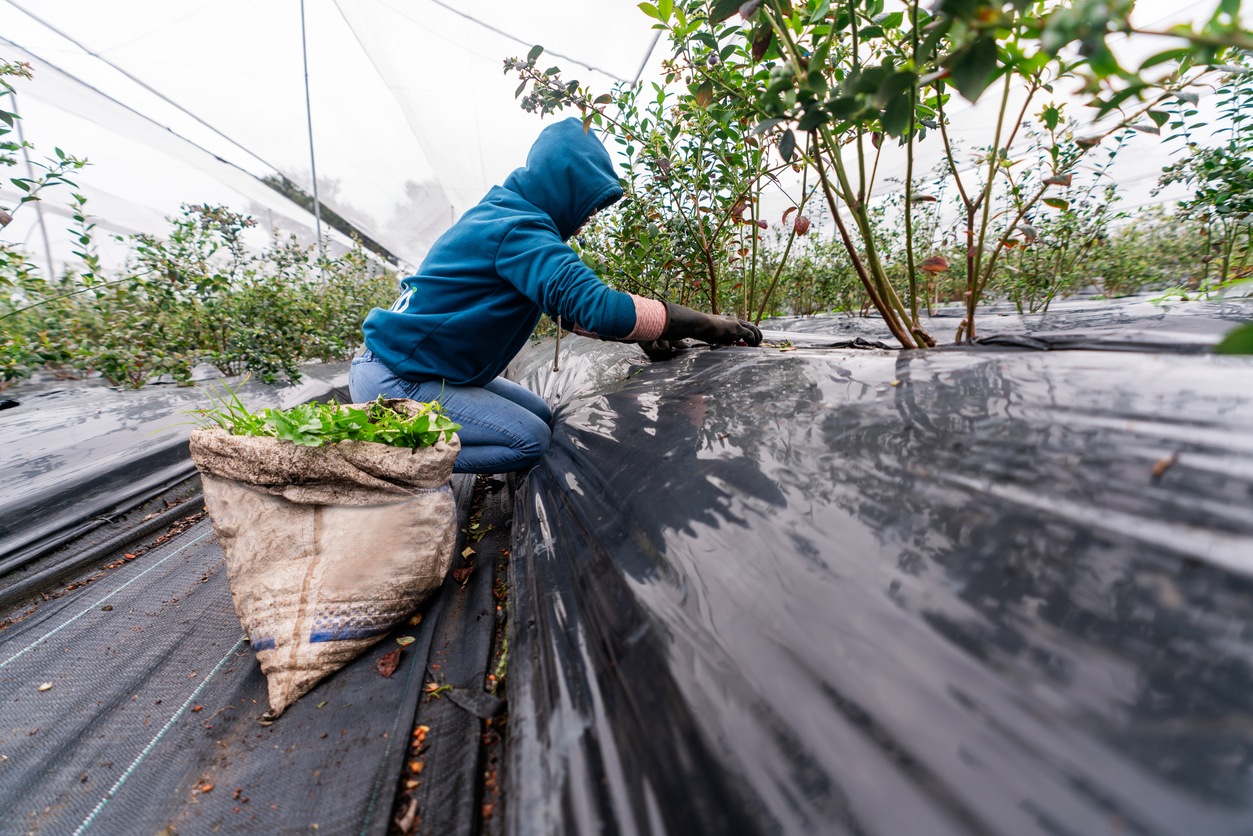
The weeds should be removed both between and within the rows. The farmer needs to be extra careful when weeding close (at the projection of the plant's canopy) to the shallow root system of the blueberries, as it can easily be damaged. For this reason, manual weeding is generally suggested, together with mulching using turf, bark, or mat that will obstruct weed emergence and growth. Hoeing and cultivation can be used, but they can be applied further away from the bush crown.
Additionally, an effective measure for controlling the weeds between the rows (alleyways) is the sowing of a permanent cover crop like perennial grasses (e.g., ryegrass and fescues). Fescue species are generally preferred due to their high tolerance to acidic soils and the little maintenance they require. On the other hand, perennial ryegrass has accelerated germination and establishment. Either cover crops, or it is best to be sown in early to mid-autumn to benefit from the rainfalls. It is also possible to plant during spring, but irrigation may be needed in that case.
Finally, some herbicides are available for pre and post-planting applications, but the farmer needs to be extra careful when using them because they can damage the crop. If the farmer needs to use post-emergence, systemic herbicides during the first 2 years of the crop's establishment, then the farmer should protect the young blueberries with nonporous wraps or growth tubes. You may avoid using glyphosate (Roundup) or phenoxy-containing (2,4-D) herbicides near blueberry plants. Always read the label and follow the instructions concerning the timing and dose. Both may vary depending on the weed species and the physiological stage of the crop. Find more information Blueberry weed control updates for 2020 — MSU Extension. You can rotate the herbicide's mode of action to avoid the development of resistant weeds.
References
- Growing blueberries in your home garden | OSU Extension Service
- Bbcovercrops 1rc66ra (PDF) – Wpmucdn
- https://www.blueberriesnz.co.nz/industries/growing/
- Blueberry Weed Control Updates – Michigan State University Extension.
- https://edis.ifas.ufl.edu/publication/WG016
- Growing Blueberries Home Garden – University of Minnesota Extension
- Blueberry Flea Beetle (PDF) – dal.ca
- Japanese Beetles White Grubs – Cornell.
- White Grubs – on.ca
- Michigan Blueberry Facts Japanese Beetle E2845 – Michigan State University Extension
- Growing Blueberries in the Home Garden – Ncsu
- Organic Management Japanese Beetle – Missouri
- Valdensinia Leaf Spot
- Blueberry Disease Guide (PDF) – Perennia
- Diseases : Center for Agriculture, Food, and the Environment (CAFE) at UMass Amherst
- Oregon State University Extension Catalog EM9117
Further reading
14 Interesting Facts about Blueberries
Uses, Nutritional value and Health Benefits of Blueberries
Blueberries vs. Bilberries- Are blueberries and bilberries the same thing?
Blueberry Plant Information-How to Identify Blueberry Plants
Blueberry Soil Conditions and Site Selection
How to Cultivate Blueberries Professionally
Blueberries Propagation and Pollination
Blueberry Water Needs and Irrigation Methods
Essential Blueberry Fertilization Guide: Nutrients, Schedules, and Best Practices
Blueberries Pests, Diseases, and Weed Management