
Comprehensive Guide to Professional Blueberry Cultivation: From Soil Prep to Harvest
Blueberries, often regarded as superfoods, are valued for their rich antioxidant content and exceptional flavor. They are commercially cultivated worldwide, with production methods requiring careful attention to detail. Below is a guide to cultivating blueberries professionally, focusing on site preparation, planting, maintenance, and harvesting techniques.
Site Selection and Soil Preparation
Blueberries thrive in well-drained, acidic soils with high organic matter. Conducting a soil analysis before planting is critical to identify pH levels and nutrient deficiencies. Ideally, the soil pH should range between 4.0 and 5.5, with an optimal level of 4.8. If the pH is too high, incorporate sulfur at least six months before planting to lower it.
To enhance soil fertility, mix organic matter like peat moss, compost, or decomposed leaves into the soil during the fall. Raised beds of 15-20 cm (6-8 inches) improve drainage and aeration. Proper site selection should ensure abundant sunlight, protection from strong winds, and adequate chilling hours for the selected variety.
Choosing the Right Variety
Selecting a suitable blueberry variety depends on the climate, soil conditions, and market preferences. Blueberries are categorized into three main types:
- Highbush Blueberries: Suitable for USDA zones 4-8, these are the most commercially cultivated types. Varieties like ‘Duke’ (early season) and ‘Bluecrop’ (mid-season) are known for their large, firm fruits and reliable yields.
- Lowbush Blueberries: These are compact plants ideal for cooler climates (zones 3-6). They produce small, intensely flavored berries, often used in processed goods.
- Rabbiteye Blueberries: Native to the southeastern United States, these thrive in warmer climates (zones 7-9). Varieties like ‘Tifblue’ and ‘Powderblue’ are known for their drought tolerance and long shelf life.
For optimal pollination and yield, plant multiple cultivars to encourage cross-pollination.
Planting Techniques
Plant blueberries in late fall or early spring, depending on regional climate conditions. Spacing varies by type:
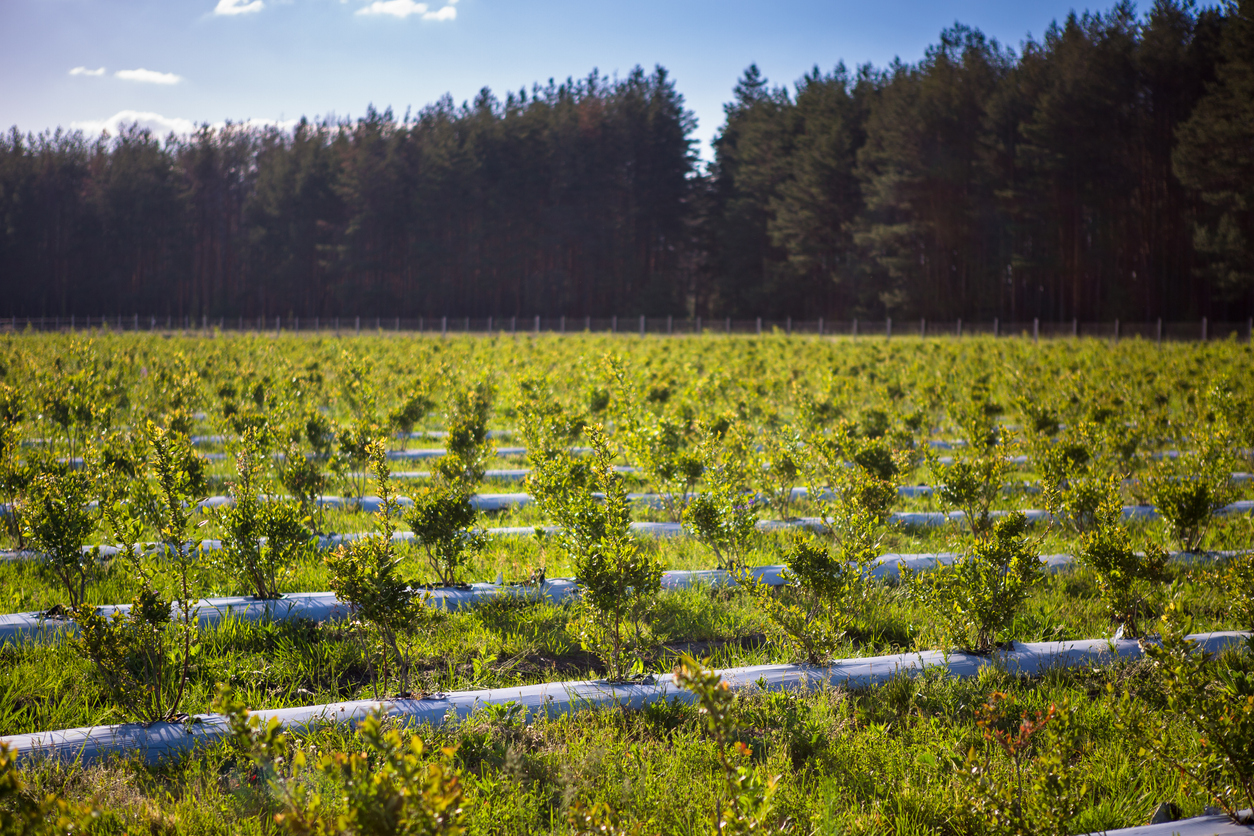
- Highbush Blueberries: 1.2-1.8 meters (4-6 feet) between plants and 2-3 meters (6-10 feet) between rows.
- Rabbiteye Blueberries: 3-4 meters (10-13 feet) between rows due to their vigorous growth.
Dig planting holes twice as wide as the root system, approximately 45 cm (18 inches) in diameter and 60 cm (24 inches) deep. Mix 50% field soil with 50% organic matter to fill the hole. Avoid adding fertilizers directly into the planting hole, as they may damage young roots.
Apply a 5-10 cm (2-4 inches) layer of organic mulch, such as wood chips or pine needles, around the base to conserve soil moisture, suppress weeds, and improve soil health.
Irrigation and Nutrient Management
Due to their shallow, fibrous root system, blueberries require consistent moisture, particularly in sandy soils. Provide 25-40 mm of water weekly during the growing season, adjusting based on rainfall. Drip irrigation is highly recommended for efficient water delivery to the root zone.
Nutrient requirements should be based on soil and tissue analysis. Blueberries favor ammonium-based nitrogen fertilizers, as they support lower soil pH levels. Apply nitrogen in split doses: once at flowering and six weeks later. Potassium and phosphorus are essential for fruit development and root health, while micronutrients like magnesium, iron, and manganese are required in trace amounts.
Pruning and Training
Pruning is essential for maintaining plant health, promoting air circulation, and enhancing fruit quality. During the first three years, focus on removing weak or damaged branches and forming a strong structure. From the fourth year onward, annual winter pruning should target:
- Removing old, non-productive canes.
- Thinning the canopy for better light penetration.
- Encouraging the growth of 3-5 new vigorous canes annually.
Each mature plant should maintain 12-18 canes of varying ages for optimal productivity.
Pest and Disease Management
Common pests include blueberry maggot flies, aphids, and Japanese beetles. Implement integrated pest management (IPM) practices, such as regular monitoring, cultural controls, and biological interventions, to minimize damage. For fungal diseases like mummy berry or Valdensinia leaf spot, use resistant varieties and certified fungicides as recommended by agronomists.
Weed management is critical during the establishment years. Manual weeding, mulching, and planting cover crops like ryegrass can reduce weed pressure without harming the shallow root system.
Harvesting and Post-Harvest Handling
Blueberries should be harvested at full ripeness when they are deep blue and slightly soft. Depending on the variety, harvesting occurs from late spring to late summer. Perform 3-7 pickings to gather berries at their peak quality.
For fresh-market blueberries, hand harvesting is preferred to minimize bruising. Mechanical harvesters are more suitable for berries destined for processing. Post-harvest, store blueberries at 0°C (32°F) with 85% relative humidity to extend shelf life up to two weeks.
Maximizing Yield and Profitability
Blueberry plants start producing commercially viable yields in their third year, with mature plants yielding up to 10,000 kg per hectare (22,046 lbs per acre) annually. To maximize profitability:
- Choose high-yield, disease-resistant varieties.
- Maintain consistent irrigation and fertilization schedules.
- Implement effective pest and disease control measures.
- Grade and package berries to meet market standards.
Professional blueberry cultivation requires meticulous planning and continuous care, but with the right practices, it can be a highly rewarding endeavor.
Further reading
14 Interesting Facts about Blueberries
Uses, Nutritional value and Health Benefits of Blueberries
Blueberries vs. Bilberries- Are blueberries and bilberries the same thing?
Blueberry Plant Information-How to Identify Blueberry Plants
Blueberry Soil Conditions and Site Selection
How to Cultivate Blueberries Professionally
Blueberries Propagation and Pollination
Blueberry Water Needs and Irrigation Methods
Essential Blueberry Fertilization Guide: Nutrients, Schedules, and Best Practices