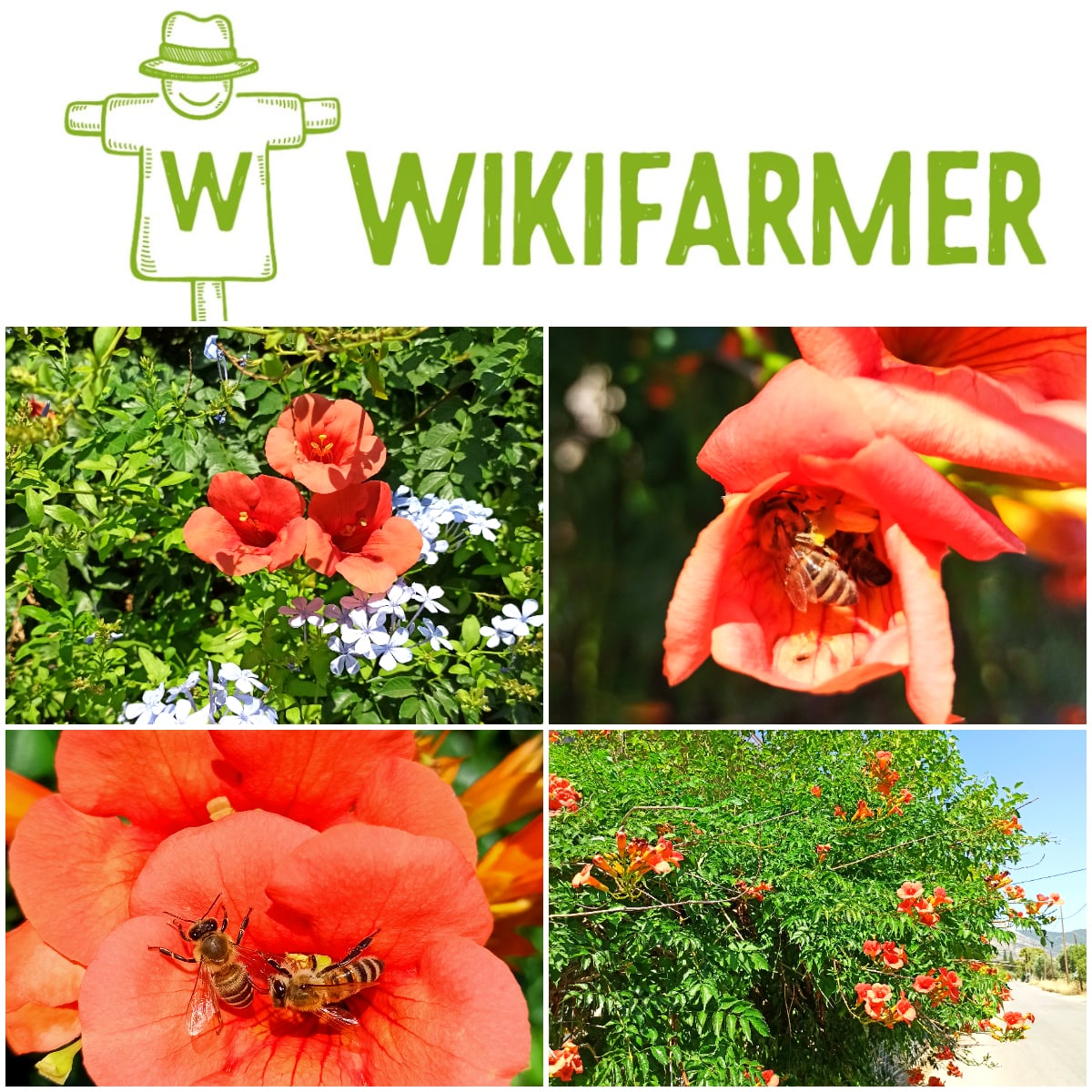











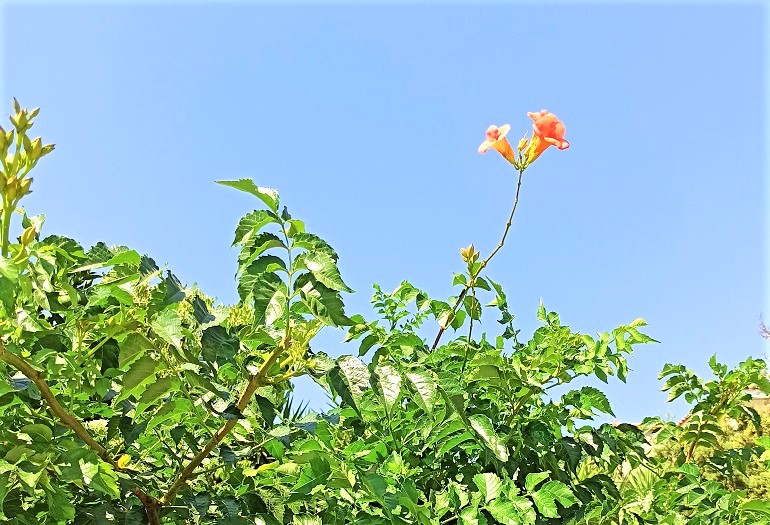
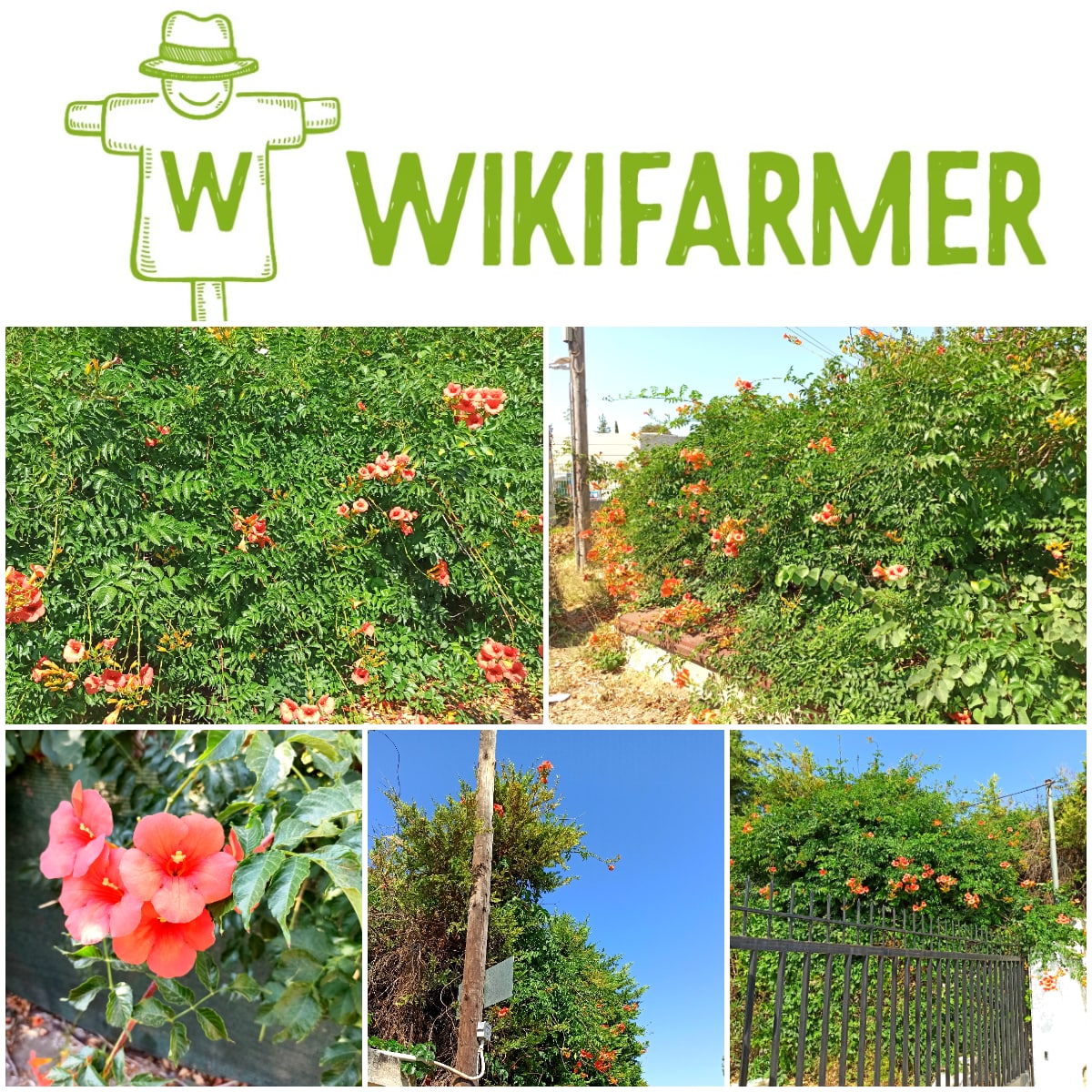
Vivid greenery spilling over garden fences, dotted with orange bell-shaped flowers and busy with bees. That image belongs to the well-known Bignonia, or Chinese trumpet vine. Many bignonia varieties exist, evergreen or deciduous, differing in size, flower shape and climbing ability. The most widespread, especially in Mediterranean countries, is Campsis grandiflora (formerly Bignonia grandiflora), originating from East Asia. This deciduous climber grows fast and bears large, orange, trumpet-shaped flowers. It can reach ten metres or more, using other trees or light poles as support to climb.
One clarification that saves confusion. Bignonia is sometimes called begonia trumpet vine, which leads people to mix it up with the begonia (Begonia). They are two completely different plants. The begonia is a small flowering plant for pots and balconies, while the bignonia described here is a large climber with orange flowers.
Bignonia is very popular as a natural hedge in many countries, thanks to its fast growth and rich foliage. It's commonly used to cover walls, fences, pergolas, or even rocky ground. Many gardeners create colourful living fences by combining bignonia (bright orange flowers) with plumbago (sea-blue flowers) and bougainvillea (pink, red and white flowers).
Bignonia grows both in pots and in the ground. Once established, after one or two years, it needs minimal care, with the exception of the yearly pruning that it always requires.
Buying a plant and choosing the spot
Start with a plant from your nearest nursery, an inexpensive choice, as a plant about 1.5 metres tall costs only a few euros. Next, find a sheltered spot to plant it in the ground or place the pot.
For light, bignonia grows in semi-shade but produces noticeably fewer flowers there. For both dense foliage and intense flowering, place it where it gets direct sun for several hours a day. As for soil, the plant is versatile and adapts to any well-drained type.
Watering
Mature bignonias are very drought-resistant, but young plants and those in pots need regular watering in summer. Even well-established plants perform better if watered during prolonged dry spells. Water when the soil has dried out, since excessive moisture causes root rot.
Pruning
In a fast-growing plant with such strong climbing ability, pruning is critical. Done right, it gives the plant the shape you want, directs its growth, and controls excess vegetation. Left unchecked, bignonia can quickly get out of hand and smother neighbouring plants.
Bignonia is pruned yearly, at the beginning of spring. The plant blooms on new growth, so a hard prune doesn't cost you flowers, it encourages them. Many gardeners do an initial prune right after planting, cutting all shoots to about 15 cm from the ground. As growth resumes, they keep the four or five strongest shoots and remove the rest. Weak, dry, diseased and underdeveloped shoots are removed throughout.
A mature, well-formed bignonia has branches reaching about 4 metres, which usually takes two to three years. To keep the plant in good shape, within bounds and well-ventilated inside its canopy, prune the lateral shoots well before growth starts each year.
Fertilisation
In the first two years after planting, you can encourage vigorous growth and quick cover by adding a balanced granular fertiliser (such as NPK 7-7-7) twice a year, once in spring and once in summer. For plants in pots, a balanced water-soluble fertiliser twice during the growing season works too. Follow the dosage on the product label. From the third year, the plant usually needs no fertiliser at all.
Maturity and maintenance
From the third year onwards, bignonia needs very little care. Water only in prolonged dry spells and don't fertilise again. The key task now is pruning, often and sometimes aggressively, to keep the plant under control so it doesn't choke nearby plants and trees. That unchecked vigour is the biggest issue with this plant. It faces no serious pests or diseases, with the possible exception of ants.
Care during pruning
Several people report skin irritation and itching after contact with bignonia foliage. If you grow a bignonia on your terrace or in your garden, it's worth wearing gloves during pruning and other work to protect your skin.
Important notes
Every garden and every plant is unique. Conditions vary with your region, sun exposure and soil drainage. The guidance above is general and a starting point rather than a strict rule.
If you suspect a serious problem that doesn't respond to the basic practices, consider consulting a horticulturist. Use plant protection products with care. Try non-chemical methods first, and when chemical intervention is needed, use only approved products and follow the label instructions.