How to grow and care for begonias
Begonias are among the most loved flowering plants for pots, balconies and window boxes, with rich blooms that last all summer and often longer. Some types are grown for their spectacular flowers, others for their strikingly patterned leaves.
One clarification first, because it saves a lot of confusion. The begonia is the herbaceous flowering plant of the genus Begonia. It has nothing to do with the bignonia or trumpet vine (Campsis grandiflora), a completely different plant, a large climber with orange trumpet-shaped flowers. The two are often mixed up because of the similar name, but they're unrelated and need entirely different care. This guide is about the begonia, genus Begonia.
Here we'll look at how to tell the main begonia types apart and how to care for each, from light and watering to propagation and overwintering.
The types of begonia
The genus Begonia includes more than 2,000 species and countless hybrids, and the type you have decides its care. In gardens and shops you'll mostly meet four groups.
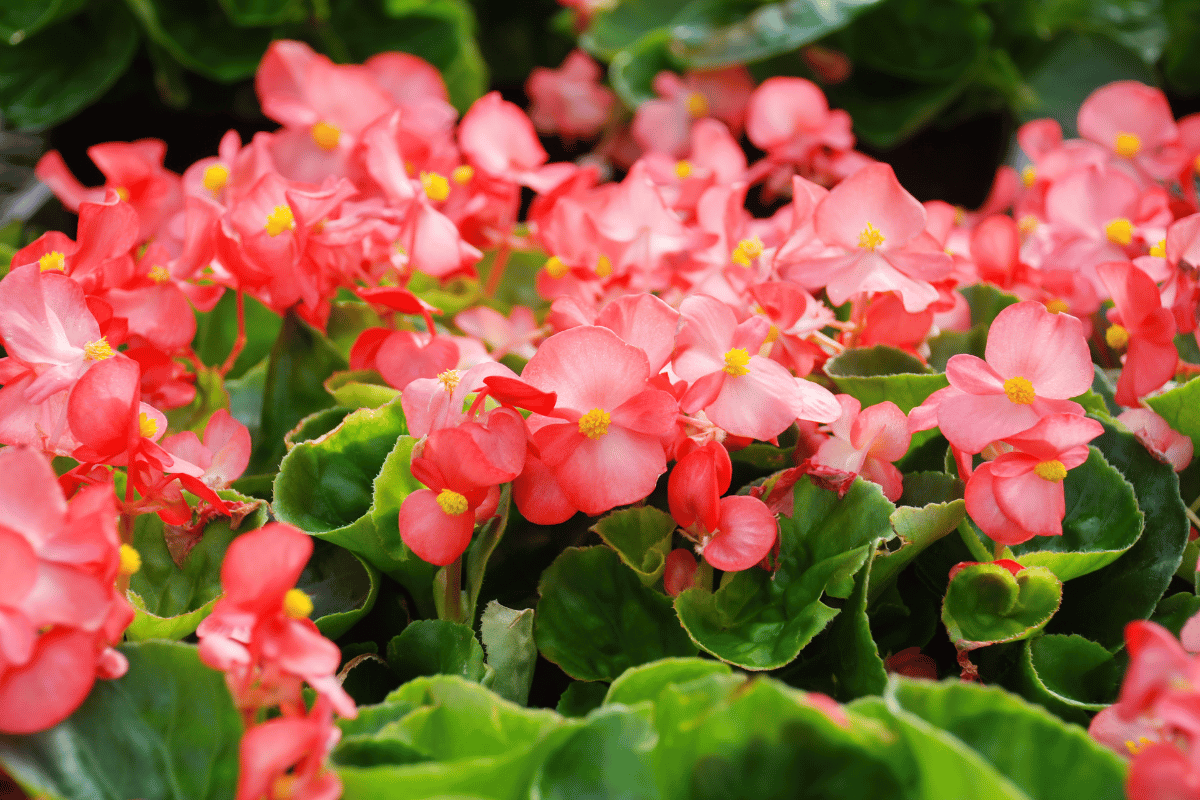
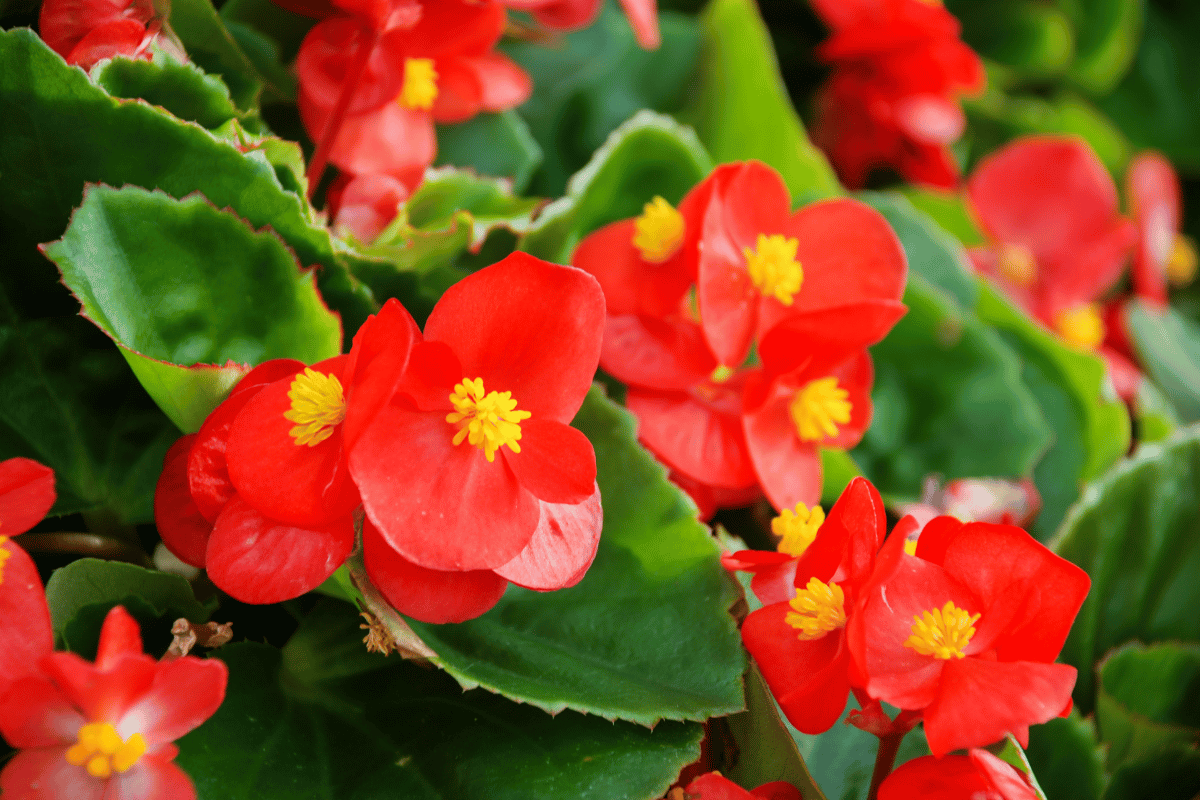
Wax begonia (Begonia semperflorens): the most common for bedding and pots, with small glossy leaves and continuous bloom all summer. It's the only group that tolerates direct sun, especially the bronze-leaved varieties.
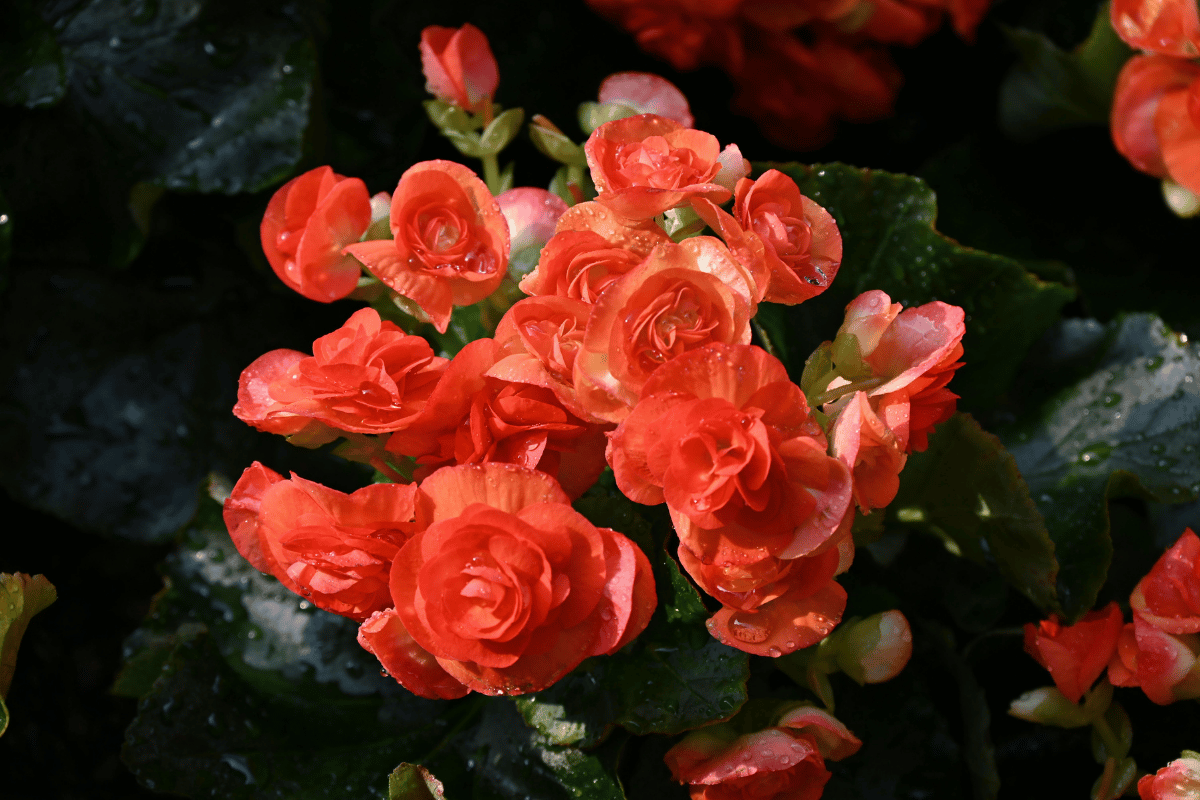
Tuberous begonia (Begonia x tuberhybrida): with large, showy, often pendulous flowers, ideal for window boxes and hanging baskets. It grows from a tuber and goes dormant in winter.
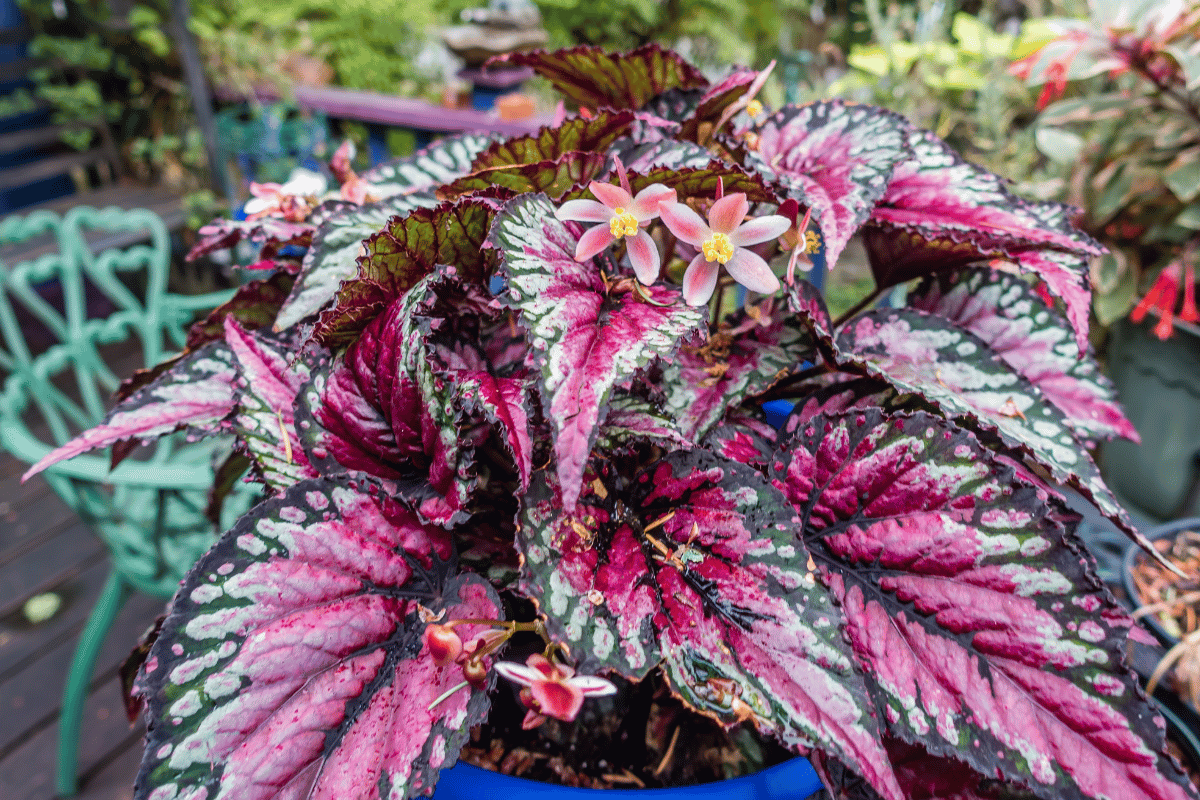
Rex begonia (Begonia rex): grown for its dramatic, colourful foliage rather than its flowers. Mainly a houseplant, it wants humidity and indirect light.
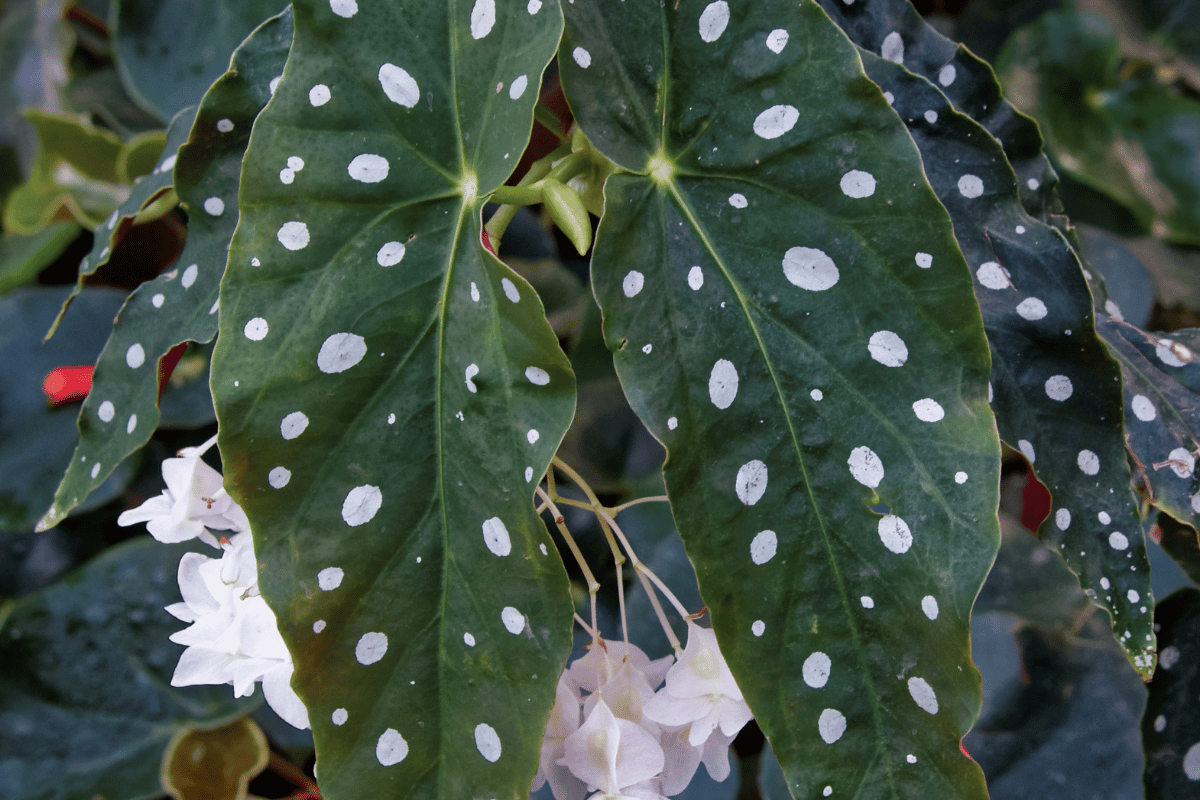
Cane begonia (angel wing types, such as Begonia maculata): with tall, upright cane-like stems and decorative leaves, often spotted.
Also sold is the Elatior (Rieger) begonia, a hybrid with abundant flowers that blooms even in winter.
Where to put a begonia
Most begonias want a bright spot with indirect light, not strong midday sun, which scorches the tender leaves and flowers. Light shade, or a spot with morning sun and afternoon shade, suits most of them.
The exception is the wax begonia, which tolerates more sun, especially the varieties with dark, bronze foliage. Green-leaved varieties also prefer some shade during the hottest hours of summer.
The begonia is sensitive to cold and won't tolerate temperatures below 10°C. It's grown outdoors from spring to autumn, while in winter the plants you want to keep move into a sheltered or indoor spot. Protect it from strong draughts too.
Soil
Begonias want a light, fertile mix with very good drainage. Their root system is sensitive and rots easily in soil that stays wet. Use a good-quality potting mix enriched with perlite or coarse sand for drainage, and always a pot with drainage holes.
Watering
Watering is the most delicate part of begonia care. Water only when the surface soil has dried out, checking with your finger. The plant prefers measured, regular watering over large amounts that leave it waterlogged.
One detail that makes a real difference, always water at the base of the plant and never over the leaves and flowers. Moisture on the foliage encourages fungal problems, especially powdery mildew, which shows as a white dust. In winter, reduce watering significantly.
Feeding
From spring to autumn, feed regularly with a water-soluble flowering fertiliser, roughly every two weeks. Avoid overfeeding, which gives lush foliage at the expense of flowers and can harm the sensitive roots. Stop feeding in winter.
Planting tubers
If you grow tuberous begonias, planting the tuber the right way makes the difference. Plant tubers in spring, once the risk of frost has passed.
- Fill a shallow container with a light, free-draining mix
- Place the tuber with the concave (hollow) side facing up. That's where the buds that sprout are found
- Cover with one to two centimetres of soil
- Water sparingly and keep in a warm, bright spot until the first shoots appear
The most common failure with tubers is planting them upside down. If you set the tuber the wrong way, it sprouts late or not at all.
Growing begonias in pots and window boxes
The begonia is above all a pot and window-box plant, perfect for balconies and terraces.
- Choose a pot with plenty of drainage holes, not overly large
- Trailing varieties, especially tuberous ones, look their best in hanging baskets
- Place the pot in a bright spot with indirect light
- In a pot the soil dries faster, so check watering regularly in the summer months
Propagation
Begonias are easy to propagate, mainly from cuttings.
From stem cuttings. Cut a healthy 8-10 cm cutting, strip the lower leaves, and place it in water or directly in a light mix until it roots.
From leaf cuttings. Rex begonias and other foliage types can be propagated from a single leaf. Lay a healthy leaf on a moist mix and new plantlets form within a few weeks.
From tuber division. In tuberous varieties, a large tuber can be cut into pieces in spring, as long as each piece has at least one bud.
Overwintering tubers
Tuberous begonias go dormant in winter. In late autumn, when the foliage yellows and withers, stop watering. Lift the tubers, clean them and let them dry.
Store them in a dry, cool, dark place, in a paper bag or a box of dry peat, until spring. Replant them once the risk of frost has passed.
Common problems
- White dust on the leaves: this is powdery mildew, the most common begonia disease, encouraged by moisture on the foliage and poor airflow. Avoid wetting the leaves and improve ventilation
- Soft, yellowing leaves that drop: almost always from overwatering and root rot. Let the soil dry out and check the drainage
- Few or no flowers: usually from insufficient light or too much nitrogen fertiliser
- Scorched, brown patches on the leaves: from direct, strong sun. Move it to a spot with indirect light
Pests and diseases
- Powdery mildew: white dust on the leaves, the most common threat. Prevent it by watering at the base and ensuring good airflow
- Botrytis: grey mould in damp, poorly ventilated conditions. Remove affected parts and improve the conditions
- Aphids: small sap-sucking insects on new growth. Rinse off with water or spray with insecticidal soap
- Whitefly: tiny white insects on the undersides of leaves. Treat with insecticidal soap and yellow sticky traps
- Root rot: from overwatering and poor drainage. Prevent it with the right mix and careful watering
Is begonia toxic?
The begonia is toxic to pets. According to the ASPCA, all species of the genus Begonia contain insoluble calcium oxalate crystals that cause dogs and cats intense mouth irritation and burning, drooling and vomiting if eaten.
The most toxic part of the plant is underground, the tubers and rhizomes, which have the highest concentration. Poisoning is rarely serious, as the immediate irritation usually stops the animal from eating much, but it's best to keep the plant away from pets, especially dogs that dig and might reach the tubers. In people the risk is low for the same reason. If a pet ingests part of the plant, contact your veterinarian.
Frequently asked questions
Does begonia want sun or shade? Most begonias want a bright spot with indirect light and protection from strong midday sun. The exception is the wax begonia, which tolerates more sun, especially the bronze-leaved varieties.
Why is there white dust on my begonia's leaves? It's powdery mildew, a fungal disease encouraged by moisture on the foliage and poor airflow. Water at the base without wetting the leaves, and make sure the plant is well ventilated.
Does a begonia only last one summer? It depends on the type. Tuberous begonias overwinter as a tuber and resprout each spring. Wax begonias are often grown as annuals but can be kept if protected from cold indoors.
Can I grow a begonia on a balcony? Yes, the begonia is an ideal balcony and window-box plant. It wants a bright spot with indirect light, careful watering, and protection from cold in winter.
Is it dangerous to pets? Yes, it's toxic to dogs and cats because of the calcium oxalate crystals, with the underground tubers the most toxic part. It's best to keep it out of their reach.
Important notes
Every home, every garden and every plant is unique. Conditions vary with the type of begonia, the light, the temperature, the water quality and the ventilation. The guidance above is general and a starting point rather than a strict rule.
Given the begonia's toxicity to pets, if you have a dog or cat, place it somewhere out of reach, and in case of ingestion contact a vet.
If your plant shows persistent problems that don't respond to the basic practices, it's worth consulting a horticulturist or your local nursery. For pest control, try non-chemical methods first, such as insecticidal soap. When a product is needed, use only ones approved for ornamental plants and follow the label instructions.
References
- Royal Horticultural Society. Begonias: outdoors.
- BBC Gardeners' World. How to grow begonias.
- ASPCA Animal Poison Control. Toxic and Non-Toxic Plants: Begonia.