











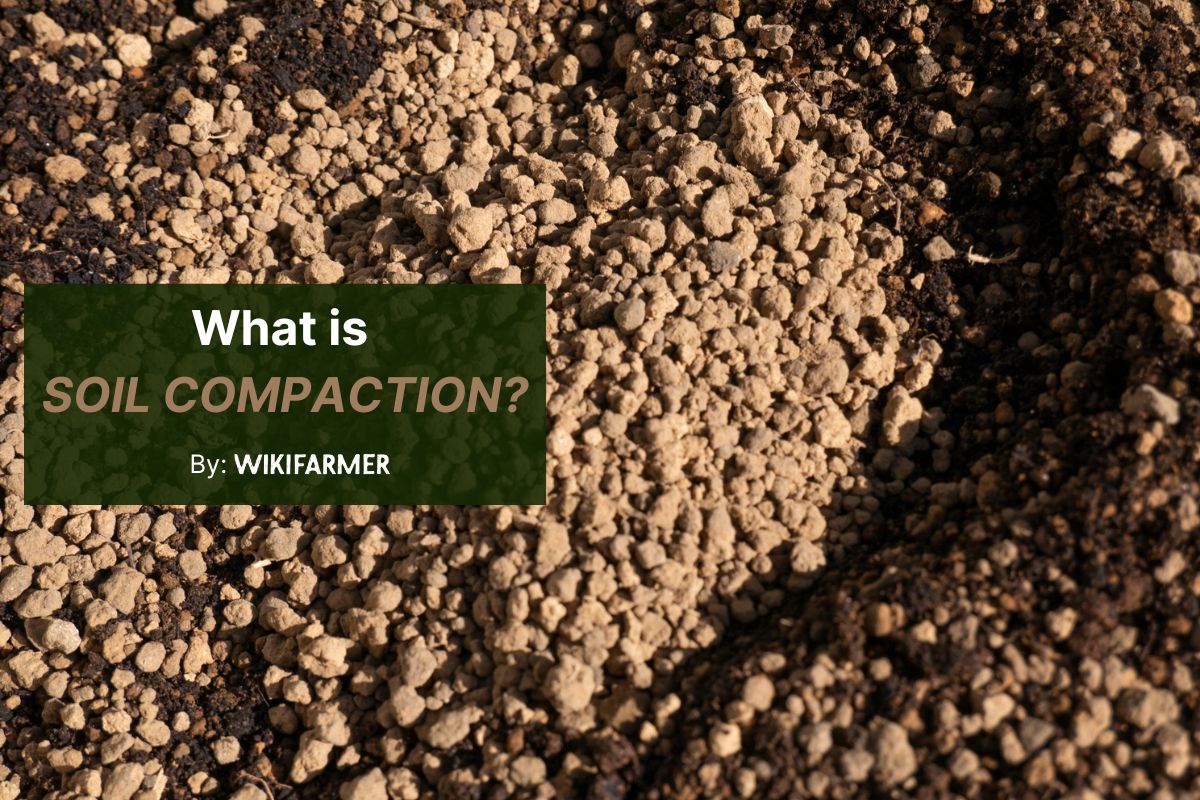
Understanding soil compaction: Causes, impacts, and management
Soil compaction is a crucial factor affecting agriculture, urban environments, construction, and overall environmental health. Whether you manage a farm, maintain green spaces, or plan infrastructure projects, understanding soil density is essential for healthy soil, proper water movement, and structural stability.
This guide answers the most commonly asked questions about soil compaction, how it happens, and how to measure and manage it.
What is soil compaction?
Soil compaction occurs when soil particles are pressed together, reducing the space (pores) between them. These pores normally hold air and water, so when they shrink, the soil becomes denser, less permeable, and harder for roots and microorganisms to thrive.
Compaction can happen naturally over time, but human activities often accelerate it. Foot traffic, heavy machinery, and construction are common culprits.
Causes of soil compaction
What causes soil compaction in farm fields?
In agriculture, compaction is most often caused by:
- Heavy machinery repeatedly passing over the same ground
- Tilling or working soil when it is too wet
- Livestock trampling
- Lack of organic matter
- Monocropping without soil-restoring practices
Clay-rich soils are especially prone to long-term structural issues under these conditions.
Impacts on soil properties
How does soil compaction change air space?
Compaction reduces both the size and connectivity of soil pores. Large pores (macropores) collapse, air spaces shrink, and soil bulk density increases. This reduces oxygen availability for roots and microorganisms, slows gas exchange, and restricts root penetration.
Does soil compaction lower porosity?
Yes. As soil is compressed, air is squeezed out, increasing the soil's bulk density.
Does less soil volume mean worse quality?
Reduced soil volume does not always indicate poor quality, but in agricultural and ecological contexts, it often signals decreased soil health. Less breathable soil restricts root growth, water movement, and microbial activity. In construction, however, higher density and reduced volume can be desirable for stability.
Effects on water movement
How does soil compaction affect infiltration?
Infiltration is the initial process by which water enters the soil surface. Compacted soil:
- Slows infiltration
- Causes water to pool on the surface
- Reduces groundwater recharge
How does soil compaction affect percolation?
After infiltration, percolation is the downward movement of that water through all the soil layers. Compacted layers act like barriers, preventing water from moving downward. This can:
- Trap water near the surface
- Increase waterlogging
- Limit deep root growth
How does soil compaction impact runoff?
When water cannot infiltrate, it runs off the surface instead. This leads to increased erosion, nutrient loss, greater flood risk, and pollution of nearby water bodies.
Soil chemistry and moisture
Managing soil density requires balancing moisture and mineral levels.
Why is it important to water down soil before compaction?
Water acts as a lubricant during compaction. Adding the right amount—known as the optimum moisture content—helps soil particles slide past one another, achieving maximum density. Too little water resists compaction, and too much prevents proper particle packing.
How does calcium decrease compaction?
Calcium improves soil structure by promoting aggregation (clumping of small particles), creating stable macropores, and reducing dispersion in clay soils. Gypsum (calcium sulphate) is commonly used in agriculture to improve compacted soils.
Measuring soil compaction
How to measure soil compaction?
Soil compaction can be measured in several ways:
- Penetrometer: Measures resistance to penetration
- Bulk density tests: Compares soil mass to its volume
- Field density tests: Includes sand cone and nuclear gauge methods
These tools assess how dense soil is in place and guide management decisions.
What is relative compaction in soil mechanics?
Relative compaction is the ratio of in-place (field) density to the maximum achievable density determined in laboratory conditions. Expressed as a percentage, it is widely used in construction to ensure soil stability.
How to test soil for 98% dry density?
For construction projects, soils are often compacted to a percentage of their maximum dry density:
- Proctor test: Laboratory test to find maximum dry density
- Nuclear density gauge: Field measurement of soil density
Relative compaction is field dry density divided by maximum dry density, multiplied by a hundred. Achieving 98% indicates the soil has reached nearly optimal compaction.
Can soil compaction exceed 100%?
Yes. Field compaction sometimes surpasses laboratory standards when more energy is applied (e.g., a vibratory roller), slightly exceeding the lab-determined maximum density.
Managing and remediating compaction
To prevent or help reverse soil compaction:
- Subsoiling or deep tilling: Breaks up compacted layers
- Adding organic matter: Improves structure and porosity
- Water management: Adjust soil moisture for optimal density
- Calcium amendments: Improve aggregation in clay soils
- Rotation and controlled traffic: Reduce repeated pressure on the same soil
Conclusion
Soil compaction is a double-edged sword. While necessary for construction and infrastructure, excessive compaction can degrade soil health, limit water movement, and hinder plant growth. By understanding its causes, impacts, and measurement methods—and managing moisture, chemistry, and human activity—we can maintain soils that are both strong and biologically vibrant. Sustainable land use depends on this balance.