Co-author: Collins Lawrence Omogiade
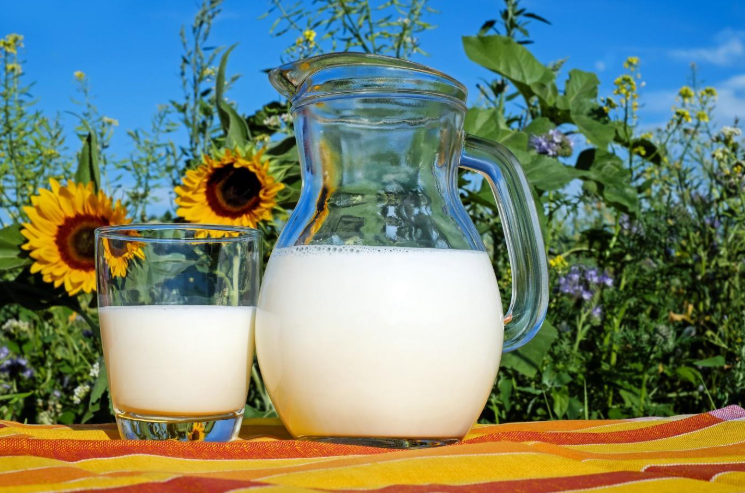
Milk has been a fundamental part of human nutrition for thousands of years, playing a crucial role in dietary practices across various cultures. The history of milk consumption is deeply intertwined with human evolution, cultural traditions, and nutritional advancements.
Historical and Evolutionary Perspectives on Milk Consumption
The consumption of milk and dairy products has deep historical roots, dating back to the Neolithic period with the advent of agriculture and animal domestication. The ability to digest lactose, the sugar found in milk, varies among populations, with lactase persistence (LP) being a genetic trait that allows some individuals to digest milk into adulthood (Gomes et al., 2025).
Evidence of Dairy Consumption in Neolithic Europe
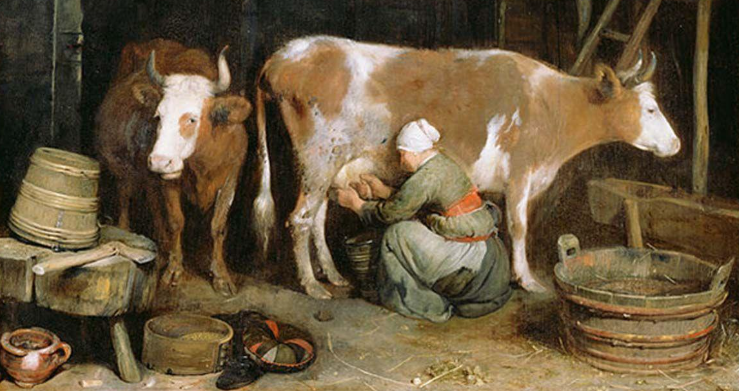
The Neolithic period marked the transition from hunter-gatherer societies to agricultural communities, with the domestication of animals such as cattle, sheep, and goats. Evidence from lipid residue analyses of pottery vessels indicates that dairy consumption was widespread in Neolithic Europe, even among populations with low lactase persistence (Gomes et al., 2025). For example, studies of pottery from sites in Britain, France, and Poland have revealed traces of milk fats, suggesting that dairy products were a significant part of the Neolithic diet. Interestingly, the production of cheese and other fermented dairy products may have allowed lactose-intolerant individuals to consume dairy without adverse effects. Fermentation reduces lactose content, making these products more digestible. This adaptation highlights the ingenuity of Neolithic societies in utilizing milk despite genetic limitations.
The Case of the Pyrenees
The Pyrenees region provides a unique case study for understanding dairy consumption in Neolithic societies. The La Feixa del Moro necropolis, dating to 3975–3790 cal. BC, offers insights into the genetic and dietary practices of early farming communities in this mountainous region. Genetic analysis of individuals from this site revealed a mix of lactase persistence and non-persistence, with one adult male carrying the GA genotype associated with lactose tolerance (Gomes et al., 2025). This finding suggests that lactase persistence may have been present in some Neolithic populations, even if it was not widespread.
The harsh climate of the Pyrenees likely influenced dietary practices, with dairy products providing a valuable source of nutrition. However, the absence of direct evidence for dairy consumption at La Feixa del Moro raises questions about the role of milk in this community. Further research is needed to determine whether dairy products were consumed and how they were processed.
Lactase Persistence and Evolutionary Implications
The evolution of lactase persistence is a fascinating example of gene-culture coevolution. The -13910T allele, associated with lactase persistence, is thought to have emerged around 4700–4600 BC, with its frequency increasing significantly by 2000 BC (Gomes et al., 2025). This timeline coincides with the spread of dairy farming in Europe, suggesting that the ability to digest lactose provided a selective advantage in societies reliant on milk. One hypothesis is that lactase persistence conferred nutritional benefits, particularly during periods of food scarcity. Milk is a rich source of calories, protein, and essential nutrients, making it a valuable resource for survival. Additionally, the calcium and vitamin D in milk may have supported bone health, further enhancing the fitness of lactase-persistent individuals.
Lactose Digestion in Humans
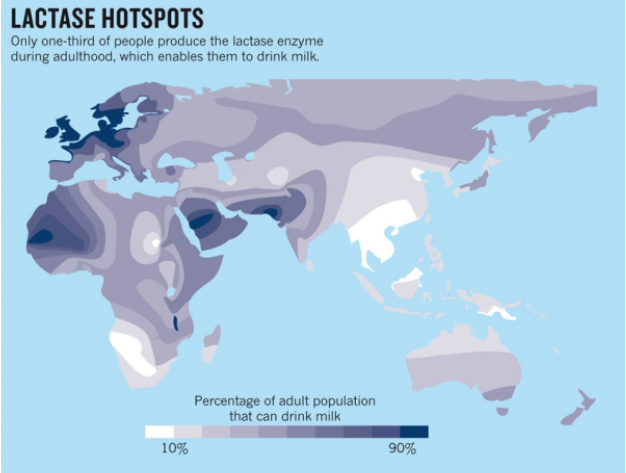
Lactose digestion is regulated by the enzyme lactase, which breaks down lactose into glucose and galactose. While all humans produce lactase during infancy, lactase persistence into adulthood is a genetic trait that emerged relatively recently in human evolution. Lactase persistence is associated with specific genetic variants, such as the -13910T allele, which allows continued lactase production in adulthood (Gomes et al., 2025). In contrast, lactase non-persistence, or hypolactasia, results in lactose intolerance, a condition prevalent in many populations worldwide.
The frequency of lactase persistence varies globally, with higher prevalence in populations with a long history of dairy farming, such as those in Northern Europe, and lower prevalence in regions like Southeast Asia, where dairy consumption is historically limited (Gomes et al., 2025). This variation suggests that the ability to digest lactose may have provided a selective advantage in societies reliant on dairy products.
Cultural Significance of Milk in Modern Societies
In modern times, milk and dairy products continue to play a significant role in diverse cultural contexts. For example, in multicultural Australia, dairy traditions from migrant communities, such as Indian ghee and paneer or Middle Eastern labneh, have enriched the country’s culinary landscape (Sarkar et al., 2015). These practices highlight the cultural significance of dairy and its role in maintaining dietary heritage. At the same time, sustainable dairy practices are becoming increasingly important. Australian dairy has made significant strides in reducing its environmental impact, with a 27% reduction in greenhouse gas emissions since 2010 (Dairy Australia, 2021). These efforts align with global sustainability goals and support the role of dairy in a healthy, sustainable diet.
Dairy and Food Culture in Multicultural Australia
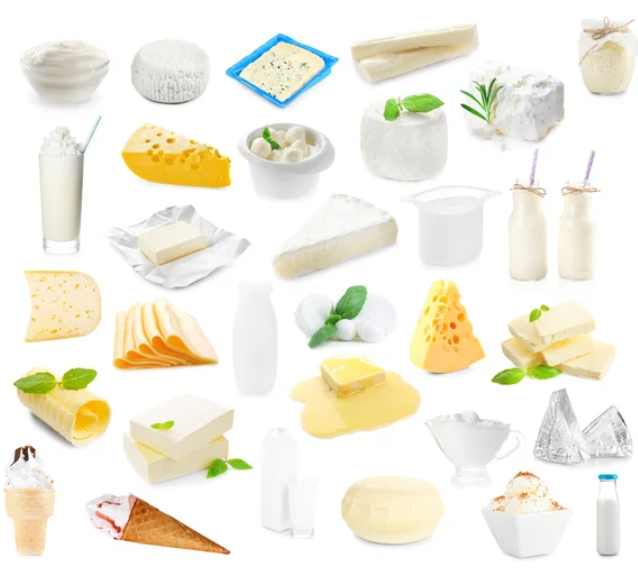
Australia’s multicultural society has significantly shaped its dairy consumption patterns. Migrant communities have introduced diverse dairy traditions, such as Indian ghee and paneer, and Middle Eastern labneh, enriching the country’s culinary landscape (Sarkar et al., 2015).
Socio-Economic Perspectives of Dairy Products
The production and consumption of dairy products had significant socio-economic implications for Neolithic societies. Cheese and other fermented dairy products offered a means of preserving milk, extending its shelf life, and facilitating trade. The development of dairy-based economies may have contributed to the growth of early agricultural communities, providing a stable food source and enabling population expansion.
In regions like the Pyrenees, where environmental conditions were challenging, dairy farming may have been particularly important. The ability to produce and store dairy products would have allowed communities to sustain themselves through harsh winters and periods of scarcity. This adaptability likely played a key role in the survival and success of Neolithic populations in mountainous regions.
Environmental Impact and Sustainable Dairy Practices
Efforts to Reduce Greenhouse Gas Emissions
The dairy sector has been working to reduce its carbon footprint through improved feed efficiency, methane-reducing technologies, and sustainable manure management practices.
Ethical Dairy Farming and Alternative Milk Sources
Ethical dairy farming emphasizes animal welfare, sustainable land use, and fair labor practices. Additionally, plant-based milk alternatives have emerged as a growing trend, offering environmentally friendly options to traditional dairy products.
Future Trends in Dairy Sustainability
Innovations in Eco-Friendly Dairy Production
Technological advancements, such as precision farming and methane capture systems, are driving sustainability in dairy production. These innovations aim to balance productivity with environmental stewardship.
Conclusion
Milk consumption has shaped human evolution, culture, and nutrition for millennia. The development of lactase persistence reflects the deep connection between genetics and dietary adaptation. From Neolithic dairy use to modern multicultural traditions, milk remains a key dietary staple. As sustainability gains importance, responsible dairy production will be essential for its future role in global nutrition.
References
- Alhadrami, G. A., & Faye, B. (2016). Animals that Produce Dairy Foods: Camel. In Reference Module in Food Sciences. Elsevier.
- Bailey, R. L., Dodd, K. W., Goldman, J. A., Gahche, J. J., Dwyer, J. T., Moshfegh, A. J., Sempos, C. T., & Picciano, M. F. (2010). Estimation of total usual calcium and vitamin D intakes in the United States. Journal of Nutrition, 24, 817–822.
- Dairy Australia. (2021). Australian Dairy Sustainability Framework. Retrieved from Dairy Australia
- Elbagermi, M. A., Alajtal, A. I., & Edwards, H. G. M. (2014). A comparative study on the physicochemical parameters and trace elements in raw milk samples collected from Misurata-Libya. SOP transactions on analytical chemistry, 1(2), 15-23.
- FAO. (2023). Global Dairy Market Report. Food and Agriculture Organization of the United Nations. Retrieved from Food and Agriculture Organization of the United Nations (FAO)
- FDA. (2020). Food Fortification Guidelines. U.S. Food and Drug Administration. Retrieved from U.S. Food and Drug Administration (FDA)
- Gadzama, I. U., & Yashim, S. M. (2023). Soymilk replacer versus whole milk: Effects on calf performance. Paper presented at the Dairy Research Foundation 2023 Symposium, Sydney, Australia. https://www.researchgate.net/publication/383181646_Soymilk_Replacer_versus_Whole_Milk_Effects_on_Calf_Performance_Australian_Dairy_Symposium
- Gadzama, I. U. (2017). Utilization of Soymilk as Milk Replacer in Feeding Friesian x Bunaji Dairy Calves (Master's thesis, Ahmadu Bello University, Zaria, Nigeria).
- Gomes, C., López-Matayoshi, C., Remolins, G., Gibaja, J. F., Subirà, M. E., Fondevila, M., Palomo-Díez, S., López-Parra, A. M., Labajo-González, E., Lareu, M. V., et al. (2025). Analysing Milk and Dairy Consumption in Ancient Societies: Bioarchaeological, Evolutionary and Human Social Perspectives. World, 6, 27.
- Goff, D. (2010). Raw milk quality. Dairy Science and Technology, University of Guelph, Food Science, Guelph, Ontario, Canada. Retrieved from Raw Milk Quality – Uoguelph
- Gupta, D. (2021). The ULTIMATE guide to choose MILK – Which milk is the BEST? – Swadesi Way. Swadesi Way. Retrieved from The Ultimate Guide to Choose Milk Which Milk Is the Best – Swadesiway
- Lönnerdal B. (2003). Nutritional and physiologic significance of human milk proteins. The American journal of clinical nutrition, 77(6), 1537S–1543S.
- Månsson H. L. (2008). Fatty acids in bovine milk fat. Food & nutrition research, 52, 10.3402/fnr.v52i0.1821.
- Michalski, M. C., Ollivon, M., Briard, V., Leconte, N., & Lopez, C. (2004). Native fat globules of different sizes selected from raw milk: thermal and structural behavior. Chemistry and physics of lipids, 132(2), 247–261.
- Park, Y. W. (2009). Bioactive components in milk and dairy products. Wiley-Blackwell.
- Roy, D., Ye, A., Moughan, P. J., & Singh, H. (2020). Composition, Structure, and Digestive Dynamics of Milk From Different Species-A Review. Frontiers in nutrition, 7, 577759.
- Sarkar, P., Dhumal, C., Panigrahi, S. S., & Choudhary, R. (2015). Traditional and Ayurvedic foods of Indian origin. Journal of Ethnic Foods, 2(3), 97-109.
- Singh, H. (2006). The milk fat globule membrane—A biophysical system for food applications. Current Opinion in Colloid & Interface Science, 11(2-3), 154–163.
- Skibiel, A. L., Downing, L. M., Orr, T. J., & Hood, W. R. (2013). The evolution of the nutrient composition of mammalian milks. The Journal of animal ecology, 82(6), 1254–1264.
- Uruakpa, F. O., Ismond, M. A. H., & Akobundu, E. N. T. (2002). Colostrum and its benefits: A review. Nutrition Research, 22(6), 755–767. Colostrum and its benefits: a review
- Weaver, C. M., Gordon, C. M., Janz, K. F., Kalkwarf, H. J., Lappe, J. M., Lewis, R., O'Karma, M., Wallace, T. C., & Zemel, B. S. (2016). The National Osteoporosis Foundation's position statement on peak bone mass development and lifestyle factors: a systematic review and implementation recommendations. Osteoporosis international: a journal established as result of cooperation between the European Foundation for Osteoporosis and the National Osteoporosis Foundation of the USA, 27(4), 1281–1386. The National Osteoporosis Foundation position statement on peak bone mass development and lifestyle factors: a systematic review and implementation recommendations | Osteoporosis International
- WHO (2021). Lactose Intolerance and Health. World Health Organization. Retrieved from World Health Organization (WHO)