
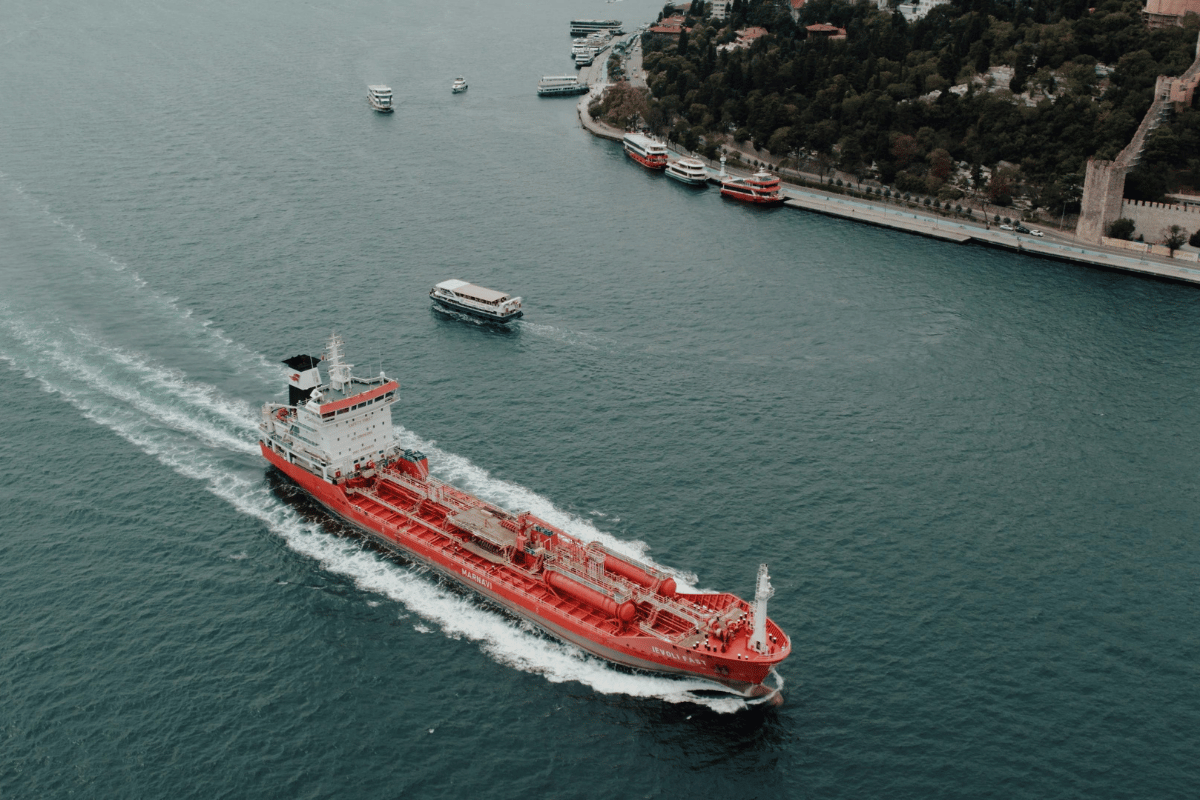
One sentence in the latest FAO and WFP Global Report on Food Crises sets up the 2026 fertilizer outlook better than any forecast does. The escalation in the Middle East since late February has disrupted shipping through the Strait of Hormuz, and other major producers cannot scale up to fill the gap. Input costs for next season are being shaped by a 39-kilometer-wide waterway and by the absence of substitute capacity anywhere else. For anyone budgeting inputs into 2026, that is the line the rest of the model has to be built around.
One sentence in the GRFC 2026 frames the 2026 input outlook
The disruption hits energy and fertilizer at the same time, which is unusual. Gulf countries are major exporters of both, so when shipments slow at Hormuz, two cost lines move together rather than offsetting each other. Russian and Belarusian nitrogen fertilizers already face escalating EU tariff pressure under the duties phased in from July 2025, which has tightened the European supply picture for over a year. Moroccan phosphate output runs near capacity. North American urea producers are squeezed by domestic gas costs. The system entered 2026 without spare capacity to absorb a fresh shock.
Why can alternative suppliers not fill the gap
Ammonia plants take years to build. Capacity does not move in a quarter, and feedstock pipelines are not easily rerouted. The Gulf alone accounts for a significant share of global urea and ammonia exports, and replacing those volumes from elsewhere on the timeline that the 2026 planting needs is not possible. When Hormuz traffic slows, the price effect transmits straight down the chain. Urea and DAP benchmarks move first, then compound NPK, then the farmgate. The lag from FOB to field runs roughly four to eight weeks in Europe and longer in the Southern Hemisphere. That timing matters. It means 2026 planting decisions across Brazil, Argentina, Australia and South Asia are being made against benchmarks that have not finished moving.
The 2022 shock is the relevant comparison. After Russia's invasion of Ukraine, urea prices roughly tripled within months, and even with global demand destruction the index took close to two years to settle near a new, higher equilibrium. The structural pattern from that episode is that fertilizer markets price up quickly and back down slowly. The current disruption sits on top of a market that has not yet finished absorbing 2022.
Energy and fertilizer move on the same molecule
Fertilizer and energy prices are tied at the molecule. Natural gas feeds ammonia, ammonia feeds urea and slow-release fertilizers, and urea powers most of the world's wheat, maize, and rice production. Higher LNG prices raise ammonia production costs and shrink export availability from gas-rich Gulf producers. The FAO and WFP analysis states the conclusion bluntly, that rising or persistently high energy costs will exacerbate global food inflation pressures. For anyone modeling nitrogen fertilizers into a 2026 forecast, the energy link belongs in the central case, not as a downside scenario layered on at the end. The cost-side picture for European farms is already visible, as rising fuel and energy prices are feeding into farm costs.
How does this land in the field
At a certain input cost relative to expected crop prices, farmers cut application rates. They switch to less nitrogen-hungry crops. They run their soil harder. Yields drop. Sudan offers the extreme example. Even as security has improved in parts of the country, high input prices and limited availability have suppressed production in major cereal areas like Al Jazirah and Sennar, leaving the 2026 harvest weaker than the security picture would suggest. The Sudan case is acute, but the mechanism scales. Less affordable nitrogen means less applied nitrogen, and investments in nitrogen use efficiency in cropping systems start paying back faster when every kilogram costs more.
The substitution effects play out crop by crop. Soybean, with its biological nitrogen fixation, becomes relatively more attractive than maize. Sunflower gains ground against wheat in some Black Sea rotations. Pulses gain a margin advantage in South Asia, and crop rotations with legumes become more competitive on the input side. None of these shifts is dramatic on its own. In aggregate, they change what gets planted, where, and at what intensity. The downstream effect on processed-food sourcing is the same in every case: less of the input-heavy commodity, more of the substitute, and a longer adjustment period before the market signals settle.
A higher cost floor for the 2026 cereal market
The FAO Food Price Index sits about 24% above its pre-COVID level despite ample global supply. The 2019 baseline is not coming back. Add a fertilizer supply shock on top of that floor, and the 2026 cereal environment looks different in one specific way: higher fixed costs are locked into every contract. Buyers of processed cereals, edible oils, and the Strait of Hormuz disruption are pushing urea, DAP, and NPK prices ahead of the 2026 planting. Why supply cannot scale and what to watch in fertilizer benchmarks. And animal feed faces higher landed costs before any 2026 weather event.
For EU importers, this lands on an already tight environment. The way trade tensions are reshaping Europe's food security position has been a story for two years. Fertilizer is the latest pressure point, and based on the structural lag in supply response, it is likely to be the slowest to resolve.
Three benchmarks to watch into 2026
Three benchmarks carry most of the signal. Urea Egypt FOB tracks the Middle East story directly. DAP NOLA captures phosphate transmission to the Western Hemisphere. Compound NPK pricing in Europe shows how quickly Gulf disruptions feed into farmgate costs. Watch the spread between these three and their historical norms. When that spread stays wide for two consecutive quarters, the input-cost reset will be locked in, and 2026 cropping patterns across the Southern Hemisphere and Asia will already reflect it. Structural shifts in this market typically only show up in confirmed data after the planting decisions have already been made, which is when the early signal stops being useful.
References
- FAO, WFP and GNAFC. (2026). 2026 Global Report on Food Crises – Joint analysis for better decisions. Rome, FAO and WFP.
- FAO, IFAD, UNICEF, WFP and WHO. (2025). The State of Food Security and Nutrition in the World 2025 – Addressing high food price inflation for food security and nutrition. Rome.
- AMIS. (2025). Market Monitor No. 134 – December 2025. Agricultural Market Information System.