How Legume Crop Rotations Enhances Soil Health, Boost Yields, and Support Sustainable Farming
The Challenges of Sustainable Agriculture: Soil Degradation and Climate Change
Sustainable agriculture faces significant challenges due to soil degradation, intensive farming, and climate change. To meet the needs of a growing population, intensive agriculture is expanding, leading to biodiversity loss and extensive land degradation, affecting around 30% of the world's land area and impacting three billion people. This intensified land use and heavy reliance on chemical inputs such as fertilizers and pesticides gradually diminishes soil fertility and affects the balance of ecosystems, undermining agricultural productivity. Furthermore, if agriculture is intensified without sustainable practices, it risks stagnating or even reducing crop yields due to ongoing resource degradation. Climate change exacerbates these challenges by accelerating resource depletion and posing an additional threat to food security and safety. Therefore, adopting sustainable agricultural practices is essential to face these negative impacts.
Why Diversified Agricultural Systems Are Key to Restoring Biodiversity
Restoring biodiversity through diversified agricultural systems can create agroecosystems that maintain soil fertility and promote productivity. Strategies such as crop rotation are an essential part of this approach. The inclusion of legumes in crop rotations can help address many of the problems associated with short rotations or monocultures. Legume crops can provide various ecosystem services that make them an effective approach to sustainable agriculture, such as improving soil fertility, enhancing biodiversity, and mitigating climate change. However, their potential is often underutilized because many farmers lack the awareness, knowledge, or resources to incorporate them effectively. This oversight results in inadequate investment in legume-based cropping systems, resulting in a missed opportunity to leverage their full potential for sustainable agriculture.
Legumes in Crop Rotations: A Solution for Sustainable Agriculture
Healthy soils are the basis for sustainable agriculture, and including legumes in crop rotation schemes significantly affect soil health by improving various physical, chemical, and biological properties. Their extensive root systems improve soil structure by increasing porosity, reducing compaction, and enhancing water infiltration and retention. This leads to better aeration and reduced surface runoff, which helps prevent soil erosion.
How Legumes Improve Soil Health: Physical, Chemical, and Biological Benefits
In addition, legume residues, rich in organic matter and nutrients, decompose quickly, adding essential elements such as nitrogen, phosphorus, and carbon to the soil. These residues improve the soil's nutrient dynamics and increase the soil organic carbon (SOC) stock, which is crucial for maintaining long-term fertility and resilience against degradation. Legumes can promote beneficial microorganisms and other microbes that enhance nutrient cycling and organic matter decomposition. This increase in microbial activity supports a thriving soil ecosystem, which in turn improves nutrient availability and disease control. Incorporating legumes in rotations also contributes to the cycling of key elements and stabilizes the soil's nutrient profile. In addition, legumes break pest and disease cycles, reduce reliance on chemical inputs, and maintain ecological balance in the soil.
Nitrogen Fixation: Legumes' Contribution to Reducing Fertilizer Use
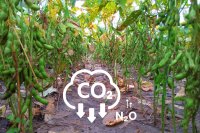
Crop rotations involving legumes significantly increase productivity by enhancing soil fertility, improving nutrient availability, and reducing pesticide overreliance. All legumes have the ability to fix atmospheric nitrogen (N) by colonization of the roots by rhizobacteria of the genus Rhizobium. This nitrogen fixation contributes approximately 20–22 million tons of nitrogen per year worldwide, reducing the need for synthetic fertilizers and providing essential nutrients for plant growth. Nitrogen is a major component of protein and a required nutrient for plants. Legumes in crop rotation generally lead to a reduced need for nitrogen fertilizers, which contribute to 25% of total direct greenhouse gas emissions from agriculture in the EU.
The Role of Legume Rotations in Boosting Productivity and Reducing Costs
The nitrogen fixed by legumes benefits subsequent crops and leads to higher yields, while their residues, which are rich in organic matter, contribute to soil health and nutrient cycling. In addition, legumes improve the physical properties of the soil, such as porosity and water retention, creating favorable growing conditions for other crops in the rotation. These crop rotations also disrupt pest and disease cycles, reducing crop losses and the need for chemical pesticides. The integration of legumes into cropping systems optimizes the efficiency of resource use, including light, water, and nutrients.
At the same time, it reduces the risk of nutrient depletion that often occurs with continuous monocropping systems. Legume-based rotations have been shown to enhance yields not only of staple cereals but also of other companion crops, maximizing land use and productivity. The improved biodiversity within the system fosters resilience to environmental stresses and ensures stable and sustainable agricultural outputs. By reducing input costs and increasing yields, crop rotations with legumes offer farmers both financial and environmental benefits.
VALERECO: Advancing Legume-Based Solutions for Sustainable Farming
To advance sustainable agriculture and enhance the adoption of legume-based cropping systems, the initiative of projects such as VALERECO plays a crucial role. VALERECO (Valorization of Legumes Related Ecosystem Services) is an EU-funded project that aims to promote the adoption of legumes in European agricultural systems. The main objective of VALERECO is to support farmers by providing innovative solutions, promoting knowledge exchange, and fostering the integration of legumes into different agricultural systems. Through collaborative research and practical applications, Valereco aims to strengthen agroecosystems, improve soil health, and boost productivity, thus contributing to sustainable and resilient agriculture. By addressing challenges such as farmer awareness and resource constraints, VALERECO bridges the gap between research and practical implementation.
Further reading
Nitrogen Use Efficiency in Cropping Systems: A Comprehensive Overview
Runner Beans Information and Production Steps
The use of Greek fodder legume varieties for a sustainable, low-input cropping system
A more Resilient Cereal-Cropping System with Legumes