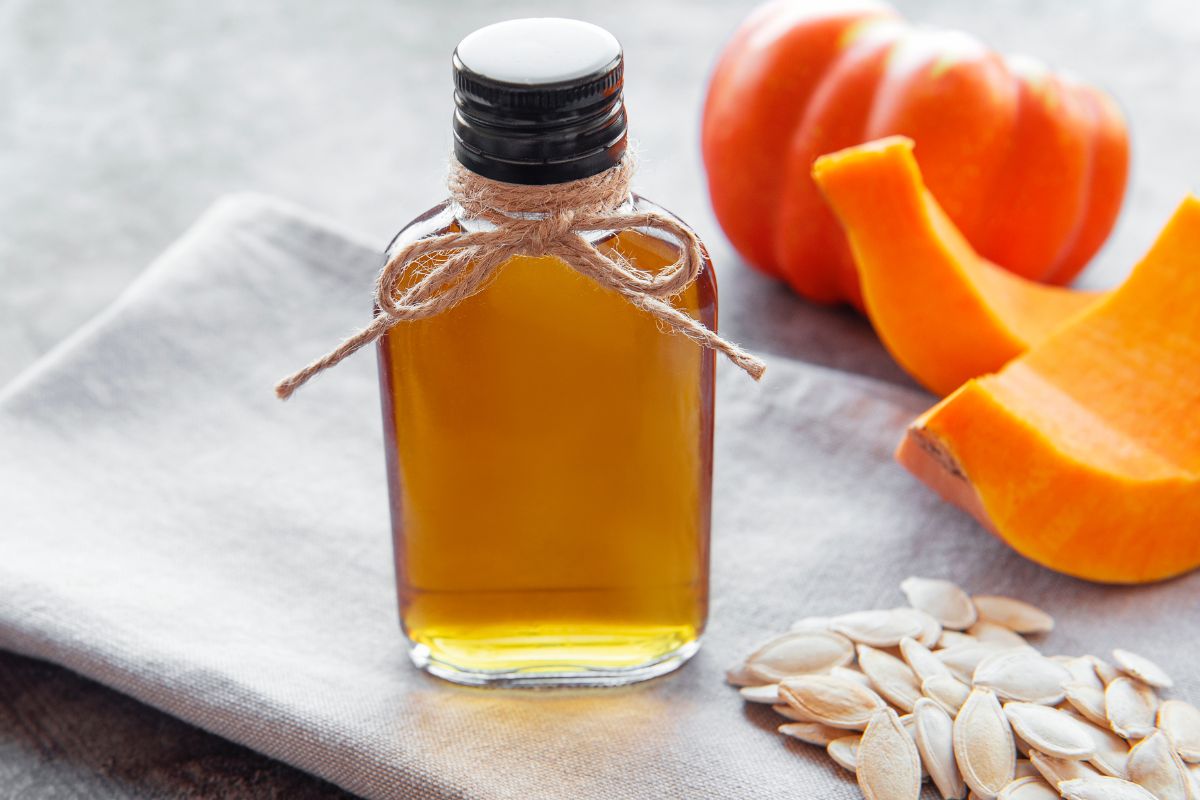
Pumpkin seed oil is an oil extracted from the roasted seeds of the pumpkin fruit. It is rich in unsaturated fats and commonly drizzled on foods and taken as a health supplement. It is prized for its numerous health benefits.
What is pumpkin seed oil?
Pumpkin seed oil is an unrefined, cold-pressed oil extracted from roasted pumpkin seeds. The most common pumpkin varieties used are Cucurbita pepo and Cucurbita maxima, which produce shell-less seeds. These make it easy to press the oil out without hulling.
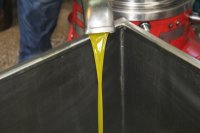
Pumpkin seed oil is much denser and more viscous than other edible oils, with a consistency similar to syrup. When thinly poured, it looks dark green; when thickly poured, it looks reddish brown, as it contains chlorophylls and carotenoids. The flavour is strong, rich and nutty, with a toasted smell, complementing many dishes.
Origins
Pumpkin seed oil originally comes from Styria, a region in southeastern Austria. In the 19th century, farmers in the region began cultivating pumpkins that produced shell-free seeds. It is unknown whether the trait emerged through spontaneous mutation or was introduced from elsewhere.
The seeds were pressed into oil without having to hull them: easy, efficient and economically viable. The oil became widely popular and a staple of various Eastern European cuisines. This pumpkin variety eventually became a common crop and is now called Cucurbita pepo var. Styriaca.
How is it produced?
To produce pumpkin seed oil, the hull-less pumpkin seeds are cleaned, dried, and ground into a paste. That paste is then roasted to develop the oil's nutty flavour and aroma. The roasting process must be long enough to remove blandness and give the oil its characteristic roasted flavour, but not too long as to make it bitter. The roasted paste is then pressed to release the oil. It is not refined like many edible oils, so it retains most of the seeds' nutrients.
The production process requires a large amount of pumpkins, as they yield few seeds and little oil. Producing 1 litre of oil requires about 2.5 to 3 kilograms of seeds, which means many pumpkins. This is why it often has a premium price.
Nutrition and health benefits
Pumpkin seed oil is about 80% unsaturated fat, half polyunsaturated fats (mostly linoleic acid) and half monounsaturated fats (mostly oleic acid). It includes a little bit of saturated fat, too.
The oil also contains natural plant compounds, including vitamin E (tocopherols), carotenoids, phytosterols, and antioxidants. Vitamin E and carotenoids both act as antioxidants, helping protect cells from oxidative damage.
Some research has been done in recent decades about the health benefits of pumpkin seed oil, which may include:
- Prostate health: The most researched use for pumpkin seed oil is for benign prostatic hyperplasia (BPH). The phytosterols in the oil may hamper the conversion of testosterone into the androgen hormone dihydrotestosterone (DHT), which can lead to prostate growth. Some clinical trials supplementing pumpkin seed oil showed improvements in urinary symptoms.
- Hair loss: A 2014 randomized, double-blind, placebo-controlled trial had 76 men with androgenic alopecia take 400 mg of pumpkin seed oil daily for 24 weeks. Average hair counts rose by about 40%, compared with smaller results in the placebo group.
- Bladder and menopause: Studies have examined pumpkin seed oil supplementation for overactive bladder and postmenopausal health. The results included improved urinary comfort and modest improvements in cholesterol and blood pressure.
The findings on pumpkin seed oil's health benefits are promising so far, but they relate to concentrated supplementation, and more research is still needed to be conclusive.
What is Styrian-labelled pumpkin seed oil?
Pumpkin seed oil produced in the traditional Styria region and meeting defined quality standards can be labelled as Styrian pumpkin seed oil. The European Union granted this Protected Geographical Indication (PGI) designation in 1996, protecting its status.
Under this designation, the oil must come from the seeds of the Cucurbita pepo var. styriaca variety, pressing must take place in specified mills in Styria and some neighbouring areas, the traditional method of production must be used, and the product must be 100% pure oil from the first pressing. Styrian pumpkin seed oil producers now encompass over 3,600 growers and about 40 mills.
For buyers, the Styria label on pumpkin seed oil indicates it is 100% pumpkin seed oil, reducing the risk of adulteration, dilution, and blends, and providing traceability to the Styria region.
Can it be used in cooking?
No, pumpkin seed oil should not be used for cooking or frying because it has a very low smoke point (around 120–160°C). Heating breaks down unsaturated fats, making the oil bitter and destroying its nutritional value.
It should only be used cold as a finishing oil, adding extra flavour to dishes. Usually, it is drizzled over soups and vegetables, used in salad dressings, poured over scrambled eggs, ice cream, and much more.
Buyer tips
When buying pumpkin seed oil, here are some useful things to look out for:
- If looking for 100% pumpkin seed oil from Styria, cold-pressed and unrefined, check for the PGI seal.
- The product should be in a dark glass bottle, which prevents oxidation by protecting it from light and heat.
- The oil should smell like toasted nuts. If it smells sour or off, it should not be consumed.
- Refrigerate after opening to extend its life.
- Store unopened bottles in a cool, dark area. It can last for 1 to 2 years.