
Pine bark is the natural outer layer from the trunk of conifers, shredded and put to use in gardening. It usually comes from pine, has a reddish to brown colour and is a durable material that breaks down slowly. It is used mainly as a mulch on beds and pots, and secondarily as a component of growing media when it is composted.
How it works as a mulch
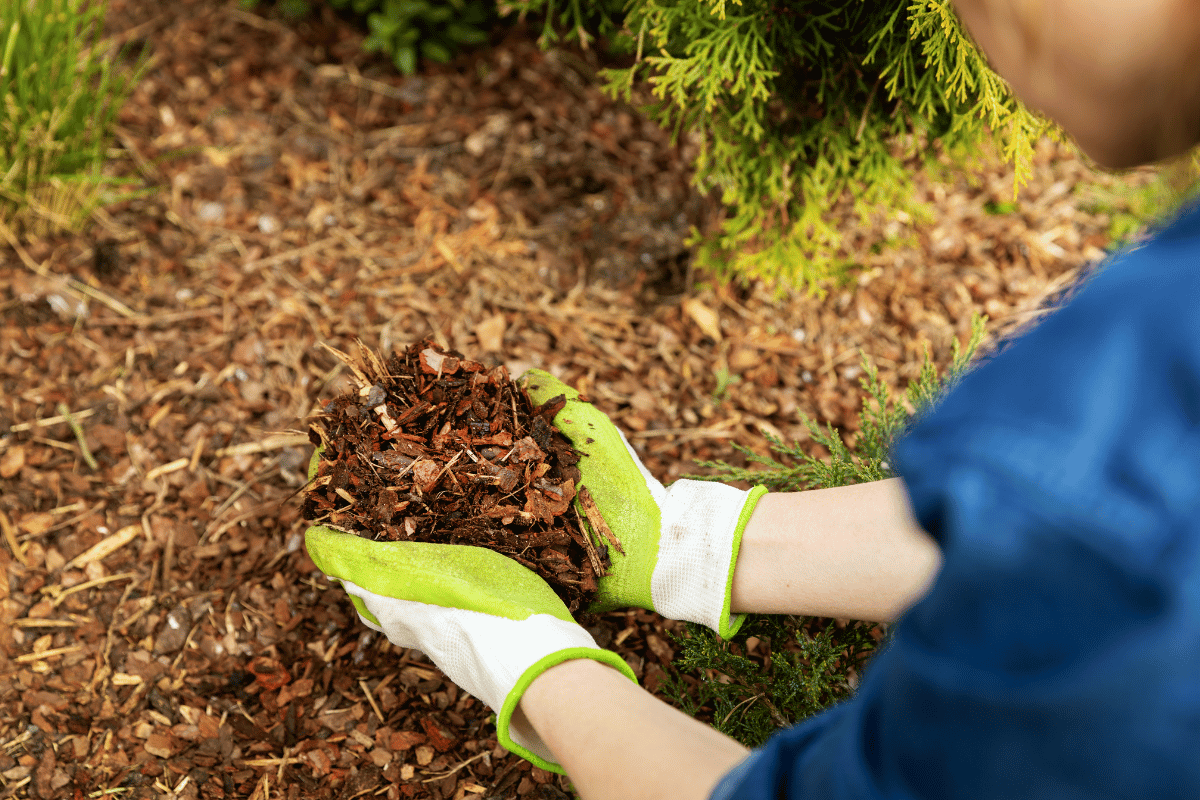
The main use of pine bark is mulching, the covering of the soil surface around plants. Spread in a layer it limits evaporation, so the soil keeps moisture and watering is reduced. At the same time it stops weed seeds from germinating by cutting off their light, and it insulates the root zone from frost in winter and heat in summer. As it breaks down slowly, it gradually adds organic matter to the soil and gives beds a clean, even natural finish.
Which grade and how thick a layer
Pine bark comes in different grades that suit different uses.
| Grade | Best suited to |
|---|---|
| Fine, 10 to 20 mm | Pots and small beds |
| Medium, 20 to 40 mm | Beds, trees and planters |
| Coarse, over 40 mm | Large areas and garden paths |
For pots and beds the fine grade is preferred, while for large areas the coarse grade lasts longer. The layer is usually 2 to 3 centimetres for pots and up to 5 to 7 centimetres for beds, so the soil is covered without smothering the collar of the plants.
How to apply pine bark
Before applying, clear the surface of perennial weeds and make sure the soil is moist, because bark keeps the moisture that is already there rather than creating it. Spread an even layer and keep a few centimetres of distance from the trunk or collar of the plants, avoiding a mound around the base that encourages rot and rodents. On trees the cover extends outward, roughly to the drip line of the canopy. As the bark breaks down gradually, the layer is topped up every one to two years. The best time to apply is spring or autumn, with the soil moist and not frozen.
Pine bark as a growing medium and orchids
Beyond mulching, pine bark is used as a component of growing media, because it gives aeration and a stable structure that does not compact easily. It is the main material in orchid substrates, which need plenty of air gaps around the roots and very little water retention. In that case almost pure bark is used, in a coarse grade, instead of regular soil. Because of its mildly acidic effect, mulching with pine bark also suits acid-loving plants such as rhododendron, azalea, camellia and blueberries.
Fresh or composted bark
This distinction is critical for correct use. Fresh, uncomposted bark is suitable for mulching over the soil, where it acts as a protective layer. If it is mixed into the soil while fresh, the microorganisms that break it down temporarily tie up nitrogen, taking it away from plants. For that reason, when bark is meant to be incorporated into a growing medium, composted bark is used, so it has already stabilised and does not tie up nitrogen.
How it combines with other materials
As a mulch, pine bark works on its own over the potting mix or the soil. As a component of growing media, composted bark gives aeration and structure and is combined with materials that hold water, and it is one of the main alternatives to peat, along with coir and wood fibre, in modern peat-free mixes.
What to watch
Bark is not piled against the trunk, because constant moisture there encourages collar rot and gives shelter to rodents. Fresh bark is kept for mulching over the soil and is not mixed into it, since it ties up nitrogen. Decorative dyed barks are avoided near edible crops. Finally, bark from Mediterranean pine is generally more durable and lasts longer than cheaper, soft grades.
Frequently asked questions
What is pine bark used for
Mainly as a mulch, since it holds moisture, limits weeds, insulates roots and finishes beds neatly. It is also used as a component of growing media, especially for orchids, when it is composted.
How thick a layer of bark do I use
In pots a layer of 2 to 3 centimetres is enough, while in beds the layer reaches 5 to 7 centimetres. Leave some space around the collar of the plants so that too much moisture does not sit against the stem.
Which grade of bark should I choose
For pots and small beds the fine grade, around 10 to 20 mm, is preferred. For larger areas and for longer life, the coarse grade, over 40 mm, is chosen.
How often do I top up pine bark
Bark breaks down gradually, so the layer drops over time. It usually needs topping up every one to two years, depending on the grade, as the coarse grade lasts longer than the fine.
Does pine bark tie up nitrogen
Fresh bark ties up nitrogen only if it is mixed into the soil. As a mulch over the soil it causes no problem. For incorporation into a mix, composted bark is used.
Does pine bark acidify the soil
It has a mildly acidic effect as it breaks down, smaller than is often believed. For most garden plants it does not substantially change the pH when it is used as a mulch.
Sources
- Royal Horticultural Society, Mulches and mulching.
- Royal Horticultural Society, Alternatives to peat-based compost.
- University of New Hampshire Extension, Garden mulches.