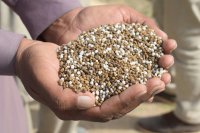
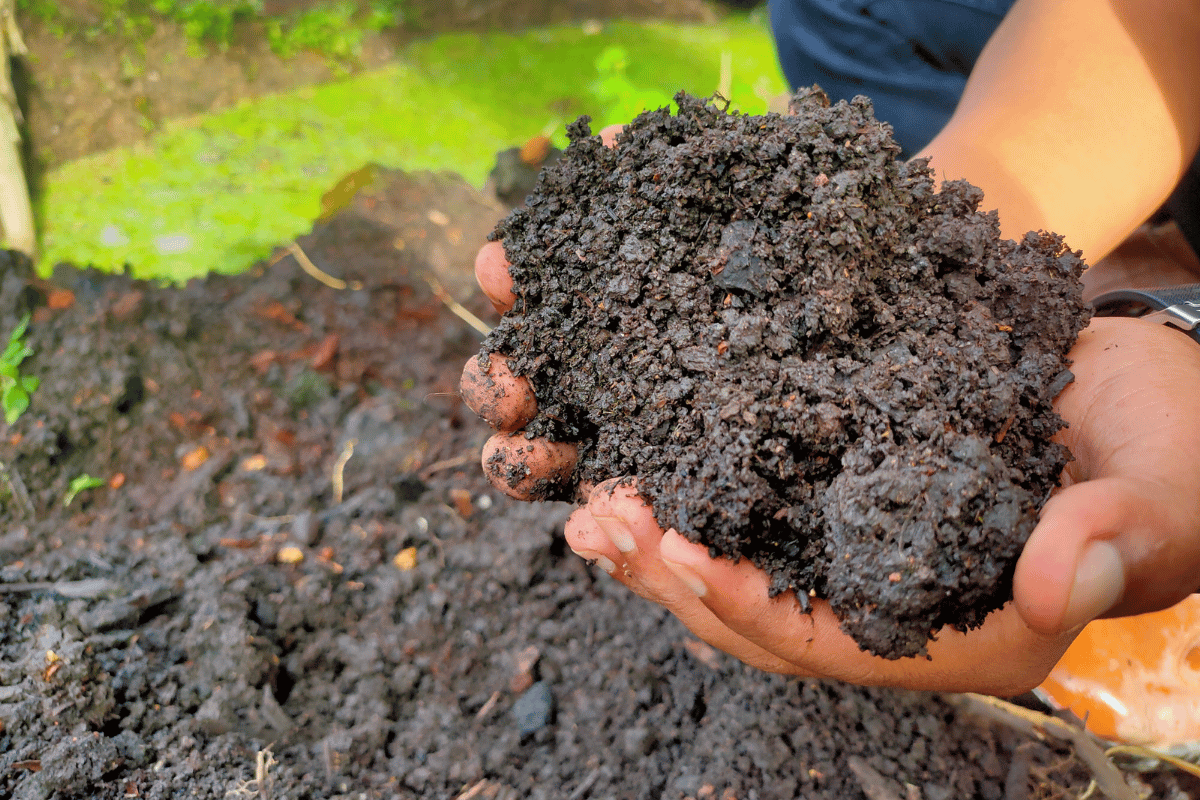
Peat is an organic material formed by the slow, partial decomposition of plants, mainly sphagnum moss and other wetland vegetation, in bogs and marshes with very little oxygen. Because the waterlogging prevents full decay, plant remains build up over thousands of years into a light, fibrous and spongy material, brown to dark in colour, with a large capacity to hold water and air. In gardening it is used as a soil conditioner and as a base ingredient in growing media, because it improves soil structure and supports a healthy root system.
How blonde and black peat differ
The main distinction on the market is between blonde and black peat, which come from a different degree of decomposition. Blonde peat is less decomposed, fibrous and light in colour, with a low acidic pH around 3.5 to 4.5, and it holds a lot of water and air. Black peat is more decomposed, darker and crumblier, less acidic and with more available nutrients.
| Characteristic | Blonde peat | Black peat |
|---|---|---|
| Decomposition | Low, fibrous texture | Higher, crumblier |
| pH | Low, acidic (3.5 to 4.5) | Less acidic |
| Water retention | Very high | High |
| Nutrients | Few | More |
| Best suited to | Acid-loving plants, quality seed starting | General mixes and potting soils |
Beyond colour, peat also comes in different grades. Fine, milled peat suits seed starting, where an even texture around the small seed matters, while coarser peat with larger fibres gives better aeration in potting mixes and for transplanting.
What peat does for the soil
Peat holds many times its weight in water and releases it gradually, while at the same time keeping pores filled with air, so the roots do not suffocate. In heavy, clay soils it loosens the structure and improves drainage, while in light, poor soils it raises the capacity to hold water and nutrients. It is nearly sterile, free of weed seeds and pathogens, which is why it is preferred for seed starting, where young plants are vulnerable. On its own it is low in nutrients, so commercial products are usually enriched with fertiliser. Blonde peat also acidifies the medium, which is put to use for acid-loving plants.
Where peat is used
The most common use is as a medium in seed trays and for transplanting, as well as a base ingredient in potting mixes alongside potting mix components and inert materials. Blonde, acidic peat is the first choice for acid-loving plants such as gardenia, azalea, rhododendron, camellia, blueberries and citrus. In hydrangeas the acidic conditions that peat creates favour blue flowers, while in neutral or alkaline soil the flowers shift towards pink. It is also used in preparing lawns, in improving poor soils, and in biodegradable peat pots that are planted together with the plant so the roots are not disturbed.
How much peat to add and how to manage pH
Peat usually goes in as the base of a mix and is rarely used pure, because over time it compacts and holds too much water. For that reason it is combined with materials that open up the pores, such as perlite, for better aeration and drainage. For acid-loving plants blonde peat is used at a high proportion, to keep the pH low. For other plants, which do not want an acidic environment, blonde peat needs its pH corrected with added lime, something already done in ready-made mixes. One practical point is wetting, since completely dry peat becomes water-repellent and water runs off it, so it is moistened gradually before mixing.
What to watch
Peat is not used pure in pots, because it compacts and suffocates the roots, nor does it replace feeding, since it is low in nutrients. Blonde peat is acidic, so it suits acid-loving plants but needs pH adjustment for everything else. Once it dries out completely, it struggles to take up water again, so it is best not to let it reach full dryness. Finally, because its extraction carries a significant environmental cost, it is worth considering the alternatives, especially for uses where an acidic medium is not needed.
The environmental cost and the alternatives
Peat bogs form very slowly, taking about 100 years for every 10 centimetres, and they store more than twice as much carbon as all the world's forests combined. Extracting and draining them releases that carbon as carbon dioxide and destroys rare ecosystems, which is why the direction internationally is towards peat-free growing media. The Royal Horticultural Society stopped all new use of peat from 1 January 2026. The materials used as alternatives are coir, composted bark, wood fibre and compost, often combined with perlite or sand.
| Alternative | What it offers | Note |
|---|---|---|
| Coir | Water and air retention, neutral pH | Renewable, the most direct replacement for peat |
| Composted bark | Aeration and stable structure | A timber by-product, goes into mixes |
| Wood fibre | Light material with good aeration | Often in professional growing media |
| Compost | Nutrients and organic matter | Enriches poor soils, can be made at home |
Frequently asked questions
How does blonde peat differ from black peat
Blonde peat is less decomposed, fibrous, with a low acidic pH and very high water retention, ideal for acid-loving plants and seed starting. Black peat is more decomposed, darker and crumblier, with more nutrients, suited to general mixes.
Which plants need acidic peat
Acid-loving plants such as gardenia, azalea, hydrangea, rhododendron, camellia, blueberries and citrus benefit from blonde, acidic peat that keeps the pH of the medium low.
How much peat do I add to a mix
Peat goes in as the base of the mix and is combined with perlite or sand for aeration, while it is rarely used pure. For acid-loving plants it is used at a high proportion, while for other plants the acidic blonde peat needs its pH corrected with lime.
Is peat acidic
Blonde peat is acidic, with a pH around 3.5 to 4.5. Black peat is less acidic. For plants that do not want an acidic environment, the pH is corrected by adding lime.
How is peat made and can I make it myself
Peat forms naturally over thousands of years in wetlands and is not produced in the garden. What you can make at home is compost or leaf mould, which work as organic soil conditioners without the environmental cost of peat.
How does peat differ from potting mix
Peat is a raw material, a single ingredient. Potting mix is a ready-to-use planting blend that often contains peat along with other materials, such as perlite, compost and fertiliser, ready for the pot.
What are the alternatives to peat
The most common are coir, composted bark, wood fibre and compost. They are increasingly chosen for environmental reasons, since they avoid the destruction of peat bogs.
Sources
- Royal Horticultural Society, Peat-free information for gardeners.
- Royal Horticultural Society, Peat-free gardening.
- Royal Horticultural Society, Alternatives to peat-based compost.