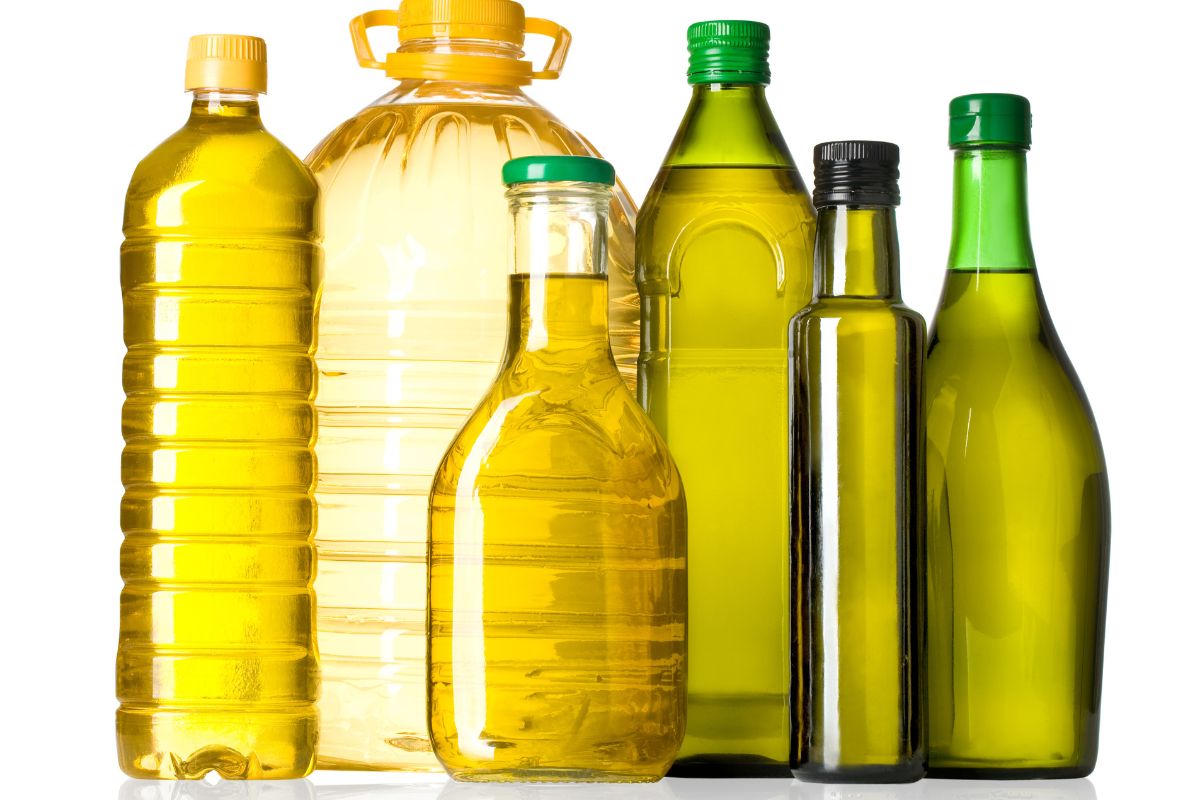
Olive oil is one of the most adulterated foods in the world, and extra virgin olive oil, the most expensive grade, is the biggest target. Fraud can involve blending olive oil with cheaper seed oils, passing off lower-grade refined or lightly deodorized oils as extra virgin, adding colourants such as chlorophyll, and falsely labelling the oil's origin.
To verify authenticity, olive oil is tested for its fatty acid profile, sterol composition, triglyceride composition, stigmastadienes, and wax content before being evaluated by a trained sensory panel. For a buyer, it is important to demand a full authenticity certificate, verify origin, use independent testing for large orders, and watch out for strangely low prices.
Why is olive oil fraud so common?
Extra virgin olive oil commands a substantial premium over other olive oil grades and an even larger one over seed oils, which is strong a financial incentive for fraud. Once blended, it is hard to tell apart by eye or even by casual taste. When prices spike, as they did in 2023–24, the margin from diluting or mislabelling widens, and fraud and theft rise with it.
Edible oils are consistently identified by the joint Europol–Interpol Operation OPSON as one of Europe's most frequently adulterated, diluted, and illicitly traded food categories. Law enforcement actions to seize adulterated extra virgin oil are common. The EU uses the European Anti-Fraud Office (OLAF) and national authorities to trace supply chains and dismantle criminal networks.
A 2023 Europol operation arrested many people in Spain and Italy for selling lampante oil as premium extra virgin olive oil and seized over 260,000 litres of lampante oil, while a separate Italian seizure that year uncovered hundreds of thousands of kilograms of blended vegetable oil labelled as olive oil. Italian authorities have estimated their fraud-related losses at billions of euros a year.
The main types of olive oil fraud
Blending with cheaper oils: One method of adulteration is diluting olive oil with a cheaper oil like soybean, sunflower, corn, rapeseed/canola or palm oil. Hazelnut oil is often used as well because its composition is very similar to olive oil and is more difficult to detect. Not only is this fraudulent, but it is also a safety risk, as undeclared seed or nut oils are hidden allergens, which could cause health problems or even death among unaware consumers. In the worst cases, non-food oils, dyes like Sudan colourants, and reused oil are also used.
Selling lower grade oils as extra virgin: The most common method is selling a lower olive grade as extra virgin. Refined olive oil, olive pomace oil, or mildly deodorized lampante oil (to remove its defects) are sold as extra virgin and often go unnoticed.
Faking origin: Premium single-origin and PDO/PGI oils are highly valued and more expensive, making them vulnerable to fraud. Oil produced in one country is labelled as the product of another, usually a more marketable one. Sometimes oil produced from olives grown in one country is labelled as originating from the country where it was bottled or packed, yet bottling in a country does not, by itself, make that country the country of origin. Protected-origin and single-estate claims need documentary proof.
Faking freshness: Old stock is relabelled as current-harvest, or blended with fresh oil. Standard quality tests may not detect this, but the age markers in the certificate-of-analysis guide, including fatty-acid ethyl esters, pyropheophytins, and diacylglycerols, would.
How can fraud be detected?
Laboratories analyze olive oil samples against International Olive Council standards and other applicable regional regulations. Here is what is tested and what each indicates:
● Fatty acid composition (GC): If the levels of linoleic acid, linolenic acid, or trans fatty acids fall outside the normal range for olive oil, this indicates dilution with other oils.
● Sterol composition: Detects the addition of seed oils, for example, elevated campesterol may indicate corn or rapeseed oil, and sterol profiles can reveal sunflower oil at concentrations of about 1%.
● ΔECN42 (triglyceride analysis): This indicates very low-level seed-oil adulteration, down to about 1–3%.
● Stigmastadienes: This indicates that refined oil was blended into virgin oil, as these compounds form during refining and shouldn't be present in a true virgin oil.
● Wax content: Indicates whether olive pomace oil has been added.
● Fatty-acid ethyl esters (FAEE): Identify deodorized, soft-refined oil, and poor-quality fermented fruit.
● UV absorbance (K270, ΔK): Shows if refined oil is present.
● Sensory (organoleptic) panel: Trained tasters identify any defects that mark an oil as below extra virgin, which chemistry alone can miss.
Beyond these tests, laboratories can use advanced methods like stable-isotope ratio analysis to find out geographic origin and to catch similar-profile adulterants like hazelnut that fatty-acid analysis may miss, DNA analysis for cultivar and origin, spectroscopic fingerprinting (NIR, FTIR, NMR), and machine-learning models trained on spectral and image data.
One test is not enough
The problem is that sophisticated adulteration is carried out so that each individual number remains within range. Only when several markers are interpreted together, and cross-checked against provenance, does an adulterated oil come to light.
Standard grading tests also don’t detect mild deodorization, even though it's one of the most common forms of olive oil fraud. Catching it relies on inferring it from specialist markers such as elevated FAEE, stigmastadienes, and pyropheophytins. This means that an oil can show normal acidity and peroxide value and still be fraudulent.
What to watch out for
Be wary of very low prices: Genuine extra virgin is not cheap to produce and still has to be sold at a reasonable price. An extra virgin olive oil quoted well below the prevailing market price is the strongest single signal that it may be adulterated or mislabelled.
Verify provenance: Require origin documentation, lot-level traceability, and valid PDO/PGI or single-origin certification, and remember that the packing country is not always the same as the origin country.
Test independently for new suppliers and large orders: Commission testing by an accredited third-party laboratory and a pre-shipment inspection rather than relying solely on the seller's own certificate of analysis. Then, tie the result to your contract and payment so that funds are released only against verified authenticity.
Buy through verified channels. Recognized certification schemes and vetted supplier marketplaces exist to uphold this diligence, which helps avoid the risk of fraud.