Co-author: Collins Lawrence Omogiade
Milk is a rich source of essential nutrients, including proteins, fats, vitamins, and minerals. The composition of milk varies across species, and fortification has played a key role in enhancing its nutritional value.
Milk Composition and Variations Across Species
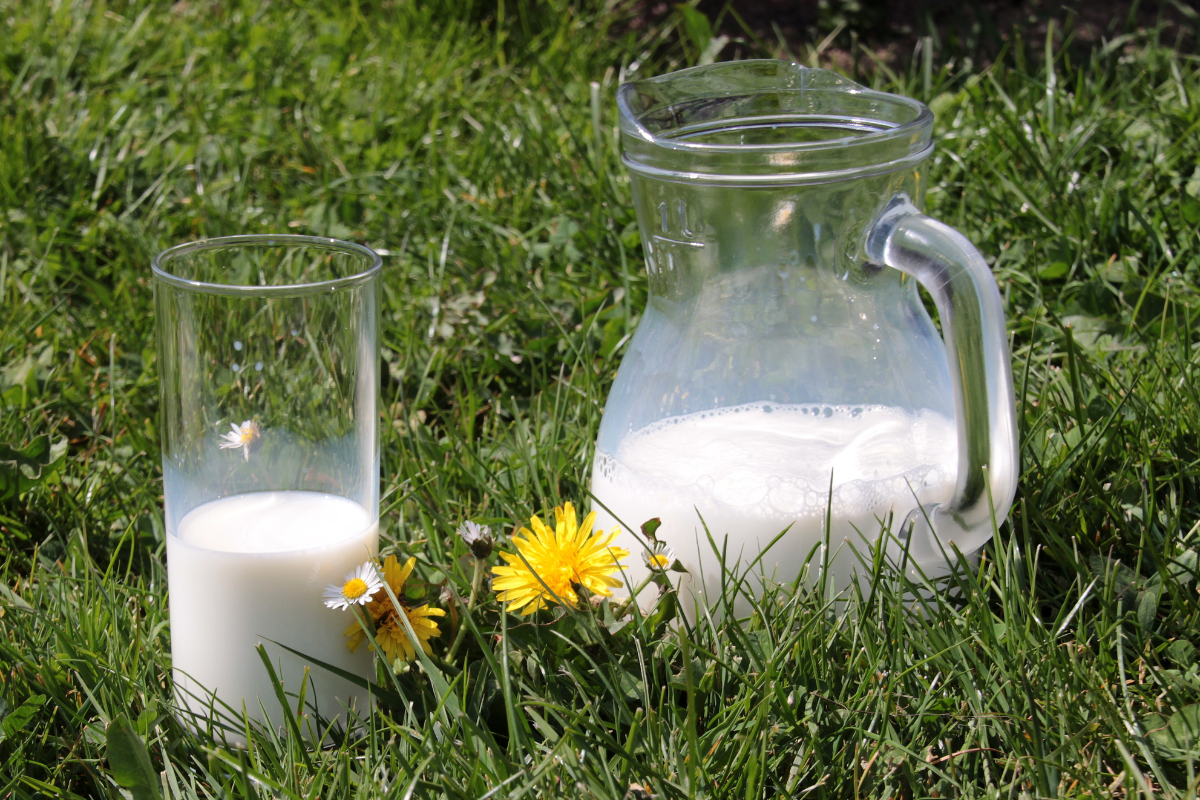
Milk is typically a white liquid, but its appearance varies across species. For instance, buffalo milk appears creamy white, while reindeer milk has a bluish tint due to differences in fat and protein content (Elbagerma et al., 2014). The pH of milk ranges from 6.7 to 6.9, classifying it as slightly acidic. Notably, colostrum—the first milk produced postpartum—differs from mature milk in composition, containing higher levels of immunoglobulins (antibodies), proteins, and vitamins to support neonatal immunity (Uruakpa et al., 2002).
Milk composition varies significantly across species, breeds, lactation stages, and diets, reflecting evolutionary adaptations to environmental and nutritional demands (Skibiel et al., 2013). These variations highlight the potential of non-cattle milk, such as goat, sheep, and camel milk, which are often considered more similar to human milk in terms of composition and digestibility. This makes them promising candidates for specialized nutritional products, particularly for infants, children, and the elderly (Roy et al., 2020).
Milk Composition and Biochemistry
The composition of milk is a key factor in its nutritional value (Figure 1). Milk comprises approximately 87% water and 13% total solids, including fat (3.7%), protein (3.4%), lactose (4.8%), and minerals (0.7%) (Månsson, 2008; Gadzama, 2017). The solid-not-fat (SNF) fraction, which includes proteins, lactose, and minerals, forms the basis for dairy processing into products like cheese and yogurt. Milkfat exists as emulsified globules surrounded by a phospholipid membrane, which prevents coalescence and influences texture and creaminess (Singh, 2006).
Key Components of Milk
- Water: As the primary constituent, water acts as a solvent for milk’s nutrients and influences its physical properties, such as viscosity and freezing point.
- Milk fat: Milkfat exists as emulsified globules surrounded by a phospholipid membrane, which prevents coalescence (Singh, 2006). The size of these globules affects texture and creaminess, with smaller globules enhancing mouthfeel in products like ice cream (Michalski et al., 2004).
- Milk Proteins: Milk proteins include caseins (80%) and whey proteins (20%). Caseins form micelles that bind calcium phosphate, enabling efficient nutrient delivery (Goff, 2010). Whey proteins, such as α-lactalbumin and β-lactoglobulin, remain soluble after casein removal and are valued for their high bioavailability (Lönnerdal, 2003).
- Lactose: This disaccharide, unique to mammalian milk, influences milk’s osmotic balance (Figure 1). Approximately 68% of humans experience lactose intolerance due to reduced lactase enzyme activity post-weaning (WHO, 2021).
- Minerals and Vitamins: Milk is rich in calcium, potassium, and phosphorus, with a 250 mL serving providing 30% of the daily calcium requirement (Weaver et al., 2016). Fortification with vitamin D is common in commercial milk to enhance calcium absorption (FDA, 2020).

Figure 1. The nutritional composition of milk
Fortification of Milk: Enhancing Nutritional Value
The nutritional profile of milk makes it an ideal candidate for fortification, a strategy used to address nutrient deficiencies and enhance its functional properties. Fortified milk can provide additional vitamins and minerals, such as vitamin A, vitamin D, iron, and zinc, which are critical for public health, especially in developing countries. For example, vitamin D fortification enhances calcium absorption and supports bone health (Bailey et al., 2010), while iron fortification addresses iron deficiency anemia, a prevalent issue in many populations. These efforts have been shown to improve nutritional status and reduce the prevalence of micronutrient deficiencies, making fortified milk a valuable tool in global nutrition programs.
Comparative Composition of Cattle and Non-Cattle Milk
Milk from different species varies significantly in composition, with non-cattle milk like goat, sheep, and camel milk offering unique nutritional benefits (Table 1).
Protein Profiles
Non-cattle milk, such as goat and camel milk, have lower casein-to-whey protein ratios compared to cow milk, making them more digestible and suitable for individuals with cow milk protein allergy (Roy et al., 2020).
Fat Composition
Goat and sheep milk are rich in medium-chain triglycerides, which are more easily digested than the long-chain triglycerides found in cow milk (Roy et al., 2020).
Digestive Dynamics
Non-cattle milk form softer curds during gastric digestion, leading to faster nutrient delivery and better tolerance, particularly for infants and the elderly (Roy et al., 2020).
|
Table 1: Average Composition (%) of Camel Milk Compared to Milk from Other Farm Animals |
||||
|
Constituents |
Camel |
Cow |
Ewe |
Goat |
|
Moisture |
86.9 |
87.0 |
80.8 |
87.7 |
|
Protein |
3.4 |
3.5 |
5.5 |
3.3 |
|
Fat |
4.1 |
3.9 |
5.3 |
4.1 |
|
Lactose |
3.7 |
4.9 |
4.5 |
3.9 |
|
Solids-not-fat |
8.9 |
9.1 |
11.8 |
8.2 |
|
Ash |
0.7 |
0.7 |
0.9 |
0.8 |
Adapted from Alhadrami et al. (2016)
Implications for Human Nutrition
The unique composition and digestive properties of non-cattle milk make them valuable for developing specialized nutritional products. Their softer curd formation and faster digestion rates may benefit infants, the elderly, and individuals with digestive disorders. Additionally, the hypoallergenic potential of certain non-cattle milk, such as camel milk, offers opportunities for addressing cow milk protein allergy.
Conclusion
Milk's diverse composition across species highlights its nutritional significance and adaptability. Fortification enhances its value, addressing nutrient deficiencies and improving public health. Non-cattle milk offer unique benefits, particularly for individuals with digestive concerns. As dairy science evolves, optimizing milk's nutritional potential will remain crucial for global nutrition.
References
- Alhadrami, G. A., & Faye, B. (2016). Animals that Produce Dairy Foods: Camel. In Reference Module in Food Sciences. Elsevier.
- Bailey, R. L., Dodd, K. W., Goldman, J. A., Gahche, J. J., Dwyer, J. T., Moshfegh, A. J., Sempos, C. T., & Picciano, M. F. (2010). Estimation of total usual calcium and vitamin D intakes in the United States. Journal of Nutrition, 24, 817–822.
- Dairy Australia. (2021). Australian Dairy Sustainability Framework. Retrieved from Dairy Australia
- Elbagermi, M. A., Alajtal, A. I., & Edwards, H. G. M. (2014). A comparative study on the physicochemical parameters and trace elements in raw milk samples collected from Misurata-Libya. SOP transactions on analytical chemistry, 1(2), 15-23.
- FAO. (2023). Global Dairy Market Report. Food and Agriculture Organization of the United Nations. Retrieved from Food and Agriculture Organization of the United Nations (FAO)
- FDA. (2020). Food Fortification Guidelines. U.S. Food and Drug Administration. Retrieved from U.S. Food and Drug Administration (FDA)
- Gadzama, I. U., & Yashim, S. M. (2023). Soymilk replacer versus whole milk: Effects on calf performance. Paper presented at the Dairy Research Foundation 2023 Symposium, Sydney, Australia. https://www.researchgate.net/publication/383181646_Soymilk_Replacer_versus_Whole_Milk_Effects_on_Calf_Performance_Australian_Dairy_Symposium
- Gadzama, I. U. (2017). Utilization of Soymilk as Milk Replacer in Feeding Friesian x Bunaji Dairy Calves (Master's thesis, Ahmadu Bello University, Zaria, Nigeria).
- Gomes, C., López-Matayoshi, C., Remolins, G., Gibaja, J. F., Subirà, M. E., Fondevila, M., Palomo-Díez, S., López-Parra, A. M., Labajo-González, E., Lareu, M. V., et al. (2025). Analysing Milk and Dairy Consumption in Ancient Societies: Bioarchaeological, Evolutionary and Human Social Perspectives. World, 6, 27.
- Goff, D. (2010). Raw milk quality. Dairy Science and Technology, University of Guelph, Food Science, Guelph, Ontario, Canada. Retrieved from Raw Milk Quality – Uoguelph
- Gupta, D. (2021). The ULTIMATE guide to choose MILK – Which milk is the BEST? – Swadesi Way. Swadesi Way. Retrieved from Raw Milk Quality
- Lönnerdal B. (2003). Nutritional and physiologic significance of human milk proteins. The American journal of clinical nutrition, 77(6), 1537S–1543S.
- Månsson H. L. (2008). Fatty acids in bovine milk fat. Food & nutrition research, 52, 10.3402/fnr.v52i0.1821.
- Michalski, M. C., Ollivon, M., Briard, V., Leconte, N., & Lopez, C. (2004). Native fat globules of different sizes selected from raw milk: thermal and structural behavior. Chemistry and physics of lipids, 132(2), 247–261.
- Park, Y. W. (2009). Bioactive components in milk and dairy products. Wiley-Blackwell.
- Roy, D., Ye, A., Moughan, P. J., & Singh, H. (2020). Composition, Structure, and Digestive Dynamics of Milk From Different Species-A Review. Frontiers in nutrition, 7, 577759.
- Sarkar, P., Dhumal, C., Panigrahi, S. S., & Choudhary, R. (2015). Traditional and Ayurvedic foods of Indian origin. Journal of Ethnic Foods, 2(3), 97-109.
- Singh, H. (2006). The milk fat globule membrane—A biophysical system for food applications. Current Opinion in Colloid & Interface Science, 11(2-3), 154–163.
- Skibiel, A. L., Downing, L. M., Orr, T. J., & Hood, W. R. (2013). The evolution of the nutrient composition of mammalian milk. The Journal of animal ecology, 82(6), 1254–1264.
- Uruakpa, F. O., Ismond, M. A. H., & Akobundu, E. N. T. (2002). Colostrum and its benefits: A review. Nutrition Research, 22(6), 755–767. Colostrum and its benefits: a review
- Weaver, C. M., Gordon, C. M., Janz, K. F., Kalkwarf, H. J., Lappe, J. M., Lewis, R., O'Karma, M., Wallace, T. C., & Zemel, B. S. (2016). The National Osteoporosis Foundation's position statement on peak bone mass development and lifestyle factors: a systematic review and implementation recommendations. Osteoporosis international: a journal established as result of cooperation between the European Foundation for Osteoporosis and the National Osteoporosis Foundation of the USA, 27(4), 1281–1386. The National Osteoporosis Foundation position statement on peak bone mass development and lifestyle factors: a systematic review and implementation recommendations | Osteoporosis International
- WHO (2021). Lactose Intolerance and Health. World Health Organization. Retrieved from World Health Organization (WHO)