An olive picked straight from the tree is inedible because its flesh contains oleuropein, a phenolic compound with an intensely bitter taste. Curing is the process that removes it, making the fruit palatable. Since oleuropein is water-soluble, the traditional method relies simply on soaking and regularly changing the water. This guide covers which olives suit each home method, how to cure step by step in water, directly in brine and with dry salt, how to make the preserving brine correctly, and the signs that a batch has to be thrown away.
The three home curing methods
| Method | Which olives | Duration | Result |
|---|---|---|---|
| Water curing | Cracked or slit green olives, whole black olives | 8 to 12 days for slit olives, 10 to 20 or more for whole ones | The most common home method, with a flavour you can check day by day |
| Brine curing | Whole olives, green or black, left uncut | Several months | Curing and fermentation happen together, giving a fuller flavour and longer keeping |
| Dry salt curing | Fully ripe black olives | A few weeks | Wrinkled fruit with an intense, salty flavour |
The flavour and texture of each style depend partly on the curing process used. Brined olives undergo a natural fermentation not unlike that of traditional dill pickles and sauerkraut, driven by lactic acid bacteria, which is where much of their depth of flavour comes from.
Choosing and preparing the olives
Table olives are mostly large-fruited varieties whose flesh separates easily from the stone, the best-known being Kalamon, Konservolia, Halkidiki, and Throumbolia. Stone size and the ratio of flesh to stone are among the main quality traits of table olives, and large-stoned varieties such as Kalamon and Konservolia are the classic choices for the table.
Green olives are picked once the fruit has reached full size but before it changes colour, and give firm, crisp flesh. Black olives are picked fully ripe, with softer flesh and more oil. Ripeness at picking determines the result, making harvest timing the first decision.
Sorting comes before any method. Remove any fruit that is bruised, soft, shows signs of rot, or has olive fly punctures, because these spoil quickly and can ruin a whole batch. Wash the sound fruit well in cold water.
Water curing step by step
This is the most widespread method in Greek households and takes five steps:
- Slitting or cracking: green olives are slit lengthwise with a sharp knife in two or three places, or cracked lightly with a stone or a wooden mallet so the flesh splits without crushing the stone. Black olives usually go in whole
- Submerging: place the olives in a glass, ceramic or food-grade plastic container and cover them completely with cold water, with a plate or weight on top so none float to the surface
- Changing the water: pour off the bitter water and replace it with fresh every 24 hours, or twice a day for a quicker result
- Tasting: from the eighth day onward, taste one olive each day until the bitterness drops to the level you want
- Moving to brine: once cured, the olives go into the preserving brine
Slit and cracked green olives are usually cured within 8 to 12 days, while whole olives, particularly black ones, need 10 to 20 days or longer. For the Kalamon variety, the traditional technique is to slit the fruit before soaking.
Some cooks use a faster route, changing the water twice a day with hot rather than cold water, which completes curing in about three days. It is quick, but the flesh softens noticeably, and the olives lose their crisp texture.
Curing directly in brine
Olives can go whole, without slitting or cracking, straight into salted water. In that case, curing and lactic fermentation occur simultaneously, as lactic acid bacteria develop in the brine. The process is slow and can take several months, but it gives the fullest flavour and the longest shelf life.
The traditional naturally cured green olives of Halkidiki follow this principle, with part of the oleuropein leaching out of the flesh naturally into the brine, without any lye.
Dry salt curing
Fully ripe black olives can also be cured with dry salt, using no water at all. The olives are layered in a container that drains, alternating with coarse salt, and turned regularly. The salt draws out the fluids and the bitterness with them, so the fruit shrivels and develops an intense flavour. Excess salt is rinsed off before eating.
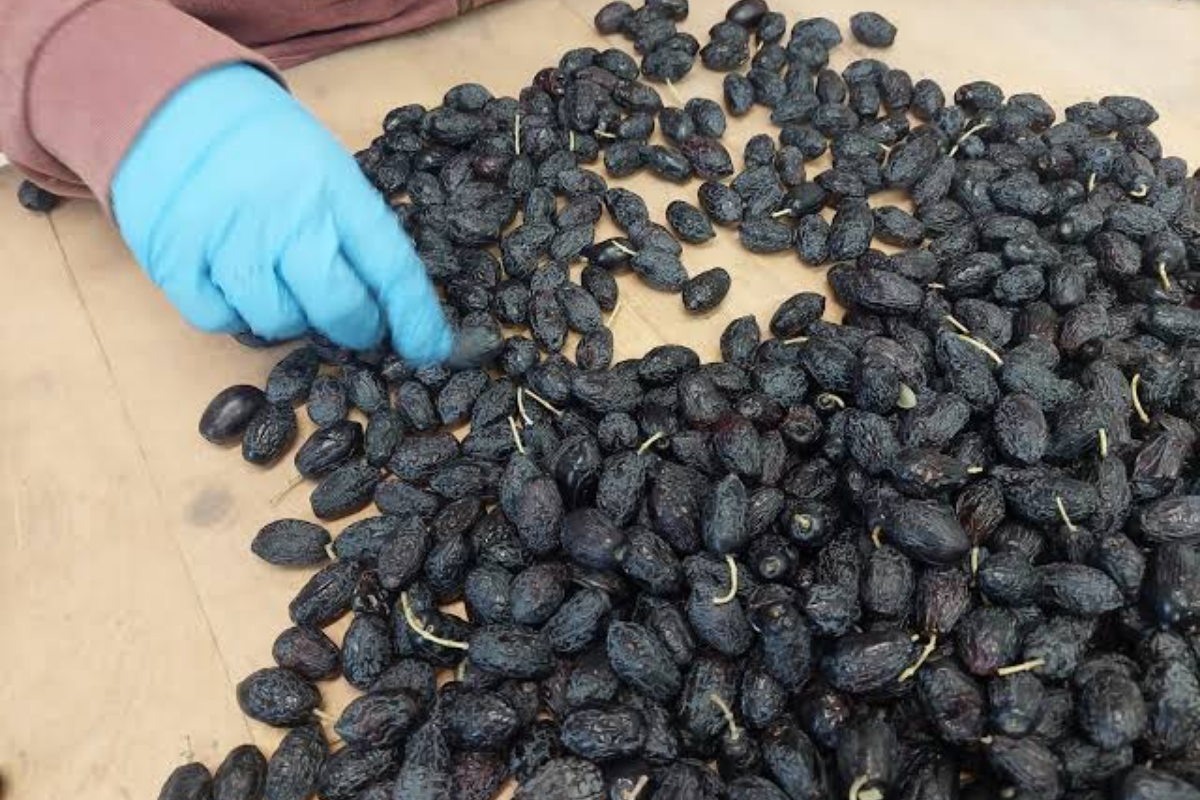
Dry salt draws out the fluids and the bitterness, so the fruit shrivels and takes on an intense flavour.
The preserving brine
After curing, the olives are kept in brine, a solution of salt in water. The typical strength for storage is 8 to 10%, meaning 80 to 100 grams of salt per litre of water. A few points decide success:
- Weigh the salt: tested recipes specify salt by weight, because a cup of coarse salt weighs something different from a cup of fine salt
- Pure salt with no additives: pickling salt is the simplest choice, since the anti-caking agents in table salt cloud the brine, and reduced-sodium salt substitutes are never used for preserving
- Chlorine-free water: bottled water, or tap water left to stand uncovered for a few hours
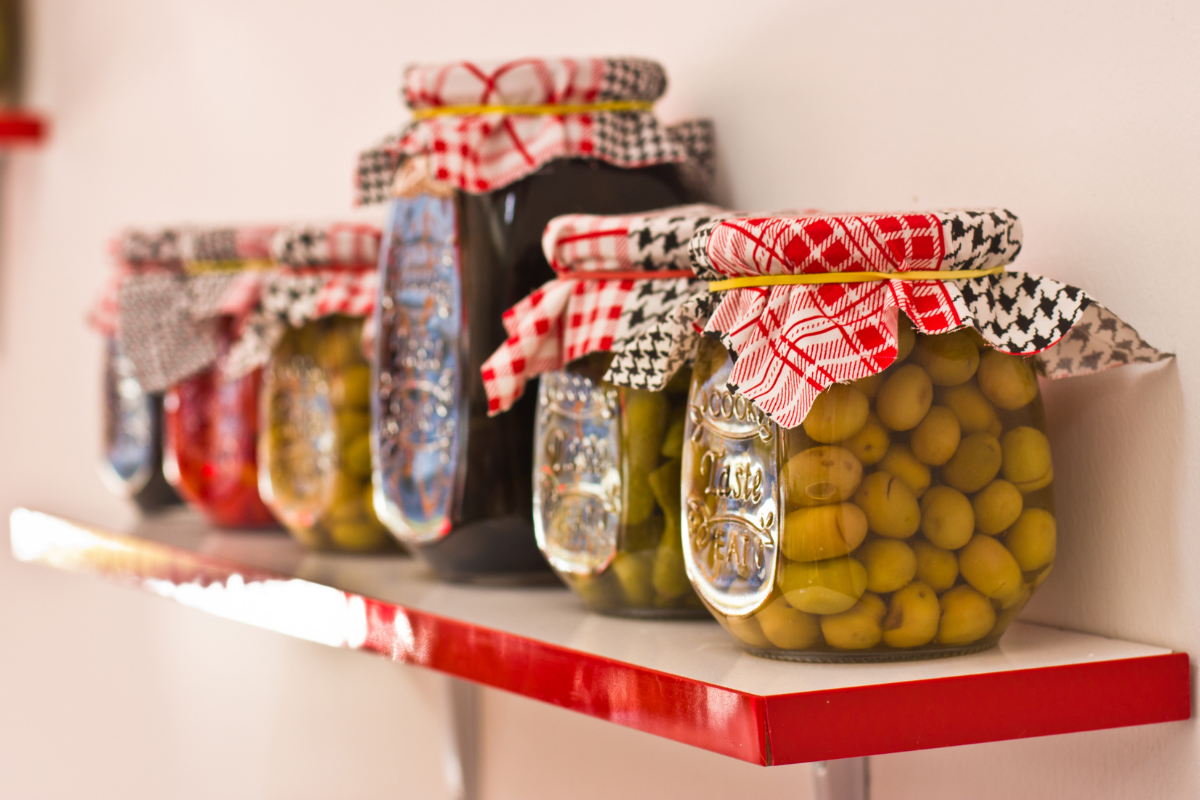
- Sterilised jars: cover the olives completely with brine, and a thin layer of olive oil on top limits contact with air
- Flavourings: oregano, garlic, lemon, bay or fennel, to taste
The well-known egg test, where a fresh egg floats showing a coin-sized patch above the surface, is a traditional way of judging brine density. An egg's buoyancy changes with its age, though, so the test is no substitute for the salt weight specified in a tested recipe.
Vinegar-cured Kalamon olives
Kalamon olives, once cured in water, usually go into brine with added vinegar, which gives them their characteristic tangy flavour. A simple version is half a kilo of coarse salt in five litres of water, with vinegar and lemon, and a layer of olive oil on top. The vinegar increases the liquid's acidity and helps preserve it.
Why lye is not for home use
Commercial processors cure most table olives with a dilute solution of sodium hydroxide, known as lye, which chemically breaks down oleuropein within hours. At home, this method is not recommended. Lye is highly caustic and causes severe burns to the skin and eyes; it requires containers resistant to alkali and precise timing, and incomplete rinsing leaves residues in the fruit. The natural methods, water, brine and dry salt, cover every home's needs safely.
When to throw a batch away
A thin white film of yeasts on the surface of the brine is common during fermentation and can be skimmed off with a spoon. A batch is discarded without tasting, however, when any of the following appears:
- Soft, mushy flesh that falls apart when touched
- An unpleasant smell, putrid or sharply sour
- Coloured mould that has spread into the fruit itself rather than staying on the surface of the liquid
- Bulging lids or heavy gas production in a sealed jar
Whenever in doubt, do not taste the olives and discard them.
Frequently asked questions
How long does it take to cure olives in water?
Slit or cracked green olives usually cure in water for 8 to 12 days, with daily water changes. Whole olives, especially black ones, need 10 to 20 days or longer.
What is the right salt ratio for olive brine?
For storage, use 80 to 100 grams of salt per litre of water, resulting in a brine of 8 to 10%. Weigh the salt, since cup or spoon measures give different amounts depending on how coarse it is.
Can olives be cured without cutting them?
Yes, either with daily water changes over a longer period, or by placing them straight into brine. In the second case, curing and fermentation occur together, and the process takes months.
What is the fastest way to cure olives at home?
Cracked olives with the water changed twice a day, which cure in about a week. Hot water cuts that to about three days, at the cost of the fruit's texture.
Why did my olives go soft in the brine?
Usually because the brine was too weak, because bruised fruit was not removed at sorting, or because of prolonged soaking in hot water, if the flesh is mushy or the smell unpleasant, discard the batch.
Can I cure olives with lye at home?
Lye is not recommended at home because it is highly caustic and requires special equipment, protection, and precise timing. The natural methods using water, brine, and dry salt are safe and meet every home's needs.
Important notes
The safety of home-cured olives depends on correct brine strength, clean containers and sound fruit, so always follow tested proportions. Anyone intending to sell table olives must comply with their country's food safety legislation.
References
- University of California Agriculture and Natural Resources, Olives, safe methods for home pickling, Publication 8267.