



European Fresh Fruit Market Update: Early September
The European fresh fruit market in week 36 continues the critical transition period from late summer harvests to early autumn pickings. This update provides an overview of the current market state using data from official wholesale price bulletins and agricultural reports across key European trading centers.
Stay up-to-date with our weekly fresh fruit market digest
Fruits in Season
Pip Fruit – New crop starting
- Apples: Early varieties are being harvested across northern and central Europe. Germany and Poland expect large crop. EU production expected to be similar to last year's.
- Pears: Early varieties being picked and marketed. EU production expected to be higher than last year’s.
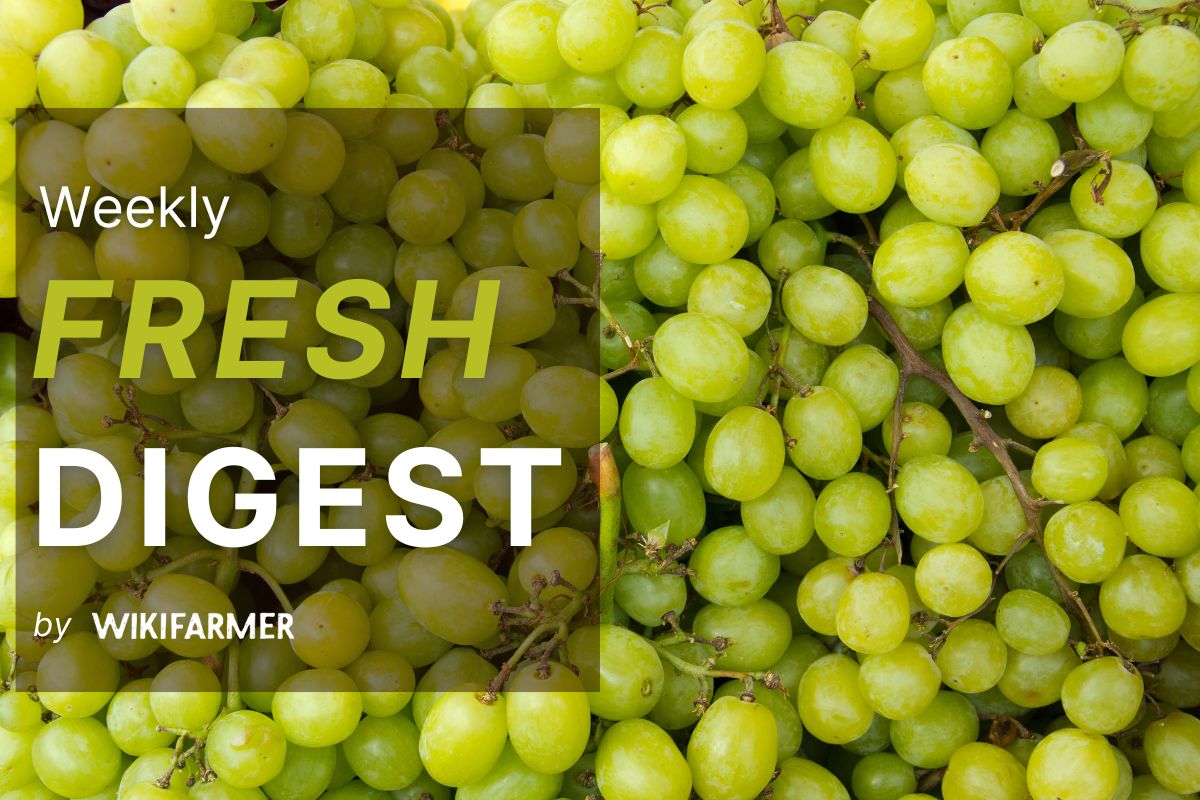
Grapes – Early-mid harvest
- Table & wine grapes: Harvest in full swing in southern Europe. Sicily, Puglia and other Italian regions supply large volumes; Spain and France also active. Rapidly increasing volumes placing pressure on prices as September advances.
Figs – Early season
- Figs: Mediterranean production began slightly earlier due to warm end-of-summer weather. Supply limited in opening weeks, but quality excellent.
Melons & Watermelons – Late season
- Melons: Production still active but winding down. Some price instability. Supplies are shrinking and reliance shifting to late-planted fields.
- Watermelons: Harvests in their final weeks. Production higher this year, but oversupply created pressure on grower returns. Volumes declining with market tightening week by week.
Stone Fruit – Final phase
- Peaches & Nectarines: Production winding down; only late flat peaches and nectarines continue in smaller yields.
- Plums: Still available. Good yields in Germany.
- Cherries & Apricots: Main seasons have ended.
Berries – Season ending
- Strawberries: Northern and central European production tapering off. Germany’s late-season yields reduced. Protected crops extend supply but volumes limited.
- Raspberries: Field production declining, though late varieties remain. Regional overlaps in timing create price swings.
- Blackberries: Availability shrinks as field seasons end; supply limited to late-protected crops.
- Blueberries: Main harvest largely completed in northern and eastern Europe, only residual volumes left. Quality fruit commands premium, but quantities dropping quickly.
Production Challenges & Market Risks
- Weather: Rain and scab have reduced some Mediterranean pear yields; spring frosts reduced some cherry yields in Poland; late-summer heat accelerated ripening in some grape zones.
- Prices: Grapes face downward pressure as volumes surge; melons and watermelons in Spain saw oversupply earlier, with some prices below costs; berries face higher costs as field volumes fade.
- Regional variation: Strong apple crops in Germany and Poland contrast with smaller outputs in parts of Central/Eastern Europe, creating uneven market dynamics.
- Labour & costs: Harvest labour shortages and high input costs continue to squeeze margins, especially in southern fruit and late strawberries.
- Logistics & perishability: Short-window crops like figs risk losses if not sold quickly; patchy late-season stone fruit could cause local shortages or price spikes.
Wholesale Prices
Spain
|
Fruit |
Variety |
Most Frequent Price (€/kg) |
|
Blueberries |
Unspecified |
9.60 |
|
Plums |
Golden |
1.50 |
|
|
Tolosa |
2.00 |
|
|
Queen Claudia |
3.30 |
|
|
Purple |
1.60 |
|
Raspberries |
Unspecified |
18.00 |
|
Strawberries |
Unspecified |
4.75 |
|
Pomegranites |
Unspecified |
3.00 |
|
Prickly pears |
Unspecified |
2.25 |
|
Figs |
Green |
3.47 |
|
|
Black |
3.47 |
|
Apples |
Granny Smith |
1.74 |
|
|
Fuji |
2.30 |
|
|
Golden |
1.76 |
|
|
Royal Gala |
1.60 |
|
|
Reineta |
2.04 |
|
|
Pink Lady |
2.16 |
|
|
Starking |
2.30 |
|
Peaches |
Red |
1.42 |
|
|
Yellow |
1.55 |
|
|
Calanda |
2.50 |
|
Melons |
Cantalope |
1.15 |
|
|
Galia |
1.00 |
|
|
Piel de Sapo |
0.55 |
|
Quince |
Unspecified |
1.30 |
|
Blackberries |
Unspecified |
16.00 |
|
Nectarines |
Yellow flesh |
1.53 |
|
Flat peaches |
Unspecified |
2.03 |
|
Pears |
White |
1.68 |
|
|
Conference |
1.96 |
|
|
Limonera |
1.16 |
|
|
Ercolini |
1.96 |
|
Watermelons |
Without seeds |
0.40 |
|
Grapes |
Ideal |
2.00 |
|
|
Alfonso Lavalle |
1.25 |
|
|
Moscatel Española |
2.65 |
|
|
Black without seeds |
2.25 |
|
|
Red Glober |
1.70 |
|
|
Villanueva |
1.20 |
|
|
White without seeds |
2.70 |
|
|
Victoria |
2.10 |
Most recent Mercamadrid pricing data from September 1 reveals market dynamics driven by harvest timings in Spain. End-of-season fruits demonstrate classic oversupply pricing, with watermelons at €0.40/kg and melons from €0.55-€1.15/kg showing compressed margins as producers clear remaining inventory before season closure. Stone fruits in their final harvest phase exhibit varied pricing strategies: peaches (€1.42-€2.50/kg) and nectarines (€1.53/kg) maintain moderate pricing despite late-season positioning, while flat peaches command a premium at €2.03/kg, suggesting successful market differentiation for this specialty variety.
Plum varieties display significant price stratification (€1.50-€3.30/kg), with Reina Claudia commanding a 120% premium over Golden varieties, indicating strong consumer willingness to pay for premium cultivars during peak availability. Tree fruits beginning their new season show defensive pricing: apples range €1.60-€2.30/kg with minimal variety differentiation, while pears span €1.16-€1.96/kg, both reflecting favourable price floors for the upcoming main harvest period.
Grape pricing (€1.20-€2.70/kg) demonstrates sophisticated variety-based segmentation, with Moscatel Española commanding the highest premium at €2.65/kg—125% above basic varieties—exploiting quality preferences during harvest season. Specialty seasonal fruits capitalize on limited availability windows: figs reach €3.47/kg despite peak season, pomegranates at €3.00/kg, and prickly pears at €2.25/kg maintain premium positioning ahead of upcoming supply increases.
Italy
|
Fruit |
Variety |
Price Range (€/kg) |
|
Apricots |
Farbaly 40+ |
1.30 - 1.40 |
|
Nectarines |
Febe 17.5+ |
0.85 - 0.95 |
|
|
Alexia 17.5+ |
0.85 - 0.95 |
|
Peaches (yellow) |
Corindon and similar 17.5+ |
0.90 -1.00 |
|
Plums |
Grossa di Felisio 40+ |
0.50 - 0.60 |
|
|
Angeleno 40+ |
0.85 - 0.95 |
|
Pears |
Conference 60+ |
0.95 - 1.05 |
|
|
Kaiser 65+ |
1.05 - 1.25 |
|
|
Abate Fetel 60+ |
1.45 - 1.60 |
|
|
Decana del Comizio 70+ |
1.40 - 1.50 |
|
Apples |
Golden Ruggine 70+ |
0.60 - 0.70 |
|
|
Golden Delicious 70+ |
0.55 - 0.65 |
|
|
Granny Smith 70+ |
0.50 - 0.60 |
|
Watermelons |
Asahi Miyako 6kg+ |
0.70 - 0.80 |
|
|
Crimson 8-10kg |
0.30 - 0.35 |
|
|
Crimson 10kg+ |
0.53 - 0.58 |
|
Melons |
Smooth 1.0-1.2kg |
1.30 - 1.40 |
|
|
Netted 1.0-1.2kg |
1.25 - 1.35 |
|
Grapes |
White varieties |
3.00 - 3.40 |
|
|
Black varieties |
3.00 - 3.40 |
Most recent Bologna wholesale market data from September 4 demonstrates classic late-season market dynamics with significant variety-based differentiation strategies. Stone fruits nearing harvest completion show compressed pricing patterns, with Angeleno plums commanding 70% premiums over basic Grossa di Felisio varieties (€0.85-0.95 vs €0.50-0.60), while peaches and nectarines maintain stable €0.85-1.00 ranges despite late-harvest timing.
Tree fruits entering their new season exhibit strategic price positioning: pears display substantial variety premiums with Abate Fetel achieving 45-60% markups over Conference types, reflecting quality differentiation during peak availability periods. Apples demonstrate minimal pricing variance (€0.50-0.70) across varieties, suggesting abundant new-season supply and market equilibrium.
Watermelons reflect sophisticated size-grade segmentation, with larger Crimson varieties (10kg+) achieving 65% premiums over smaller sizes. Melons show minimal variety differentiation, indicating equal demand for both types on the market.
Greece
|
Fruit |
Variety |
Price Range (€/kg) |
|
Pears |
Kryptalia |
1.00 - 2.00 |
|
|
Santa Maria |
1.00 - 1.90 |
|
Plums |
Vanilla |
1.00 - 2.50 |
|
Watermelons |
Domestic |
0.15 - 0.28 |
|
Apples |
Gala |
1.20 - 1.50 |
|
|
Granny Smith |
1.00 - 1.40 |
|
Melons |
Galia |
0.50 - 0.80 |
|
|
Thracian |
0.60 - 0.80 |
|
|
Loutraki |
0.60 - 1.00 |
|
Peaches |
Grade I & II |
1.00 - 2.70 0.80 - 1.00 |
|
|
White flesh |
1.30 - 2.60 |
|
Nectarines |
Unspecified |
1.30 - 2.70 0.80 - 1.00 |
|
Grapes |
Muscat |
1.40 - 1.80 |
|
|
Red Globe |
1.70 - 2.20 |
|
|
Sultana |
1.20 - 2.00 0.80 - 1.00 |
|
Figs |
Unspecified |
2.00 - 5.00 |
The most recent Athens wholesale market data for September 2 reveals seasonal pricing trends for Greek harvests. Early-season tree fruits command premium pricing as new crops enter the market, with pears showing strong differentiation—Kryptalia varieties reach €2.20 while Santa Maria peaks at €1.90, indicating buyers' willingness to pay for first-quality autumn fruit. Apple varieties display narrow pricing bands (Gala €1.20-1.50, Granny Smith €1.00-1.40), suggesting a stable early-season supply meeting consistent demand as the new harvest begins.
Late-summer stone fruits show wide quality-based pricing spreads reflecting the tail end of their season. Peaches show the most dramatic range variation, from €0.80-1.00 for Class II fruit to €1.00-2.70 for premium grades, while white-flesh varieties maintain €1.30-2.60 premiums. Similarly, nectarines are at €0.80-1.00 for standard quality versus €1.30-2.70 for top grades, indicating a push to clear remaining inventory while preserving margins on high-quality fruit.
Peak summer fruits show compressed pricing as abundant supply drives competition. Domestic watermelons trade low at €0.15-0.28, while melons across regional varieties (Galia €0.50-0.80, Thracian €0.60-0.80, Loutraki €0.60-1.00) demonstrate commodity-level maturity with minimal differentiation. Grape varieties entering harvest season reflect quality stratification, with Red Globe commanding €1.70-2.20 premiums over Sultana grapes at €1.20-2.00, though Class II Sultana drops to €0.80-1.00. Figs maintain exceptional €2.00-5.00 ranges, suggesting strong demand despite peak season availability, with the wide spread indicating significant quality variations.
France
|
Fruit |
Variety |
Average Price (€/kg) |
|
Strawberries |
Standard Belgian Cat. I |
7.92 |
|
Grapes |
Chasselas Moissac |
7.12 |
|
|
Italian Cat. I |
3.22 |
|
|
French Muscat Hambourg |
4.20 |
|
Apricots |
Orange, French. Cat. I, 45-50 mm |
3.05 |
|
Peaches |
White flesh, Spanish, Cat. I A |
1.80 |
|
|
White flesh, French, Cat. I A |
2.90 |
|
|
Yellow flesh, Spanish, Cat. I A |
1.80 |
|
|
Yellow flesh, French, Cat. I A |
3.00 |
|
Plums |
Yellow Mirabelle, French, Cat. I, 20-25 mm |
3.10 |
|
|
Green Reine-Claude de Bavay, French, Cat. I, 40-45 mm |
3.00 |
|
|
Green Reine-Claude Dorée, French, Cat. I, 40-45 mm |
4.00 |
|
Apples |
Gala, French, Cat. I, 201/270g |
2.00 |
|
|
Golden colo. 1-2, French, Cat. I, 201/270g |
2.00 |
|
|
Reinette grise du Canada, French, Cat. I 201/270 |
2.30 |
Most recent Rungis wholesale market data from September 2 shows prices reflecting both the winding down of summer and the first arrivals of autumn harvests. Strawberries, with an exceptionally high average cost of €7.92/kg, are at the very end of their season, making these late batches scarce and prized. Grapes are in full season, but notable differences exist by origin and type: the sought-after Chasselas Moissac commands a premium at €7.12/kg, while French Muscat Hambourg (€4.20/kg) and standard Italian grapes (€3.22/kg) offer more accessible, volume-driven prices.
Stone fruits are in their final phase: French apricots fetch €3.05/kg, which is relatively high due to diminishing supply and maintaining quality standards late in the season. Peach prices show clear country and quality differentiation, with French-grown white and yellow peaches (€2.90 and €3.00/kg) priced substantially higher than similar Spanish varieties (€1.80/kg for both types), as French supply is more scarce and local preferences drive up the premium. Plums offer variety-based segmentation as well, with Yellow Mirabelles and Green Reine-Claude de Bavay hovering around €3.00/kg, while the Reine-Claude Dorée stands higher at €4.00/kg, reflecting its short window of top quality and strong demand.
On the other hand, apples are just coming into season; new-crop Gala and Golden varieties and the specialty Reinette grise du Canada are all trading at a modest €2.00-2.30/kg, indicating abundant and reliable supply.
Germany
|
Fruit |
Variety |
Price Range (€/kg) |
|
Apples |
Boskoop, German |
1.45 - 1.72 |
|
|
Elstar, German |
1.57 - 1.63 |
|
|
Gala, Italian |
1.43 - 2.15 |
|
|
Golden Delicious, Italian |
1.05 - 1.77 |
|
|
Granny Smith, Italian |
1.45 - 1.77 |
|
|
Jonagold, German |
1.29 - 1.54 |
|
Pears |
Abate Fetel, Chilean & South African |
2.40 - 2.85 |
|
|
Carmen, Italian |
2.23 - 2.68 |
|
|
Clapps Liebling, German |
1.53 |
|
|
Santa Maria, Italian |
2.56 - 3.20 |
|
Grapes |
Italian |
2.73 |
|
|
Red Globe |
2.75 |
|
|
Victoria |
2.43 |
|
Strawberries |
Belgian, German, Dutch, Polish |
5.98 - 6.50 |
|
Apricots |
French, Italian, Spanish |
2.53 - 3.77 |
|
Nectarines |
Yellow flesh, French, Italian, Spanish, >AA - B |
2.34 - 4.60 |
|
|
White flesh, French & Spanish |
3.15 - 4.26 |
|
Peaches |
Yellow flesh, French, Greek, Italian, Spanish, >AA - B |
2.35 - 4.32 |
|
|
White flesh, Spanish, AA - A |
3.20 - 3.30 |
|
Plums |
French, Italian, Spanish |
2.60 - 2.90 |
|
Prunes |
All varieties, German |
1.14 - 1.31 |
The most recent German wholesale market data from September 3 shows fruit prices based on seasonal phase and origin. German apples are coming into their main harvest, presenting moderate price ranges for popular varieties like Boskoop (€1.45–1.72), Elstar (€1.57–1.63), and Jonagold (€1.29–1.54), while imports like Italian Gala and Golden Delicious cover wider and mostly higher spans, reflecting both new arrivals and remaining stored fruit. For pears, southern hemisphere Abate Fetel still fetch €2.40–2.85 as their season tapers off, but fresh Italian and German varieties such as Carmen (€2.23–2.68) and Clapps Liebling (€1.53) enter the market with competitive pricing, and premium Santa Maria from Italy stands out at the top (up to €3.20) due to early-season quality.
Grapes show peak quality and availability, with Italian and Red Globe types near €2.70–2.75, and Victoria slightly lower at €2.43, demonstrating strong demand and broad supply. Strawberries are now rare and command very high prices (€5.98–€6.50), consistent with their season's close.
Prices for apricots (€2.53–3.77), peaches, and nectarines (ranging from €2.34 up to over €4.60) reflect limited late-season supply, especially for white-flesh types, and a mix of origins as local supply ends. Plums and prunes provide more stability: plums from France, Italy, and Spain remain in a tight band (€2.60–2.90), while local German prunes are among the most affordable late-summer fruits at €1.14–1.31, supported by good harvest volumes.
Market Outlook
September will be characterized by the transition from late-summer fruits to the main pip fruit and grape harvests. Weather conditions will be the defining factor for both quality and overall volumes. In the short term, wholesalers and producers will prioritize rigorous quality control, a balanced variety mix, and flexible pricing strategies as new-crop volumes rise and summer fruits taper off.
Conclusion
As week 36 progresses, the European fruit market demonstrates a smooth seasonal transition. Traders effectively manage abundant new-crop supplies while clearing end-of-season inventory, and clear price differentiation by quality grade and origin highlights a mature market that responds to seasonal shifts and consumer preferences.
Disclaimer: The information provided on this website, including market prices, insights, and projections, is for general informational purposes only. While we strive to ensure accuracy and timeliness, we make no guarantees regarding the completeness, reliability, or suitability of the information presented. Users are solely responsible for independently verifying the data and assessing its relevance to their specific circumstances before making any decisions. Wikifarmer and its operators shall not be held liable for any losses, damages, or consequences arising from the use of the information provided herein.
Sources
European Commission Agri-Food Data Portal
European Commission Agriculture and Rural Development
European Commission Fruit & Vegetables Market Observatory
MercaMadrid