
Your weekly food recall & compliance tracker w3/2026
The third week of January brought a measurable escalation in Europe's food safety surveillance activity. Between January 12 and 18, the Rapid Alert System for Food and Feed processed 78 recall notifications, marking a 15% increase from the previous week's 68 alerts. Fresh produce stayed at the center of attention, but the more interesting story this week is how concentrated several issues were: repeat hits on the same product, the same origin, and sometimes the same chemical.
Highlights at a glance
- 78 total notifications (65 food, 10 feed, 3 food-contact materials).
- Fresh produce was the #1 category: 15 alerts (19.2%).
- In fresh produce, pesticide residues dominated: 11 of 15 produce alerts were pesticide-related.
Two “repeat patterns” shaped the week’s risk profile:
- acephate in red beans from Brazil appeared 4 times (a sign of targeted border attention or repeated supplier failure).
- Salmonella in poultry meal from the UK appeared 5 times (feed category, concentrated issue).
Top product categories affected

Graph 1: Top 5 Product Categories with the Most RASFF Alerts (Week 3)
Fresh produce retained its position as the category triggering the most frequent alerts, but last weeks distribution pattern diverges sharply from typical seasonality. While fruits and vegetables led with 15 notifications (19.2% of the total), dietetic foods and food supplements followed closely with 14 alerts. This concentration is driven by labeling violations, unauthorized health claims, and the ongoing cereulide contamination crisis in infant formula products marketed across multiple countries.
Fresh produce focus
Fresh produce alerts fell into three very practical “buyer problems” this week: residue risk, drying and storage risk, and physical contamination risk.
1) Pesticide residues: the week’s main disruption trigger
11 produce alerts involved pesticide residues. Several were unauthorised substances in the EU, which is where trade disruption becomes more likely (holds, rejection, intensified controls).
The most repeated produce pesticide issue:
- Red beans (Brazil): acephate (unauthorised) appeared 4 times. When the same substance-product-origin combination repeats in one week, it usually means one of two things: (a) the same supply chain is still shipping non-compliant lots, or (b) controls have tightened and inspectors are now looking for it systematically. Either way, buyers should treat it as an “active file”, not a one-off.
A second signal worth noticing: tropical fruit and off-season supply pressure. Ecuador shows up twice in produce this week, including a multi-residue case in pitaya.
2) Figs: quality reputation meets hard compliance
Turkey’s figs were flagged repeatedly, but with two different problem types:
- ochratoxin A in figs (2 separate notifications)
- aflatoxins (B1 and total) in dried figs (1 notification)
- plus an uncomfortable one for the market: “organic dried figs” with permethrin and tetramethrin (unauthorised)
3) Physical contamination: small fragments, big consequences
Belgium had a fresh produce alert for plastic and glass pieces in sliced mushrooms. Physical hazards are often less frequent than residues, but they are brutal commercially because they undermine confidence in sorting, slicing, and packing controls. If you are sourcing processed produce lines (sliced, frozen, bagged), your risk is not only farm chemistry. It is the packing environment.
Complete list of recalled fresh produce
Fruits and vegetables
- Figs, dried (Turkey): Ochratoxin A [2 notifications], aflatoxins (B1 and total), permethrin + tetramethrin (organic product)
- Bananas (Ecuador): Chlorpyrifos (unauthorized substance)
- Pitayas (Ecuador): Cypermethrin, dimethoate, lambda-cyhalothrin
- Peppers, sliced and frozen (Egypt): Propargite (MRL exceedance)
- Peppers (Egypt): Chlorpropham above legal limits
- Leek (Belgium): Lambda-cyhalothrin (MRL exceedance)
- Raisins (China): Chlorpyrifos (unauthorized substance)
- Red beans (Brazil): Acephate (unauthorized substance) [4 notifications]
- Mushrooms, sliced (Belgium): Plastic and glass foreign bodies
Cereal products
- Rice, long grain (Poland): Foreign body
- Spelt (Belgium): Chlorpyrifos-methyl (unauthorized substance)
Herbs and spices
- Wasabi powder (China): Possible presence of mustard and soya (allergens)
- Dill, fresh (Uzbekistan): Penconazole (0.081 mg/kg)
- Chili peppers (China): Chlorate + chlorfenapyr exceedance
- Cinnamon (India): No pesticide testing, no official health certificate
- Nutmeg (Indonesia): Aflatoxin B1
Nuts and seeds
- Groundnuts/unroasted peanuts (Argentina): Aflatoxin B1 and total aflatoxins
- Peanut butter (United States): Aflatoxins B1
- Peanuts, in-shell (China): Aflatoxin B1
- Groundnuts (United States): Aflatoxin B1 and total aflatoxins
- Pistachio cream (Italy): Salmonella spp.
- Sesame seeds (Sudan): Absence of health certificates [2 notifications]
- Sunflower seeds, unshelled for wild birds (Ukraine): Salmonella spp. (feed material)
Geographic risk patterns

Graph 2: Top 5 Countries with the Most RASFF Alerts (Week 3)
What the origin map is really saying this week
Across all categories, the top origins were:
- United States (10): heavily driven by food supplement compliance (claims, labelling, ingredients).
- China (8): spread across categories, including produce (raisins, chili peppers) and other control areas.
- United Kingdom (7): almost entirely Salmonella in poultry meal (feed), a very concentrated pattern.
- Poland (5) and France (5): EU-origin issues showing that “inside the EU” is not automatically low-risk.
- Turkey (4): strongly linked to fig-related risks this week.
- Brazil (4): essentially a single repeated theme: acephate in red beans.
Fresh produce origins only (where produce buyers should pay attention)
- Turkey (4): figs (mycotoxins + unauthorised insecticides)
- Brazil (4): red beans (acephate repeat cluster)
- Egypt (2): peppers (propargite; chlorpropham)
- Ecuador (2): bananas (chlorpyrifos); pitaya (multi-residue)
- Belgium (2): leek (lambda-cyhalothrin); sliced mushrooms (plastic/glass)
- China (1): raisins (chlorpyrifos)
Top food hazards for Europe this week
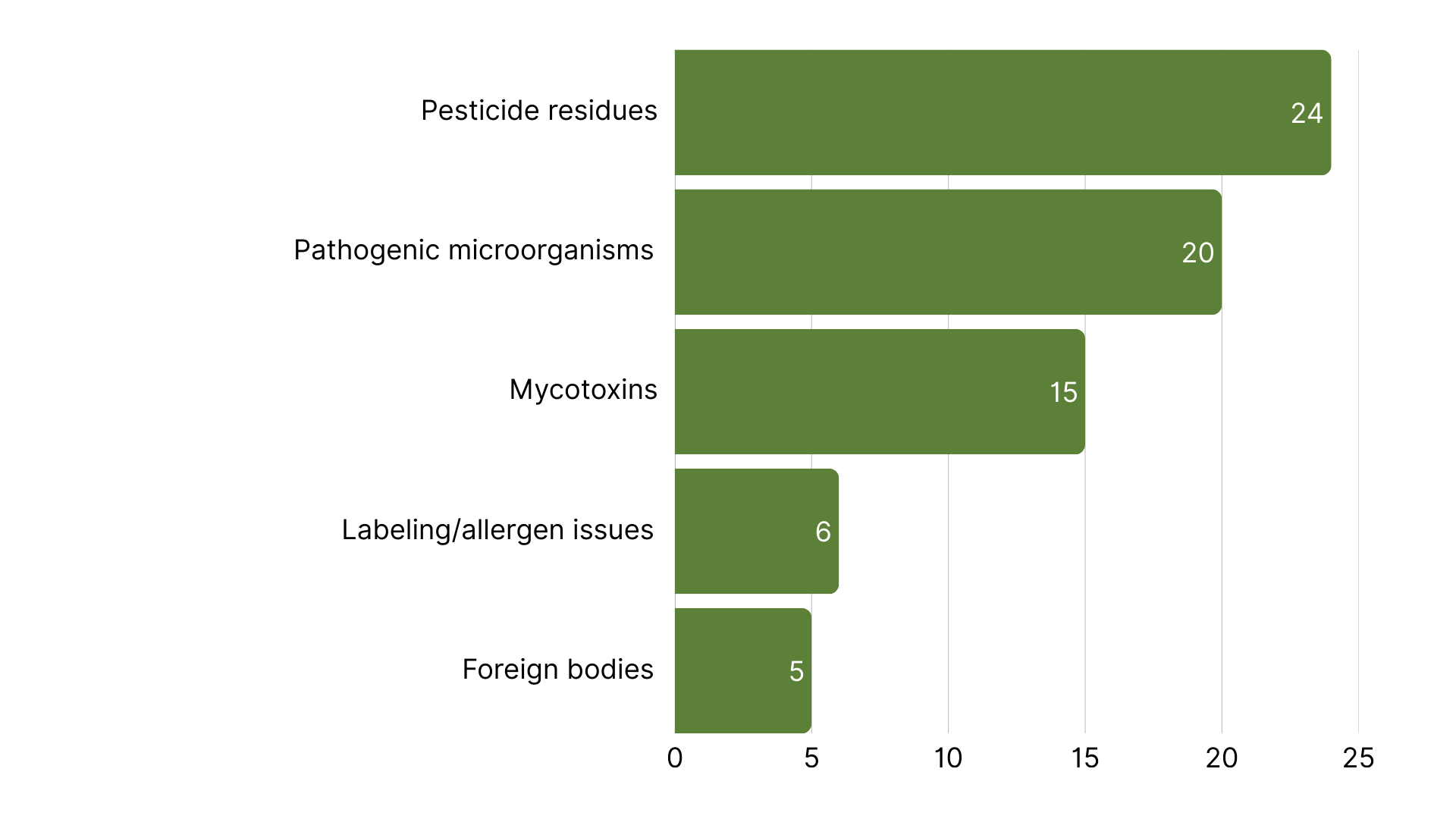
Graph 3: Top 5 food hazards in Europe week 3. 2026
Last week’s hazard distribution demonstrates the multi-dimensional nature of food safety risk facing agricultural supply chains. Pesticide residues dominated with 24 notifications (30.8% of total), but pathogenic microorganisms followed closely at 20 alerts (25.6%), and mycotoxins accounted for 15 cases (19.2%). This near-equal distribution across chemical, biological, and fungal hazards means that procurement strategies focused exclusively on one risk category, such as pesticide testing programs that ignore microbial or mycotoxin screening, will miss substantial threats.
What this week should tell farmers and buyers
This week’s recalls were not “more fresh produce is unsafe.” Fresh produce alerts stayed almost the same as last week (15 vs 14). What changed is everything around them. Total notifications jumped again, and a bigger share of the system’s attention went to feed and to compliance-heavy categories like supplements. In plain terms, controls are running at full speed again after the holiday slowdown, and they are catching problems across the whole supply chain, not only at the produce gate.
For buyers, the most useful signal is how concentrated some issues were. When the same lane shows up repeatedly in a single week, it is rarely random. The clearest example was red beans from Brazil flagged four times for acephate, plus repeated fig issues from Türkiye. Patterns like these are early warning signs for the market: more border checks, more holds, more rejections, and higher friction for everyone who sources from those lanes, even if their own lots are clean.
For growers, the message is slightly different. The week reinforces that the strictest pressure points are still chemical compliance and post-harvest control. Most produce cases were pesticide residues, and the few non-residue alerts remind us how quickly value can be lost after harvest, whether from drying and storage conditions (mycotoxins in dried fruit) or from packing line discipline (foreign body contamination).
If you take one practical takeaway from the data: risk is clustering, not spreading. Last week, fresh produce was still the main category, but this week the wider system got louder, while produce stayed steady. That is usually the moment when trade gets less forgiving. Buyers tighten specs, labs get busier, and one unreliable supplier can slow down an entire program.