Half of the farmers who answered the Wikifarmer Global Farmer Survey say the prices they receive for their produce are unfair. Asked whether they are paid fairly, 51.1% said no, 33.2% said yes, and the rest were not sure. The survey reached 10,234 farmers in more than 150 countries between November 2025 and March 2026, and their answers on prices shifted sharply with region, age, farm size and sector.
Seven in ten surveyed farmers in Latin America and Europe say prices are unfair
In Latin America, 71.7% of respondents, and in Europe 68.6% say they are not paid fairly, against 34.8% in Africa, the widest gap between regions on any headline question in the survey. Poland and Mexico have the highest shares among countries, with more than eight in ten respondents calling their prices unfair, while in Madagascar and Tanzania, the figure is about one in five.
Older farmers are more likely to call their prices unfair
Among respondents under 30, about one in four say their prices are unfair, and among those aged 51 to 60, the share reaches 64.6%. Age cannot be separated from region in these figures, because most of the survey's younger respondents farm in Africa and South Asia, where the overall shares are lower.
Larger farms report unfair prices more often
About one in three respondents farming less than 1 ha call their prices unfair. The share rises steadily with farm size and reaches nearly two in three on farms of 21 ha or more.
Dairy and arable farmers report unfair prices most often
Dairy farmers, at 66.6%, and growers of arable crops such as cereals and pulses, at 65.2%, report unfair prices more often than any other sector. At the other end, 38.8% of greenhouse growers call their prices unfair, the lowest share of any sector or production system in the survey, and greenhouse growers also rate their financial security higher than any other group.
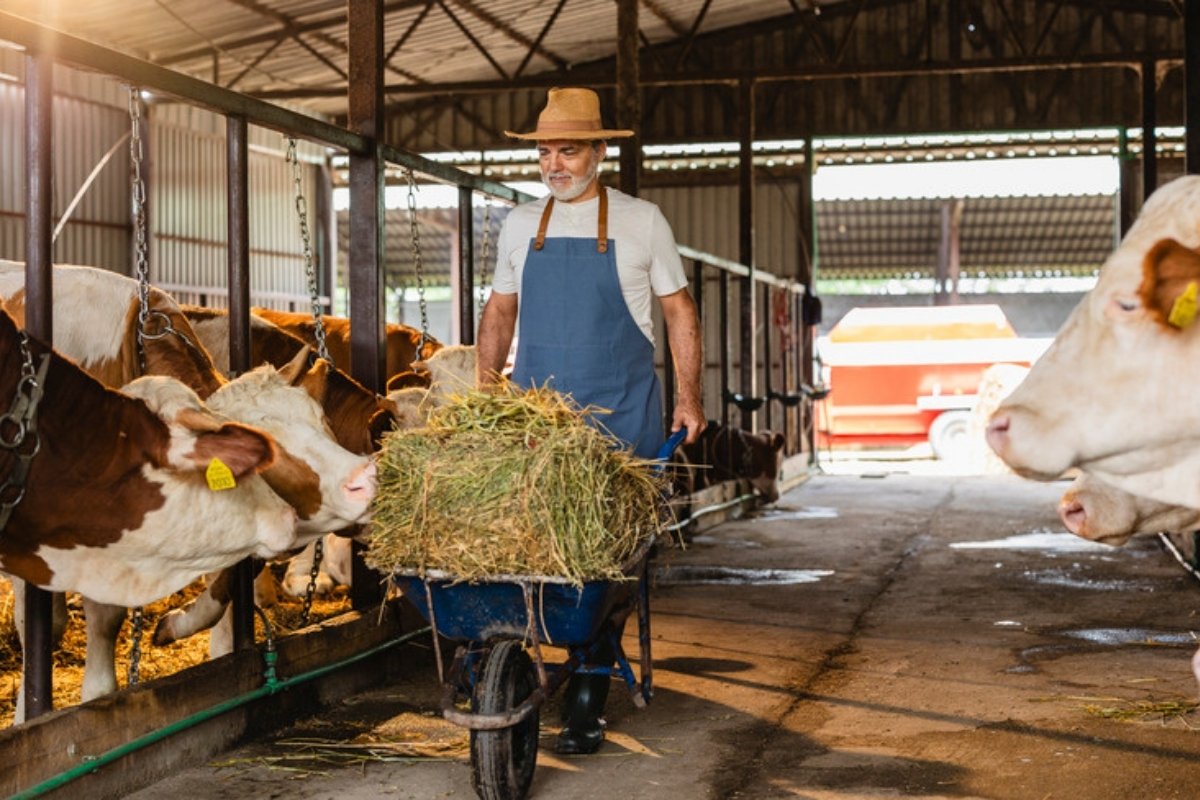
Dairy farmers report unfair prices more often than any other sector in the survey, at 66.6%.
Certified farmers are twice as likely to call their prices fair
Among certified respondents, 46% say their prices are fair, against 22% of those without any certification, and organic certification on its own shows a similar pattern. A better view of prices does not translate into higher income, since once region, farm size, age, and sales channels are taken into account, certified farmers have 18% higher odds of reporting income lower than last year.
Farmers who feel underpaid report weaker income and more stress
Price perception is the factor most strongly linked to the decline in farm income in the survey. Respondents who call their prices unfair have about 2.5 times the odds of reporting lower income than last year compared with those who are unsure, even after accounting for region, farm size, sales channels, and climate exposure. They also rate their financial security lower, 2.20 out of 5, against 2.90 for those who feel fairly paid, and report more stress. Because the survey captures a single moment, it cannot show which of these comes first.
How the survey was run
Farmers chose to answer the survey Wikifarmer launched in November 2025, reaching it through Wikifarmer, partner organisations and online advertising, so the figures describe the farmers who took part rather than all farmers. Tables by country, region and sector are in the survey's data explorer, and the full report can be downloaded from the survey page.
Frequently asked questions
What share of farmers say their prices are unfair?
In the Wikifarmer survey, 51.1% of respondents said the prices they receive are unfair, while 33.2% said they are fair.
Where do farmers most often say prices are unfair?
In Latin America and Europe, where about seven in ten respondents say they are not paid fairly, with Poland and Mexico being the highest among countries.
Do younger farmers see prices differently?
Yes. About one in four respondents under 30 call their prices unfair, against close to two in three of those aged 51 to 60.
Does certification help farmers get fair prices?
Certified respondents are twice as likely as uncertified respondents to say their prices are fair, but in the survey, certification is not linked to higher income.
Sources
- Wikifarmer. (2026). Voice of the Farmer 2026. Wikifarmer Global Farmer Survey 2025-2026.
- Wikifarmer. (2026). Wikifarmer Global Farmer Survey 2026, data explorer.