
Food recall notifications in Europe | Week 8, February 16-22, 2026
Between February 16 and 22, the Rapid Alert System for Food and Feed (RASFF) logged 84 notifications. The volume was close to recent weekly averages, but the chemistry behind those notifications was different. A total of 28 distinct pesticide substances appeared across the week, and several individual products from Southeast Asia carried five, six, or even eight different residues simultaneously.
The difference between a product that exceeds one MRL and a product that arrives at an EU border with eight residues from four separate chemical classes is not just a matter of degree. It points to a production system where chemical inputs are layered rather than targeted, where substances banned in the EU for over a decade remain routine tools. That distinction changes what testing buyers need, what supply contracts should require, and which trade corridors will face the most friction at EU borders in the months ahead.
Highlights at a glance
- 84 total RASFF notifications across food (73), feed (8), and food contact materials (3)
- Fruits and vegetables led with 25 alerts (29.8%), nearly doubling Week 6's 14 alerts
- 28 unique pesticide substances identified, including 7 notifications for banned chlorpyrifos
- Plant-based categories combined: 36 alerts (42.9%) covering fruits, vegetables, nuts, herbs, and cereals
- Top origins: China (6), Italy (5), Turkey (5), followed by Poland, France, Spain, and Belgium at 4 each
- EU-origin alerts: 36 (42.9%), showing active internal enforcement alongside import controls
- Cadmium cluster: avocados from Peru and Colombia flagged alongside Spanish paprika and Venezuelan mung beans
Top product categories affected by food recalls
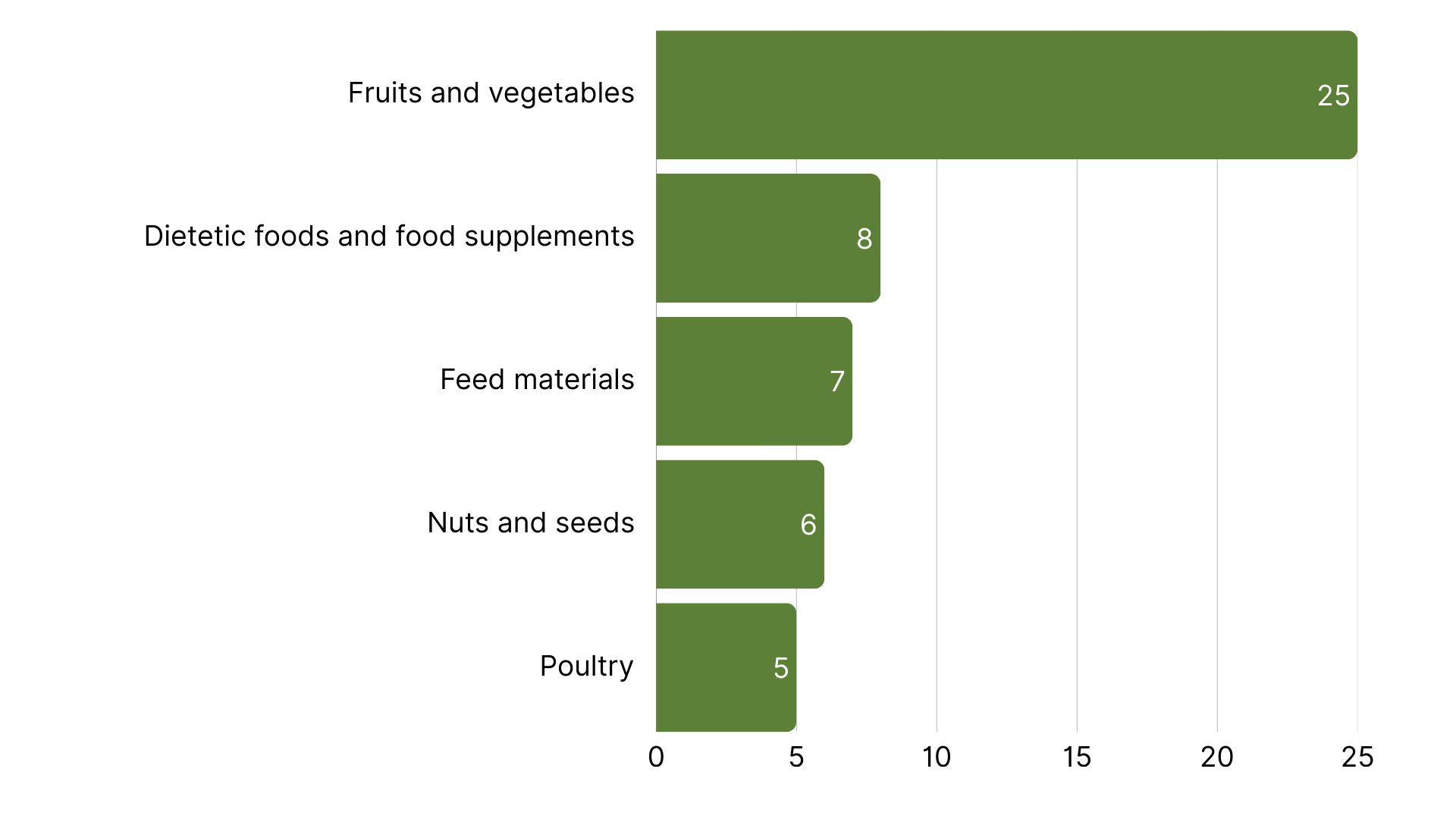
Graph 1: Top 5 Product Categories with the Most RASFF Alerts (Week 8, 2026)
Fruits and vegetables dominated this week with 25 notifications, accounting for nearly a third of all alerts. That is the highest weekly count for this category since early January and almost double Week 6's figure of 14. The spike was driven by pesticide residues: 19 of the 25 fruit and vegetable notifications (76%) involved pesticide issues, and 11 of those (44%) concerned substances that are unauthorised in the EU.
Dietary supplements and fortified foods ranked second place with 8 alerts, continuing regulatory scrutiny on novel ingredients and dosage claims. Feed materials accounted for 7 notifications, while nuts and seeds contributed 6, four of which involved mycotoxin contamination. Poultry meat rounded out the top five with 5 notifications, predominantly Salmonella-related, a category that has appeared consistently in weekly data throughout 2025 and into 2026.
When one product carries eight pesticides
The most concrete development this week was the severity and complexity of pesticide contamination in produce arriving from Southeast Asia. Three consignments of chilli peppers, two from Cambodia and one from Laos, carried between five and eight different pesticide residues each. One Cambodian shipment tested positive for chlorpyrifos, lambda-cyhalothrin, buprofezin, clothianidin, hexaconazole, pencycuron, propiconazole, and thiacloprid simultaneously. Of those eight substances, chlorpyrifos and hexaconazole are unauthorised in the EU.
The Laotian chilli peppers carried carbofuran, chlorfenapyr, diafenthiuron, dinotefuran, methomyl, and buprofezin. Three of those six substances are unauthorised. Carbofuran is a highly toxic carbamate insecticide banned in the EU since 2008 and restricted in many countries due to its acute toxicity to humans and wildlife.
Products carrying six to eight distinct chemical residues from entirely different pesticide classes (organophosphates, neonicotinoids, carbamates, pyrroles) point to systematic use of multiple crop protection products in production systems where EU-style residue limits are either absent or unenforced. Standard single-analyte testing is unlikely to catch this kind of contamination profile. Buyers importing from Southeast Asia should work with multi-residue screening panels covering 200 or more active substances.
Cadmium in Latin American avocados
A separate cluster involved heavy metals. Avocados from Peru and Colombia were flagged for cadmium contamination, alongside Spanish paprika and Venezuelan green mung beans. Cadmium uptake in avocados is often linked to naturally high soil cadmium levels in volcanic and tropical soils. That is a structural, geological issue that cannot be resolved by changes in farming practices alone. As the EU tightens cadmium limits across a broader range of food products, buyers sourcing from Latin America's avocado belt will need cadmium testing to be a standard procurement step.
Italian produce under the same lens
Italy generated 5 notifications this week, tying with Turkey for the second-highest origin after China. Italian-origin alerts included acetamiprid on spinach, permethrin (unauthorised) in organic dried porcini mushrooms, tetramethrin (unauthorised) in dried mushrooms in two separate notifications, and Listeria monocytogenes in ready-to-eat dairy products. The organic porcini case stands out: permethrin is not permitted in conventional EU agriculture, let alone in organic production under EU Regulation 2018/848.
Stay ahead of market trends and risk factors with Wikifarmer's Fresh Produce Price Insights — a tool designed to help farmers, wholesalers, and traders track real-time price movements and strengthen their market strategies
Complete fresh produce recall list
Fruits and vegetables (25)
- Fresh chilli pepper (Cambodia via Vietnam): chlorfenapyr, clothianidin, lambda-cyhalothrin, profenofos, thiamethoxam
- Spinach (Italy): acetamiprid
- Dried mushrooms (China): incorrect labelling
- Fresh mandarins (Turkey): chlorpyrifos-methyl (unauthorised)
- Persimmons (Spain): lambda-cyhalothrin
- Vine leaves (Turkey): dithiocarbamates, pyraclostrobin
- Fresh mangoes (Vietnam): acetamiprid, chlorantraniliprole, chlorpyrifos (unauthorised)
- Passion fruit (Colombia): cyantraniliprole
- Chili peppers (Cambodia): chlorpyrifos (unauthorised), lambda-cyhalothrin, buprofezin, clothianidin, hexaconazole (unauthorised), pencycuron, propiconazole, thiacloprid [8 substances]
- Organic dried porcini mushrooms (Italy): permethrin (unauthorised)
- Paprika (Spain): cadmium
- Figs (c): ochratoxin A
- Raisins (Uzbekistan): chlorpyrifos (unauthorised), profenofos (unauthorised)
- Currants (Belgium): acetamiprid
- Broccoli (Spain): acetamiprid
- Dried mushrooms (Bulgaria/Italy): tetramethrin (unauthorised)
- Mangoes (Brazil): chlorpyrifos (unauthorised)
- Red chilli peppers (Laos): buprofezin, carbofuran, chlorfenapyr, diafenthiuron (unauthorised), dinotefuran (unauthorised), methomyl (unauthorised) [6 substances]
- Chillies (India): illegal importation
- Avocado (Peru): cadmium
- Avocado (Colombia): cadmium
- Aubergines (Burkina Faso): chlorpyrifos (unauthorised)
- Dried mushrooms (China/Italy/Poland): tetramethrin (unauthorised)
- Fresh peppers (Turkey): formetanate
- Passion fruit (Colombia): thiabendazole
Herbs and spices (3)
- Whole cumin (unknown origin): pyrrolizidine alkaloids
- Ground organic bay leaves (unknown origin): Salmonella spp.
- Salt (Romania): foreign bodies (EPS plastic particles)
Cereals and bakery products (2)
- Tagliatelle pasta (France): incorrect allergen labelling (wheat/gluten)
- Rice (Belgium): MOAH mineral oil contamination
Nuts, nut products and seeds (6)
- Brazil nut kernels (Bolivia via UK): aflatoxin B1
- Supersprouts raw seeds (Belgium): Salmonella spp.
- Roasted peanuts (China): aflatoxin B1, aflatoxin total
- Sesame seeds (Sudan): absence of health certificates
- Pistachios (United States, dispatched from Turkey): aflatoxin B1, aflatoxin total [2 notifications]
Top food hazards for Europe this week
Pesticide residues accounted for 22 of the 57 lab-confirmed hazard notifications (38.6%). The chemical diversity is what distinguishes this week:
- 28 active substances were detected
- organophosphates (chlorpyrifos, profenofos)
- neonicotinoids (acetamiprid, clothianidin, thiamethoxam, dinotefuran, thiacloprid),
- carbamates (carbofuran, methomyl, formetanate),
- pyrroles (chlorfenapyr).
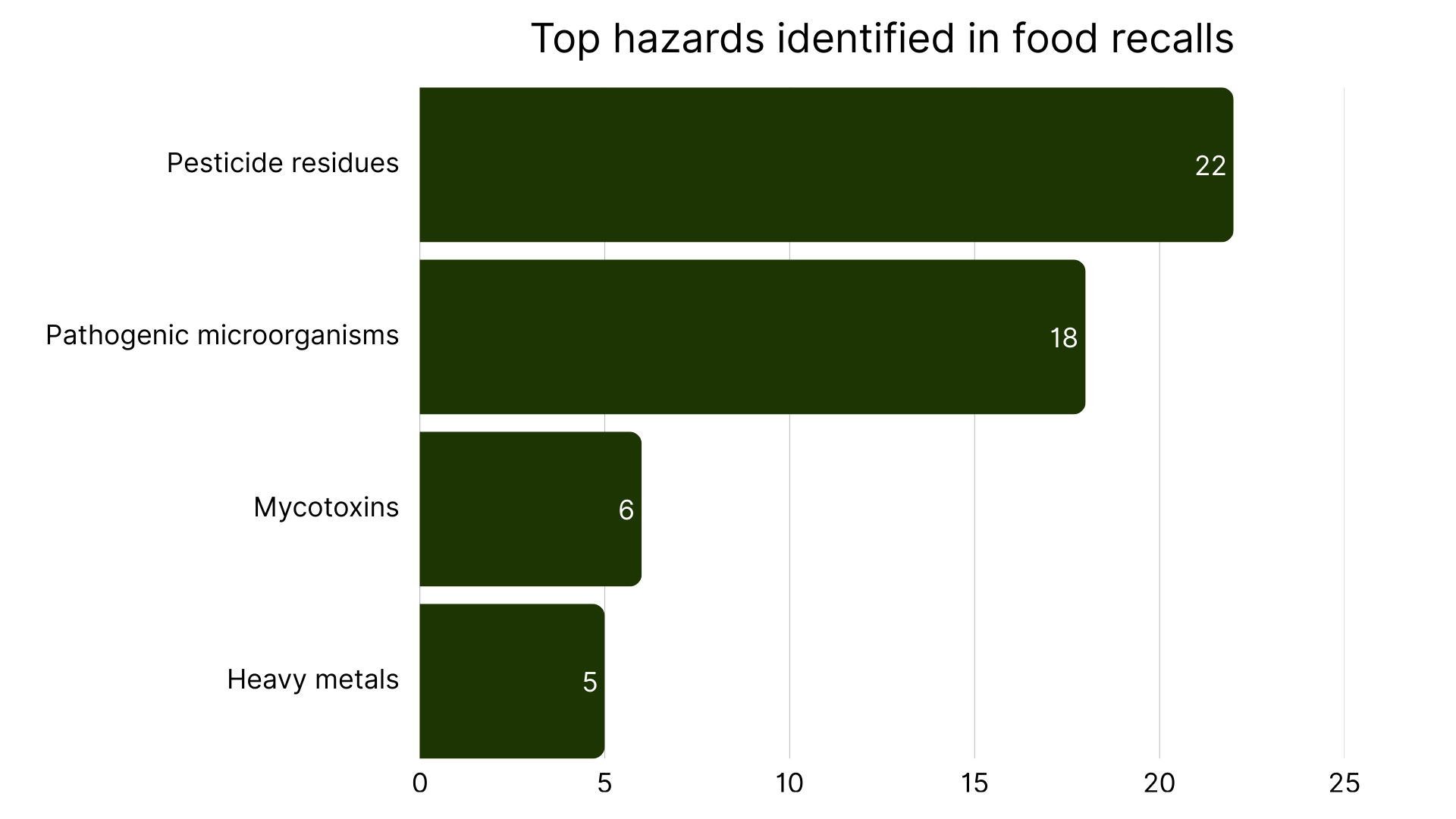
Graph 2: Top 5 food hazards in Europe, Week 8, 2026
Testing protocols focused on a narrow panel of commonly found substances will miss a measurable share of actual contamination in weeks like this one.
Key observations regarding the origin of recalled products
Southeast Asia (Cambodia, Vietnam, Laos) accounted for 4 notifications but generated the most complex contamination profiles of the week. Every consignment tested carried three or more pesticide residues. This corridor requires specific multi-residue screening protocols at the border.

Graph 3: Top origin countries, Week 8, 2026
Türkiye (5) showed its familiar pattern: figs with ochratoxin A, mandarins with chlorpyrifos-methyl, vine leaves and peppers with various pesticides. Compared to weeks when Türkiye generated 8-10+ alerts, this is a lower volume, possibly reflecting reduced trade flows in mid-February or shifting inspection priorities.
Italy (5) continued a trend of active EU-internal enforcement. Unauthorised pesticides in organic mushrooms and dried mushrooms, Listeria in dairy, and spinach acetamiprid all point to domestic compliance gaps.
Latin America (Colombia 3, Brazil 3, Peru 1, Bolivia 1) collectively reached 8 alerts, driven by the avocado cadmium cluster, passion fruit pesticides, mango chlorpyrifos, and Bolivia's Brazil nuts with aflatoxin. Buyers sourcing tropical produce from this region face diversified risk across both chemical and mycotoxin categories.
What this week means for procurement and production
When a single shipment of chilli peppers arrives carrying eight different pesticide residues from four separate chemical classes, a standard MRL screen for one or two commonly detected substances would clear the product. Multi-residue panels covering 200+ active substances are the only way to detect the kind of contamination Southeast Asian supply chains are generating right now.
Avocado buyers sourcing from Peru and Colombia should treat cadmium testing as routine rather than exceptional. Nut buyers working with intermediary dispatch countries should verify storage conditions along the entire route, not just at the farm of origin. And anyone buying Italian or Belgian organic produce should apply the same verification standards they would use on third-country imports.
The reputational cost extends beyond the individual producer to the whole category. Food safety compliance in 2026 requires understanding which supply chains generate chemical complexity, and factoring that complexity into procurement decisions before products reach the inspection point.