

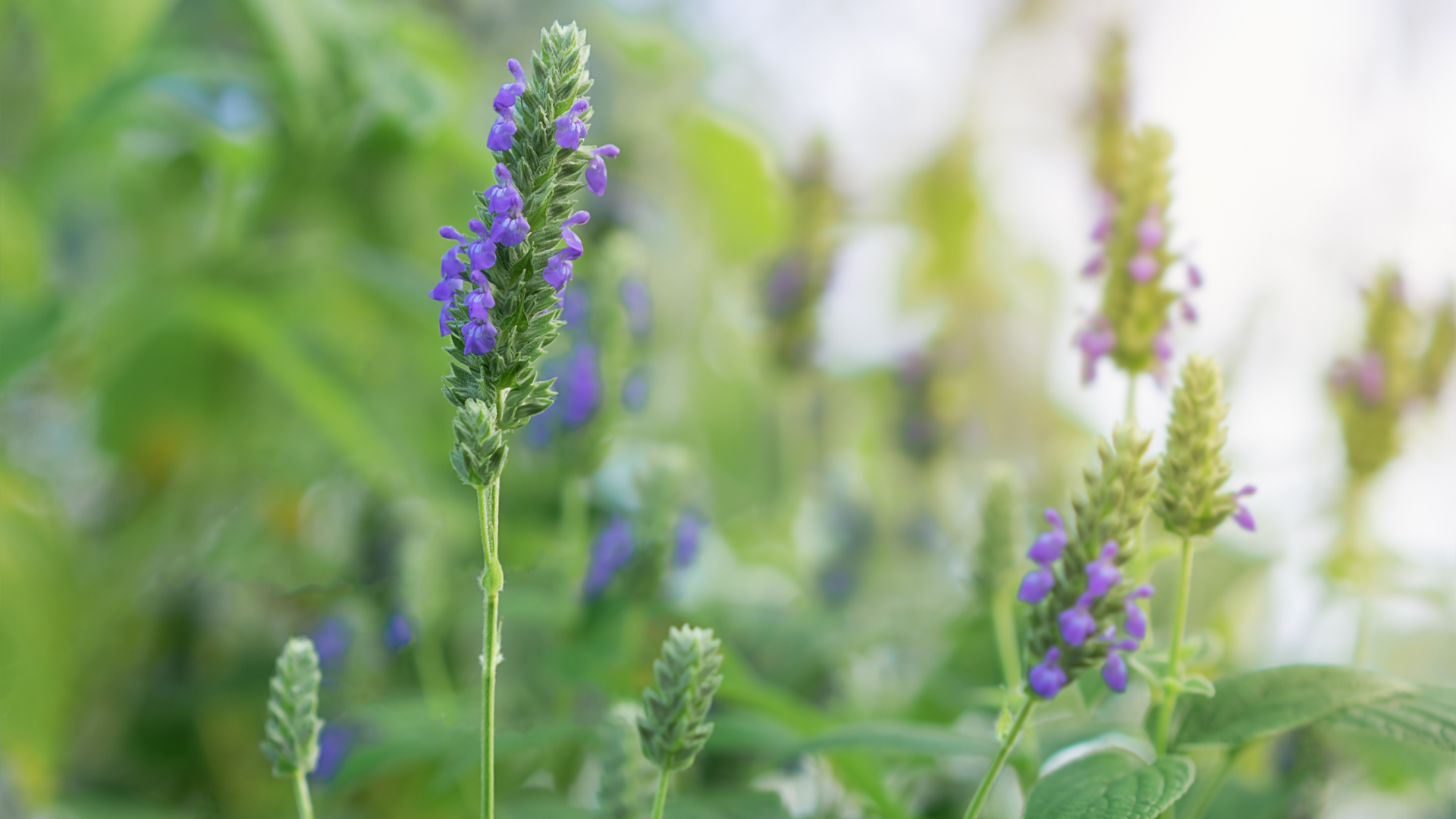
Chia (Salvia Hispanica L.) is an annual herbaceous plant. Botanically, it belongs to the Lamiales order, family Labiate (mint family), and Salvia genus. It is an oleaginous seed (rich in oil), considered a pseudocereal, native to southern Mexico and northern Guatemala (1). Chia is cultivated beyond Mexico and Guatemala, as well as in Bolivia, Peru, Argentina, Europe, and Australia. Mexico is considered the largest producer of chia globally.
History of Chia
Historical records indicate that Salvia hispanica L. was widely used by ancient Mesoamerican civilizations, including the Aztecs and Mayas, alongside corn, beans, and amaranth for food and traditional medicines. In pre-Columbian societies, chia was second only to beans in importance as a crop. Among the Aztecs, it was valued as a food source and for use in cosmetics and religious rituals. (2)
The long history of plant-human interactions with S. hispanica led to significant changes through domestication and human selection, influencing the morphology of chia seeds.
Wild and domesticated chia plants exhibit significant differences due to human selection. Wild chia is characterized by an open calyx, anthocyanin coloration on the stem, leaf pubescence, and smaller, darker seeds that disperse easily when ripe.
Domesticated (modern) varieties, in contrast, have larger seeds, greater spike size, closed calyces, and reduced pubescence, leading to higher yields. These plants also show apical dominance and uniform flowering and ripening periods while lacking anthocyanin coloration.
Semi-domesticated populations share similarities with domesticated varieties but retain the open calyx of wild plants. These changes have improved productivity (yield), making domesticated chia more suitable for agricultural use. (3,4)
Characteristics and Cultivation of Salvia hispanica L.
Chia primarily grows for its seeds and produces small white and purple hermaphroditic flowers. The plant can reach up to 1 meter in height with reverse petiolate, serrated leaves measuring 4 to 8 cm long and 3 to 5 cm wide. Chia seeds are tiny, oval-shaped, and vary in color from black, gray, and black-spotted to white.
Nutritional differences between black and white chia seeds are minimal, with
- black seeds containing 16.9% protein and 32.6% fiber, while
- white seeds have 16.5% protein and 32.4% fiber.
Morphologically, white seeds are slightly larger and thicker. When cultivating black chia seeds, 5% to 8% of the yield will be white, whereas cultivating only white chia results in exclusively white seeds. Under optimal conditions, chia plants can produce 1102 to 1322 lbs of seed per acre (1235-1482 kg/ha). (5,6)
Nutritional Value of Chia Seeds
Due to its nutritional ‘profile, its global production has risen, along with its growing popularity. These include:
- an oil content ranging from 30% to 33%,
- a fatty acid composition where approximately 80% are unsaturated,
- carbohydrates making up 26% to 41%,
- dietary fiber between 18% and 30%,
- protein levels of 15% to 25%, and
- mineral content between 4% and 5%. (6).
In the table below, the nutrient profiles of 100g of chia, corn, and wheat is compared.
As we can see, chia seeds are significantly richer in protein and fat than wheat and corn. Chia also has higher mineral content, especially magnesium, and calcium, while wheat and corn contain much less. Chia's omega-3 fatty acid (linolenic acid) content far surpasses wheat and corn's. Chia is also notable for its higher phenolic content, particularly caffeic acid.
Table 1. Nutritional properties of chia seeds, corn and wheat per 100 g. Source USDA
| Chia Seeds | Corn | Wheat | |
| Carbohydrates (g) | 42 | 74 | 71 |
| Protein (g) | 17 | 9.4 | 12.6 |
| Fat (g) | 31 | 1.5 | 1.5 |
| Minerals (mg) | |||
| Magnesium | 335 | 127 | 126 |
| Phosphorus | 860 | 210 | 288 |
| Calcium | 631 | 7 | 29 |
| Potassium | 407 | 287 | 363 |
| Natrium | 16 | - | - |
| Vitamins (mg) | |||
| Vitamin A | 54 μg | 214 | 9 |
| Vitamin E | 0.5 | 0.49 | 1.01 |
| Vitamin C | 1.6 | 0 | 0 |
| Thiamine (B1) | 0.62 | 0.39 | 0.3 |
| Riboflavin (B2) | 0.17 | 0.2 | 0.12 |
| Niacin (B3) | 8.83 | 3.63 | 5.46 |
| Fatty acid content (%) | |||
| Linolenic acid (C18:3, ω-3) | 63.79 | 1 | 0.08 |
| Linoleic acid (C18:2, ω-6) | 18.89 | 52 | 0.68 |
| Olec acid (C18:1, ω-9) | 7.3 | 31 | 0.24 |
| Phenolic compunds (μg) | |||
| Caffeic acid | 27 | 26 | 40 |
| Quercetin | 0.17 | - | 30.1 |
Health Benefits of Chia Seeds
Chia seeds offer numerous health benefits due to their high content of α-linolenic acid (an omega-3 fatty acid), dietary fiber, and essential minerals.
Cardiovascular Health
Researchers analyzed the cardio-protective effects of chia seeds, noting that α-linolenic acid, an omega-3 fatty acid, contributes to the production of crucial compounds like leukotrienes and thromboxanes, which support various physiological functions. Omega-3 also helps prevent hypertension by blocking dysfunctional calcium and sodium channels, enhances parasympathetic tone, and protects against ventricular arrhythmia. Additionally, chia seeds support fetal brain and retina development during pregnancy. (7)
Diabetes Management and Weight Control
Incorporating chia into the diet, with its high fiber and α-linolenic acid content, helps manage body weight and related diabetes complications. Researchers found that adding 37 g/day of chia to an isocaloric diet improved key risk factors in type 2 diabetes while maintaining weight. It also reduced postprandial blood sugar and prolonged satiety. A six-month study showed that chia when added to a calorie-restricted diet, led to significant weight loss in overweight and obese individuals with type 2 diabetes. Compared to flax seeds, chia more effectively converts glucose into slow-release carbohydrates and enhances satiety, likely due to its higher fiber viscosity. The observed 39% reduction in blood glucose levels with chia aligns with previous studies showing 35% to 42% reductions. (8,9)
Blood pressure control, anti-inflammatory, and antioxidant properties
A study found that consuming 50 g/day of chia seeds for 30 days lowered diastolic blood pressure from 66.1 to 61.5 mmHg and significantly reduced serum triglycerides without any reported side effects. (10) Additionally, chia seeds are noted for their potential therapeutic benefits, including providing bioactive peptides for tissue repair, controlling dyslipidemia, and acting as antiplatelet, anti-carcinogenic, and laxative agents. Chia seeds have been shown to have anti-inflammatory effects and may contribute to reducing oxidative stress, which is linked to various chronic diseases. (11,12)
References
- Ayerza, R. (2013). Seed composition of two chia (Salvia hispanica L.) genotypes which differ in seed color. Emirates Journal of Food and Agriculture, 25(7), 495-501.
- Ullah, R., Nadeem, M., Khalique, A., Imran, M., Mehmood, S., Javid, A., & Hussain, J. (2016). Nutritional and therapeutic perspectives of Chia (Salvia hispanica L.): a review. Journal of food science and technology, 53(4), 1750-1758.
- Calderón-Ruíz, A., Montes-Hernández, S., García-Perea, M. A., Covarrubias Prieto, J., Aguirre-Mancilla, C. L., & Raya-Pérez, J. C. (2021). Characterization of wild and cultivated chia populations. Revista mexicana de ciencias agrícolas, 12(7), 1161-1170.
- Cahill, J. P., & Ehdaie, B. (2005). Variation and heritability of seed mass in chia (Salvia hispanica L.). Genetic resources and crop evolution, 52, 201-207.
- Hrnčič, M. K., Cör, D., & Knez, Ž. (2018). Subcritical extraction of oil from black and white chia seeds with n-propane and comparison with conventional techniques. The Journal of Supercritical Fluids, 140, 182-187.
- da Silva, B. P., Anunciação, P. C., da Silva Matyelka, J. C., Della Lucia, C. M., Martino, H. S. D., & Pinheiro-Sant'Ana, H. M. (2017). Chemical composition of Brazilian chia seeds grown in different places. Food chemistry, 221, 1709-1716.
- Muñoz, L.A.; Cobos, A.; Diaz, O.; Aguilera, J.M. Chia seeds: Microstructure, mucilage extraction and hydration. J. Food Eng. 2012, 108, 216–224
- Vuksan, V.; Jenkins, A.L.; Brissette, C.; Choleva, L.; Jovanovski, E.; Gibbs, A.L.; Bazinet, R.P.; Au-Yeung, F.; Zurbau, A.; Ho, H.V.T.; et al. Salba-chia (Salvia hispanica L.) in the treatment of overweight and obese patients with type 2 diabetes: A double-blind randomized controlled trial. Nutr. Metab. Cardiovasc. Dis. 2017, 27, 138–146. 67.
- Vuksan, V.; Choleva, L.; Jovanovski, E.; Jenkins, A.L.; Au-Yeung, F.; Dias, A.G.; Ho, H.V.T.; Zurbau, A.; Duvnjak, L. Comparison of flax (Linum usitatissimum) and Salba-chia (Salvia hispanica L.) seeds on postprandial glycemia and satiety in healthy individuals: a randomized, controlled, crossover study. Eur. J. Clin. Nutr. 2017, 71, 234.
- Vertommen, J.; Van de Sompel, A.M.; Loenders, M.; Van der Velpen, C.; De Leeuw, I. Efficacy and Safety of 1 Month Supplementation of SALBA (Salvia Hispanica Alba) Grain to Diet of Normal Adults on Body Parameters.
- Ayerza, R.; Coates, W. Chia: Rediscovering a Forgotten Crop of the Aztecs; University of Arizona Press: Tuscon, Arizona, AZ, USA, 2005; ISBN 978-0-8165-2488-4. 73.
- Adams, J.D.; Wang, R.; Yang, J.; Lien, E.J. Preclinical and clinical examinations of Salvia miltiorrhiza and its tanshinones in ischemic conditions. Chin. Med. 2006, 1, 3.