
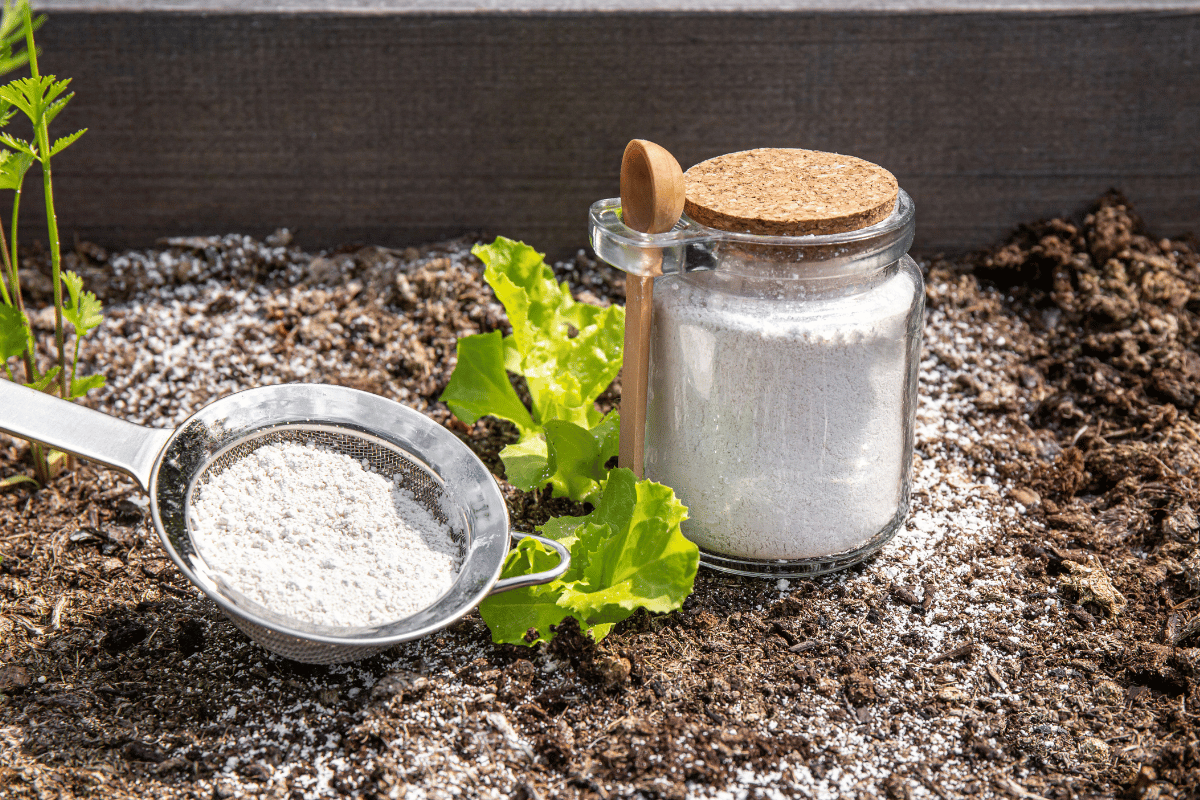
Diatomaceous earth, also known as DE, is a natural mineral made of the fossilised shells of microscopic aquatic algae called diatoms. It is rich in silica, often above 80%, and takes the form of a very fine, white powder with sharp particles. It is used mainly as a natural contact insecticide, and secondarily as a soil amendment, since its microscopic sharp particles act mechanically on insects rather than chemically.
How it works as a natural insecticide
Unlike chemical insecticides, diatomaceous earth does not act chemically but mechanically. When an insect crawls over the powder, the sharp particles cling to its body and damage the waxy protective layer of its exoskeleton. The insect loses water and dehydrates within a few hours to a few days. Because the action is physical and not toxic, insects do not develop resistance the way they can with synthetic products. A critical condition is that the powder must be dry, because moisture makes it ineffective.
Which pests it targets
Diatomaceous earth is effective mainly against crawling and soft-bodied insects that come into direct contact with the powder.
| Category | Examples |
|---|---|
| Crawling insects | Ants, fleas, bed bugs, cockroaches |
| Soft-bodied plant pests | Aphids, thrips, caterpillars |
| Molluscs | Slugs and snails |
How to apply it to plants
Application is always done in dry conditions, because moisture makes the powder ineffective. Depending on the target, different steps are followed:
- For crawling insects and slugs, dust the powder around the base of the plants or the rim of the pot, creating a continuous protective barrier.
- On the plants themselves, apply a light dusting to the leaves and stems with a shaker, in the evening and with no wind.
- As a soil amendment, mix a small amount, around 5 to 10%, into the pot soil.
The application is repeated after every rain or watering, since it is the dry powder that works. A light, even layer is enough, as too much offers no more.
Diatomaceous earth as a soil amendment
Beyond pest control, diatomaceous earth is used within the growing medium, at a small proportion of around 5 to 10%. Thanks to its porosity, it improves aeration and helps the soil hold water and nutrients, which are released gradually to the roots. In this use it works like other inert materials, complementing potting mix and materials such as perlite, without replacing feeding. In the soil it does not harm earthworms, which live below the surface and do not come into contact with the dry powder.
Which types of diatomaceous earth exist
Not all diatomaceous earth is suitable for the garden. Food grade is the pure form used for pest control, on vegetables and near pets. There is also an industrial form, such as the type meant for pool filters, which is heat-treated and contains crystalline silica that is dangerous to breathe, and is not used in any application on plants or around animals. For the garden, the food-grade label on the packaging is the criterion for selection.
What to watch for pollinators and safety
Diatomaceous earth is non-selective, meaning it dehydrates any insect that contacts it, including beneficial insects and pollinators. For that reason it is never applied on flowering plants or in spots visited by bees and other pollinators. Targeted application at the base of the plants, and at times when pollinators are not active, limits the risk. Because the fine powder irritates the airways and eyes, a mask and goggles are worn during application. For use on vegetables and near pets, food-grade diatomaceous earth is always chosen.
Frequently asked questions
What is diatomaceous earth
It is a natural mineral made from the fossilised shells of diatoms, rich in silica, in the form of a fine white powder. It is used as a natural contact insecticide and as a soil amendment.
How does diatomaceous earth kill insects
It acts mechanically, not chemically. The sharp particles damage the waxy layer of the insect, which dehydrates and dies. Because the action is physical, insects do not develop resistance.
When and how do I apply diatomaceous earth
Always in dry conditions, with a light dusting around the base of the plants or on the leaves, in the evening and with no wind. The application is repeated after rain or watering.
Does diatomaceous earth harm earthworms
No. Earthworms live below the surface, have moist, soft bodies and do not contact the dry powder on the surface, so they are not affected by normal use.
Is diatomaceous earth dangerous for bees
Yes, it is non-selective and can harm pollinators and beneficial insects. It is not applied on flowering plants or in spots visited by bees, and targeted application at the base of plants is preferred.
Which diatomaceous earth do I choose for the garden
For use on vegetables and near pets, food-grade diatomaceous earth is chosen, the pure form that is safer to handle.
Diatomaceous earth is a plant-protection product. Regional pest pressures and rules vary, so for a serious infestation it is best to consult a local agronomist, to try non-chemical methods first, and to use only approved products according to their label.
Sources
- The Old Farmer's Almanac, What is diatomaceous earth.
- Gardener's Path, How to use diatomaceous earth for pest control.