Learn what sunflower oil is, how it is produced, where it comes from, how it is classified, and what buyers should know
What is sunflower oil?
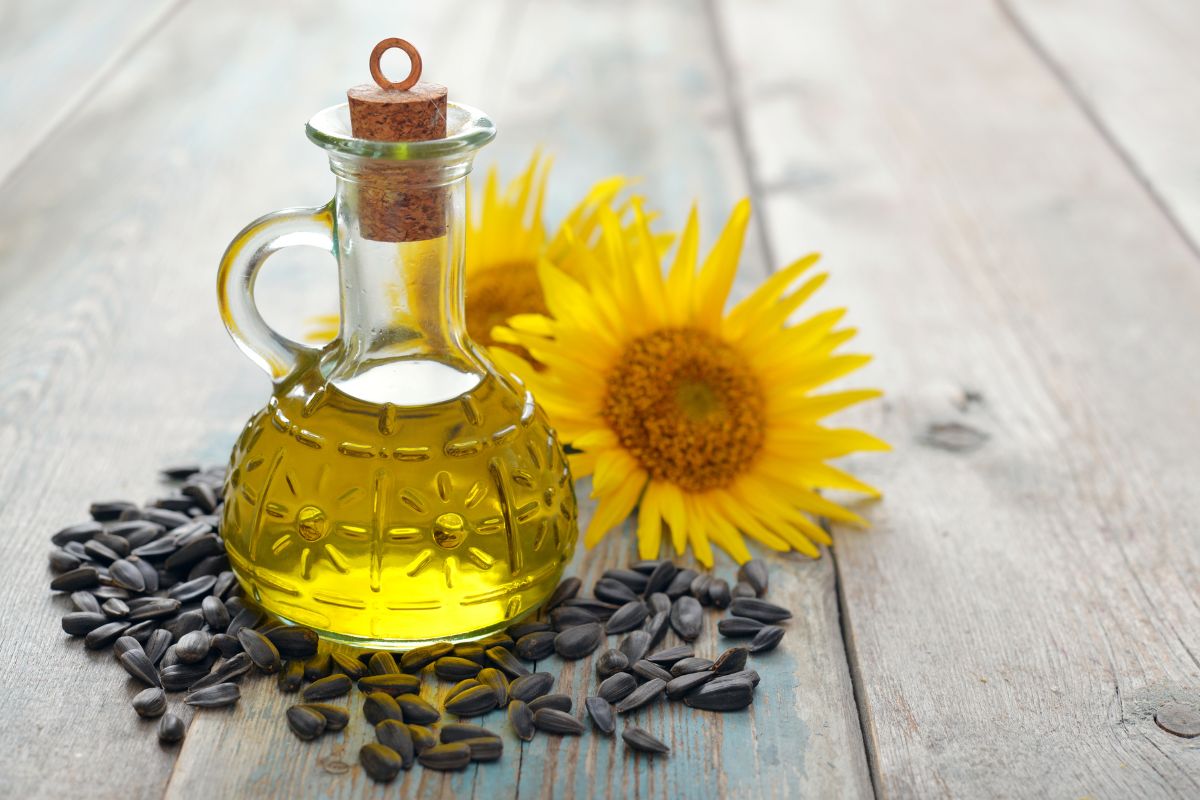
Sunflower oil is a vegetable oil extracted from the seeds of the sunflower plant (Helianthus annuus) through mechanical pressing and/or solvent extraction. It has a mild, neutral flavour and a relatively high smoke point.
It is most commonly used for cooking and frying, in salad dressings, margarines and spreads, food manufacturing, and industrial food applications.
Sunflower oil is regulated in international trade under the Codex Alimentarius Standard for Named Vegetable Oils (CXS 210-1999).
Types of sunflower oil
- Sunflowerseed oil (regular / high-linoleic)
This is the standard and most common form, with a fatty acid profile of 14–40% oleic acid and 48–74% linoleic acid. It is used for cooking and frying. - High-oleic sunflower oil (HOSO)
High-oleic sunflower oil is produced from specially bred sunflower seeds with a higher oleic acid content. It contains 75% or more oleic acid, typically between 75–91%. It has greater oxidative stability, a longer shelf life, and greater heat resistance. It is used in industrial frying, packaged foods, and large-scale food manufacturing. - Mid-oleic sunflower oil (MOSO / NuSun)
Mid-oleic sunflower oil is an intermediate variety with oleic acid levels of 43%-72%. It is used in food service and commercial kitchens, where a balance between stability and cost is required, particularly in North America.
Processing types
Refined sunflower oil
Produced with mechanical pressing and/or solvent extraction (typically hexane), refined through neutralization, bleaching, and deodorization. It is a pale, neutral-flavoured oil with a high smoke point and long shelf life, and it dominates global trade.
Cold-pressed / unrefined sunflower oil
Mechanically extracted without solvents or high-temperature refining. Retains more natural flavour, colour (amber), and antioxidants, but has a lower smoke point and a shorter shelf life. It is used in artisanal and health-food retail and is common in Eastern European cuisine.
Is sunflower oil healthy? Is sunflower oil bad for you?
It depends on the type of sunflower oil and the health aspect being considered. Sunflower oil meeting Codex and EU standards is safe for human consumption.
Fatty acid composition
Sunflower oils are predominantly unsaturated fats, which are generally considered preferable to saturated fats in cardiovascular nutrition.
- Regular sunflower oil is high in linoleic acid, an omega-6 polyunsaturated fatty acid, an essential nutrient that the body cannot produce on its own.
- High-oleic sunflower oil (HOSO) has a fatty acid profile dominated by monounsaturated oleic acid, making it more similar to olive oil in terms of nutritional and functional properties.
Oxidation & heat stability
Oils high in polyunsaturated fats can oxidize when repeatedly heated to high temperatures, producing undesirable degradation products. This is why repeated reuse of frying oil is discouraged.
High-oleic sunflower oil, however, is significantly more resistant to oxidation than regular sunflower oil due to its lower polyunsaturated fat content. This makes it the preferred choice for commercial deep frying and industrial food production.
Vitamin E and antioxidants
Sunflower oil is a natural source of vitamin E (alpha-tocopherol), a fat-soluble antioxidant that protects cells against oxidative stress.
Cold-pressed and minimally refined oils retain higher levels of vitamin E and plant compounds, but they are less stable under high heat and have shorter shelf lives.
What is the smoke point?
Refined sunflower oil has a smoke point of approximately 227°C (440°F). High-oleic sunflower oil reaches 230–246°C (446–475°F). Cold-pressed sunflower oil is much lower at 107–160°C (225–320°F) and should not be used for high-heat cooking.
Is sunflower oil good for cooking?
Yes. Refined sunflower oil is suitable for most cooking, including frying. High-oleic sunflower oil is preferred for high-temperature and industrial frying because of its superior oxidative stability. Cold-pressed sunflower oil should be reserved for unheated uses such as dressings, dips, and finishing dishes.
Where is sunflower oil produced?
Sunflower oil is produced globally, but five countries dominate production and trade. The conflict in Ukraine has reshaped global supply chains.
- Russia: The world’s largest producer of sunflower oil, with output of approximately 6.8 million tonnes in 2024/25 and projected growth to 7.5 million tonnes in 2026/27. Expanded domestic crushing capacity has increased refined oil exports.
- Ukraine: The largest exporter of sunflower oil, accounting for 36.8% of global export value in 2024 ($5.12 billion). Production has been disrupted by war but is forecast to recover from 4.73 million tonnes in 2025/26 to 5.63 million tonnes in 2026/27. Ukraine remains a key supplier to EU markets via Black Sea export routes.
- Argentina: Forecast to produce a record 8 million tonnes of sunflower seed in 2026/27. Its Southern Hemisphere harvest cycle provides counter-seasonal supply to global markets.
- European Union: A major producer and the second-largest importer of sunflower oil. Production is concentrated in Romania, Bulgaria, Hungary, France, and Spain. Output is expected to recover after drought-related declines.
- Türkiye: Produces, imports, and re-exports sunflower oil, primarily to North Africa, the Middle East, and Central Asia. It remains a net importer but plays a key role in refining and packaging.
Who is the largest importer of sunflower oil?
India is the world’s largest importer of sunflower oil, with demand forecast at approximately 3.2 million tonnes in 2025/26. Other major importers include the European Union, China, Türkiye, and Iran.
What do sunflower oil prices look like?
Sunflower oil is one of the most volatile vegetable oils on the global market. Prices have remained elevated in 2026 due to supply disruptions, particularly in the Black Sea region.
High-oleic sunflower oil typically trades at a 15–30% premium to regular refined sunflower oil, reflecting both lower production volumes and higher demand from industrial frying and shelf-stable food manufacturers. Organic-certified sunflower oil trades at roughly 30–60% above conventional. Cold-pressed sunflower oil retails at a 100–300% premium over refined sunflower oil.
What drives price volatility
- Black Sea weather conditions (especially summer rainfall in Russia and Ukraine)
- Russia’s export policy
- Substitution with palm, soybean, and rapeseed oils
- Indian demand (the world’s largest importer)
- Energy and freight costs (high-volume, low-value-density shipping commodity)
- Currency fluctuations (especially USD strength)
Where to buy sunflower oil in bulk
For industrial buyers
Bulk sunflower oil is shipped in:
- Steel or HDPE drums (190–200 kg)
- IBC totes (~1,000 litres)
- Flexitanks (24,000–26,000 kg)
- Bulk tank trucks (regional supply)
- A10 cans (foodservice packaging)
Major suppliers include Ukraine, Russia, Argentina, Türkiye, Romania, Bulgaria, and Hungary.
For retail buyers
Sunflower oil is one of the most widely available vegetable oils in supermarkets worldwide. For high-oleic sunflower oil, specialty food stores and online retailers are the most reliable sources. Cold-pressed sunflower oil is typically sold in 250–500 ml dark glass bottles through health food retailers.
EU labelling and quality controls
Sunflower oil sold in the EU must comply with Regulation (EU) No 1169/2011 and Codex CXS 210-1999. Mandatory labelling includes:
- Product designation
- Country of origin
- Net quantity
- Best-before date
- Storage conditions
- Manufacturer/packer information
- Nutrition declaration
Imported sunflower oil entering the EU must comply with EU maximum residue limits (MRLs) for pesticides (Regulation (EC) No 396/2005) and maximum contaminant limits for substances, including polycyclic aromatic hydrocarbons (Regulation (EC) No 1881/2006).
Can sunflower oil be organic?
Yes. Organic-certified sunflower oil is produced under EU Regulation 2018/848 or USDA NOP standards. Organic certification requires that the sunflower seeds be grown without synthetic pesticides, herbicides, or fertilizers, and without genetic modification. Key origins are Ukraine, Romania, Bulgaria, and Argentina.
Common mistakes to avoid
- Treating all sunflower oils as identical. Regular, mid-oleic, high-oleic, and cold-pressed sunflower oils have different fatty acid profiles, smoke points, shelf lives, and prices.
- Frying with cold-pressed sunflower oil. Its low smoke point (107–160°C) means it breaks down before reaching frying temperature.
- Ignoring the meaning of “high-oleic”. It must contain at least 75% oleic acid, a measurable specification that distinguishes it from regular sunflower oil.
- Skipping origin verification and documentation. Black Sea origin certificates and Certificates of Analysis are standard documentation requirements to avoid risk.
- Reusing frying oil excessively. All vegetable oils degrade when heated repeatedly.
- Confusing sunflower oil with safflower oil. They are different products from different plants.
Conclusion
Sunflower oil is one of the world’s most traded vegetable oils and plays an important role in global food systems, from household cooking to industrial frying. The market has been significantly reshaped by geopolitical disruption in Ukraine and Russia.
For consumers, use refined sunflower oil for everyday cooking, use high-oleic sunflower oil for high-heat frying, and use cold-pressed sunflower oil for dressings and finishing. For buyers, watch specifications: define oil type, verify origin, and ensure compliance with Codex standards and EU regulatory frameworks.
The sunflower oil market is expected to remain volatile through 2026.