
On 20 May 2026, World Bee Day marks the birth of Anton Janša (1734–1773), the Slovenian beekeeper whose work in Vienna established the first formal beekeeping curriculum in Europe. The United Nations chose this date in 2017, after a proposal from Slovenia supported by Apimondia, and FAO has coordinated the global observance since 2018. The story behind the date is older than Janša, older than agriculture itself. The 2026 theme, "Bee Together for People and the Planet", focuses on a partnership that runs from honey hunting and traditional hive-keeping to the beekeeping systems used today. This article traces ten millennia of that partnership through the cave walls, temples, clay cylinders, rainforests, cliffs, and patent offices where it took shape.
The honey hunters of prehistoric Spain

The Cuevas de la Araña near Bicorp in Valencia hold a rock painting, roughly 8,000 years old, of a human figure climbing ropes toward a wild bees' nest. It is the oldest known depiction of honey collection by Homo sapiens, and the caves are part of the UNESCO World Heritage area of Levantine rock art. The painting was published in 1924 after work by archaeologist Eduardo Hernández-Pacheco and has been reproduced widely in beekeeping literature, including Eva Crane's 1999 reference work The World History of Beekeeping and Honey Hunting.
A second site, found more recently at Barranco Gómez in Castellote, Teruel, shows a similar climber with a vessel for the honeycomb. Researcher Manuel Bea from the University of Zaragoza, with colleagues Inés Domingo and Jorge Angás, dated the painting to around 7,500 years ago and described it as one of the best-preserved honey-gathering scenes ever documented. Before sugar cane reached Europe, honey was the densest sweet energy source in nature, which is why early foragers were willing to climb cliffs without protection to take it.
When ancient Egypt put bees in clay hives
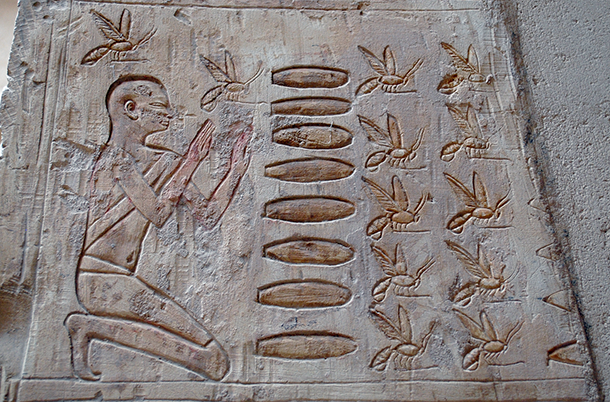
The shift from hunting wild nests to keeping bees in artificial cavities appears for the first time in the archaeological record of the Old Kingdom. In the sun temple of Pharaoh Nyuserra (Newoserre), built around 2450 BCE during the Fifth Dynasty, a relief shows beekeepers kneeling before stacked cylindrical hives, calming the bees and pouring honey into storage jars. Egyptologist Gene Kritsky describes this as the first true evidence of beekeeping in the world, in his book The Tears of Re (Oxford University Press, 2015).
Bees carried weight beyond the apiary. Egyptian myth held that the tears of the sun god Ra became bees on touching the earth, and pharaohs bore the title "Lord of Bees", with the honey bee hieroglyph used on royal cartouches. Honey reached the kitchen, the medicine chest, the embalming workshop, and the temple offering, which is one reason why Egypt's hive design (long horizontal cylinders made of unfired Nile mud) remained almost unchanged into the 20th century. The rules that govern how honey is made by bees were already being applied at industrial scale 4,500 years ago.
Tel Rehov and the oldest apiary ever discovered
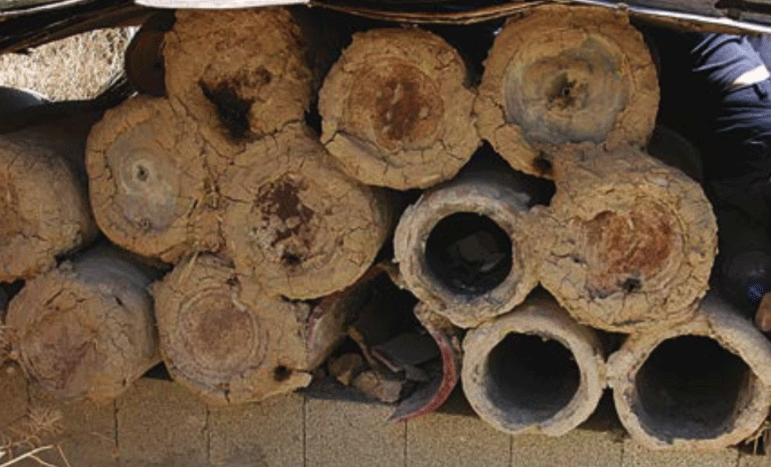
For decades, the Egyptian reliefs were the only firm visual record. Then in 2007, an excavation in northern Israel produced the first physical apiary recovered in situ anywhere in the ancient Near East. At Tel Rehov in the Beth Shean Valley, archaeologist Amihai Mazar of the Hebrew University of Jerusalem uncovered around 30 intact unfired-clay beehives, with remains of 100–200 more, dated to the mid-10th to early-9th century BCE. Each hive was a clay cylinder with a small flight hole at one end and a removable lid at the other, and the apiary is estimated to have produced up to half a tonne of honey per year.
Analysis of bee remains found inside the hives showed that the colonies were not local. They matched a subspecies from Anatolia, evidence that beekeepers were already importing honey bees over long distances 3,000 years ago. The biblical phrase "land of milk and honey" suddenly had a literal economic referent.
The Maya and the sacred stingless bee
 with the wax-pot entrance visible.jpeg)
Across the Atlantic, an entirely different bee was being kept by another civilisation. In the Yucatán Peninsula, Maya communities have managed Melipona beecheii, a stingless bee known in Yucatec Maya as Xunan-Kab or "Royal Lady Bee", for at least 3,000 years. The bee is unique to Central America, from the Yucatán down to Costa Rica, and Maya tradition holds it as a gift from the god Ah Muzen Cab.
Melipona honey is harvested from soft wax pots rather than rigid combs, and the wax itself was used by Maya craftspeople for casting jewelry and small metal objects. After Spanish colonization, sugar cane displaced honey as the main sweetener and meliponiculture declined sharply, almost disappearing by the 21st century before recent revival efforts began across Yucatán communities. The Maya example matters because it shows that the human-bee partnership is not a single European story. It evolved independently, with different bee species, on at least three continents.
African honey hunters and the bird that guides them
The most remarkable example of cross-species cooperation in honey collection involves no hive at all. In sub-Saharan Africa, the greater honeyguide (Indicator indicator) leads human honey hunters to wild bee colonies in tall trees. The hunters open the nests for honey, and the bird gets the wax and bee larvae left behind. Brian Wood and his colleagues, working with the Hadza of northern Tanzania, found that the birds increased the rate of bee-nest discovery by 560% and accounted for an estimated 8 to 10% of total Hadza caloric intake.

Evolutionary biologist Claire Spottiswoode and conservationists Keith and Colleen Begg published in Science in 2016 a study of Yao honey hunters in Mozambique, demonstrating two-way communication. The Yao use a trilled "brrr-hm" call, and honeyguides respond to it specifically. Hadza honey hunters use a melodic whistle instead, and honeyguides in Tanzania are over three times more likely to cooperate with their local human calls than with foreign ones. The partnership is at least as old as the hominin honey-hunting tradition itself, and it is the only well-documented case of free-living wild animals collaborating with humans for mutual food reward.
The Himalayan honey hunters of Nepal
A few thousand kilometres east of the Spanish cave painting, the practice it depicts is still being performed twice a year. In Lamjung and the surrounding districts of central Nepal, Gurung communities harvest wild honey from cliff colonies of Apis laboriosa, the giant Himalayan honey bee and the largest honey bee species in the world. Hunters known locally as Khudke scale vertical rock faces on handmade bamboo ladders that often hang hundreds of feet above the ground. They calm the bees with smoke from fires lit at the base of the cliff and cut the comb away with long sticks called tangos, fitted with a sickle, while a basket below catches the falling honeycomb. A single harvest can yield around 20 kg of honey, divided among the village.
The colonies they target are themselves unusual. Apis laboriosa builds massive single combs on south-west-facing cliffs at elevations of 2,500 to 3,000 m, and the honey is partly produced from Rhododendron nectar, which can contain grayanotoxins. The result, known locally as bhir maha and internationally as "mad honey", has mild psychoactive properties and reaches some of the highest prices of any honey on the global market. Mad honey poisoning in humans was first recorded by Xenophon in his Anabasis, when his Greek soldiers retreating through Pontos (north-east Anatolia) in 401 BCE consumed wild Rhododendron honey and were incapacitated for several days. The same chemistry connects a Greek campaign in modern Turkey, a Roman defeat under Pompey in 67 BCE, and a Gurung harvest tomorrow morning in the Marshyangdi valley.
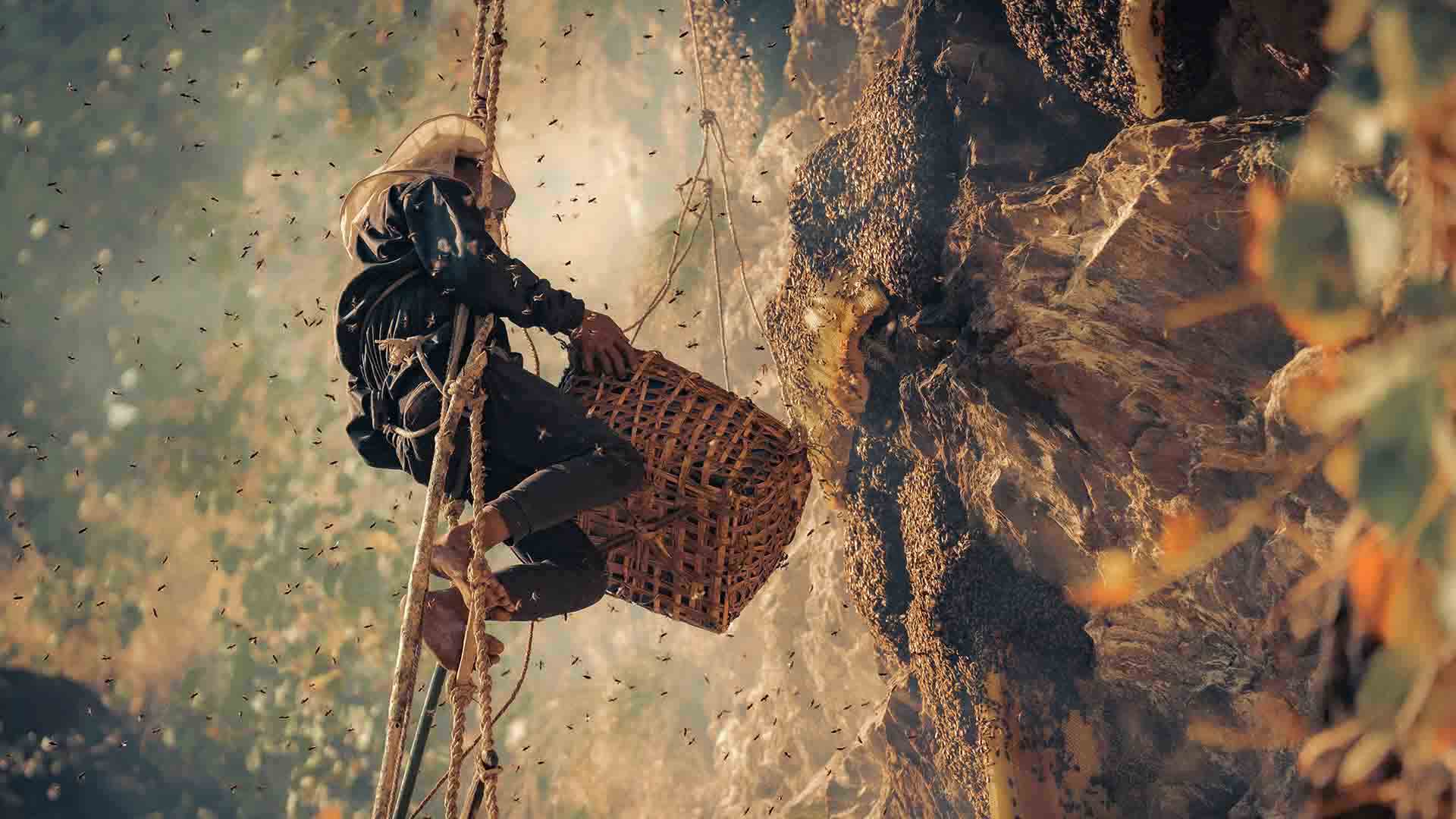
The tradition is under documented pressure. Reports indicate steep declines in Apis laboriosa populations in parts of its range, with habitat loss and climate change as the main drivers, and the Himalayan Honeybees project of the International Centre for Integrated Mountain Development (ICIMOD) is working with Nepali authorities to license harvesters and regulate offtake. Younger Gurung men are increasingly leaving cliff villages for urban work, and the ownership of harvest cliffs has shifted in some districts from indigenous communities to the government, which now opens them to non-community bidders. The oldest visual record of the human-bee partnership and one of its last living forms now face each other across 8,000 years and the same risk profile.
Aristotle, Virgil and the classical world's bee scholars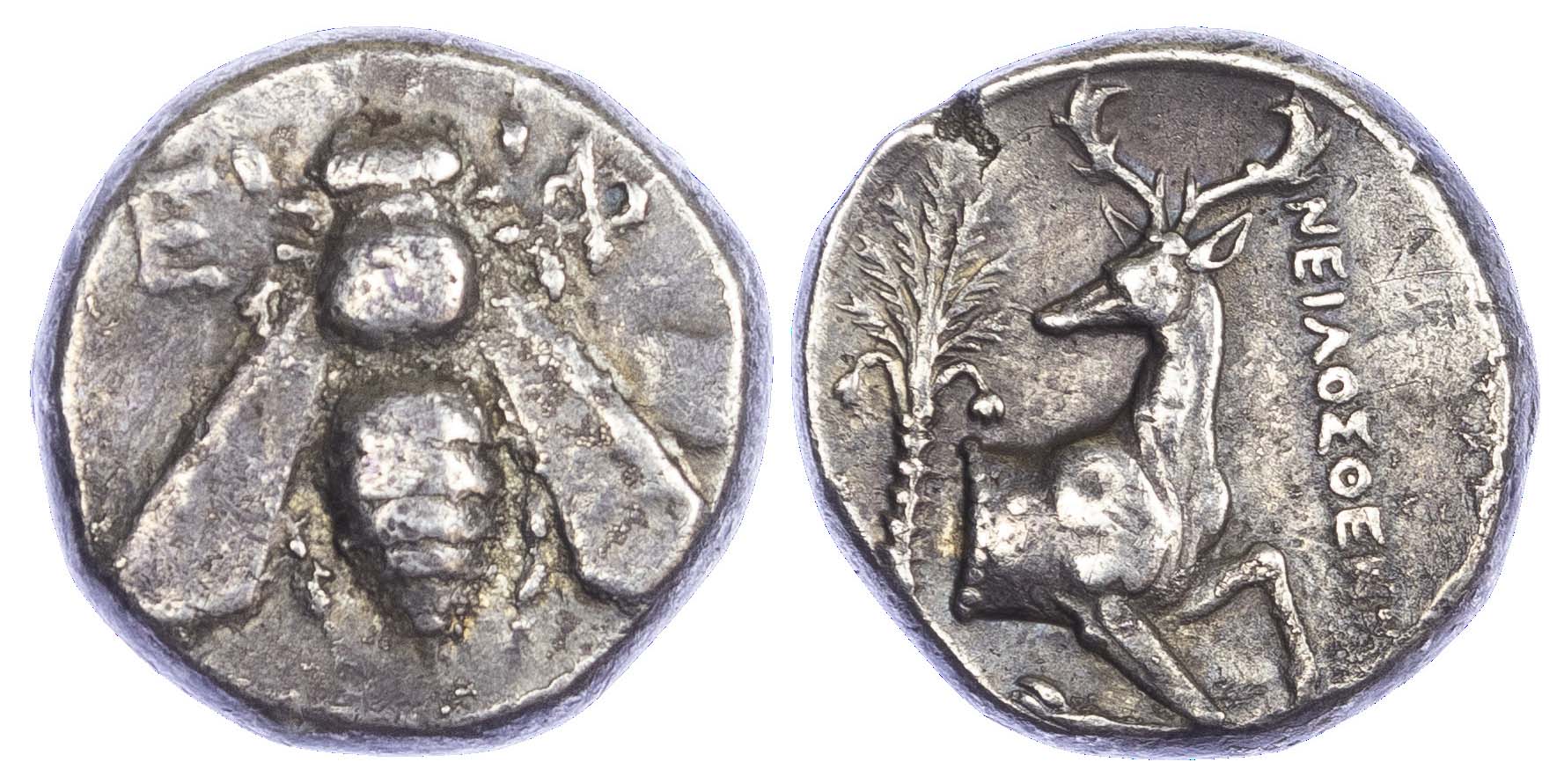
Europe's written record of bees begins in Athens. Aristotle's Historia Animalium (4th century BCE) contains the first systematic observations of honey bee behaviour, including descriptions of the colony structure and forager behaviour that align with what we now call honeybee biology. Aristotle correctly identified that bees collect from one flower species at a time on a given foraging trip, a fact rediscovered by 19th-century researchers as floral constancy.
Roman writers turned observation into instruction. Virgil's Georgics Book IV (29 BCE) is a 566-line poem on beekeeping that gives advice on hive placement, queen identification (though Romans believed the queen was male), and swarm management. Greek and Roman beekeepers used woven straw or wooden box hives, and Mediterranean varietal honeys (thyme, pine, fir) recorded in Roman cookbooks correspond closely with those still produced and sold today, including the Greek PDO-protected fir honeys described in the WikiFarmer article on honey produced in forests and meadows.
Anton Janša and the Slovenian roots of modern beekeeping
The figure behind World Bee Day was a painter who became a beekeeper. Anton Janša was born on 20 May 1734 in a beekeeping family in Carniola, the region that is now part of Slovenia. In 1770 he was appointed first imperial teacher of beekeeping at the court of Empress Maria Theresa, the earliest formal beekeeping post in Europe. Janša wrote two foundational works, Discourse on the Swarming of Bees (1771) and Comprehensive Science of Beekeeping (1775), and after his death Maria Theresa decreed that beekeeping in the Habsburg lands would be taught according to his methods.
A century later, Anton Žnideršič (1874–1947) developed the AŽ hive, modelled on Italian beekeeper Alberti's design. Around 90% of Carniolan honey bee colonies in Slovenia today live in these small, painted hives, often decorated with folk art known as panjske končnice. Slovenia has roughly five beekeepers per thousand inhabitants, the highest density per capita in the world, and the native Carniolan honey bee (Apis mellifera carnica) is one of the most widely distributed subspecies globally. World Bee Day is set on Janša's birthday for a reason. Slovenia treats beekeeping as cultural heritage with the same protections it grants to language and music.
Langstroth's 1851 hive changed honey production
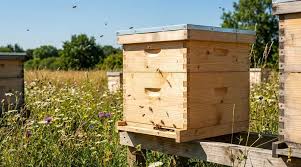
The single technical breakthrough that defined modern apiculture happened in Massachusetts. Lorenzo Lorraine Langstroth, a Philadelphia-born minister and amateur beekeeper, identified in 1851 that honey bees leave passages of about one quarter of an inch (around 6 mm) unblocked, but seal anything smaller with propolis or build comb across anything larger. He called this dimension "bee space" and applied it to a hive with removable wooden frames. US Patent 9300 was issued to Langstroth on 5 October 1852.
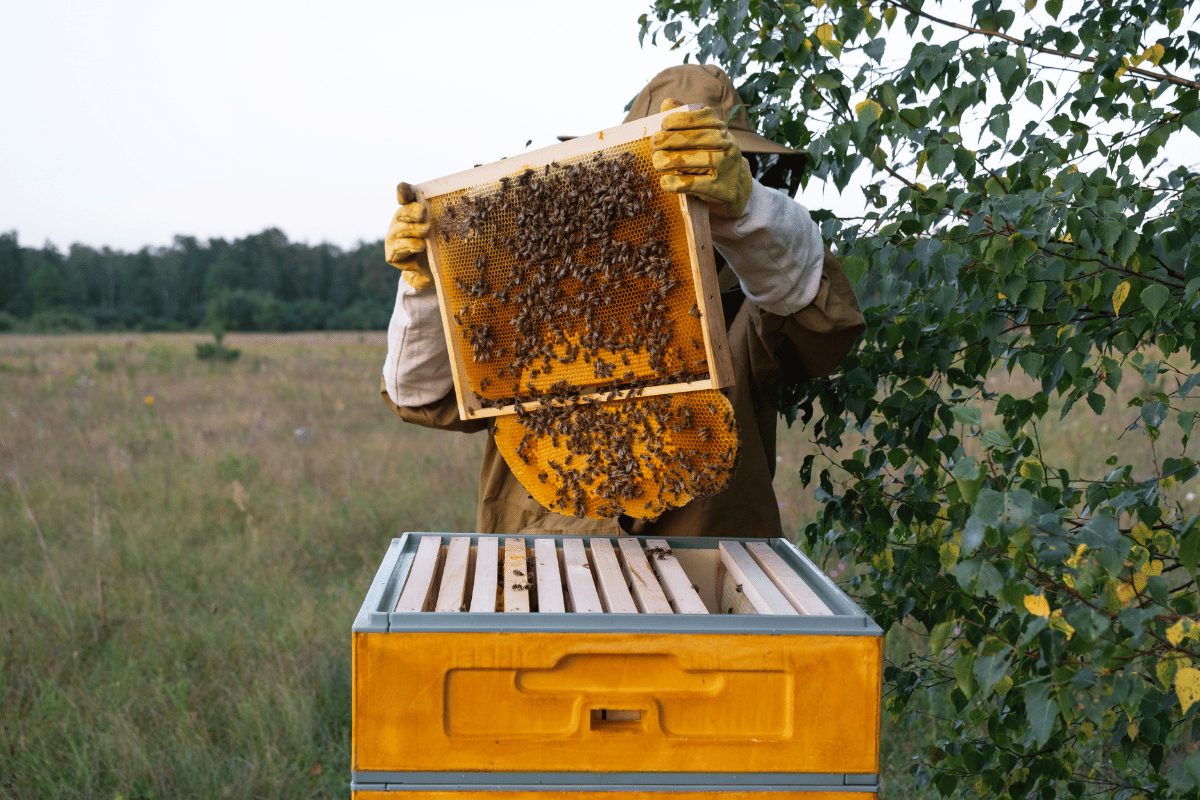
The consequence was straightforward but enormous. For the first time, beekeepers could lift out individual frames to inspect for disease, monitor colony health, harvest honey, and reuse drawn comb. About 75% of beehives in use today are based on this design. Earlier hive types (skeps, gums, fixed-comb log hives) usually required killing the colony or breaking the comb to harvest honey. The 20th century added improvements (better ventilation, integrated Varroa management, plastic foundations) on the same fundamental architecture. The hive hierarchy of queen, drones, and workers became, with the Langstroth frame, something a beekeeper could actually see.
The swing back to nature-based methods
Langstroth's hive made beekeeping productive, but it did not make it universal. Across most of Africa, parts of Asia, and increasingly among smallholder beekeepers in Europe and North America, fixed-comb and top-bar designs remain the standard. Hives can be woven like baskets using palm fronds or split bamboo, and inside them bees build comb as they would in any natural cavity, storing honey away from the entrance. WikiFarmer's PhD apiculturist Giacomo Ciriello describes this approach in what is nature-based beekeeping and how can a farmer adopt it, an article on the system that African beekeepers have used for centuries to produce honey and beeswax while maintaining healthy colony populations.
The trade-offs are explicit. Frame hives, combined with centrifuges and wired foundations, allow comb to be returned to the colony, which therefore produces more honey. The cost is more expensive equipment and reduced beeswax yield. Fixed-comb and top-bar hives invert that equation, with low equipment cost, higher beeswax production per hive, and a colony cycle closer to the wild state. A growing minority of European beekeepers now choose these designs precisely for that reason, avoiding routine treatments and selecting for resilience over yield. The 21st-century beekeeping landscape is therefore not a single dominant model. It is a coexistence of frame, top-bar, and fixed-comb systems, each suited to different ecological and economic conditions.
What the partnership looks like in 2026
The 10,000-year-old relationship is now an industrial one. According to FAO, around 75% of leading global food crop types depend on animal pollination to some degree, and pollinators contribute to approximately 35% of global crop production by volume. About 87 of the 115 major food crops worldwide depend on animal pollinators, and pollinator-dependent crops provide many of the micronutrients and vitamins in the human diet. FAO estimates that between US$235 billion and US$577 billion of annual food production relies directly on pollinator contributions. The volume of agricultural production dependent on animal pollination has risen by 300% over the past 50 years.
Bees do not work alone. There are more than 20,000 known bee species worldwide. Honey bees (genus Apis) account for around 8 of them, bumblebees (Bombus) around 250, and the majority of bee diversity is solitary, ground-nesting or cavity-nesting. A 2025 study by Tang et al. found that native bumblebees (Bombus trifasciatus) outperformed honey bees in pollination efficiency due to their morphology and foraging behavior, which is why bumblebees are used in greenhouse tomato pollination. Almond growers rely so heavily on bees that orchards routinely place 2 to 3 honey bee colonies per acre, or 5 to 7 per hectare, during the late-winter bloom.
The threats are equally specific. Varroa mite infestation, neonicotinoid pesticide exposure, habitat loss from agricultural intensification, and climate-driven mismatches between flowering and bee activity are the four pressures named most often in current research. In 2018, the EU committed to reversing pollinator decline by 2030, with measures at the farm level (hedges, field margins, fallow land, flowering strips) and at the landscape level. A study by Zattara and Aizen (2021) found 25% fewer bee species in records from 2006 to 2015 than before 1990. Responses include field margin management and flowering strips, reduced pesticide use, and sustainable beekeeping practices that leave enough honey for colonies to overwinter.
Bees on the rooftops
The most recent shift in the partnership has been geographical. Honey bees, long pushed out of cities by paving and pesticide drift, have returned to them on rooftops. Paris went from around 300 hives in 2010 to more than 2,500 registered today, with apiaries on the Opéra Garnier and the Beaugrenelle shopping centre. Luxembourg Garden has hosted hives since the 19th century. London saw a 220% increase in registered beekeepers between 1999 and 2012, and major sites including Fortnum & Mason, the Bank of America Tower in New York, the Empire State Building, and the Waldorf-Astoria now host hives. In Seoul, beekeeping on the rooftop of City Hall began in 2012 and has since spread to corporate, university, and government buildings.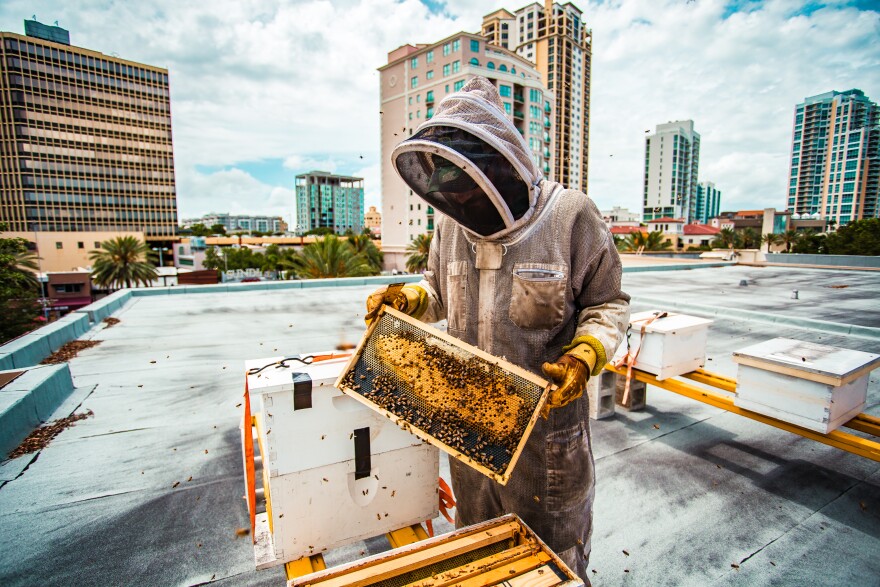
The picture is more complicated than the trend suggests. A study of 880 hives in the Paris metropolitan area found a positive effect of urbanisation on honey bee winter survival. However, with more than 7,500 urban hives in London, conservation groups warn that high honey bee density can outcompete wild pollinators such as bumblebees and solitary bees for limited urban nectar. The rapid expansion has prompted calls to pair every new urban hive with melliferous plantings rather than treat it as a standalone sustainability claim. Slovenia, true to its origins as the home of World Bee Day, maintains active rooftop apiaries in central Ljubljana using the native Carniolan honey bee. The newest chapter of the partnership is being written six storeys above pavement.
World Bee Day 2026 and the work ahead
This year's observance has a specific venue. The Third International Forum for Action on Sustainable Beekeeping and Pollination takes place in Maribor, Slovenia, on 20 to 21 May 2026, co-organised by FAO and the Government of Slovenia, with the theme "Science, innovation and policy actions for a more sustainable future". The 2026 World Bee Day theme is also tied to the International Year of the Woman Farmer 2026 and the International Year of Rangeland and Pastoralists 2026, two parallel UN observances that recognise the role of beekeeping in rural and pastoral livelihoods and women's economic participation.
The honey hunter in the Spanish cave painting climbed ropes alone. The Tel Rehov apiarist managed an industrial production yard. The Yao honey hunter walks the bush with a wild bird as a partner. The Gurung Khudke scales a Himalayan cliff with a bamboo ladder. The almond grower in central California rents 2 million colonies every February. Each version of the relationship is recognisable as the same partnership, scaled differently. The 10,000-year record suggests that the people side of the partnership has always done most of the active work, and the next decade will not be different. Habitat, pesticide policy, and traditional knowledge are now the variables that decide whether the next chapter is written.
References
- Bea, M., Domingo, I., & Angás, J. (2021). Newly-discovered Spanish cave art depicts honey-gathering. The Past.
- Ciriello, G. What is nature-based beekeeping, and how can a farmer adopt it. WikiFarmer.
- Cuevas de la Araña entry. Cuevas de la Araña – UNESCO Levantine rock art context. Wikipedia summary of academic dating literature.
- FAO. Global Action on Pollination Services for Sustainable Agriculture. Food and Agriculture Organization of the United Nations.
- FAO. (2026). World Bee Day 2026 – Bee together for people and the planet. Food and Agriculture Organization of the United Nations.
- FAO. Pollinators vital to our food supply under threat. Food and Agriculture Organization of the United Nations.
- Geneva Environment Network. (2026). World Bee Day 2026 – Bee Together for People and the Planet.
- Government of Slovenia. (2020). Pioneers of Slovenian beekeeping.
- ICIMOD. The Himalayan Honeybees Programme. International Centre for Integrated Mountain Development, Kathmandu.
- Kritsky, G. (2015). The Tears of Re: Beekeeping in Ancient Egypt. Oxford University Press.
- Langstroth, L. L. (1852). US Patent 9300. Langstroth hive – history. Patent record and historical context.
- Mazar, A., & Panitz-Cohen, N. (2007 to 2018). The Iron Age apiary at Tel Rehov, Israel. Beth-Shean Valley Archaeological Project, Hebrew University of Jerusalem.
- Newey, A. (2013). The ancient art of honey collecting on the Himalayan cliffs of Nepal. Field documentation with Gurung honey hunters, Kaski district.
- Paris rooftop beekeeping research, INRAE. Summary via 56Paris.
- Quezada-Euán, J. J. G. and colleagues. Melipona beecheii – stingless bee biology and cultural significance. Reference compilation of meliponiculture literature.
- Spottiswoode, C., Begg, K., & Begg, C. (2016). Reciprocal signaling in honeyguide-human mutualism. Science (summary release, University of Cambridge).
- Turner, M. D. (2023). Mad honey and the poisoner king: A case of mass grayanotoxin poisoning in the Roman military. Cureus, DOI 10.7759/cureus.38289.
- United Nations / Apimondia. World Bee Day – Anton Janša, 20 May.
- Urban beekeeping reference compilation. Urban beekeeping – global expansion and ecological concerns. Wikipedia summary of academic and city data.
- Villanueva-Gutiérrez, R., et al. House of the Royal Lady Bee – Maya revive native bees and ancient beekeeping. Mongabay.
- Wood, B. M., et al. (2014). Mutualism and manipulation in Hadza–honeyguide interactions. Evolution and Human Behavior.
- Wood, B. M., Spottiswoode, C., et al. (2023). Wild birds lead people to honey and learn from them. Science (AAAS press release).
- Xenophon. Anabasis 4.8.21 (401 BCE). Translation by Carleton L. Brownson (1922), Harvard University Press, Loeb Classical Library.
- Yogis Adventure. Gurung Honey Hunters of Nepal – Cliff Harvesting Tradition in Lamjung. Field guide and cultural background on Khudke harvest practice.
- Zattara, E. E., & Aizen, M. A. (2021). Worldwide occurrence records suggest a global decline in bee species richness. One Earth.