


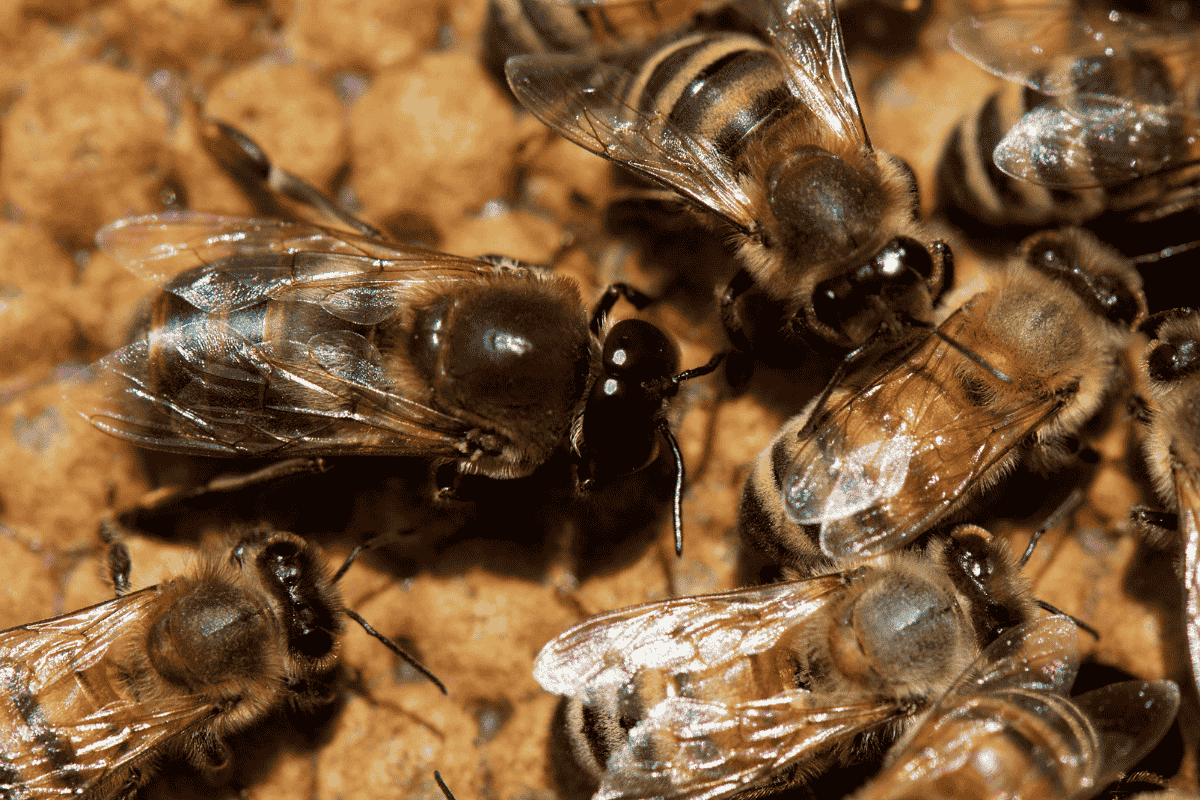
Have you ever wondered why honey bees are called social insects and how tens of thousands of individuals manage to live and work together in perfect harmony inside a single hive? The secret lies in a fascinating division of labor known as the caste system. Each member of a honey bee colony has a specific role, and the success of the entire colony depends on the efficient collaboration between these distinct castes.
The social structure of a honey bee colony
A typical honey bee colony consists of 35,000 to 70,000 bees, living together within a highly organized system. This includes:
- one queen bee – the fertile mother of the colony
- 200 to 300 drones – the male bees
- Tens of thousands of worker bees – sterile females that maintain the colony
The three castes (queen, drone, and worker) are morphologically and behaviorally distinct, and each plays a vital role in the survival and productivity of the hive.
The queen: the colony's reproductive center
The queen bee is the only sexually mature female in the colony and is developed from a fertilized egg. However, what sets her apart is her diet during larval development: she is fed royal jelly throughout her entire larval stage, triggering full reproductive development.
Physical features
- Long abdomen that extends beyond the wings
- Developed ovaries and spermatheca (sperm storage organ)
- Lacks pollen baskets and wax glands
Main functions
Egg laying: A healthy queen can lay up to 1,500–2,000 eggs per day, depending on season and colony needs.
Mating: Within a week of emergence, the queen embarks on nuptial flights, mating mid-air with 10–20 drones. After mating, she stores sperm in her spermatheca and uses it for the rest of her life.
Pheromone production: The queen produces a complex chemical blend called queen substance, which:
- Inhibits the development of ovaries in worker bees
- Maintains social cohesion
- Suppresses swarming under normal conditions
The queen's presence and productivity directly influence colony behavior, growth, and survival.
The drones: short-lived males with a single purpose
Drones are the male bees of the colony. Unlike the queen and workers, drones develop from unfertilized eggs through a process called arrhenotokous parthenogenesis. They are larger than workers, have large eyes for locating the queen during mating flights, and lack a sting.
Main functions:
- Mating with virgin queens: This is their only reproductive function. After mating, drones die immediately, as their genitalia are irreversibly damaged during copulation.
- Temperature regulation: Some studies suggest that drones may help maintain optimal hive temperature, particularly in larger colonies.
Because drones do not collect nectar, build combs, or defend the hive, they are usually expelled from the hive before winter, as they become a drain on resources during the non-reproductive season.
The worker bees: the engine of the colony
Worker bees make up the vast majority of the hive population and are infertile females developed from fertilized eggs. Despite their small size, they are equipped with specialized structures such as pollen baskets (corbiculae), wax glands, and a sting. Workers undergo a well-defined age-based division of labor known as temporal polyethism.
Phase 1: in-hive duties (day 1–21)
During the first three weeks of life, worker bees remain in the hive and perform the following tasks:
- Nursing: Feed larvae with royal jelly (young) and bee bread (older)
- Comb building: Secrete and mold wax to construct honeycomb cells
- Hive maintenance: Clean cells and maintain overall hygiene
- Temperature control: Use wing fanning to ventilate the hive
- Nectar processing: Convert collected nectar into honey by reducing its water content
- Guarding: Protect the hive entrance from intruders
Phase 2: foraging duties (day 22–42)
After their in-hive phase, workers become foragers:
- Collect nectar and pollen: Main sources of carbohydrates and protein
- Gather propolis: Plant resin used to seal hive cracks and sterilize the environment
- Collect water: Used for cooling and honey dilution
- Pollinate flowers: While not intentional, their pollination activities are essential to many crops
A forager’s life is demanding, and most die in the field due to predation, exhaustion, or environmental hazards.
A perfect example of natural coordination
The honey bee caste system is a remarkable example of evolutionary adaptation and social cooperation. Every bee, from the queen to the workers and drones, plays a critical role in maintaining the health and survival of the colony. Their division of labor is not only efficient but also essential for pollination and food production worldwide.
In fact, the honey bee (Apis mellifera) is responsible for pollinating approximately one-third of the food we eat, making the understanding and protection of their colonies more important than ever.