We all hear the word "sustainability" rocking in every article, website, and company as their future target. Even the United Nations set 17 global goals called SDGs (Sustainable Development Goals). But the question remains: What does sustainability truly mean?
Sustainability is a goal that balances economic, social, and environmental aspects that should be maintained to achieve successful cohabitation on Earth.
However, we always forget the viral picture of the Earth without bees. In two words, NO LIFE.

Figure 1 Windermere, the lake district with and without bees (A.Farnworth,2021)
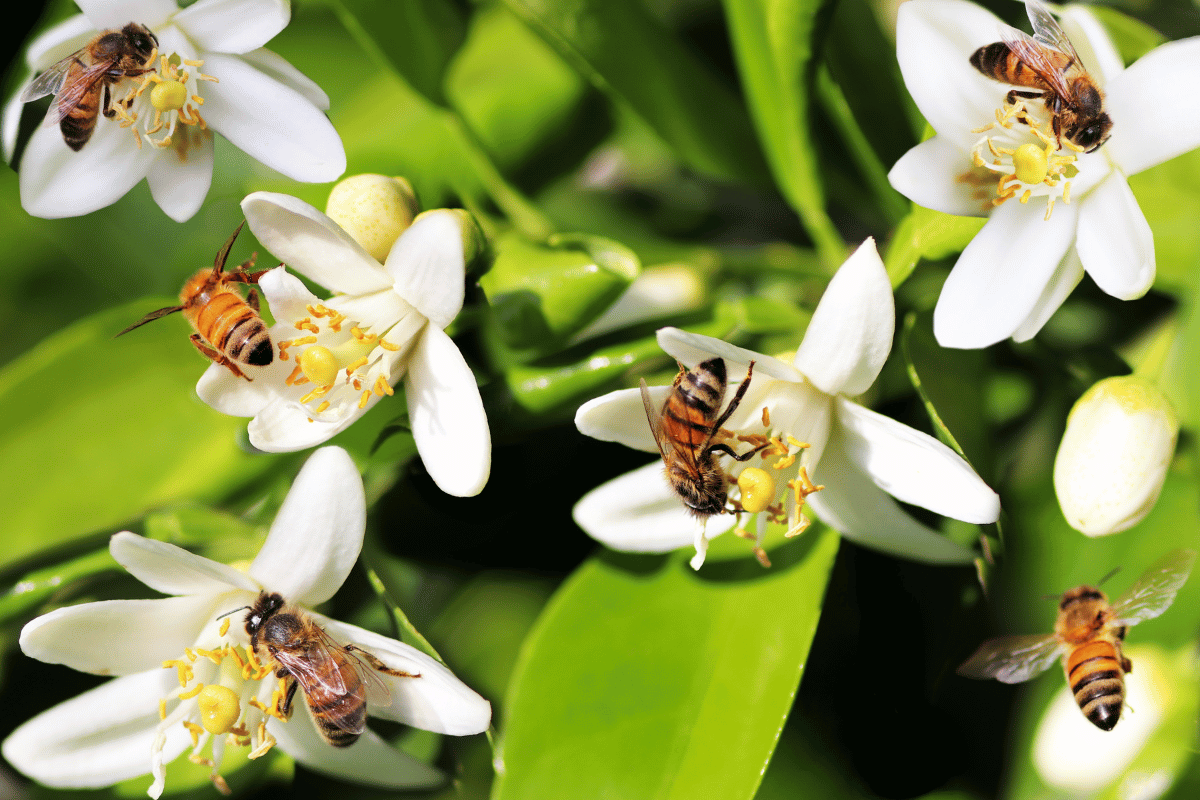
These wild pollinators are essential to maintaining the ecosystem. They fertilize trees and flowers and support the food chain.
Yet, this valuable insect faces a dangerous threat: Colony Collapse Disorder (CCD). As its name suggests, CCD is the phenomenon where honeybees leave their hives without any cause. Various factors influence the occurrence, such as diseases, pesticides, climate change, habitat loss, and many more.
So how can we help them?
Sustainable Beekeeping practices
Avoid spraying pesticides near beehives
Pesticides, including insecticides, highly affect bees, since they're also insects (not to forget that). Spraying insecticides can cause either direct mortality of bees or contamination of these chemical elements in the beehive, where direct contact with bees occurs, even honey and pollen. It's preferable to locate the beehives in an area a bit far from treated agricultural areas.
If isolating the beehives is impossible, applying pesticides during the bees' non-working / sleep hours is advisable. This lowers the risk of direct exposure to chemicals. It is also good to replace heavy chemicals with organic ones.
Create a perfect environment for the bees
Who says that we can't enhance honey or pollen production? If the flowers are far, we can make them closer. There are a lot of plants that could be cultivated near beehives. In this way, we're increasing green areas, helping the bees increase their lifespan and productivity. Any type of plant is beneficial, but as a suggestion, maybe some aromatic herbs like basil, cilantro, parsley, and dill or some flowers like marigolds, sunflowers, black-eyed Susans, and lavenders…
Imagine having this Eco Garden full of aromas and buzzing bees!
Ethical honey harvesting
It's guilty enough to think of taking away all the harvest (the honey) of a whole year of work from the bees. It's their work, after all, and beekeepers just come and take their yield that was supposed to be kept for surviving winter and replace it with syrups.
Ethically, honey harvesting should be done in the gentlest way possible without hurting the bees, neither by passive aggressiveness nor excessive smoke. Indeed, the whole idea of beekeeping is usually to earn money from honey harvesting, but consider the bees as partners in your company, so instead of taking all their yield, keep a small quantity for them as a profit. Keep in mind that not only do humans benefit from the nutrients in honey, but bees also rely on it to strengthen their immunity, which in turn helps extend their lifespan.
Expanding the beekeeping culture
In small towns, beekeeping is still considered a very competitive business. Since there are no rules, beekeepers create their own methods and guard their practices from one another. However, collaboration is key, as beekeeping is not just an investment of money but also an investment in our planet and in the future of our children. The best approach is to build a network among these businesses, support one another, collectively tackle challenges such as climate change and weather fluctuations, and raise awareness. After all, one hand alone cannot clap!
High-tech level of beekeeping
Technological investments in agriculture, especially in beekeeping, are still relatively low compared to other sectors. However, the global population is growing rapidly, leading to an increase in food production demands. From the beekeepers' perspective, their sole responsibility is to safeguard our valuable pollinators.
One innovative idea is smart beekeeping. It's based on monitoring and regulation because they are crucial to creating an ideal environment for the bees despite unpredictable and sometimes unbearable weather conditions.
Temperature sensors help regulate the internal temperature of the beehive by cooling during extreme heat in summer and heating during extreme cold in winter. The process of cooling naturally requires a huge additional energy from bees using their wings as a fan effect, and the heating process produces the phenomenon of clustered bees in one place to keep the heat, which decreases the development of the beehives.
Humidity sensors monitor humidity in the beehive and send awareness notifications to the beekeeper. High humidity increases the risks of pest disease and proliferation. It could be caused by a spilled syrup or natural high humidity and could be solved by placing a small dehumidifier in the beehive.
Automatic feeders equipped with water level sensors and dispensers minimize the beekeeper's work and the inconvenience of opening the beehives and disturbing the bees.
Weight sensors under the beehive linked to a smart IoT system can provide real-time information about every hive. An increase in weight could be a sign of good beehive development or an increase in honey yield during the season. Also, a decrease can be a sign of death or a CCD phenomenon. In this case, the system sends an emergency alert to the beekeeper, this may improve the likelihood of getting the bees back if he acts promptly.
A fate in our hands
Decisions and actions should be made today before it's too late. Every small contribution, whether beekeepers or not, can help the destiny of the bees and ours, too. Planting flowers and applying sustainable practices are all steps toward progress!
References
A.Farnworth , 2021, what would the lake district look like in a world without bees? Lancashire Telegraph