Bee venom
Bees are known for their role in pollination and honey production. But sometimes we forget that there are also other subproducts in the world of beekeeping like beeswax, pollen, royal jelly, and BEE VENOM. Not to forget that we avoid the latter during a bee attack by zigzag running.
Bee venom is used in apitherapy; it has many effects, such as antioxidant, antimicrobial, antiviral, anti-inflammatory, anti-neuroinflammatory, and anti-cancer.
However, bee venom is still limited in use not only due to its potential side effects and allergic response but also its complex method of extraction and some ethical considerations.
What is bee venom, and how is it produced?
The biology behind the bee venom
Apitoxin is the scientific name of bee venom. It’s usually secreted and released during the first 20 seconds of contact, only during a defensive response when the worker honeybees feel threatened.
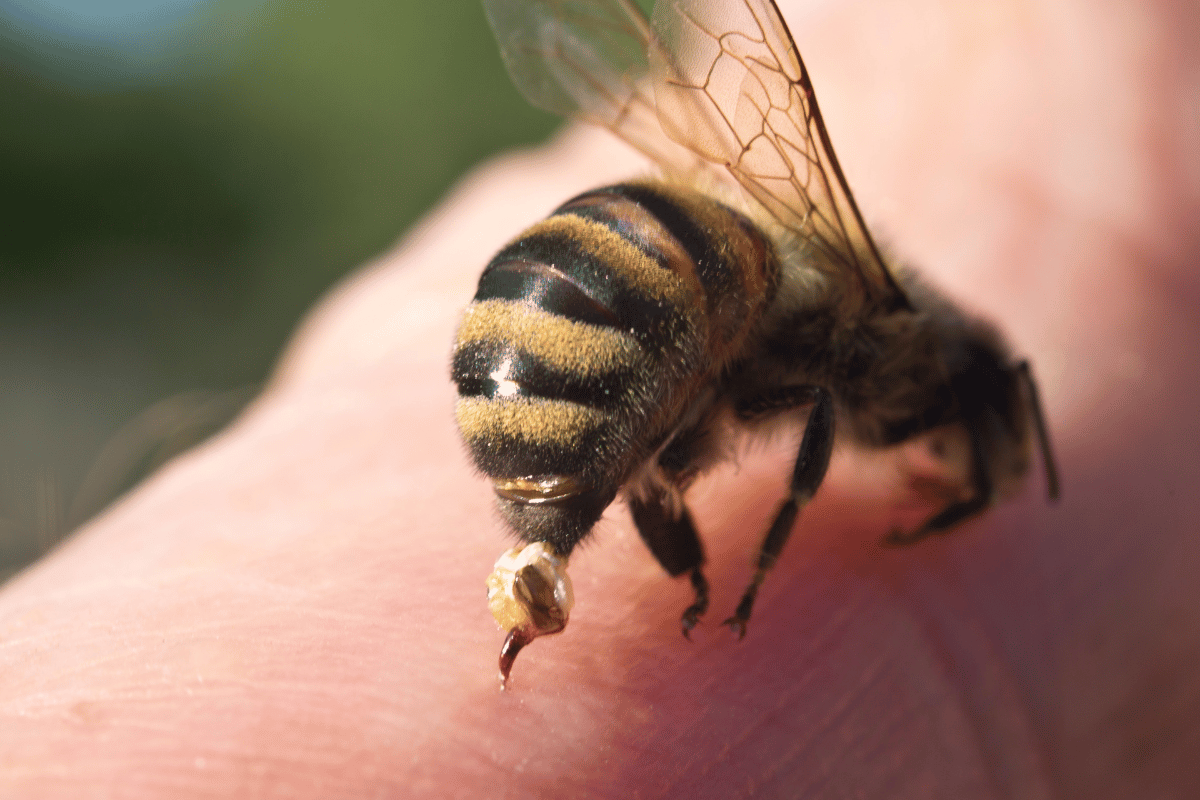
It is very well known that bees die after stinging ( in reality after 18 to 114 hours ) and that it is because the barbs are backward-facing, and their main use is to help the stinger embed itself in the skin. This causes the bee to detach its stinger, provoke abdominal tissue deterioration, and, therefore, death.
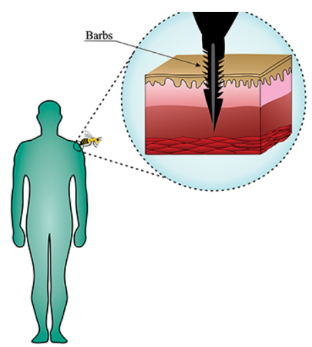
Figure 1. Barbs anchor the stinger into the skin, from where the stinger cannot be retracted when the bee escapes (Pucca et al, 2019)
Bee venom is 80% water, and the rest is a mixture of enzymes, peptides, amines, and volatile compounds. For example, melittin is the most toxic peptide, forming half of the dry venom and the main cause of pain. Because of the active compounds in the bee venom, local and systemic reactions are triggered, stimulating the nervous system.
Bee venom extraction: How is it collected?
Collecting bee venom is a very critical process, especially since the consequence of venom release in natural cases causes the death of the bees.
One of the oldest techniques was shocking the bees electrically and squeezing them between the rolls to make them sting. But this process comes with a lot of bee loss, which we're trying to avoid to keep a healthy ecosystem.
To solve this issue, a patent was created in the US for collecting bee venom without harming the bees, it’s placed on the hive entrance.
The structure is built from:
- Base plate (Glass or Rigid transparent material) to collect the venom
- Fabric layer (Nylon or Silk) placed on top of the base plate that allows the bee’s stinger to pass without getting stuck
- An electrified grid of wires for stimulation made of alternating wires connected to positive and negative terminals of a power source (Low-voltage DC pulse generator).
Now here's the scenario: the bee walks on two wires at once closing the system and receiving a mild electrical shock. This stimulates the bee to sting through the fabric and onto the plate. After enough bees sting the device, the venom dries and transforms into crystalline film.
The collection should be done using a sterile blade. The conservation of dried bee venom can be kept frozen for several months and for a few weeks if refrigerated. As for the liquid and diluted ones, they can be stored in well-sealed dark glass containers for the same period as the dried ones.
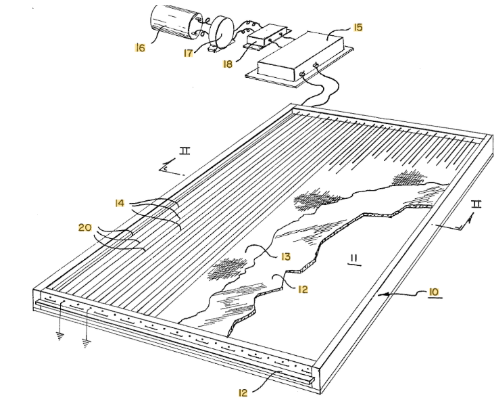
Figure 2. Patent US4254519A for collecting bee venom
The main advantages of this frame are the ability to move it easily from one beehive to another, without killing the bees, and yet it is very simple.
Hence, using electric shock can disturb hive life because it keeps the bees in an emergency state.
Safety considerations when handling bee venom
Dry venom should be handled very cautiously, by wearing proper gloves and face masks to avoid eye and lung irritation in case of contact. All the materials should be washed thoroughly and keeping an emergency kit is preferable. Labeling is very important for warning people about the product's possible health risks.
Market potential and economic value of bee venom
Bee venom is sold for around $120 per gram, which can be more expensive than gold.
Unfortunately, there is no legislation to produce bee venom because of some study limitations on the health and technical aspects.
However, its market is growing, especially after gaining popularity in the global pharmaceutical and cosmetic market.
Conclusion
Bee stings have the second-highest case fatality rate, ranked after snakebites. Since bee venom is beneficial, using it for medicinal, pharmaceutical, and cosmetic purposes without harming the bees is a good perspective!
References
Pucca M., Cerni F., Oliveira I., Jenkins T., Argremi L., Sorensen C., Ahmadi S., Barbosa J. & Laustsen A. (2019), Bee updated current knowledge on bee Venom and bee envenoming therapy. Frontier of Immunology, Section Vaccines and Molecular Therapeutics, Volume 10- 2019