The ancient practice that feeds the world
Beekeeping stands as one of humanity's oldest agricultural practices, maintaining its critical importance for global food security to this day. Honeybees (Apis mellifera), along with other bee species, form the backbone of pollination services that support natural ecosystems, agricultural productivity, and even medicinal applications. This foundational guide introduces aspiring and beginning beekeepers to the essential biology, behavior, and ecological significance of the Western honeybee, providing a comprehensive overview that connects to more specialized beekeeping topics.
Understanding the Western honeybee (Apis mellifera)
Scientific classification and global distribution
The Western honeybee, scientifically classified within the family Apidae, order Hymenoptera, represents one of Earth's most economically and ecologically valuable pollinator species. Native to Europe, Africa, and parts of Asia, Apis mellifera has been introduced to every continent except Antarctica through human activity, adapting remarkably well to diverse climates and landscapes.
Complete Scientific Classification:
- Kingdom: Animalia
- Phylum: Arthropoda
- Class: Insecta
- Order: Hymenoptera
- Family: Apidae
- Genus: Apis
- Species: Apis mellifera
Apis mellifera is not the only honey-producing bee, but it is by far the most widely managed. Course material highlights that this dominance is not accidental. Apis mellifera combines three rare traits in one species:
- strong colony cohesion
- high honey storage capacity
- exceptional adaptability to climate and forage diversity
This explains why it spread from its native range in Europe, Africa, and parts of Asia to nearly every agricultural region worldwide. Apis mellifera includes dozens of regional subspecies, each adapted to local conditions such as cold winters, drought, or long flowering seasons. This genetic diversity is one reason the species remains resilient under very different management systems, from sedentary backyard hives to large-scale nomadic beekeeping.
Habitat preferences and adaptability
Honeybees demonstrate extraordinary environmental flexibility, thriving in forests, meadows, orchards, and agricultural lands. In nature, they nest in protected cavities such as hollow tree trunks, rock crevices, or caves. In managed beekeeping, they readily adapt to human-made hives designed to optimize colony health and honey production. A well-maintained hive provides not merely shelter but an ideal environment for breeding, food storage, and honey production, with individual hives potentially generating significant income through honey and other hive products.
The ecological and economic powerhouse
The importance of honeybees extends far beyond honey production. These remarkable insects pollinate over 70% of flowering plants worldwide, ensuring the fruit and seed production essential to both wild ecosystems and agricultural systems. Their pollination services contribute to global food security, supporting the production of fruits, vegetables, nuts, and seeds that form staples of human nutrition.
Beyond pollination, honeybees produce an array of valuable products:
- Honey: A natural sweetener with antibacterial properties
- Pollen: A protein-rich nutritional supplement
- Propolis: A resinous substance with powerful antimicrobial effects
- Royal Jelly: A nutrient-dense secretion that supports queen development
- Beeswax: Used in cosmetics, candles, and industrial applications
- Bee Venom: Utilized in apitherapy for its anti-inflammatory properties
By transferring pollen between plants, honeybees maintain biodiversity and support ecosystem health across landscapes. This makes their conservation not merely an agricultural concern but an environmental imperative.
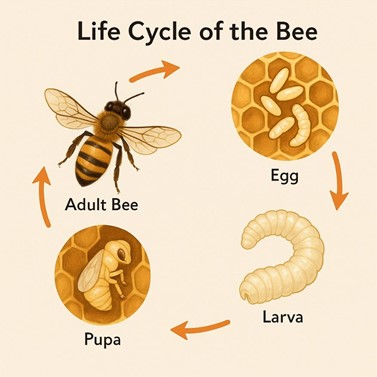
Figure 1: Honeybees life cycle
The social structure of a honeybee colony
A super-organism in action
A honeybee colony functions as a "super-organism"—a highly organized community where individual bees perform specialized roles that ensure the survival, reproduction, and productivity of the entire hive. This sophisticated social structure consists of three main castes: the queen, workers, and drones.
The queen bee
The queen bee reigns as the sole fertile female in the colony, carrying the genetic future of the entire hive. Her primary function centers on reproduction, with peak-season queens laying an astonishing 1,500 to 2,000 eggs daily. This number can be up to up to 2,000–3,000 eggs per day in peak season.
Her chemical signals are equally important. When pheromone levels decline, workers initiate queen replacement long before collapse becomes visible. When pheromone levels decline, workers initiate queen replacement long before collapse becomes visible.
Key Characteristics:
- Longevity: Queens can live 3 to 5 years, significantly longer than workers
- Pheromone Production: She releases chemical signals that maintain social order and colony unity
- Sex Determination: The queen controls offspring sex by choosing to fertilize eggs (producing females) or laying unfertilized eggs (producing males)
- Succession: When a queen ages or becomes weak, worker bees rear a replacement using specialized feeding with royal jelly
The queen's presence is so essential that the African proverb holds true: "A hive without a queen is like a kingdom without a crown."
Worker bees
Worker bees, sterile females, constitute over 95% of the colony population, performing virtually all hive maintenance, foraging, and brood care. Their roles shift with age in a remarkable progression called temporal polyethism:
Age-Based Task Progression:
- Days 1-3: Cell cleaning and hive maintenance
- Days 3-10: Feeding larvae and attending the queen
- Days 10-20: Wax secretion, comb building, nectar processing, and hive guarding
- Days 20+: Foraging for nectar, pollen, propolis, and water
Lifespan Variations:
- Summer workers: 6 to 8 weeks (due to intensive foraging demands)
- Winter workers: 4 to 6 months (reduced activity conserves energy)
This age-based division of labor ensures that the colony's needs are met efficiently throughout the season, with experienced older bees taking on the riskier foraging tasks while younger bees remain safely within the hive.
Drones
Drones serve a singular but vital purpose: mating with virgin queens from other colonies. These male bees possess distinctive characteristics that set them apart from their female colony mates:
Drone Characteristics:
- No stinger, making them defenseless
- Lack pollen baskets and do not forage
- Perform no work within the hive
- Larger eyes that help them spot queens during mating flights
- Live only during the breeding season (spring through summer)
- Are expelled from the hive or die shortly after mating or before winter arrives
Population balance in a thriving colony
A typical summer colony maintains a carefully balanced population:
|
Caste |
Approximate Number |
Percentage |
|
Queen |
1 |
<0.001% |
|
Workers |
40,000–60,000 |
~98–99% |
|
Drones |
200–1,000 |
~1–2% |
This population structure shifts seasonally, with drone populations increasing during spring reproductive periods and declining to zero by late autumn as colonies prepare for winter.
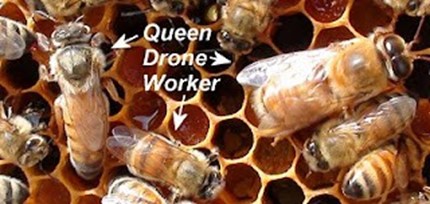
Figure 2: Population of the beehive
Honeybee communication: The waggle dance
Among the most fascinating aspects of honeybee biology is their sophisticated communication system, particularly the waggle dance. This remarkable behavior represents one of the most advanced forms of symbolic communication in the animal kingdom.
How the waggle dance works
When a forager bee discovers a valuable food source, water, or potential nesting site, she returns to the hive and performs the waggle dance on the vertical honeycomb surface. Through precise movements, she conveys three critical pieces of information:
- Direction: The angle of the waggle run relative to vertical indicates the direction to the resource relative to the sun's position
- Distance: The duration of the waggle portion communicates how far away the resource is located
- Quality: The vigor and repetition of the dance reflect the richness and desirability of the discovery
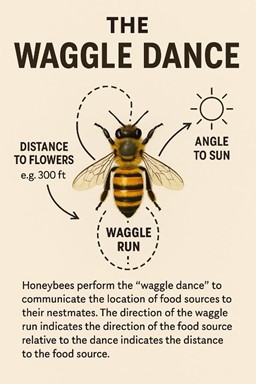
Figure 3: Bees communication: The waggle dance
This elegant communication system allows colonies to efficiently mobilize thousands of foragers to the most productive flower patches, ensuring optimal resource collection. The waggle dance demonstrates that honeybees possess not just instinct but a form of symbolic language that can transmit abstract spatial information, a cognitive achievement once thought unique to primates.
Modern threats to honeybee populations
Despite their evolutionary success and adaptability, honeybees face unprecedented challenges in the modern world. Understanding these threats is essential for anyone considering beekeeping and for society's broader conservation efforts.
Current challenges
Pesticide Exposure: Agricultural chemicals, particularly neonicotinoids and other systemic pesticides, can impair bee navigation, learning, and reproduction even at sublethal doses.
Habitat Loss: The conversion of diverse natural landscapes to agricultural monocultures reduces the availability of varied forage throughout the season.
Climate Change: Shifting weather patterns disrupt the synchronization between flower blooming and bee activity, while extreme weather events can devastate colonies.
Varroa Mite Infestation: This external parasite has become the single greatest pest threat to managed honeybee colonies worldwide, weakening bees and transmitting deadly viruses.
Disease Pressure: Bacterial, fungal, and viral pathogens including Nosema, American Foulbrood, and various viruses threaten colony health and survival.
Addressing these threats requires coordinated efforts from beekeepers, farmers, researchers, policymakers, and the general public. Sustainable beekeeping practices, integrated pest management, habitat restoration, and reduced reliance on harmful pesticides all contribute to protecting Apis mellifera and, by extension, global food security.
For beginners, this reinforces one message: successful beekeeping starts with observation, restraint, and biological literacy, not intervention alone.
The beekeeper's role in conservation and production
Modern beekeeping represents a partnership between humans and honeybees, where thoughtful management supports both colony health and productive honey harvesting. Beekeepers serve as stewards of these remarkable insects, balancing the needs of the colony with the goal of sustainable honey production.
Successful beekeeping requires understanding honeybee biology, recognizing signs of health and disease, providing adequate nutrition throughout the year, and implementing appropriate pest and disease management strategies. A well-maintained hive supports a thriving colony that can resist environmental stresses and continue its vital ecological work.
Protecting the pollinators that sustain us
The Western honeybee represents far more than an insect that produces sweet honey. Apis mellifera embodies a keystone species whose daily activities support the reproduction of wild plants, the productivity of agricultural systems, and the stability of ecosystems worldwide. Understanding their biology, social structure, communication, and the challenges they face equips both aspiring beekeepers and concerned citizens to take informed action.
Conservation efforts and sustainable beekeeping practices provide hope for protecting honeybee populations. By supporting diverse floral resources, reducing pesticide use, implementing thoughtful hive management, and raising awareness about the importance of pollinators, we safeguard not only Apis mellifera but the intricate web of life that depends on their pollination services.
Further Reading:
For more detailed information on specific beekeeping practices, explore these related articles:
- Hive Products and Biodiversity: Beyond Honeybees
- Honeybee Diseases and Colony Health Management
- Practical Beekeeping: Seasonal Management and Hive Inspection
References
FAO – Food and Agriculture Organization: Bees, pollination & food security
Bee Diversity — Museum of the Earth