Safeguarding the hive's future
Maintaining colony health represents one of the most critical responsibilities of responsible beekeeping. Honeybee colonies face serious health threats from parasites, fungi, bacteria, and viruses that can weaken hives, devastate productivity, and lead to complete colony collapse if left undetected or unmanaged. Understanding these pathogens, recognizing early warning signs, and implementing integrated management strategies are essential skills for every beekeeper committed to supporting thriving, resilient colonies.
This comprehensive guide explores the major diseases and pests affecting honeybee colonies, with particular focus on practical, science-based management approaches that balance effectiveness with environmental responsibility.
The Varroa mite crisis
Understanding Varroa destructor
The Varroa mite (Varroa destructor) stands as the most dangerous parasite threatening managed honeybee colonies worldwide. These small reddish-brown external parasites attach themselves to adult bees, larvae, and pupae, feeding on the bees' fat bodies and hemolymph (insect blood). While visible to the naked eye at approximately 1.1mm × 1.6mm, Varroa mites often hide in the intersegmental regions of bees' abdomens, making detection challenging without deliberate monitoring.
The Devastating impact of Varroa
Varroa mites cause multifaceted damage to honeybee colonies:
Direct physical harm:
- Weakened immune systems from continuous feeding
- Deformed wings, preventing flight
- Reduced body weight and shortened lifespans
- Impaired navigation and foraging abilities
Viral transmission:
Mites act as vectors for deadly viruses, most notably Deformed Wing Virus (DWV), which causes permanent wing malformation in developing bees. The combination of physical damage and viral infections creates a devastating synergistic effect.
Colony-level consequences:
- Weak, unproductive colonies unable to gather sufficient resources
- Disrupted brood patterns and reduced reproduction
- Increased susceptibility to secondary infections
- Complete colony collapse within 1-2 seasons if left untreated
Varroa mites preferentially infest drone brood cells, which remain capped longer than worker cells, providing extended reproductive opportunities. A single female mite entering a drone cell can produce multiple viable female offspring during the brood development period, leading to exponential population growth.
Research confirms that Varroa mites are among the predominant causes of global honeybee decline. The mite's natural host, the Asian honeybee (Apis cerana), evolved defensive behaviors against Varroa, but the European honeybee (Apis mellifera) lacks these natural defenses, making management intervention essential.
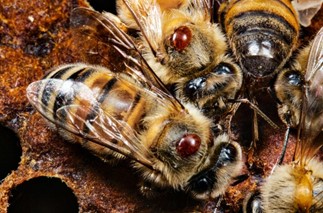
Figure 1: Varroa Mite on Honeybees
Integrated Varroa management strategies
Effective Varroa control requires an integrated pest management (IPM) approach combining multiple methods throughout the season. No single treatment provides complete, permanent control, making strategic combination and rotation essential for long-term success.
1. Chemical control methods
Synthetic Acaricides:
When infestation levels reach critical thresholds, synthetic chemical treatments provide rapid, highly effective mite reduction.
- Primary Active Ingredient: Amitraz, widely used in strips or vapor formulations
- Advantages: Fast-acting, easy to apply, highly effective at reducing mite populations
- Limitations: Risk of mite resistance development with overuse, possible residue accumulation in beeswax, should not be applied during honey flows to prevent contamination
Chemical treatments work best as targeted interventions when monitoring indicates dangerous mite levels, rather than as routine preventive applications.
2. Organic and Biological-Friendly Treatments
Naturally occurring substances accepted in organic beekeeping offer safer alternatives with minimal environmental impact and reduced resistance development.
Formic Acid:
- Penetrates capped brood cells, reaching mites during their reproductive phase
- Effective during active brood season when many mites are sealed within cells
- Temperature-sensitive application requires careful timing
- Can stress colonies if improperly applied
Oxalic Acid:
- Most effective during broodless periods (late autumn and winter) when all mites are phoretic (riding on adult bees)
- Application methods include trickling sugar-acid solution, vaporization, or spraying
- Multiple treatments may be needed for complete effectiveness
- Low environmental impact and minimal residue concerns
Thymol:
- Essential oil extracted from thyme with natural acaricidal properties
- Works well in warm climates but effectiveness declines in cooler temperatures
- Requires temperature control (15-30°C optimal) for proper vaporization
- Pleasant aroma with no harsh chemical smell
Advantages of Organic Treatments:
- Low resistance development compared to synthetic chemicals
- Minimal residue accumulation in honey and beeswax
- Suitable for organic certification and sustainable beekeeping
- Support natural colony processes when properly applied
Considerations:
- Temperature-dependent effectiveness requires careful timing
- Incorrect application can stress or harm bees
- May require multiple applications or combinations for severe infestations
3. Mechanical and Biotechnical Control Methods
Non-chemical physical interventions reduce mite populations through manipulation of colony biology and hive design.
- Drone Brood Removal: Since Varroa mites preferentially infest drone cells, strategically placing drone frames and removing them when capped traps substantial mite populations. This method exploits the mites' reproductive preference to reduce overall infestation.
- Screened Bottom Boards: Installing mesh floors allows mites that fall or are groomed off bees to drop through the screen, preventing their return to the colony. While not eliminating infestations alone, this passive method continuously reduces mite pressure.
- Powdered Sugar Dusting: Coating bees with powdered sugar encourages vigorous grooming behavior, causing mites to lose their grip and fall through screened bottom boards. This method provides limited control but can supplement other treatments.
- Brood Interruption: Temporarily caging the queen or removing brood frames breaks the reproductive cycle, forcing all mites to emerge onto adult bees where they become vulnerable to treatments like oxalic acid.
Advantages:
- Completely chemical-free approaches
- Reduce mite pressure before treatment thresholds are reached
- Support colony health through proactive management
Limitations:
- Require regular monitoring and skilled execution
- Less effective as sole treatment methods
- Best results achieved when combined with other IPM strategies
Monitoring: The foundation of Varroa management
Regular monitoring throughout the season enables beekeepers to detect rising mite levels before they cause irreversible damage. Several monitoring methods exist:
- Alcohol wash or sugar shake: Sampling adult bees to count mites
- Sticky board counts: Collecting naturally falling mites on screened bottom boards
- Drone brood examination: Opening drone cells to count mites visually
Most experts recommend maintaining mite levels below 1,000 mites per colony as a threshold for colony health. Above this level, significant impacts on colony function and survival become likely.
Nosema: The digestive system destroyer
Understanding νosema ιnfections
Nosema represents a microsporidian fungal infection affecting honeybees' digestive systems. Two species cause disease in honeybees: Nosema apis and the more aggressive Nosema ceranae. Both attack the midgut epithelium, disrupting nutrient absorption and causing progressive colony decline.
Why nosema escalates
Τhree conditions favor Nosema outbreaks:
- prolonged confinement without cleansing flights
- poor or monotonous nutrition
- damp or poorly ventilated hives
Rather than sudden collapse, Nosema causes chronic underperformance, reduced queen quality, and slow population decline. This makes it easy to overlook until productivity drops noticeably.
Recognizing nosema
Symptoms and effects:
- Spreads through contaminated water, feces, and food sharing within the colony
- Affects the midgut lining, causing poor nutrient absorption
- Leads to dysentery (diarrhea), visible as brown streaks on hive surfaces
- Causes swollen abdomens and crawling bees unable to fly
- Results in reduced honey production and weakened queens
- May trigger queen supersedure as workers detect her declining health
Colony-level impact:
Nosema causes slow, progressive colony decline rather than sudden collapse. It becomes particularly harmful during winter confinement or periods when bees cannot take cleansing flights. Stressed, malnourished colonies show greater susceptibility to infection.
Nosema management and prevention
Unlike bacterial brood diseases, Nosema management focuses primarily on prevention and colony strengthening rather than chemical treatment:
Preventive Practices:
- Regular hive inspections to detect early signs
- Maintaining strong, well-nourished colonies with adequate food reserves
- Ensuring good hive ventilation to reduce moisture buildup
- Providing diverse, high-quality pollen sources for nutrition
- Replacing old comb every 3-4 years to reduce pathogen loads
- Ensuring access to clean water sources
- Avoiding contamination between colonies through equipment sanitation
Strong colonies with robust immune systems and good nutrition can often suppress Nosema infections without intervention. The gut microbiome plays a crucial role in disease resistance, making nutritional support and minimizing antibiotic use important long-term strategies.
American foulbrood: The bacterial threat requiring extreme measures
The Deadliest brood disease
American Foulbrood (AFB), caused by the bacterium Paenibacillus larvae, represents the most severe contagious bacterial disease affecting honeybees. Its extreme persistence and rapid spread make it a notifiable disease in most countries, requiring immediate action and often regulatory intervention.
Identifying American Foulbrood
Characteristic Symptoms:
- Infects larvae after cells are capped, killing them during the pupal stage
- Sunken, greasy, and perforated cell cappings in irregular patterns
- Brown, sticky larval remains that form a characteristic "rope" when drawn out with a stick (rope test)
- Strong, foul odor resembling rotting meat or glue
- Scales (dried larval remains) adhering tightly to cell walls, extremely difficult to remove
The AFB crisis
Why AFB Is So Dangerous:
The bacterium produces spores that can survive for over 50 years in equipment, comb, and honey. These incredibly persistent spores spread rapidly between colonies through:
- Robbing behavior from weak or dead colonies
- Shared equipment moved between apiaries
- Contaminated honey fed to colonies
- Drift of infected bees between nearby hives
Legal requirements:
In most countries and regions, infected colonies must be destroyed and burned to prevent contamination spread. Equipment associated with infected colonies often requires sterilization or destruction. Failure to report and control AFB can lead to regional outbreaks affecting entire beekeeping communities.
Prevention as the only cure
Since AFB requires destructive intervention, prevention becomes paramount:
- Source bees and equipment from reputable, inspected sources
- Conduct regular brood pattern inspections
- Maintain strong colonies less vulnerable to opportunistic infections
- Never feed honey of unknown origin to colonies
- Clean and sterilize equipment between uses
- Report suspected cases to local beekeeping authorities immediately
European Foulbrood: The less aggressive bacterial disease
Understanding Melissococcus plutonius
European Foulbrood (EFB), caused by the bacterium Melissococcus plutonius, infects young honeybee larvae before cells are capped. While serious, EFB is less devastating than AFB and can often be managed through colony strengthening and requeening. EFB is a stress-associated disease that often resolves once underlying conditions improve.
EFB outbreaks links to:
- nutritional stress
- weak or aging queens
- overcrowding or poor ventilation
Recognizing EFB
Distinctive Symptoms:
- Infects uncapped larvae, causing death before cell sealing
- Larvae appear twisted, discolored, and positioned irregularly in cells
- Cappings may remain intact over dead brood (unlike AFB's perforated cappings)
- No characteristic foul odor like AFB
- Dead larvae do not rope like AFB (negative rope test)
- Spotty brood pattern with mixed healthy and diseased larvae
Managing european foulbrood
Unlike AFB, EFB often responds to management interventions:
Treatment Approaches:
- Requeening with genetically resistant stock
- Strengthening colony nutrition with adequate pollen sources
- Improving hive hygiene and ventilation
- In severe cases, shaking bees onto fresh foundation (clean slate method)
- Removing and replacing contaminated comb
EFB frequently appears in stressed, weak, or poorly nourished colonies, making colony strengthening an effective management strategy. The disease often resolves spontaneously when stress factors are addressed and colony strength improves.
Integrated colony health management
The energetic perspective
Parasites and pathogens extract a steep energetic toll from colonies. Bees divert precious energy toward immune responses and tissue repair when under disease pressure, leaving less energy for foraging, thermoregulation, brood care, and honey production. In heavily infected colonies, workers may abandon brood care entirely, accelerating collapse.
Understanding this energetic drain emphasizes the importance of reducing disease pressure through integrated management rather than relying solely on reactive treatments.
Comprehensive health practices
Year-Round Monitoring:
- Weekly inspections during active season (spring and summer)
- Every 2 weeks to monthly during winter
- Record observations including population strength, brood patterns, food stores, queen status, and disease signs
Colony Strengthening:
- Ensure adequate nutrition throughout the year
- Provide diverse pollen sources through strategic hive placement
- Supplement feeding during dearth periods
- Maintain strong populations going into winter
Biosecurity and Hygiene:
- Use biological and approved treatments following label instructions
- Avoid spreading contamination through tools, frames, or protective equipment
- Replace old comb on a regular cycle
- Source bees and equipment from inspected, reputable suppliers
Integrated Pest Management:
- Combine multiple control methods rather than relying on single approaches
- Rotate treatment types to prevent resistance development
- Monitor treatment effectiveness and adjust strategies
- Time treatments to avoid honey contamination
Vigilance rewards with thriving colonies
Managing honeybee diseases and pests represents the greatest challenge and most important responsibility of beekeeping. The threats are real, persistent, and potentially devastating. Yet beekeepers armed with knowledge, committed to regular monitoring, and willing to implement integrated management strategies can maintain healthy, productive colonies that resist disease pressure and thrive for years.
Success in colony health management comes from understanding the biology of diseases and pests, recognizing early warning signs before problems become crises, and applying appropriate interventions at optimal times. No single approach provides complete protection, but a comprehensive, integrated pest management approach combining chemical, biological, and mechanical methods offers the best path forward.
Further Reading
For complementary information on supporting colony health, explore these related Wikifarmer Library articles:
- Hive Products and Biodiversity: Beyond Honeybees
- Beekeeping Basics and Honeybee Biology
- Practical Beekeeping: Seasonal Management and Hive Inspection
References
FAO – Food and Agriculture Organization: Bees, pollination & food security