


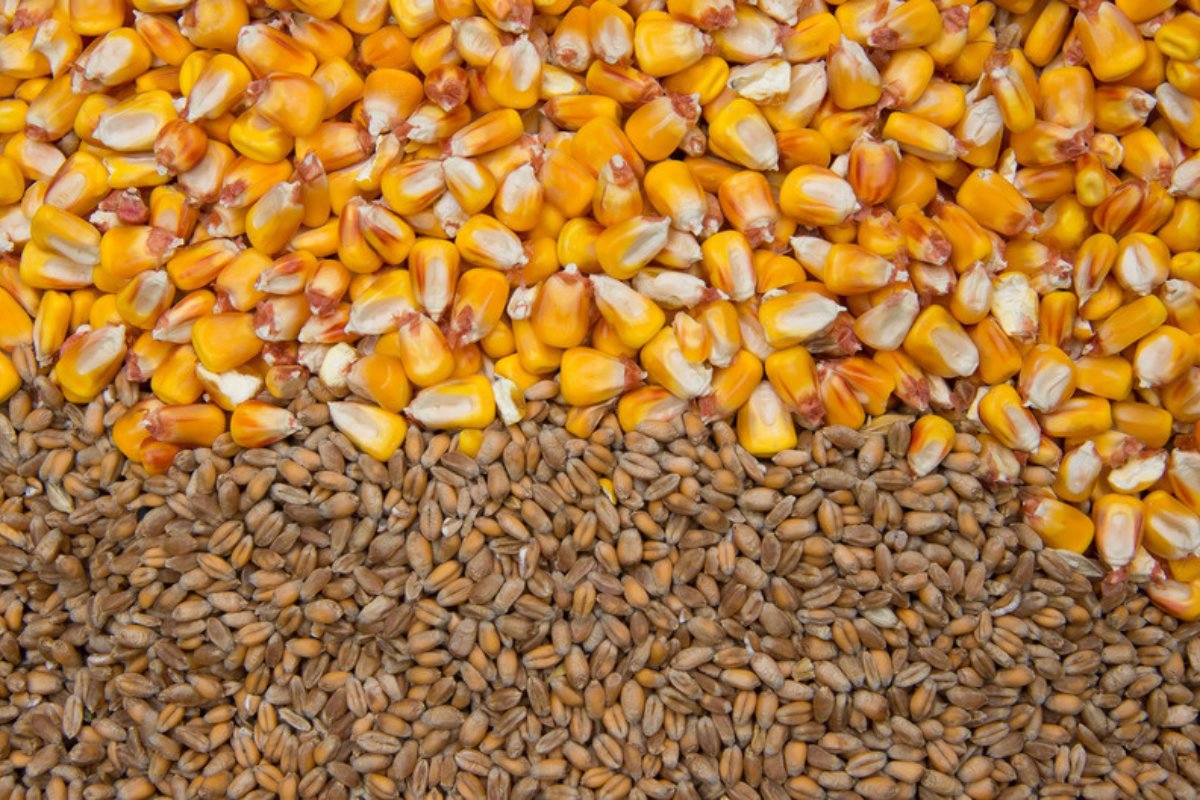
In October 2026 a tonne of US HRW wheat cost $317 at US Gulf export ports and a tonne of US maize $226.5, so wheat cost 1.40 times the price of maize, above the median ratio of 1.28 since 1960, according to a Wikifarmer analysis of the World Bank's monthly commodity prices. The ratio matters to grain buyers this northern hemisphere autumn, in a market where the world has more wheat this year and less of it able to move.
HRW wheat rose 31% from December and maize 10%
In December 2025 HRW wheat cost $242.8 a tonne and maize $205.7, a ratio of 1.18, and the ratio then rose every month to August 2026, when it reached 1.47. The wheat price peaked at $347 in September and eased to $317 in October, while maize was at $226.5 in October, 5.5% cheaper than in September. From December to October, wheat gained about 31% in price, against 10% for maize.
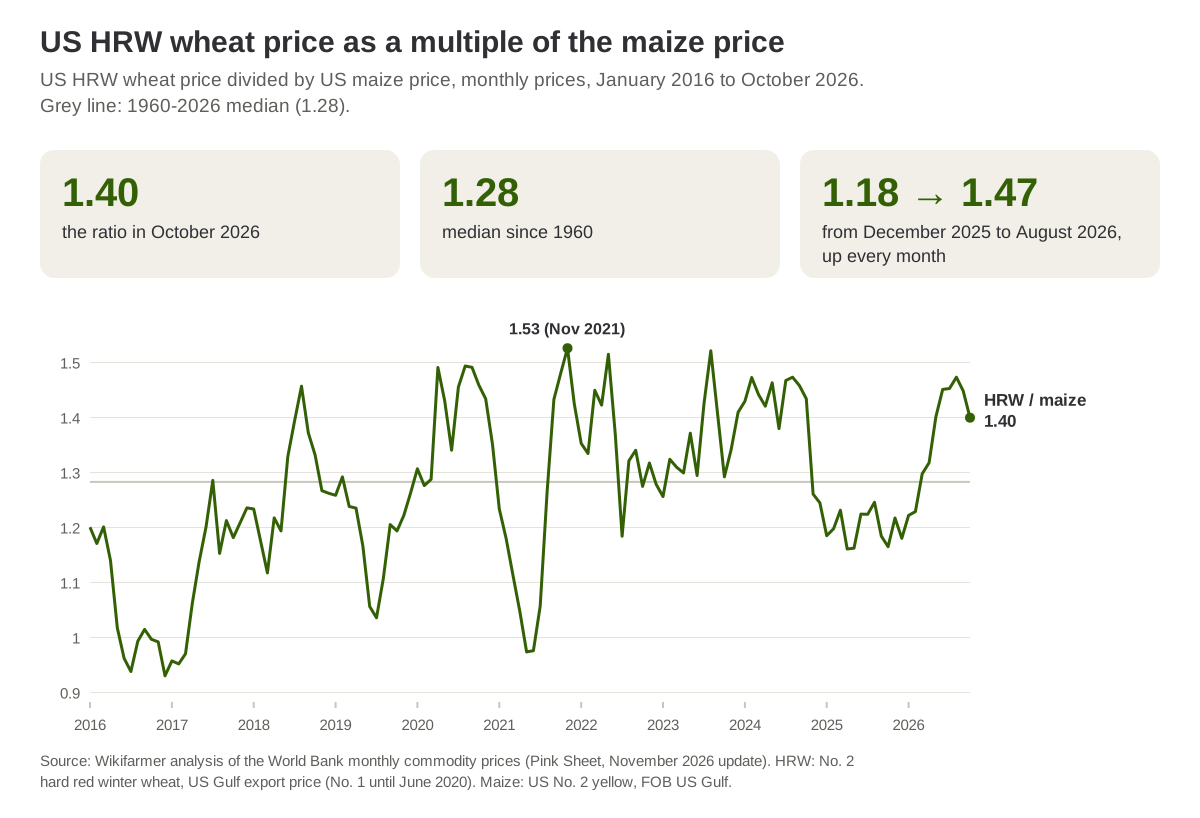
Source: Wikifarmer analysis of the World Bank monthly commodity prices (Pink Sheet, November 2026 update). Hard red winter wheat, No. 1 until June 2020 and No. 2 from July 2020, and US No. 2 yellow maize, export prices at the US Gulf.
The price ratio is above its 1960 median but not extreme
From January 1960 to October 2026 the ratio was higher than October's 1.40 in 234 of 802 months, or 29% of months, and the picture is the same when 1972 to 1974, years of very large swings in grain prices, are left out. Among the 67 Octobers in the series, this year's ranks 26th, almost level with October 2003. The highest October was 2007 at 2.04, followed by 2002 and 1994 at 1.73. In October 2024 the ratio was 1.43 and in October 2025 1.17.
Since July 2020 the World Bank series has covered No. 2 HRW wheat, while until June 2020 it covered No. 1, so the cleanest comparison is with the months from July 2020. Since then the ratio has been higher than this year's in 30 of 76 months, with the highest value in November 2021 at 1.53. The highest value in the whole series was 2.05 in September 2007 and the lowest 0.89 in the first half of 1970, one of the periods when wheat cost less than maize, as it also did in some months of 2016, 2017 and 2021.
The ratio matters to anyone choosing between wheat and maize for feed
Feed manufacturers and livestock farmers who formulate rations compare the price of wheat with the price of maize when deciding which grain to use, and at 1.40 US wheat is dearer than usual compared with maize. The picture in Europe is not necessarily the same, since US export prices do not match prices on the European market, where EU milling wheat prices in October were above a year earlier in all 25 markets. The Wikifarmer analysis did not examine whether the ratio affected exports or the use of wheat in feed.
The picture would change if wheat keeps easing, as it did in October, or if maize becomes dearer, and the next World Bank monthly prices, for November, are due in early December. For the same time of year there is also an analysis of how wheat prices usually move from October to December.
The ratio uses nominal monthly prices and a grade change in 2020
The analysis was carried out by Wikifarmer in November 2026 using the World Bank's monthly commodity prices (Pink Sheet, November 2026 update) from January 1960 to October 2026. The ratio is the HRW wheat price divided by the maize price in the same month, both in US dollars per tonne as published each month, without adjusting for inflation, an adjustment that would not change the ratio if the same index were applied to both prices. Wheat is No. 2 hard red winter, US Gulf export price, and until June 2020 No. 1 hard red winter of ordinary protein, while maize is US No. 2 yellow, FOB US Gulf. October 2026 prices may be revised in later updates. The analysis looks only at the level of the ratio, not at its causes or its effect on trade. All numbers were recomputed independently from the source file.
Sources
- World Bank. (2026). Commodity Markets, Pink Sheet monthly prices (CMO Historical Data Monthly). November 2026 update.