
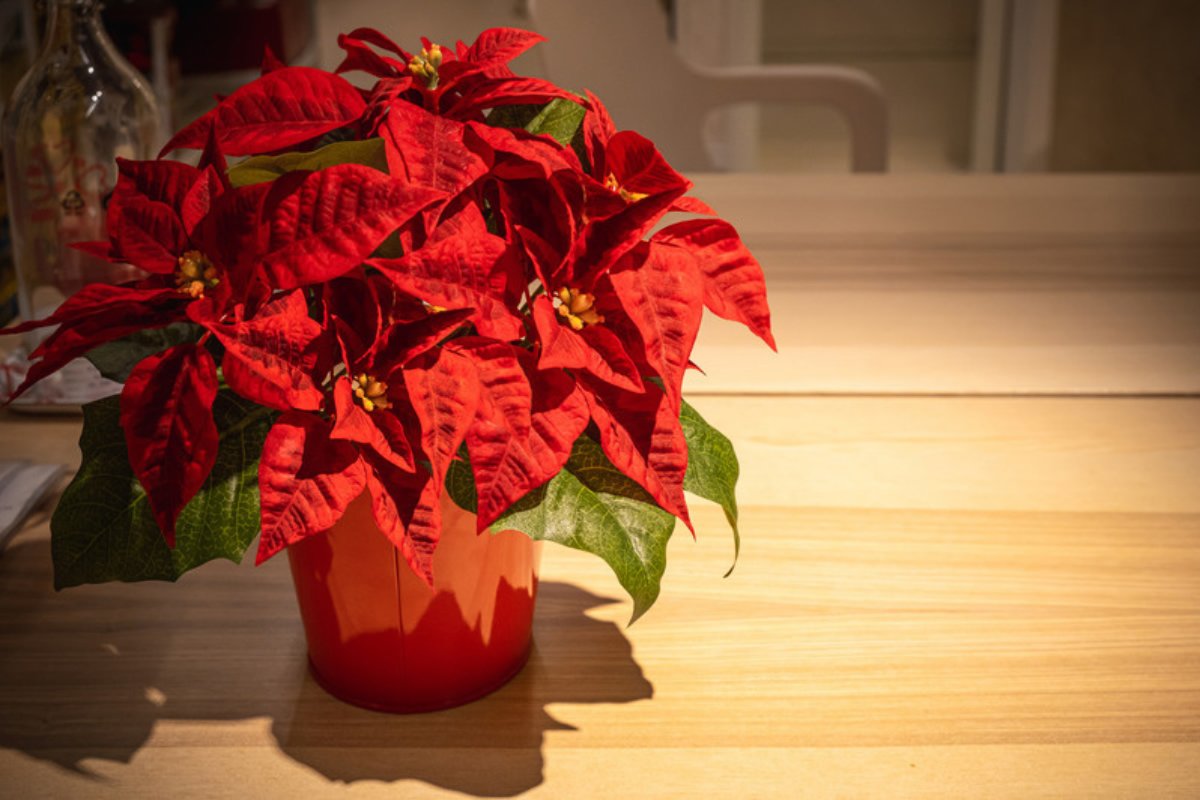
The poinsettia (Euphorbia pulcherrima) is a shrub from Mexico sold in pots for Christmas. Indoors it needs a bright spot out of direct sun and a steady temperature of 16 to 21°C (65 to 70°F), according to the Royal Horticultural Society (RHS), away from radiators, fireplaces and cold draughts. Water it when the surface of the compost is dry, and never leave it standing in water. With good care it holds its colour until March, and to turn red again the following December it needs 15 to 16 hours of unbroken darkness every night from autumn.
What a poinsettia is
The poinsettia belongs to the spurge family (Euphorbiaceae), and its botanical name means "very beautiful". Its common name honours Joel Roberts Poinsett, the first US ambassador to Mexico, who introduced the plant to the United States, according to the University of Florida. The red "petals" are modified leaves called bracts, while the true flowers are the small yellow structures in the centre, called cyathia. The bracts colour up as the days shorten and drop after the flowers are pollinated, as the University of Minnesota Extension explains.
Besides the classic red, varieties come with white, cream, pink, orange or two-tone bracts. Blue and purple poinsettias are cream varieties that have been spray-painted, often with added glitter, according to the University of Minnesota. Poinsettias share the winter windowsill with other holiday plants such as cyclamen and amaryllis, but they are the most sensitive of the three to cold.
How to choose a healthy poinsettia
Good care starts at the shop. The RHS advises against buying poinsettias displayed outdoors on the pavement or in a cold, draughty shop, because chilly conditions often make the bracts drop within days of purchase. Plants from a warm garden centre greenhouse, or ones freshly delivered to a store, are the safer choice. Since the bracts fall after pollination, pick a plant whose yellow cyathia are still closed, with foliage all the way down the stems and compost that is neither bone dry nor soggy. Wrap it for the journey home so the cold does not reach it.
Where to keep a poinsettia indoors
- Light: a south, east or west window with plenty of light but no direct sun, according to the United States Botanic Garden
- Temperature: 18 to 21°C (65 to 70°F) by day is ideal for the University of Minnesota, while below 10°C (50°F) the plant is damaged and frost kills it
- What to avoid: the heat of radiators and lit fireplaces, air from vents and fans, and cold, draughty spots such as an empty hearth, and the leaves should not touch a cold windowpane
- Humidity: warm, dry air dehydrates the plant quickly, and the University of Florida suggests misting or standing the pot on a tray of wet gravel
The steadier the conditions, the longer the bracts last. A windowsill at night, where the temperature drops sharply, is one of the spots the RHS links to bract drop.
How to water a poinsettia
A common mistake is keeping the compost too wet, which rots the roots, according to the United States Botanic Garden. Check the compost every day and water when the surface is dry to the touch or the pot feels light when lifted. Before watering, remove the decorative foil or plastic sleeve, which traps water around the roots, set the pot in the sink and water until it runs out of the drainage holes. Let it drain completely before putting the plant back. Drooping leaves mean the plant is thirsty, and the University of Minnesota advises never letting it get so dry that it wilts.
Why poinsettias drop their leaves and bracts
The RHS puts leaf and bract drop down to the heat and dry air near radiators, to cold, draughty spots and to over- or under-watering. Oregon State University Extension adds that leaves wilt when the compost is too dry or too wet, that yellowing points to too little light, too much water or a lack of nitrogen, and that over-feeding also causes leaf drop. Another problem is whitefly, the tiny white insects on the underside of the leaves, which the University of Minnesota suggests checking for from February and which is best managed with organic methods.
When and how to feed a poinsettia
A poinsettia in full colour needs no fertiliser, according to the University of Minnesota, and the University of Florida notes that heavy feeding indoors lowers the plant's quality. Feeding starts once new leaves and stems appear, with a general houseplant fertiliser at half the strength on the label, every 3 to 4 weeks.
What to do after the holidays
With good care the bracts keep their colour until March, as long as the plant is not exposed to frost, according to the University of Florida. When the bracts and leaves drop naturally, Oregon State University advises stopping feeding, cutting back on watering and pruning the stems to about 15 cm (6 inches) above the compost. From then on, water only enough to keep the stems from shrivelling until new growth appears.
In late spring or early summer, move the poinsettia into a pot 5 to 10 cm (2 to 4 inches) larger, according to the University of Minnesota. The mix needs a good share of organic matter such as peat and good drainage, so a general potting compost with some added perlite works well. In late May and again in early July, trim 5 to 7 cm off the stem tips so the plant branches out and becomes bushy, with more bracts the following winter.
Growing poinsettias outdoors
Poinsettias spend the summer happily outside. The University of Minnesota moves them out in early summer, first into indirect light and from July into more sun, with 4 to 6 hours of sun a day. In hot, dry summers such as those of the Mediterranean, a spot with morning sun and shade at midday keeps the leaves from scorching. Bring the plant back in early in autumn, before nights drop below 10°C.
In frost-free areas, such as sheltered coastal gardens, poinsettias can also be planted in the ground, where they grow into shrubs. The University of Florida recommends planting after the last spring frost in fertile, moist but well-drained soil, and protecting the plant from any frost, since it is a tropical species. Street or porch lights at night in autumn can delay or completely prevent the bracts from colouring.
How to make a poinsettia turn red again
Poinsettias colour up as the nights lengthen. Indoors, though, ordinary room lighting is enough to keep them green, so they need artificial darkness. The dates below refer to the northern hemisphere. In the southern hemisphere the same treatment falls about six months later.
| Source | Start | Darkness every night | Until |
| University of Minnesota | Around 21 September | 16 hours, with 8 hours of bright light by day | Late November |
| Oregon State University | Mid to late October | From 5 pm to 8 am | Until the bracts colour, early December |
Sources: University of Minnesota Extension; Oregon State University Extension
Every evening the plant goes into a cupboard, a windowless store room or under a cardboard box, because even a few minutes of light during the night can stop it colouring, according to Oregon State University. During the day keep it in a bright window and turn it daily so it gets even light, with night temperatures around 16°C (low 60s °F). The bracts start showing colour in mid-November, and once the colour is complete the plant can go back to normal household light.
Are poinsettias poisonous
The poinsettia's reputation as a poisonous plant does not stand up. In an analysis of 22,793 poinsettia exposures reported to US poison control centres, Krenzelok, Jacobsen and Aronis found no deaths, 92.4% of people developed no symptoms at all and 96.1% did not need to visit a health care facility. The milky sap can irritate the skin and eyes, though, and because it contains latex it bothers people who are sensitive to latex more, so wear gloves when pruning.
For pets, the ASPCA lists the poinsettia as toxic to dogs, cats and horses, causing irritation of the mouth and stomach and sometimes vomiting, and notes that its toxicity is generally over-rated. If an animal eats a large amount or shows symptoms, call the vet.
Frequently asked questions
How long will a potted poinsettia last
With a steady temperature, a bright spot and correct watering, the bracts keep their colour until March. The plant is a perennial shrub, so with spring pruning and a summer outdoors it can live for years.
Why are leaves dropping off my poinsettia
Usually because of cold or draughts, heat and dry air near a radiator, or watering mistakes in either direction. Yellow leaves often point to too much water or too little light.
How do I get my poinsettia to turn red again
From late September or October, give it 15 to 16 hours of complete darkness every night, in a cupboard or under a box, and bright light by day for 6 to 9 weeks, until the bracts colour.
Can poinsettias live outside
In summer, yes, on a balcony or in a garden with morning sun. In winter they can stay outside only in frost-free areas, because temperatures below 10°C damage them and frost kills them.
How often should a poinsettia be watered
Whenever the surface of the compost feels dry, which in a warm home can mean every few days. Water must drain freely, and the pot should never stand in water in a saucer or inside the foil.
Are poinsettias poisonous to cats and dogs
The ASPCA lists them as toxic to dogs and cats, but they usually cause only irritation of the mouth and stomach and sometimes vomiting. It is best to keep the plant where pets cannot reach it.
Important notes
Conditions differ from home to home, and the temperature and watering guidance should be adjusted to where the plant sits and how the home is heated. For persistent pest or rot problems, an agronomist or plant clinic can help with an accurate diagnosis. Use plant protection products carefully, trying non-chemical methods first.
References
- Royal Horticultural Society. Poinsettias, RHS plant guide.
- Weisenhorn, J. University of Minnesota Extension. Growing and caring for poinsettia.
- University of Florida, IFAS Extension, Gardening Solutions. Poinsettia.
- Pokorny, K. Oregon State University Extension Service (2023). How to keep poinsettias blooming year after year.
- United States Botanic Garden. Poinsettia care.
- Krenzelok, E.P., Jacobsen, T.D. and Aronis, J.M. (1996). Poinsettia exposures have good outcomes... just as we thought. American Journal of Emergency Medicine, 14(7), 671-674.
- ASPCA Animal Poison Control. Poinsettia, toxic and non-toxic plants.