

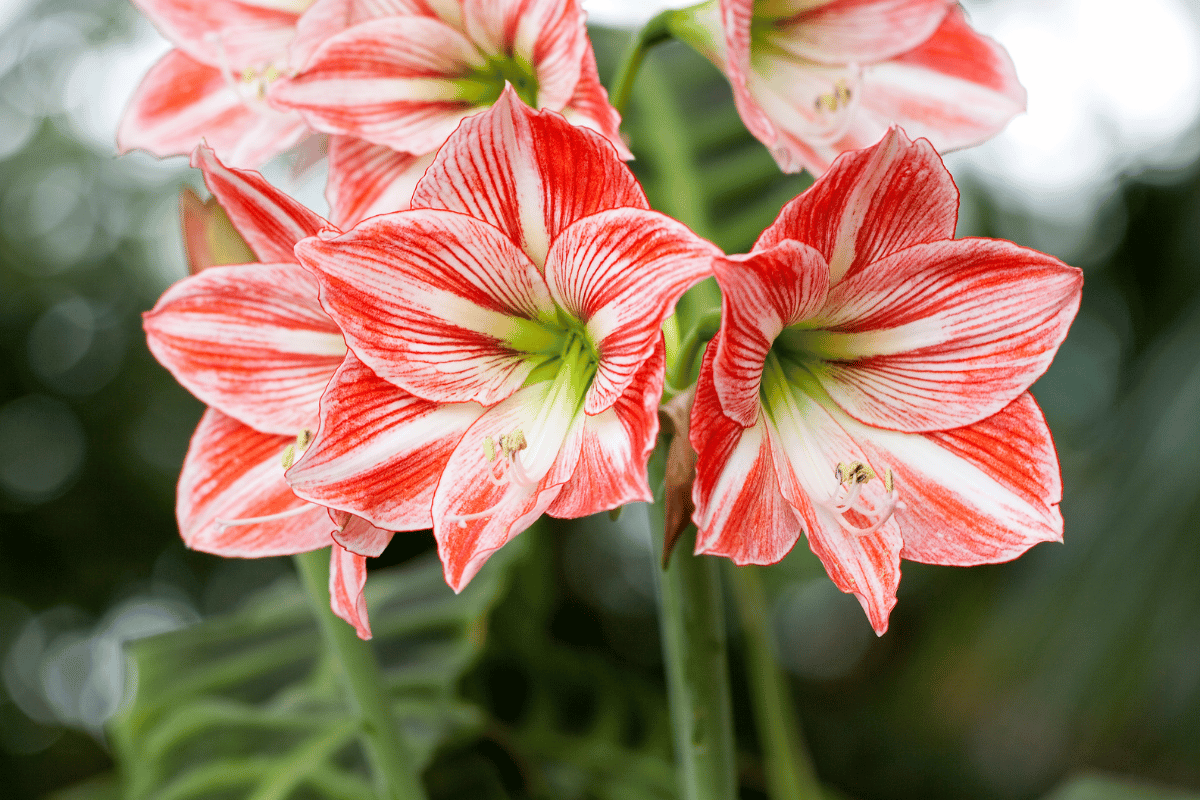
Amaryllis produces some of the biggest, boldest flowers you can grow indoors, with tall stalks carrying several trumpet-shaped blooms in red, white, pink, salmon and striped combinations. It is the classic winter gift plant, easy enough for a complete beginner, and with a little care, the same bulb will flower again year after year. This guide covers how to plant an amaryllis bulb, how to bring it into bloom for the holidays, and how to keep it going so it reblooms.
Most of what is sold as amaryllis is a large, tender bulb from South America that flowers indoors in winter and is prized as a Christmas gift. This guide walks through planting, watering, getting it to bloom, care after flowering, and the rest period that makes it rebloom, along with the important point that the bulb is toxic to pets.
What is an amaryllis
The plant almost everyone grows as an amaryllis is actually a Hippeastrum, a genus of large bulbs native to South America. The true amaryllis, Amaryllis belladonna, sometimes called the belladonna lily or naked lady, is a related but different plant that flowers outdoors in late summer. The naming has been muddled for so long that the winter gift bulb is universally sold and labelled as amaryllis, so that is the common name used here, but it helps to know you are almost certainly growing a Hippeastrum hybrid.
The bulbs are graded by size, and a larger bulb generally gives more flower stalks. A firm, heavy bulb with no soft or mouldy patches will perform far better than a soft one, and as with other flowers grown from a bulb or corm, such as ranunculus, starting with the biggest, firmest bulb you can find makes all the difference.
How to plant an amaryllis bulb
Amaryllis flowers best when its roots are slightly crowded, so choose a pot only 2.5 to 5 cm wider than the bulb itself, with drainage holes, and expect to repot only every three or four years. Fill it with a free-draining potting mix and set the bulb pointy side up, packing the soil around it so that the top third to half of the bulb stays above the surface. The neck and shoulders of the bulb should never be buried.
If the bulb arrives with dry, shrivelled roots, soaking them in lukewarm water for a few hours before planting helps it start into growth. Water thoroughly once after planting to settle the soil, then hold off on further watering until you see the flower stalk or leaves begin to emerge. From planting, a bulb usually takes about 6 to 10 weeks to flower, so to have blooms for Christmas, plant in October or early November. Bulbs sold in kits have often been pre-chilled and started, and these can flower in as little as 2 to 3 weeks.
Watering, light and temperature during growth
Once the bulb is growing, move it to the brightest spot you have, ideally with some direct sun, and keep the room comfortably warm. Water when the top of the soil feels dry, letting the surface dry slightly between waterings, and never leave the pot standing in water, which rots the bulb. Rotate the pot a little each time you water, since the stalk leans towards the light and will otherwise grow crooked.
The tall flower stalks can become top-heavy as the buds open, so stake them with a thin cane if they start to lean, taking care not to spear the bulb. Moving the plant to a cooler spot of around 15°C once the buds open makes the flowers last longer, often two to three weeks.
How long does an amaryllis take to bloom
An amaryllis planted from a dormant bulb takes roughly 6 to 10 weeks to flower, while pre-started kit bulbs bloom in 2 to 3 weeks. To time flowers for the holidays, count back from your target date and plant accordingly, and stagger the planting of several bulbs a couple of weeks apart for a longer succession of blooms. Warmth speeds the process and a cool room slows it, which gives you some control over the timing.
Amaryllis care after flowering
When each bloom fades, the plant's next job is to rebuild the bulb, and this is where most people go wrong by throwing the bulb away. Cut off the spent flower stalk about 2.5 cm above the neck of the bulb once the flowers have gone over, but leave every leaf in place. The long, strap-like leaves feed the bulb through the summer and are essential for next year's flowers.
Keep the plant in bright light, water it normally, and feed it every few weeks with a general houseplant fertiliser through spring and summer. Once the danger of frost has passed, the pot can go outside in a sheltered, partly sunny spot for the summer, then come back indoors before the first autumn frost.
How to get an amaryllis to rebloom
Reblooming depends on giving the bulb a rest. In late summer or early autumn, stop watering and feeding and move the pot to a cool, dark, dry place at around 10 to 13°C, such as a cellar or cool cupboard. Let the leaves yellow and die back, then remove them, and leave the bulb to rest undisturbed for at least 6 to 10 weeks. This dormant period is what triggers the next round of flower buds and cannot be skipped.
After the rest, repot the bulb in fresh potting mix, return it to a warm, bright spot and start watering sparingly again, and it will begin the cycle once more. By adjusting when you bring the bulb out of dormancy, you can steer it towards flowering for the holidays again. One exception is the butterfly amaryllis (Hippeastrum papilio), which is evergreen and does not need a dormant period.
Is amaryllis poisonous to cats and dogs
Amaryllis is toxic to cats and dogs. According to the ASPCA, all parts of the plant contain the alkaloid lycorine, with the highest concentration in the bulb, and the bulb also holds calcium oxalate crystals that irritate the mouth. Signs of poisoning include vomiting, drooling, diarrhoea, abdominal pain, lethargy and, in more serious cases, tremors.
Because the bulb is the most toxic part, keep both stored and planted bulbs well out of reach of pets, and site the growing plant where cats and dogs cannot chew the leaves or flowers. If you think a pet has eaten any part of an amaryllis, contact a vet promptly. The plant is also toxic to people if eaten, so keep it away from small children.
Frequently asked questions
How long does an amaryllis take to bloom? About 6 to 10 weeks from planting a dormant bulb, or 2 to 3 weeks for a pre-started kit bulb. Plant in October or early November for Christmas flowers.
Do you cut back an amaryllis after it flowers? Cut the spent flower stalk down to about 2.5 cm above the bulb, but leave the leaves, since they feed the bulb for next year's blooms.
Will an amaryllis flower again? Yes. With a summer growing season and a cool, dark rest period of 6 to 10 weeks in autumn, the same bulb reblooms year after year.
Why won't my amaryllis flower? Usually too little light, no proper dormant period, or a bulb that is still building up energy. Give it bright light, feed it through summer, and rest it properly before restarting.
Is amaryllis poisonous to cats and dogs? Yes. All parts are toxic, especially the bulb, so keep it away from pets and children.
Important notes
Every home and every bulb is a little different, and conditions vary with light, room temperature and the size and quality of the bulb. The guidance above is a general starting point.
Because amaryllis is toxic to pets and people if eaten, keep bulbs and plants out of reach of cats, dogs and young children, and wash your hands after handling the bulb. If your plant shows persistent problems that don't respond to the basic care, it's worth consulting a horticulturist or your local nursery.
References
- University of Maryland Extension. Amaryllis care.
- Royal Horticultural Society. Hippeastrum (amaryllis).
- ASPCA Animal Poison Control. Toxic and Non-Toxic Plants: Amaryllis.