
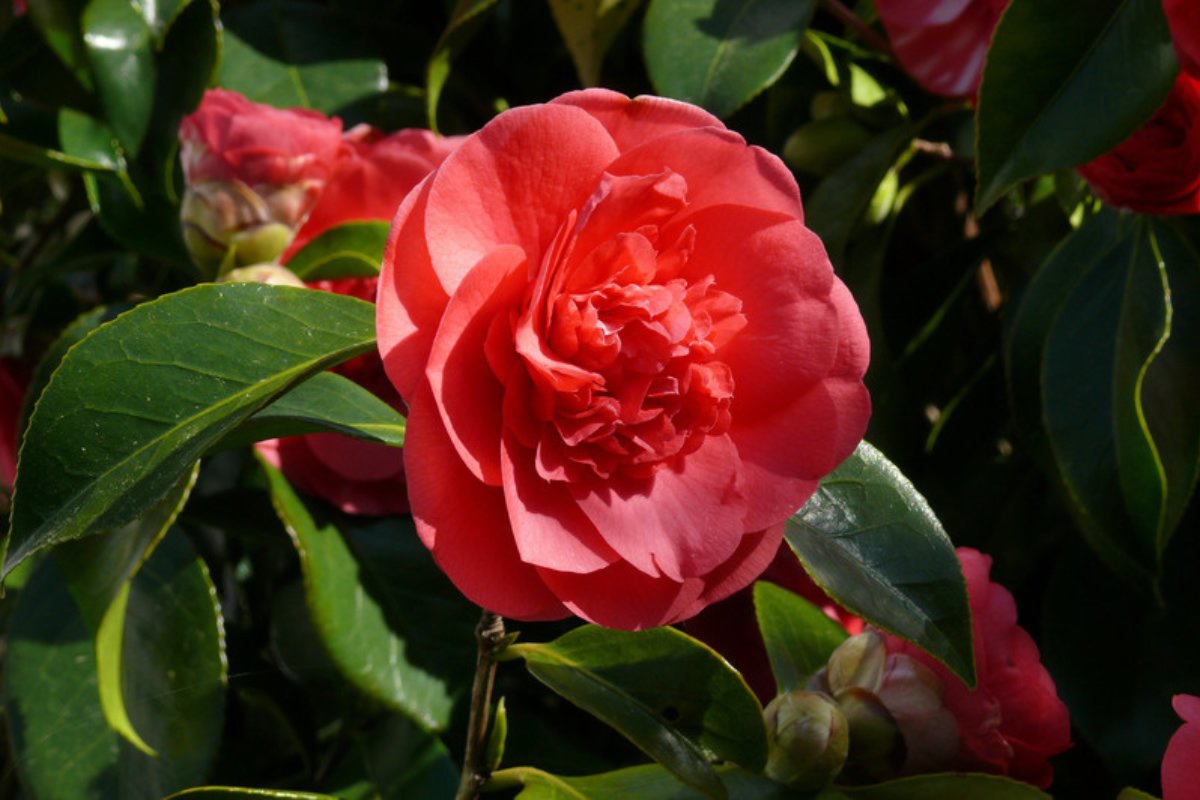
The camellia is an evergreen shrub from East Asia that flowers in the cooler months, when few other plants in the garden are in bloom. It needs acid soil with a pH of 5.8 to 6.5, according to the International Camellia Society, part shade and shelter from cold winds. Summer is the critical season, because that is when the plant forms next season's flower buds, and if the soil dries out during those months the buds drop before they open, according to the Royal Horticultural Society (RHS). On alkaline, chalky soils camellias are best grown in containers, in acid compost and watered with rainwater.
What a camellia is
The genus Camellia comes from China, Japan and South Korea, and it includes the tea plant, Camellia sinensis, which has been cultivated for thousands of years, according to the International Camellia Society. Garden camellias are mostly cultivars and hybrids of the Japanese camellia (Camellia japonica) and, less often, of the sasanqua camellia (Camellia sasanqua). They are slow-growing, long-lived shrubs with glossy dark green leaves all year round, according to the University of Florida. Flowers come in white, pink, red or bicolour, in forms ranging from single to fully double, some resembling a peony or a rose.
When each camellia blooms
| Species | Flowering | Position |
| Sasanqua (Camellia sasanqua) | Autumn and winter, from as early as November | Takes more sun once established, slightly more tender to cold |
| Japanese camellia (Camellia japonica) | Late winter and early spring | Part or dappled shade |
| Camellia × williamsii hybrids | Late winter and early spring | Part or dappled shade |
Sources: RHS; University of Florida. Seasons refer to the northern hemisphere.
A single plant blooms for several weeks, and combining early, mid and late-season cultivars keeps the garden in flower from autumn to spring, as the University of Florida suggests. In the southern hemisphere the same pattern runs about six months later. The sasanqua grows slowly and has a naturally good shape, so it needs only occasional grooming.
Where to plant a camellia
Most camellias prefer part shade or the dappled shade under tall trees, while the sasanqua tolerates sunnier spots as long as it is watered well, according to the RHS and the University of Florida. The RHS recommends a position sheltered from cold winds and from early morning sun, because flowers that catch direct sun after a frost are far more likely to be damaged. In a heat wave the leaves can also scorch, with large brown patches. In hot, dry climates the safest spot gives filtered light and protection both from winter morning sun and from summer afternoon sun, such as the north side of a wall or the ground under deciduous trees.
What soil camellias need
Camellias are acid-loving plants and need acid, open soil with good drainage and air around the roots, according to the International Camellia Society. Wherever rhododendrons grow well, the soil also suits camellias, according to the RHS, as it does gardenias and other acid lovers.
On alkaline, chalky soils, common around the Mediterranean, camellias cannot take up iron and manganese, and the leaves turn yellow between the veins, according to the RHS. There the best option is a container filled with ericaceous compost, which keeps the roots in the acid conditions they need.
When and how to plant
Autumn is the best time to plant, while the soil is still warm, so the roots establish before winter, although camellias can also be planted in spring, according to the RHS. Nurseries usually sell them in 3 to 4 litre pots, 60 to 90 cm (2 to 3 ft) tall. In the garden they need 3 to 5 m (10 to 15 ft) of space each, because they become large shrubs over the years. Plant at the same depth as in the pot and water regularly through the first year until established, as the University of Florida recommends.
Growing camellias in pots
Camellias grow very well in containers, and on chalky soil this is often the only way to grow them. The RHS recommends ericaceous compost, preferably peat-free. The pot needs drainage holes and timely repotting, because compost loses its structure over time and water starts to collect. At the same time, the RHS warns against moving the plant into a much bigger pot than it needs, since the mass of wet compost around the roots makes them rot. In hard frosts the roots in a pot can die, and the RHS suggests wrapping the container in bubble wrap.
How to water camellias
Camellia flower buds form on the current year's growth from mid-summer, and from then on they need a steady supply of water, according to the International Camellia Society, which notes that a break in watering during these months leads to fallen buds and few flowers. The RHS suggests checking the soil about 10 cm (4 in) down and watering well if it is dry at that depth. Where long, dry summers are the rule, the International Camellia Society recommends regular watering, ideally in the evening, and a mulch of bark or wood chips to cut evaporation.
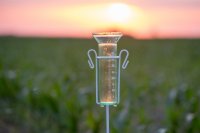
Rainwater is mildly acidic and suits camellias, so it is worth collecting for watering. The RHS advises against prolonged watering with hard tap water, which slowly raises the soil pH. Too much water does just as much harm, though, because soil that stays waterlogged rots the roots and favours Phytophthora, especially in pots.
When and how to feed camellias
Camellias in containers are fed in early spring with an ericaceous fertiliser, at the rate on the label, according to the RHS. Feeding stops at the end of July at the latest, because excessive or late feeding leads to bud drop. When leaves yellow between the veins, the RHS suggests chelated iron and other trace elements, which camellias can take up even in alkaline soil, applied every year.
Why camellia buds drop
- Dry soil: buds start forming in late summer of the previous year, and drought then or in early spring makes them drop
- Late feeding: feeding after the end of July, or at too high a rate
- Cold: low winter temperatures make buds turn brown and fall without opening
- Frost and morning sun: flowers that open and quickly turn brown have usually been damaged by frost, more often on plants that get sun early in the morning
- Fungi: grey mould and camellia flower blight also turn flowers brown and make them drop
All the causes in the list are recorded by the RHS in its camellia problems FAQ. For sensitive cultivars, horticultural fleece on frosty nights protects the buds.
When to prune a camellia
Camellias do not need regular pruning. If they outgrow their space, trim them into shape straight after flowering, according to the RHS, and finish any pruning before late summer, when the flower buds form, as the University of Florida notes. Hard renovation pruning is best done in March, but it will be two years or more before the plant flowers well again. Deadheading keeps the shrub tidy but does not improve the following year's flowering.
Common camellia pests and diseases
- Scale insects: tea scale forms a fuzzy white coating on the underside of the leaves with yellow speckling on top, while cushion scale, with its white egg sacs, leaves honeydew and sooty mould
- Aphids: they curl and distort leaves and leave honeydew on which sooty mould grows
- Spider mites: they make leaves look rusty or whitish along the veins, mostly in hot, dry weather
- Root rots: Phytophthora and waterlogged soil rot the roots, and branches die back
- Vine weevil: its white grubs eat the roots of container plants
The University of Florida lists tea scale, aphids and spider mites, and the RHS the rest. Aphids and spider mites can often be knocked off with a strong jet of water, while tea scale needs an approved horticultural oil. The RHS also notes that camellias periodically shed old inner leaves in spring and summer, which is not a problem.
How to propagate camellias
Camellias can be propagated from semi-ripe cuttings in mid to late summer, from hardwood cuttings between autumn and late winter, by layering and by grafting, according to the RHS. Cuttings root better if a 1.5 cm strip of bark is removed from the base, and hardwood cuttings can root in just three months. Seedlings do not come true to the parent plant, because the flowers have been cross-pollinated.
Are camellias toxic to pets
The ASPCA lists the Japanese camellia as non-toxic to dogs, cats and horses, which makes it a safe choice for gardens and balconies with pets.
Frequently asked questions
When do camellias bloom
In the northern hemisphere, sasanquas flower in autumn and winter, from as early as November, while Japanese camellias and williamsii hybrids flower in late winter and early spring. With cultivars of different seasons, flowering lasts for months.
Why are my camellia buds falling off
Usually because the soil dried out in late summer, while the buds were forming, or because the plant was fed after July. Cold and frost also cause bud drop.
Do camellias need sun or shade
Part shade or dappled shade, away from winter morning sun and summer afternoon sun. Sasanquas tolerate more sun if they are watered regularly.
Do camellias need to be cut back
Not regularly. They are pruned only for shape, straight after flowering and before late summer, so next year's buds are not cut off.
What are the common problems with camellias
Bud drop from dry soil or late feeding, yellow leaves on alkaline soil, scale insects with sooty mould, and root rot in waterlogged soil. Frost and early morning sun can also brown the flowers.
Are camellias high maintenance
Not once established. In the right acid soil and part shade, they need regular watering in summer, one feed in spring and very little pruning.
Important notes
Every garden is different, and conditions vary with region, exposure, water quality and soil pH. For persistent yellowing or pest problems, an agronomist can help with an accurate diagnosis. Use plant protection products carefully, trying non-chemical methods first, and only registered products according to the label instructions.
References
- Royal Horticultural Society. How to grow camellias. RHS growing guide.
- Royal Horticultural Society. Camellia problems, frequently asked questions.
- University of Florida, IFAS Extension, Gardening Solutions. Camellias.
- International Camellia Society. Basic camellia care.
- Trehane, J. International Camellia Society. Basic principles of growing camellias.
- ASPCA Animal Poison Control. Camellia, toxic and non-toxic plants.