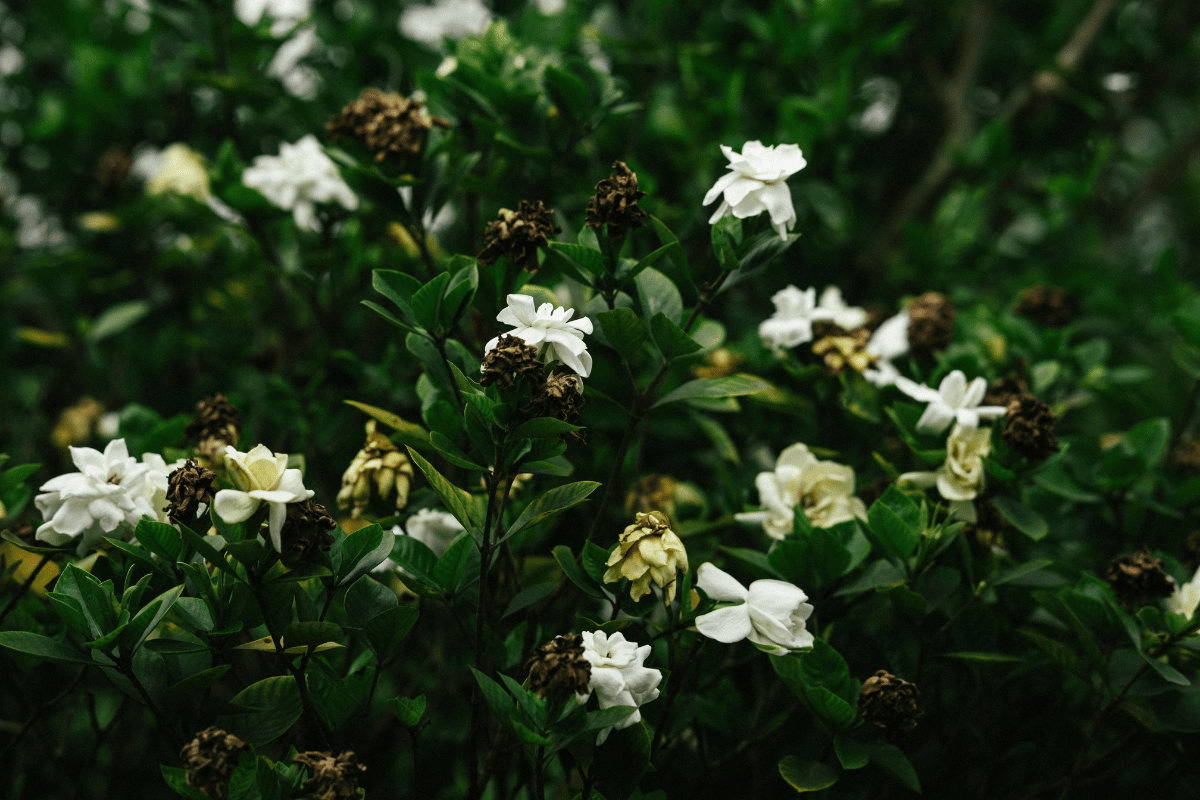
The gardenia (Gardenia jasminoides) is one of the most fragrant plants you can grow at home. Its waxy, cream-white flowers fill an entire room with a rich, jasmine-like scent in summer, and its glossy, deep green leaves look handsome all year round.
Gardenias also have a reputation for being fussy, and not without reason. They are particular about water, soil pH, temperature and humidity. Get those right, though, and a gardenia will reward you for many years. This guide explains exactly what they need and walks through the two problems that frustrate gardeners most, yellowing leaves and bud drop.
Types of gardenia
There are over 200 species in the genus Gardenia, but almost everything grown in gardens belongs to one species, Gardenia jasminoides (also known as Gardenia augusta). A few popular cultivars worth knowing about.
- 'Veitchii'. The classic indoor variety with large, double white flowers and a long flowering season
- 'August Beauty'. More temperature-tolerant, with large double flowers from late spring into autumn
- 'Kleim's Hardy'. The cold-hardiest gardenia, with single star-shaped flowers. Survives a few degrees of frost and can be grown outdoors in milder regions
- 'Crown Jewel'. More compact and hardy, ideal for small gardens and containers
- 'Radicans'. A dwarf, low-spreading variety with smaller double flowers, used as ground cover or in window boxes
- 'Frostproof'. A reliable cold-hardy choice popular in the southern US
Where gardenias grow best
Gardenia is a subtropical evergreen native to China and Japan. It thrives outdoors in USDA zones 8-11. In cooler regions it can still be grown successfully as a houseplant or in containers brought under cover for winter.
General guidance by climate.
- Mild, humid subtropical climates: outdoors year-round in a sheltered spot with morning sun and afternoon shade
- Mediterranean climates: outdoors in a protected position, ideally with afternoon shade and consistent moisture. Container growing often outperforms in-ground planting because you can control pH and water
- Cool temperate climates: grown almost exclusively as a houseplant or as a summer-only container plant moved indoors for winter
- Cold climates: pure houseplant culture, with a bright but cool spot and supplemental humidity
Gardenia wants lots of light without scorching midday sun. Morning sun and afternoon shade is ideal. Indoors, place it near a bright south- or east-facing window, with light filtering during the strongest hours.
Temperature is one of the most critical factors. Gardenia wants a steady 18-24°C during the day and 15-18°C at night. Big, sudden temperature swings cause buds to drop. It won't survive below 6°C, and most cultivars suffer below 10°C.
Soil
Gardenias need acidic, well-drained soil rich in organic matter. The target pH is 5.0-6.5. In alkaline soil the plant cannot absorb iron properly and leaves turn yellow.
Many garden soils, particularly in chalky regions, are naturally alkaline. In those areas, growing gardenia directly in the ground is difficult without constant amendment. The easier and more reliable solution is container culture with ericaceous (acid-loving plant) compost.
If you do plant in the ground and have naturally acidic soil, dig in plenty of pine bark, leaf mould and well-rotted compost before planting. On alkaline soil, apply elemental sulfur according to the product directions to lower pH, but the process is slow and needs repeating over several seasons.
Planting
The best planting time depends on your climate. In mild regions, autumn (October) works well as it lets roots establish before summer demands. In cooler regions, spring (March-April) is safer.
Planting in the ground
- Dig a hole twice the diameter of the rootball and the same depth
- Loosen the soil at the bottom and mix in plenty of pine bark, ericaceous compost and well-rotted manure
- Position the plant so the top of the rootball sits level with surrounding soil, not deeper
- Backfill with the amended soil and firm gently
- Water in well with lukewarm water
- Apply a thick mulch of pine bark or pine needles around the base, leaving space around the trunk
Growing gardenia in a container
For most gardeners, especially in alkaline-soil regions, a container is the best way to grow gardenia. It gives you full control of pH, watering and temperature.
- Choose a pot 25-35 cm in diameter for a young plant, just slightly larger than the rootball
- Make sure it has plenty of drainage holes
- Use a peat-free ericaceous potting mix (the same compost used for rhododendrons, camellias and azaleas)
- Don't leave the pot standing in water. If you use a saucer, empty it after watering
- Repot into a slightly larger container every 2-3 years in spring, after flowering
Watering
Watering is the most common source of problems with gardenias. They want consistent moisture in the soil but never waterlogged.
The general rule is to water when the top 2-3 cm of the compost feels dry. At home, that usually means every 3-5 days in summer and every 7-10 days in winter.
Tap water in many areas is hard and alkaline, and with continued use it raises the compost pH over time, leading to yellowing leaves. Where possible, use rainwater, distilled water or filtered water. If you only have tap water, let it stand in an open container for 24 hours so the chlorine can evaporate before watering.
Signs of watering trouble
- Yellow leaves dropping off: often overwatering and waterlogged compost. If the yellow leaves have green veins, it is more likely an iron problem (see below)
- Wilting and bud drop: either too dry, or a sudden temperature or humidity change
- Brown leaf edges: hard water with mineral salts, or dry air
- Air humidity
Gardenias want high air humidity, ideally above 60%. In modern homes, especially in winter with central heating, indoor humidity often falls below 30%, and that causes a long list of problems.
Ways to raise local humidity around the plant.
- Stand the pot on a tray of pebbles and water, with the pot itself sitting on the pebbles rather than in the water
- Group several plants together. They create a small humid microclimate around each other
- Mist the leaves once or twice a day, but never when the plant has buds or open flowers, since water marks them
- Run a humidifier in the room during heating season
Feeding
Gardenias are relatively hungry plants during the growing season. Use a fertiliser formulated for ericaceous plants (the same one for rhododendrons and azaleas) every two weeks from spring through late summer, at a reduced concentration.
In winter, reduce feeding to once a month or stop entirely if the plant is not actively growing.
If new leaves turn yellow with green veins, apply chelated iron (typically as Fe-EDDHA for high-pH conditions). The fastest response comes from a foliar spray, while the long-term fix is to incorporate it into the compost alongside acidification.
Avoid overdosing. Excess fertiliser builds up salts that burn the roots and cause brown leaf edges.
Pruning
Gardenias only need light pruning to keep their shape and remove spent flowers. They don't appreciate hard pruning.
The best time to prune is just after flowering, usually mid to late summer. Remove the following.
- Dead or weak branches
- Stems that spoil the shape of the plant
- Spent flowers, cutting just below the flowerhead
Avoid hard pruning after September. Gardenia forms next year's flower buds in late summer and autumn, and late pruning removes them.
How to propagate gardenia
The most reliable method is from cuttings.
From softwood cuttings
- In early summer, take 10-15 cm cuttings from the tips of healthy non-flowering shoots
- Strip the lower leaves and leave 2-3 pairs at the top
- Dip the cut end in rooting hormone
- Insert into a mix of ericaceous compost and perlite
- Cover with a clear plastic bag to maintain high humidity
- Keep in bright but shaded position at 21-24°C
Rooting takes 4-8 weeks. Pot on into individual containers once well rooted.
From semi-ripe cuttings
In late summer you can take semi-ripe cuttings with the same technique. Rooting is slower but the cuttings are tougher and more likely to survive winter.
Why gardenia leaves turn yellow
This is the most common gardenia problem and it has several possible causes. Watch the pattern of yellowing to work out which one applies to you.
Old leaves at the base yellowing and dropping. Normal, particularly in early spring before new growth. No action needed.
New leaves yellow with green veins (interveinal chlorosis). Iron deficiency. The classic symptom of an acid-loving plant grown in soil or water that is too alkaline. Apply chelated iron as a foliar spray for fast results, and acidify the compost long-term.
All leaves yellowing at once and soft. Usually overwatering and root rot. Stop watering, check the roots, and repot into fresh compost if needed.
Yellow leaves with brown edges or spots. Fertiliser overdose and salt build-up, or hard water. Flush the compost with rainwater and reduce feeding.
Generally pale green or yellowish foliage. General nutrient deficiency (nitrogen, magnesium). Apply a balanced fertiliser for acid-loving plants.
Recent move or change of location. Gardenias often react to changes by yellowing. They normally recover once conditions are stable again.
Why gardenia buds drop before opening
The second most common gardenia complaint. Flower buds form, swell, then yellow and drop without opening. The likely causes.
Sudden temperature swings. The most common cause. Differences greater than 8-10°C between day and night, or moving the plant from a warm to a cool spot, will trigger bud drop within days.
Low air humidity. Common in homes with central heating. Boost humidity with a pebble tray or humidifier.
Underwatering. Letting the compost dry out completely while the plant has buds will cause them to drop.
Overwatering and root rot. The opposite version of the same problem.
Temperature too high or too low. Above 30°C and below 13°C are difficult conditions for buds.
Moving the plant. Once a gardenia has buds, moving it almost guarantees losing them.
Insufficient light. Deep shade leads to weak buds that abort.
The fix is to stabilise temperature, humidity and watering from the moment buds appear until they open.
Pests and diseases
Gardenias attract several sap-sucking insects. All of them leave honeydew on the leaves, which in turn encourages sooty mould (a black fungal film on the foliage).
Whitefly. A very common pest. Tiny white moth-like insects that flutter up when you disturb the plant. The nymphs sit on the underside of leaves and feed. Control with potassium soap (insecticidal soap), yellow sticky traps and good plant hygiene.
Mealybug. Small white cottony masses in leaf joints and along stems. Spot-treat small infestations with a cotton bud dipped in rubbing alcohol. For heavier infestations spray with insecticidal soap or horticultural oil.
Scale insects. Small brown or whitish bumps along stems. Remove badly affected branches and spray with horticultural oil.
Aphids. Small green insects on tender new growth. Blast off with a strong jet of water or spray with insecticidal soap.
Spider mites. In dry, hot conditions. Leaves develop fine yellow stippling and you may see tiny webs on the undersides. Raise humidity and spray with water.
Thrips. Tiny sucking insects that feed inside flower buds and cause brown patches on petals. Remove affected buds.
Sooty mould. A black film on leaves that grows on the honeydew left by sap-sucking insects. Deal with the underlying pest first, then wipe leaves with mild soapy water.
Root rot. From overwatering and poor drainage. Very difficult to treat once established. Prevent with proper compost and careful watering.
Frequently asked questions
Why isn't my gardenia flowering? The most common reasons are insufficient light, the wrong temperature (either too high or too low), pruning at the wrong time (autumn pruning removes next year's flower buds), too much nitrogen fertiliser, or soil pH that prevents nutrient uptake.
How do I overwinter my gardenia indoors? Keep it in a bright but cool spot (around 15-18°C at night is ideal), away from radiators and dry draughts. Raise humidity with a pebble tray or humidifier. Reduce watering but don't let the compost dry out completely. Stop or minimise feeding until spring.
Can I leave my potted gardenia outside in winter? It depends on where you live. In mild areas, yes, in a sheltered position. In cooler regions, only 'Kleim's Hardy' has a chance outdoors, and even that needs protection during hard cold snaps. As a rule, if temperatures are likely to fall below -5 °C or there's a prolonged frost, bring the plant inside.
What kind of water should I use for my gardenia? The best options are rainwater or filtered water. If you only have tap water, let it stand for 24 hours so the chlorine can evaporate. Hard tap water gradually raises the compost pH and triggers leaf chlorosis.
Are gardenias poisonous? According to the ASPCA, all parts of the gardenia plant are mildly toxic to dogs and cats and can cause vomiting, diarrhea, and irritation if ingested. Gardenia is not considered highly toxic to humans, but it's still sensible to avoid eating any part of the plant.
My gardenia flowered when I bought it, but it hasn't flowered again. Why? This is a very common situation. Gardenias sold as flowering indoor plants are grown under controlled conditions with artificial light and temperature so they bloom at the point of sale. When you take them home, they need time and stable conditions to rebloom. Give your gardenia a full year with the right light, humidity, watering, and temperature, and it should flower the following season.
What does gardenia smell like? The scent is one of the strongest and most distinctive in the plant world. It is reminiscent of jasmine and tuberose, with sweet, velvety, almost creamy notes. A single flower can perfume an entire room, and the fragrance is most intense in the evening.
Important notes
Every plant and every garden is unique. Conditions vary significantly depending on your region, exposure, water quality, soil pH and the overall health of the plant, so the guidance above is general and a starting point rather than a strict rule.
If you suspect a serious nutrient deficiency or disease that doesn't respond to basic remedies, consider talking to a horticulturist or local garden center for an accurate diagnosis. For persistent problems with yellowing or non-flowering, a simple soil or water test can identify the actual issue and save you time and money on trial-and-error treatments.
Use plant protection products with care. Try non-chemical methods first wherever possible (cultural practices, insecticidal soap, horticultural oil, beneficial insects). When chemical intervention is needed, use only products approved for ornamental garden use, follow the dosage on the label exactly, and avoid spraying when pollinators are active in the garden.
References
- Royal Horticultural Society. Gardenia growing guide.
- Royal Horticultural Society. How to grow gardenias.
- Clemson Cooperative Extension. Gardenia.
- Clemson Cooperative Extension. Gardenia Diseases & Other Problems.
- Clemson Cooperative Extension. Gardenia Insects & Related Pests.
- University of Florida IFAS Extension. Gardenias at a Glance.
- North Carolina State Extension. Pests of Gardenia.
- Missouri Botanical Garden. Gardenia jasminoides plant finder.
- ASPCA Animal Poison Control. Toxic and Non-Toxic Plants: Gardenia.