Spanish tomatoes shipped to the United Kingdom were priced 25.2% above those sold to Spain's other export markets on average from 2021 to 2024, after averaging 6.3% below them in 2016 to 2020, according to a Wikifarmer analysis of Eurostat export data. The switch came in the first year after the UK left the EU single market and customs union, and the UK premium was still 21.9% in January to July 2026. Norway and Switzerland, which were outside the EU throughout, show no similar jump, and neither do Spanish oranges sold to the UK. UK import statistics show the same step from the British side, while Dutch tomatoes, which went through the same change in trade recording, barely moved.
The UK went from a discount to a premium in 2021
Spain's tomato exports to the UK had an average unit value of €1.23 per kg in 2020 and €1.77 per kg in 2021, a rise of 43.4%. Over the same two years the unit value of Spain's tomato exports to all other destinations rose by 12.1%, from €1.29 to €1.45 per kg (Eurostat Comext). The UK paid less than Spain's other buyers in every year from 2016 to 2020 and more in every year from 2021 to 2026.
| Year | UK, €/kg | All other buyers, €/kg | UK vs other buyers | UK, tonnes |
| 2016 | 1.00 | 1.07 | −7.1% | 137,967 |
| 2017 | 1.16 | 1.26 | −8.5% | 118,630 |
| 2018 | 1.09 | 1.15 | −5.6% | 112,141 |
| 2019 | 1.14 | 1.21 | −6.1% | 103,941 |
| 2020 | 1.23 | 1.29 | −4.3% | 98,285 |
| 2021 | 1.77 | 1.45 | +22.4% | 70,692 |
| 2022 | 2.04 | 1.73 | +18.0% | 60,942 |
| 2023 | 2.40 | 2.07 | +16.2% | 58,605 |
| 2024 | 2.25 | 1.56 | +44.2% | 61,635 |
| 2025 | 2.37 | 1.77 | +34.1% | 57,810 |
| 2026, January to July | 2.45 | 2.01 | +21.9% | 36,554 |
Source: Wikifarmer analysis of Eurostat Comext dataset DS-045409, Spanish exports under CN 0702 (tomatoes, the three 2025 subcodes summed), downloaded 15 October 2026. The 2026 figures are provisional.
Unit values are the declared value of the shipments divided by their weight, recorded at the Spanish border on free on board terms, so they exclude freight to the UK. The benchmark in this article is all of Spain's other buyers combined, weighted by volume. Measured against the other EU countries only, the UK moved from 5.6% below them in 2016 to 2020 to 27.1% above them in 2021 to 2024. The annual averages smooth out the seasonal swings that drive tomato prices through the 2024 to 2025 season and every other year, and those swings affect all buyers.
The UK now takes a smaller share of Spain's tomato exports
Spain shipped 98,285 tonnes of tomatoes to the UK in 2020 and 70,692 tonnes in 2021, a fall of 28.1%, while its total tomato exports fell by 10.1% between the same two years. The UK took 13.4% of Spain's tomato export volume in both 2019 and 2020. From 2021 to the first seven months of 2026 its share stayed between 9.0% and 10.7%.
The UK replaced part of its Spanish supply with Moroccan tomatoes. In UK import statistics, Spain's share of the tomato volume the UK imported fell from 24.3% in 2020 to 12.0% in 2024, while Morocco's rose from 22.8% to 31.8% and the Netherlands stayed close to 40% (HMRC). The UK has remained one of Spain's largest tomato markets, with 57,810 tonnes in 2025 according to Spanish export data. The trade data cannot show whether the smaller volume and the higher unit value come from the same shipments, for example if Spanish exporters stopped sending lower-priced loads after 2021.
Norway and Switzerland show no similar jump
Norway and Switzerland were outside the EU and its customs union for the whole period, so nothing changed in 2021 in how Spain recorded its tomato exports to them. Their figures show whether buyers outside the EU in general paid more from 2021. Norway paid 81.1% more than Spain's other tomato buyers on average in 2016 to 2020 and 54.5% more in 2021 to 2024. Switzerland paid 42.2% more before 2021 and 38.3% more after. Neither moved the way the UK did.
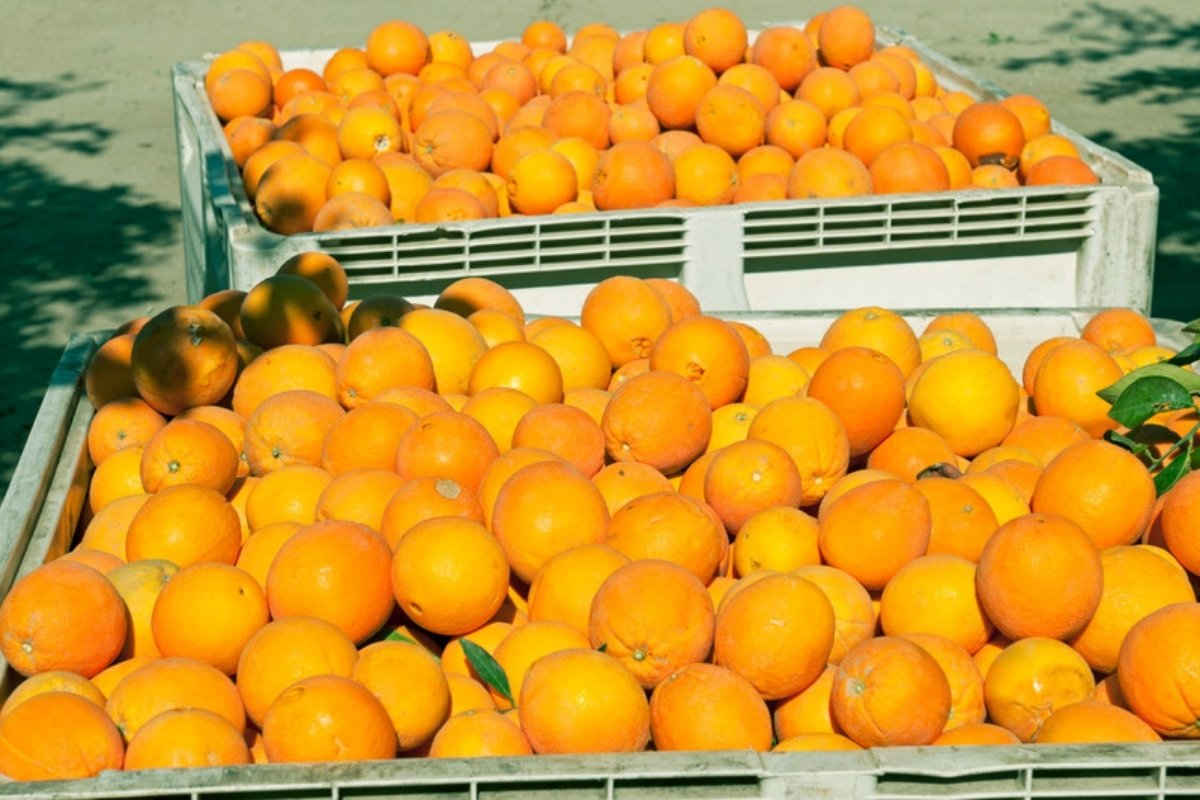
Spanish oranges went through the same change in UK trade rules and recording, without a similar shift in price
Spanish oranges sold to the UK show no premium shift
Sweet oranges went through the same change in trade rules and the same customs recording as tomatoes. The UK paid 7.3% more than Spain's other orange buyers on average in 2016 to 2020 and 3.4% more in 2021 to 2024. On monthly data the difference between the two periods is not statistically significant (p = 0.35). Spanish oranges sold to the UK showed no shift similar to tomatoes after 2021.
The 2025 tomato codes show the premium within the same code
Since January 2025 Eurostat splits tomato exports into three customs subcodes, 0702 00 10, 0702 00 91 and 0702 00 99. Before that, a premium could have come from the UK buying a more expensive mix of tomato types. In January 2025 to July 2026 the UK paid 42.8% more than Spain's other buyers under 0702 00 10, which carries most of the trade, and 9.6% more under 0702 00 99. Under 0702 00 91, the smallest of the three, it paid 6.2% less.
The UK's purchases were not weighted towards the dearest code either. Across all buyers, 0702 00 91 had the highest unit value, €2.29 per kg against €1.89 for the other two codes, and it made up 3.8% of the UK's volume against 5.8% of the volume sold to other buyers. Code 0702 00 10 made up 62.8% of the UK's volume and 69.9% of other buyers' volume. Valuing other buyers' purchases at the UK's mix of codes changes their average unit value by only 0.3%. In the two codes that carry 96.2% of the UK's tomato imports from Spain, the UK paid more than other buyers for the same customs category.
UK import data show the same step despite the recording change
Until the end of 2020, Spanish shipments to the UK were intra-EU trade, reported through the EU's business surveys of trade between member states. Since 2021, according to Eurostat, the EU's trade with the UK follows the concepts that apply to trade with non-EU countries, generally based on customs declarations. Only trade with Northern Ireland still follows the intra-EU rules.
A change in data source can move recorded values on its own, for example through different reporting thresholds or valuation rules. UK import statistics from HM Revenue and Customs (HMRC), which record the same trade at the UK border with a separate system, show the same step. In HMRC data, tomatoes from Spain were priced 15.5% below the average of all other origins in 2016 to 2020, below it in every year, and 23.9% above it in 2021 to 2024, above it in every year. In pounds, the Spanish unit value rose 24.8% from 2020 to 2021, while the average for all other origins fell 0.6%.
Tomatoes from the Netherlands went through the same switch from intra-EU to customs recording, and their unit value moved only from 6.2% to 9.3% above the other origins. A recording change would have affected Dutch and Spanish tomatoes alike, so it cannot account for most of the Spanish step, and UK oranges from Spain, recorded under the same rules, showed no similar shift either. The two sources disagree on volume, with HMRC recording 47,454 tonnes from Spain in 2024 against 61,635 tonnes in Spain's export data, a gap of 23% that the published data do not explain.
Export unit values give UK buyers a price reference with limits
For Spanish exporters and UK importers, the figures give a public reference for what tomatoes cost at the Spanish border before freight. They do not include UK import controls, certificates or transport, which are separate costs, and they do not show retail prices in the UK. Whether a supplier keeps a UK account also depends on the quality and residue checks importers run before they reorder, which the trade data do not capture. The latest months are provisional and Eurostat revises them as corrected declarations arrive.
Sources
- Eurostat. (2026). International trade in goods database, Comext dataset DS-045409, EU trade since 1988 by HS2-4-6 and CN8. European Commission.
- Eurostat. (2026). EU trade in goods with the United Kingdom in 2015-2025. European Commission.
- HM Revenue and Customs. (2026). uktradeinfo, UK overseas trade statistics. HMRC.
- Eurostat. (2026). Comext database API, getting started. European Commission.