Palms are one of the defining plants of warm climates, and the family is far more varied than most people realise. The family runs from towering coconut and date palms to compact indoor species that live happily on a windowsill, with more than 2,500 species in total. This guide sorts out the main types of palm trees, explains how fast they grow and how long they live, and covers the one piece of care most people get wrong, how to trim a palm properly.
Before the list, it helps to know what actually makes a palm and the single split that divides almost all of them, since that one feature tells you a lot about how a palm will look in a garden or a pot.
What makes a palm
Palms belong to the family Arecaceae, a group of flowering plants found mostly in the tropics and subtropics, with a few hardy enough for cooler regions. Unlike broadleaf trees, a palm has a single growing point, or bud, at the top of its trunk, and it does not branch or thicken in the same way, which matters a great deal when it comes to pruning.
The clearest way to sort palms is by leaf shape. Feather palms, or pinnate palms, have long fronds with leaflets arranged along a central rib like a feather, as in the date and coconut palms. Fan palms, or palmate palms, have leaves that spread out from a single point like the fingers of a hand, as in the windmill and European fan palms. Once you can spot the difference, most palms fall neatly into one camp or the other.
Common types of palm trees
Date palm (Phoenix dactylifera): the classic desert palm, grown across North Africa and the Middle East for its sweet fruit and recognisable by its tall, ringed trunk and arching feather fronds. It is both a serious fruit crop and a landscape tree.
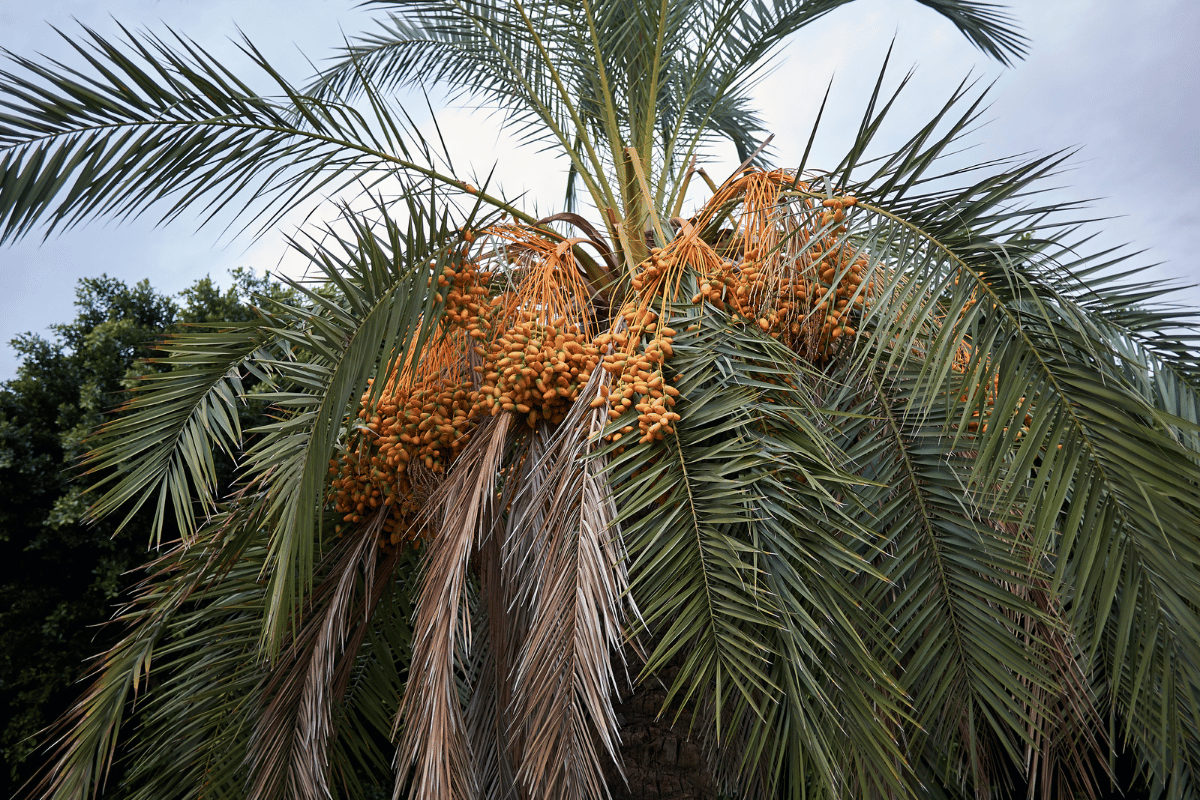
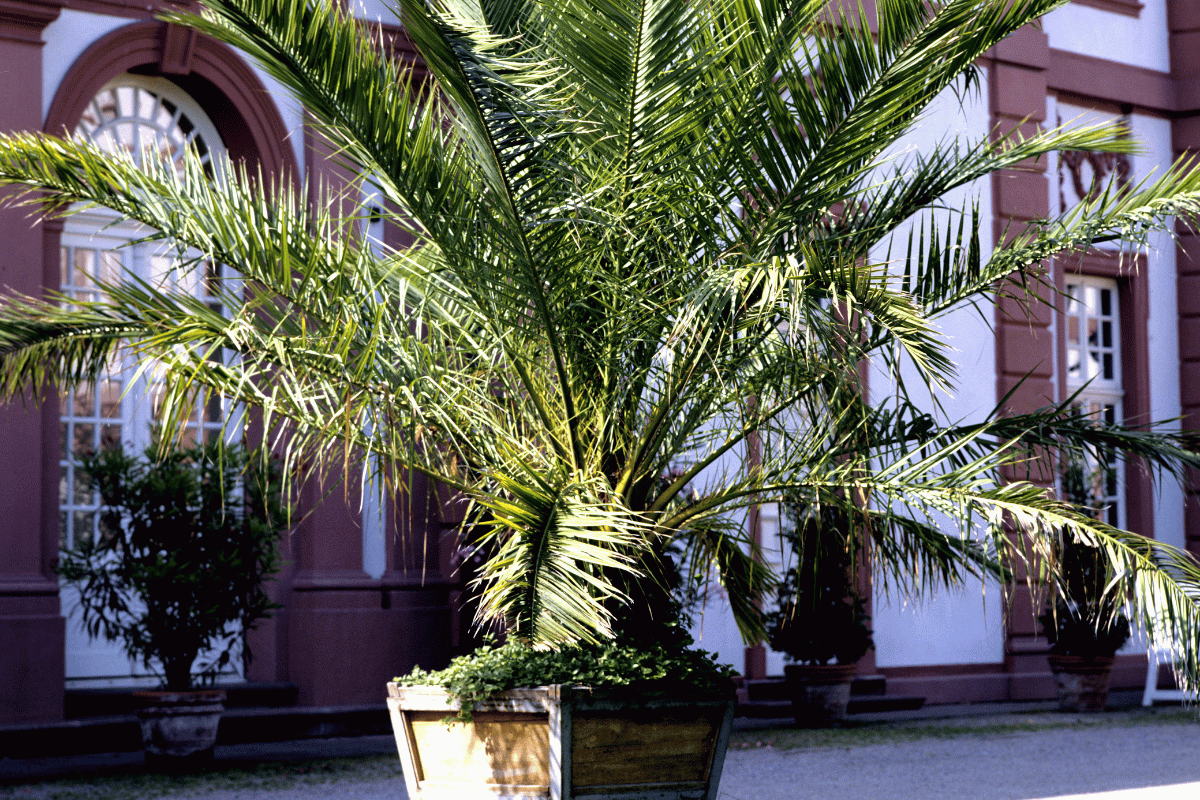
Canary Island date palm (Phoenix canariensis): a stouter, more ornamental relative with a thick trunk and a dense crown, widely planted along Mediterranean streets and in large gardens.
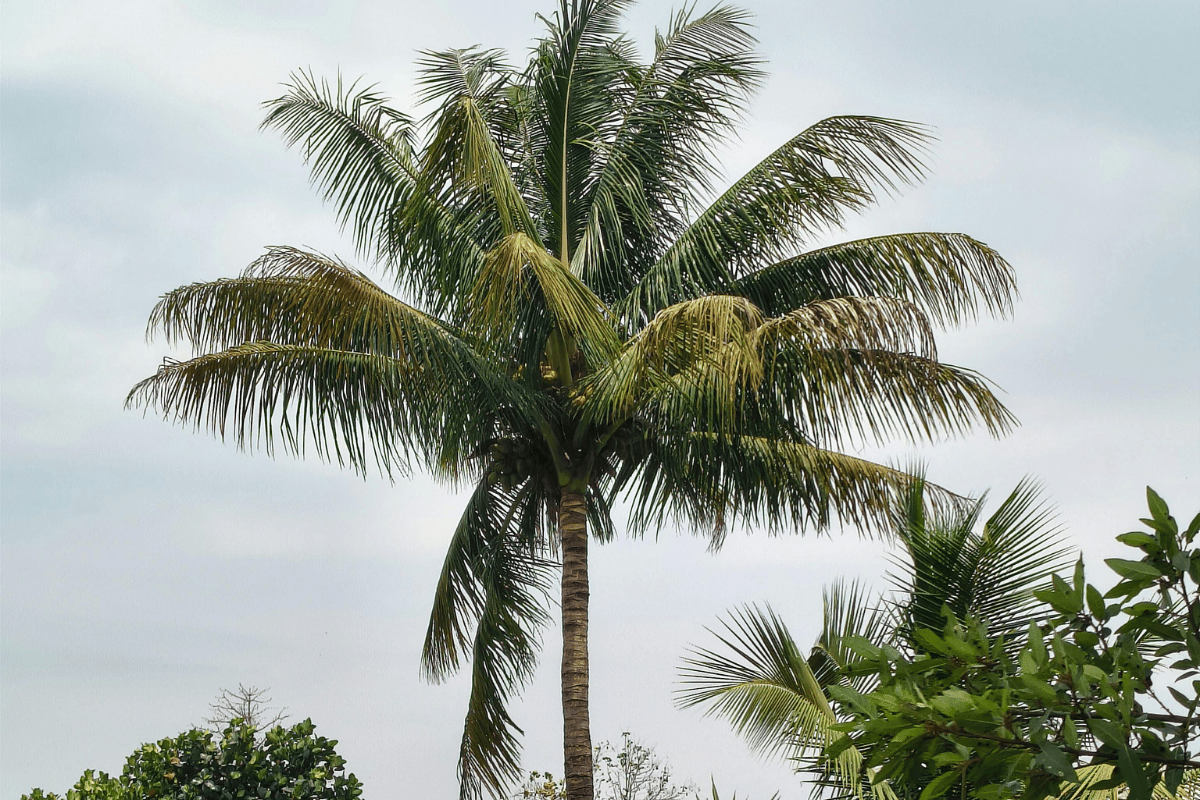
Coconut palm (Cocos nucifera): the icon of tropical coasts, with a slender, often curving trunk and large feather fronds. It needs genuine tropical warmth and will not tolerate frost.
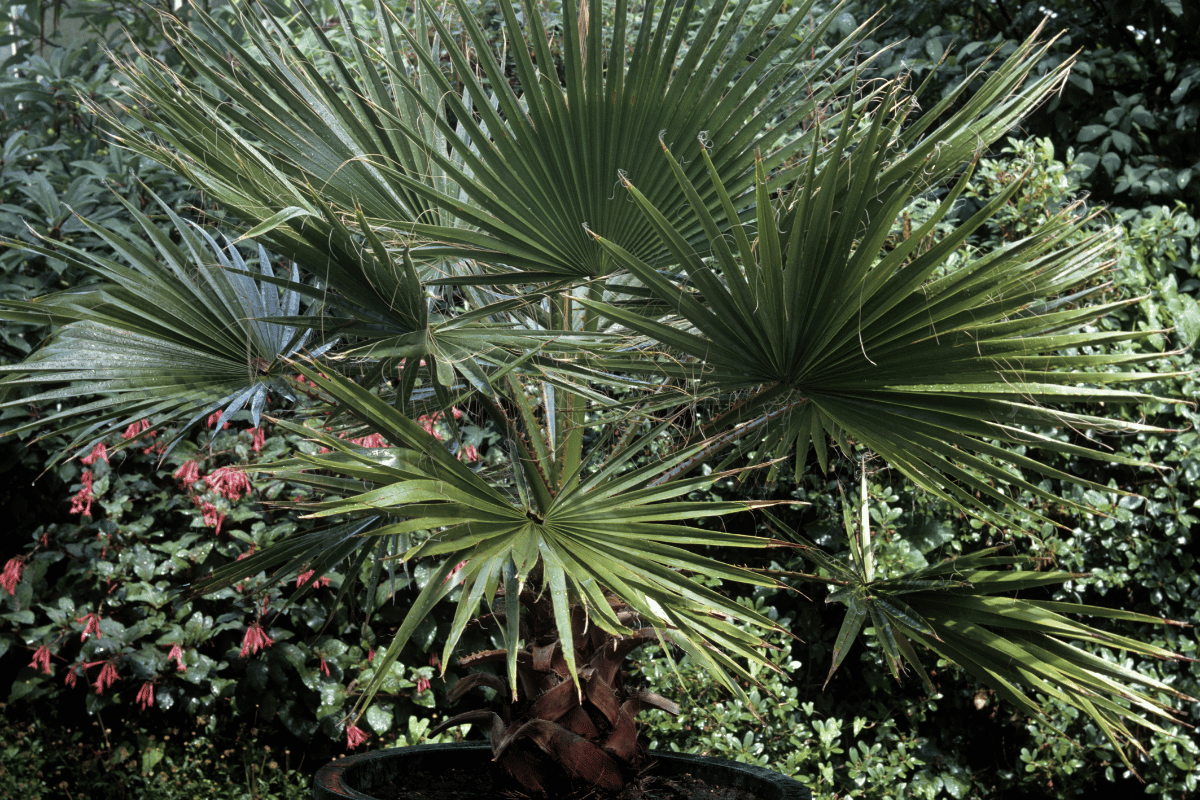
European fan palm (Chamaerops humilis): the only palm native to continental Europe, a tough, clumping fan palm from the western Mediterranean that handles drought, wind and light frost, which makes it a favourite for Mediterranean-style gardens.
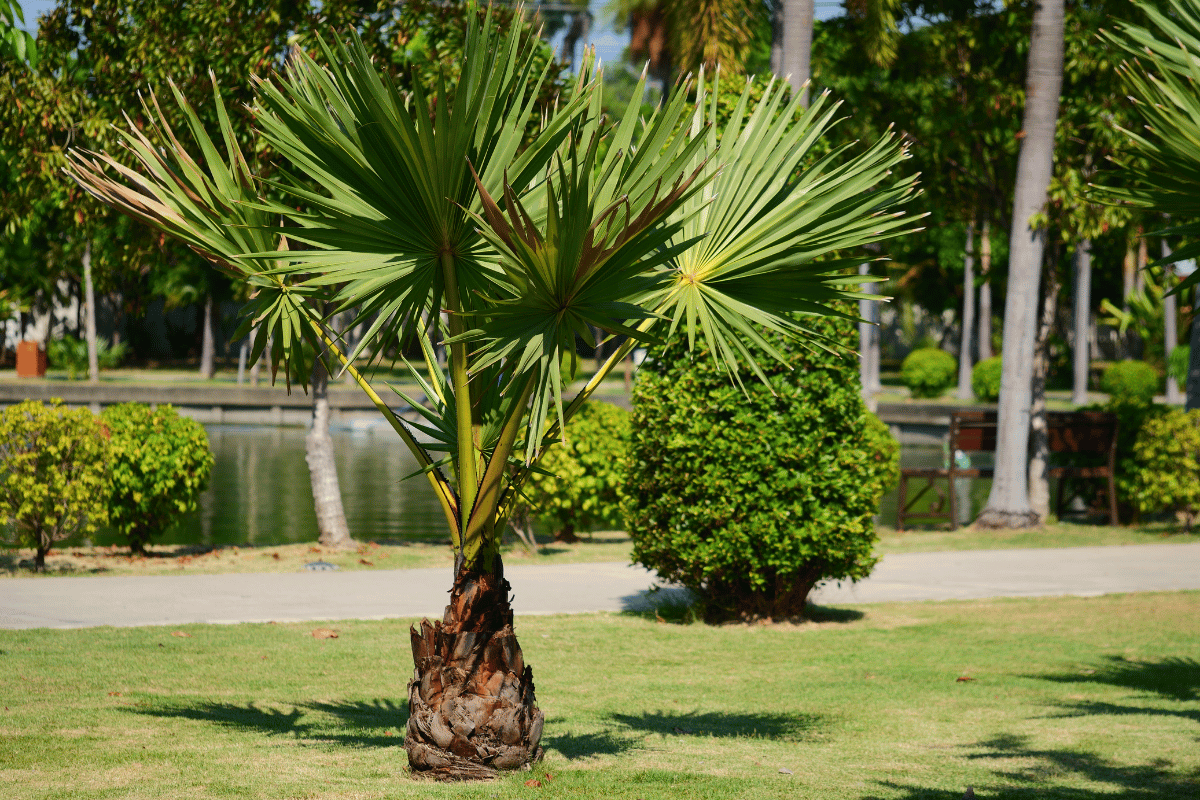
Windmill palm (Trachycarpus fortunei): one of the most cold-hardy palms of all, with a fibrous trunk and stiff fan leaves, able to survive hard frosts and grow well in temperate gardens.
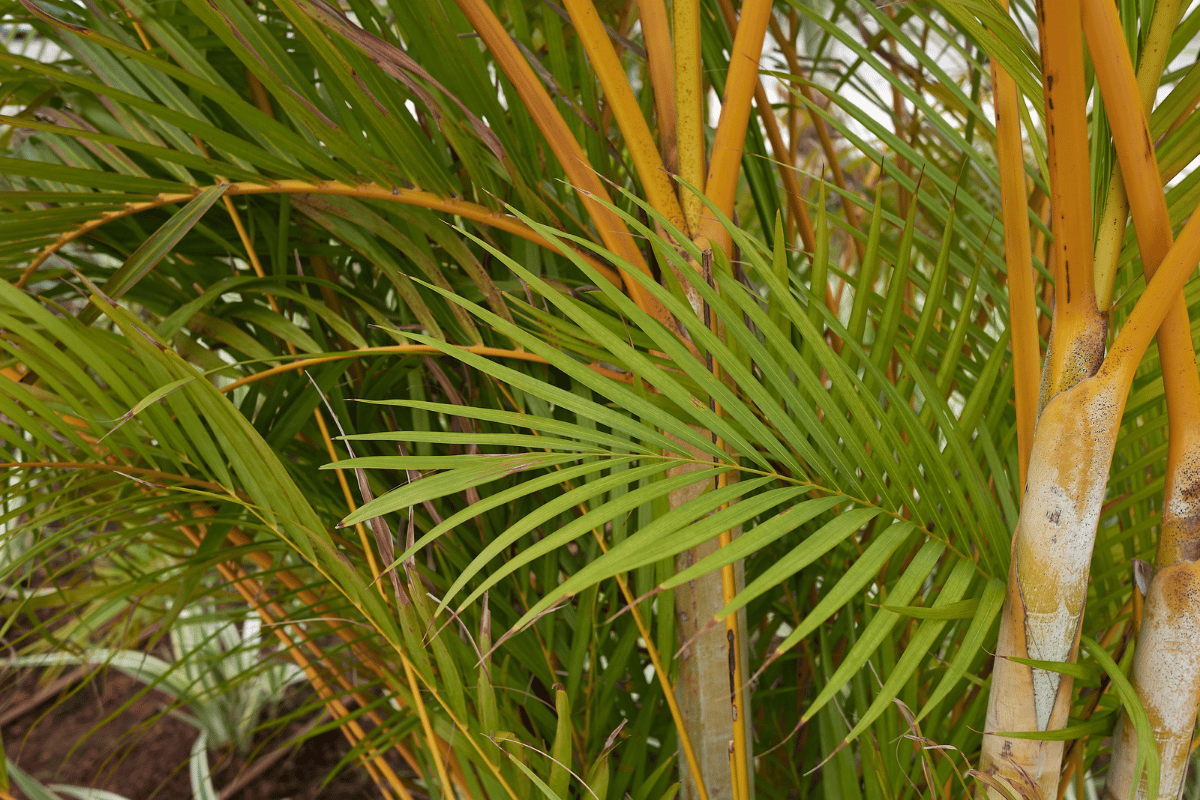
Areca palm (Dypsis lutescens): a clumping feather palm with slender yellow-green stems, one of the most popular indoor palms and easy to keep in a bright room.
Parlour palm (Chamaedorea elegans): a small, slow, shade-tolerant feather palm that has been a favourite houseplant for generations because it copes with low light and neglect.
Kentia palm (Howea forsteriana): an elegant, upright feather palm that tolerates lower light and cooler rooms, long valued as a graceful indoor specimen.
Majesty palm (Ravenea rivularis): a fuller, feathery indoor palm that wants bright light and steady moisture, popular as a large floor plant.
How fast do palm trees grow and how long do they live
Most palms are slow to moderate growers, adding anywhere from a few centimetres to around 30 cm of height a year depending on the species and conditions, with indoor palms among the slowest. Growth speeds up with warmth, light and steady moisture, and slows sharply in poor light or cold.
Palms are long-lived once established. Many landscape palms live for several decades, coconut palms often reach 60 to 80 years, and date palms can live and fruit for a century or more. Because they grow from a single bud, a palm that loses that growing point cannot recover, which is why care focuses on protecting the crown.
How to trim a palm tree
The single most important rule is to remove only fully brown, dead fronds. Green and even partly yellow fronds are still feeding the palm and should be left alone, because a palm draws nutrients back out of an ageing frond before it dies. Cutting healthy fronds forces the palm to dip into its reserves and weakens it.
Avoid the so-called hurricane cut or pineapple cut, where most of the fronds are stripped away leaving only a few pointing upwards. It looks tidy but it is harmful, and observations after storms show that over-pruned palms are more likely to snap, not less, because the full canopy actually protects the tree. Aim to keep a full, rounded crown, and as an absolute limit never cut fronds growing above the 9 o'clock and 3 o'clock positions.
When you do remove a dead frond, cut it close to the trunk but not flush, leaving a short stub of a few centimetres rather than cutting into the trunk itself. Palms do not heal wounds the way other trees do, so a cut into the trunk is a lasting entry point for disease. In Mediterranean and other warm regions this matters even more, since fresh wounds attract the red palm weevil, a pest that can kill a palm from the inside. Use clean, sharp tools, never climbing spikes, and for tall palms it is safer to hire a qualified arborist.
Indoor palms
Several palms make excellent houseplants, chief among them the areca, parlour, kentia and majesty palms. Indoors, most want bright but indirect light, a well-draining pot that is never left standing in water, and a little extra humidity, since dry air browns the leaf tips. They pair well with other easy foliage houseplants such as dracaena for a green, low-maintenance corner. Feed lightly through the growing season and repot only every few years, as most palms prefer to be somewhat snug.
A note on the sago palm
Despite the name, the sago palm (Cycas revoluta) is not a true palm at all but a cycad, an ancient group unrelated to the palm family. It matters for two reasons. It grows far more slowly and recovers even less well from over-pruning, and it is toxic to pets and people, with the seeds especially dangerous to dogs. If you have pets, keep sago palms well out of reach.
Frequently asked questions
How do I trim a palm tree without harming it? Remove only fully brown, dead fronds, cut close to the trunk but not flush, and never strip the green canopy or cut above the 9 and 3 o'clock line.
How fast do palm trees grow? Most grow slowly to moderately, from a few centimetres up to about 30 cm a year, faster in warmth and good light and slower indoors or in cold.
What is the most cold-hardy palm? The windmill palm (Trachycarpus fortunei) is among the hardiest, followed by the European fan palm, both of which survive frost in temperate gardens.
Which palms grow well indoors? Areca, parlour, kentia and majesty palms are the most reliable indoors, all preferring bright indirect light and careful watering.
Important notes
Palm species differ enormously in their tolerance of cold, drought and light, so always match the palm to your climate and setting, and treat the guidance here as a general starting point.
For tall palms, pruning is a job for a qualified arborist rather than a ladder and a saw, both for safety and for the health of the tree. If a palm shows persistent problems, or signs of pests such as the red palm weevil, seek advice from a professional before acting.
References
- University of Florida IFAS Gardening Solutions. Pruning palms.
- Royal Horticultural Society. Palms.