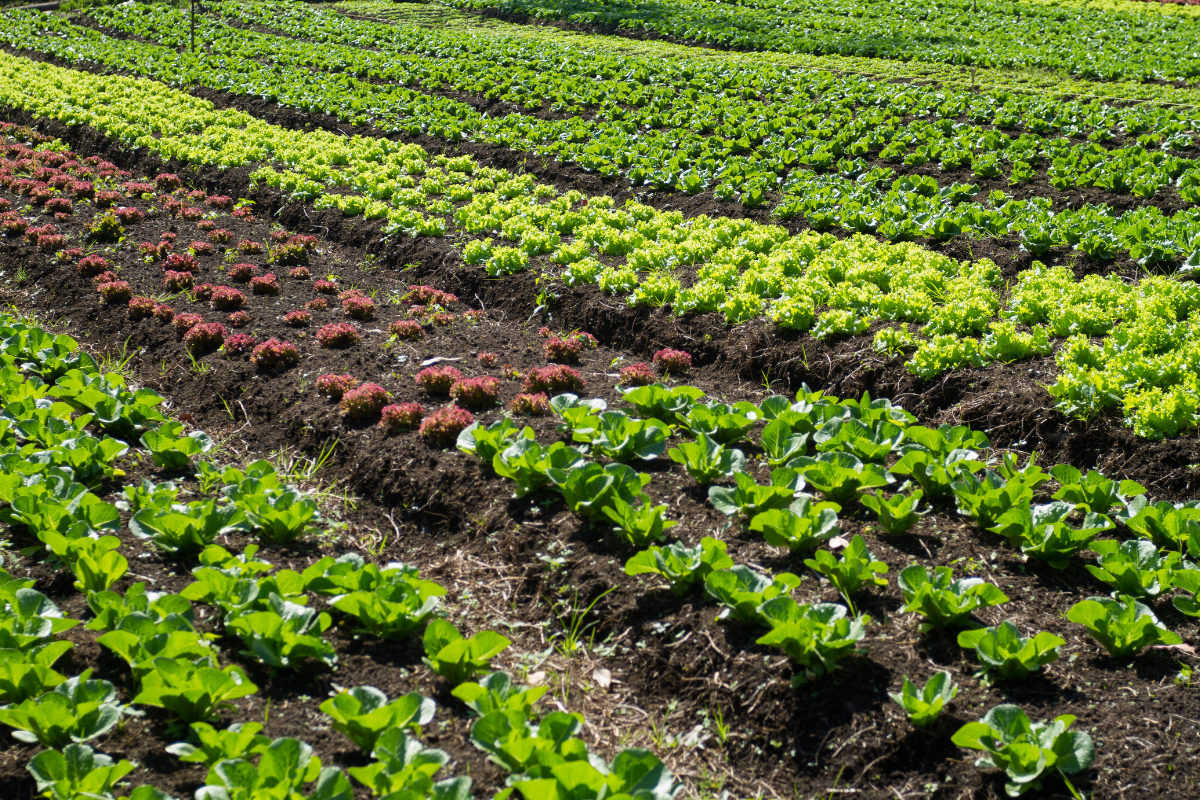
Europe lost 12 million tonnes of crops and 660,000 hectares to fire over the past summer, European Commission President Ursula von der Leyen told the European Parliament in Strasbourg on 16 September. She called it "the summer of truth" and warned that the months just passed were the hottest ever recorded and "probably the coolest of the years to come".
The figures are the Commission President's own, delivered in a political speech rather than published as audited statistics, and the speech did not say how they were calculated. They are the Commission's first attempt to put a single number on a season that agricultural agencies have so far measured crop by crop, and they arrive after the JRC cut EU summer crop forecasts for every crop it tracks and after world food prices reached their highest level since November 2022.
Water moved to the centre of the food security argument
The most concrete agricultural content came under a heading that the President called water and food security. She put the case in plain terms. Crops need water to grow, livestock need it to survive, and entire harvests depend on it. Then came the number that framed the response. European pipes lose almost one in every four litres, mostly through leakage.
The Commission will put forward a new European Water initiative, presented as serving both industry and food security. No scope, timetable or budget was given. Alongside it, the President promised proposals to improve risk management and to address the insurance gap, which links the water question directly to the second announcement.
An insurance gap that leaves national budgets exposed
Only around 25% of catastrophe losses in Europe are covered by private insurance, which the President described as leaving national budgets to act as the insurer of last resort. The Commission will set up a Climate Insurance Alliance to close that gap.
For agriculture, the figure matters more than for most sectors, because crop and livestock losses from drought, hail, frost and fire fall heavily on farms that often carry no cover at all. A season in which sugar beet yields collapsed, and fodder supplies ran short across western and central Europe, is the case study for what an uninsured 75% looks like in practice. What the Alliance will consist of, who will belong to it and whether it will involve public reinsurance were not specified.
A resilience framework naming 100 vulnerable territories
The Commission will present a new framework for climate resilience next month and identify 100 of the most vulnerable territories in Europe, assess the risks, and decide at which level they should be managed. The President described this as a whole-of-society approach reaching down to local level, where she said adaptation matters most.
She also framed adaptation as a market rather than merely a cost, naming drought-resistant crops, flood prevention, and energy-efficient cooling as areas where Europe already leads and should capture commercial value. For seed companies and breeding programmes, that is a signal worth noting, though again without instruments attached.
Two further commitments sit alongside it. A European Heatwave Plan covering early warning, health preparedness, urban cooling and support for vulnerable people. And, on wildfires, a group of senior firefighters and emergency responders has been asked to examine preparedness and prevention and to make proposals, including a future European Firefighting Fleet. The President told the chamber the story of Rune Kyndal, a Danish pilot who flew firefighting missions in Greece in July, stayed on when the emergency peaked and was killed in an accident with his fire liaison officer. His family attended as guests.
Precision agriculture is named in the AI section
Agriculture appeared a second time, in the part of the speech about artificial intelligence. Precision agriculture was listed among the places where the President said the real value of AI lies, moving it "from the screen to the real economy". Agri-food was named as one of five priority sectors for industrial AI, alongside health, transport, advanced manufacturing, and defence and space, with initiatives promised in November.
The argument concerned data rather than models. European industries hold high-quality data that can power tailor-made industrial AI, and Europe need not develop frontier technology to extract the most value from it.
What the speech did not contain
There was no mention of the Common Agricultural Policy, no figure for farm support in the next long-term budget, and no new money attached to any of the agricultural announcements. Every instrument named is at the stage of intention. The climate resilience framework is due next month, the heatwave plan and water initiative are promised without dates, and the firefighting fleet is a proposal that senior responders have been asked to consider.
The President's closing line on the sector was a statement of intent rather than a commitment. Europe's farmers, she said, are the best in the world, and the Commission will support them every step of the way.
Why it matters for Greek producers
Greece appeared twice in the speech, once as a place where flames roared through the islands and once through the Danish pilot who died flying missions there. Greek farms sit within the exposure the speech described, in a country where irrigation infrastructure determines whether a crop survives a heatwave, as this season's results showed, with Greek maize coming in above its five-year average while French yields hit a record low.
Two of the announcements could matter concretely if they acquire substance. A water initiative addressing distribution losses speaks to a country where much irrigation water is lost before it reaches a field. An insurance alliance addressing the 75% of uninsured catastrophe losses speaks to farms that currently carry risk themselves. Whether either delivers will be visible first in the resilience framework due next month, and in whether the list of 100 vulnerable territories includes Greek ones.
Sources
- European Commission. (2026). 2026 State of the Union Address by President von der Leyen. Strasbourg, 16 September 2026.
- Euronews. (2026). Von der Leyen unveils European Heatwave Plan in key speech. 16 September 2026.
- Eunews. (2026). AI and climate: the two challenges von der Leyen says will reshape the EU. 16 September 2026.