
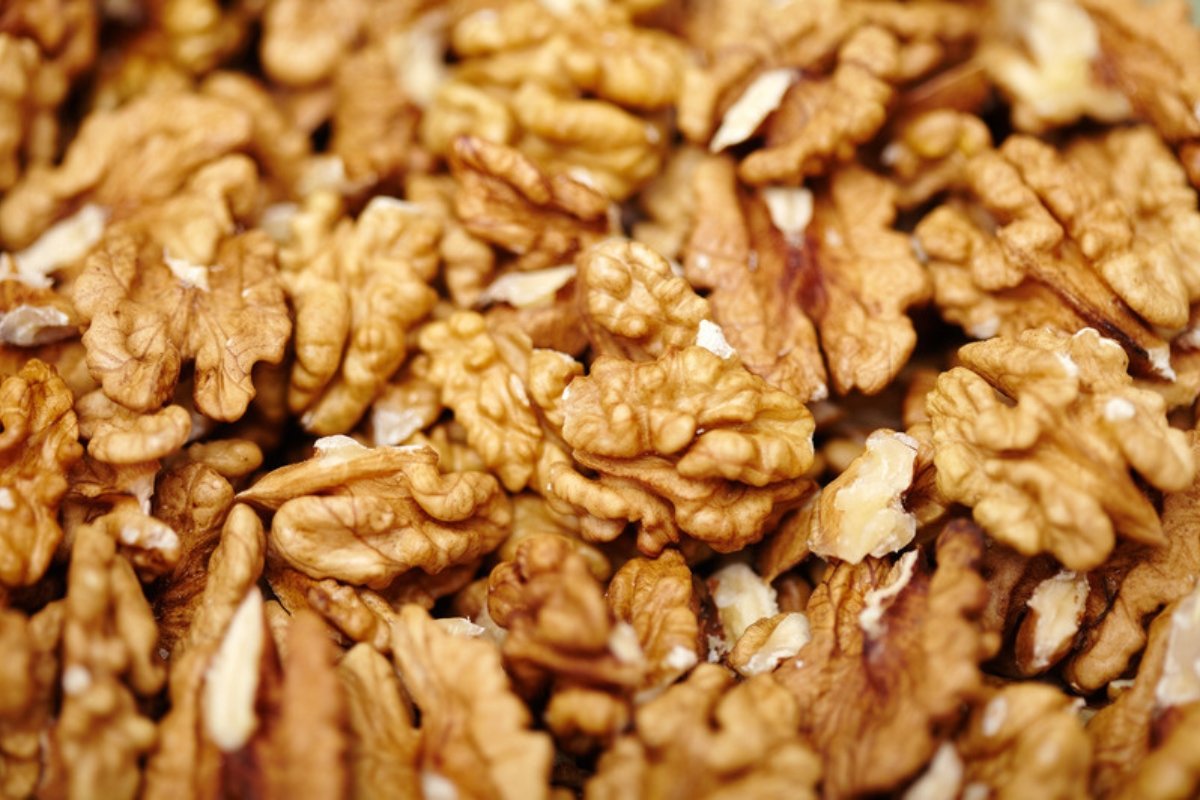
From January to August 2026 the EU imported 113,483 tonnes of shelled walnuts from outside the EU, the largest quantity for these months since at least 2012, and paid an average of €5.34 per kilo, 12.6% less than in the same months of 2025, according to a Wikifarmer analysis of Eurostat trade data. Greece and Spain also imported their largest quantities for these months since at least 2012, and in Greece Chile became the largest supplier this year. The data run to August, so they do not yet include the imports of the months before Christmas.
The EU imported four times as many shelled walnuts this year as in 2012
In Eurostat's Comext database EU imports of shelled walnuts from outside the EU from January to August were 28,070 tonnes in 2012, 60,090 tonnes in 2019, 89,689 tonnes in 2024, 105,256 tonnes in 2025 and 113,483 tonnes in 2026, 7.8% more than last year. The average import price was €5.34 per kilo, against €6.11 last year, the fifth lowest of the 15 years since 2012, while the highest was €9.47 in 2015.
The US supplied 57.9% of the tonnes, at an average of €5.67 per kilo against €7.13 last year, followed by China with 22.2%, Chile with 9.5% and Ukraine with 7.2%, down from 13.5% in 2025. Of the four largest suppliers, Chinese walnuts had the lowest price, €4.09 per kilo, and Chilean walnuts the highest, €6.18.
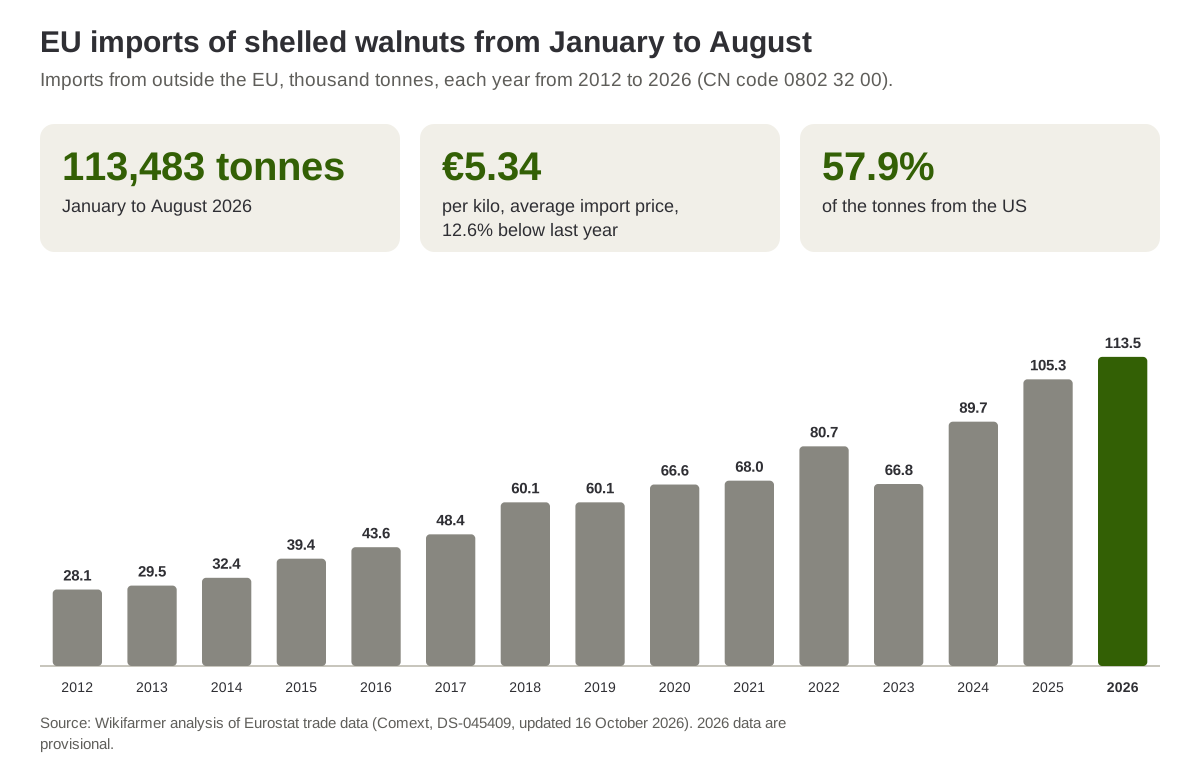
Source: Wikifarmer analysis of Eurostat trade data (Comext, DS-045409, updated 16 October 2026), CN code 0802 32 00. 2026 data are provisional.
The import price of walnuts in shell was 18.1% lower than last year
For walnuts in shell the EU paid an average of €2.49 per kilo from January to August 2026, 18.1% less than the €3.05 of 2025, and imported 26,797 tonnes, a quantity also 18.1% smaller than last year. Last year's price was the seventh highest since 2012 and this year's is the fifth lowest. The US supplied 53.4% of the tonnes, at €2.31 per kilo against €2.96 last year, and Chile 33.1%, at €2.71 against €3.21.
The monthly import price of shelled walnuts reached €6.99 per kilo in August 2025, fell to €5.15 in March 2026 and rose to €5.64 in August 2026. For walnuts in shell it moved from €3.23 in September 2025 to €2.26 in May 2026 and was €2.58 in August 2026.
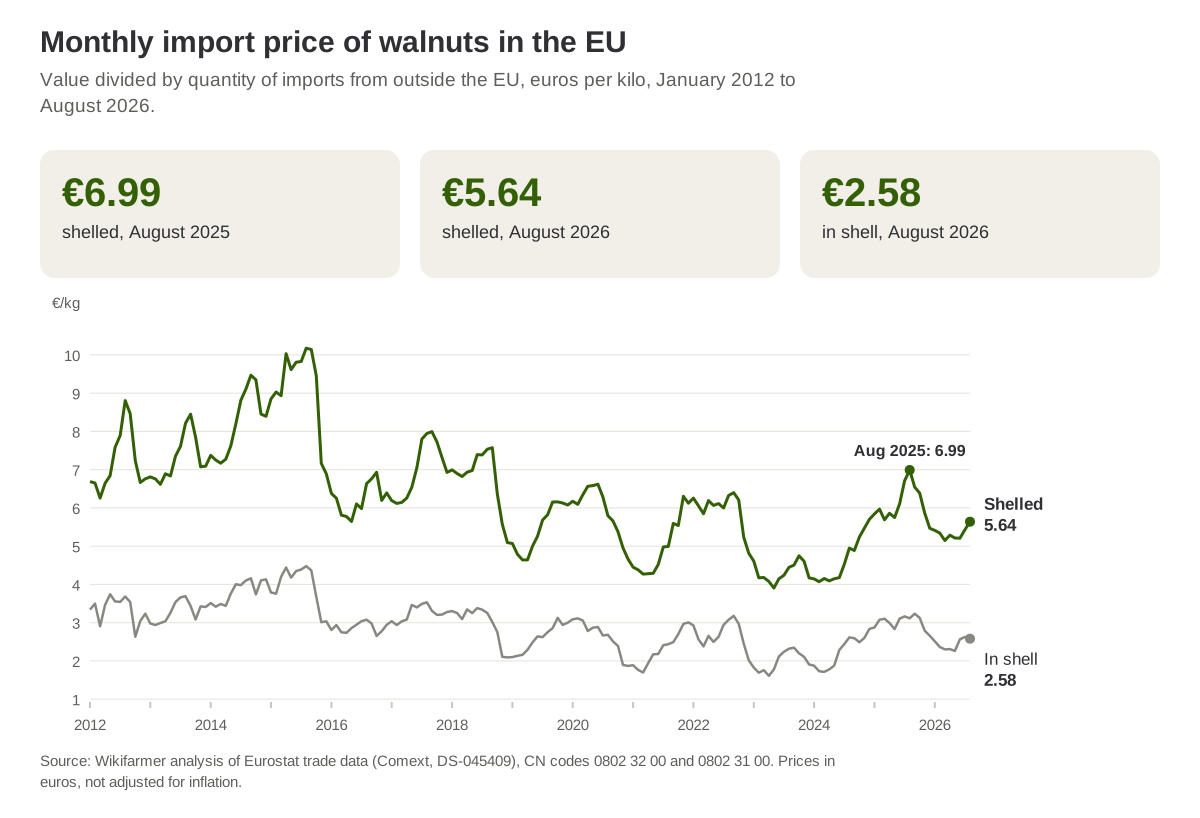
Source: Wikifarmer analysis of Eurostat trade data (Comext, DS-045409), CN codes 0802 31 00 and 0802 32 00. The price is the value of imports divided by the quantity, in euros not adjusted for inflation.
Chile became Greece's largest supplier of shelled walnuts
Greece imported 2,567 tonnes of shelled walnuts from January to August 2026, the largest quantity for these months since at least 2012, when it was 845 tonnes, at an average price of €5.31 per kilo against €5.57 last year. Chile supplied 40.4% of the tonnes, up from 9.6% last year, while the share of Ukraine, the largest supplier in 2025 with 47.9%, fell to 18.4%. China supplied 21.1% and the US 11.0%, up from 4.4% last year. Walnuts in shell are a much smaller quantity, 651 tonnes, mostly from Chile, with 72.6%, at an average of €2.66 per kilo against €3.73 last year, when 33% of the tonnes came from Bulgaria at €4.48 per kilo.
Spain buys two thirds of its shelled walnuts from the US
Spain imported 19,047 tonnes of shelled walnuts from January to August 2026, also the largest quantity for these months since at least 2012, at an average price of €5.77 per kilo, 20.1% lower than the €7.22 of 2025, and 67.4% of the tonnes came from the US. At Madrid's central wholesale market, Mercamadrid, the most frequent walnut price averaged €4.68 per kilo from October to December 2025, the highest since 2019, and was €4.20 in September 2026, against €4.60 in September 2025. The quantity the market handled from January to September 2026, 565 tonnes, is the smallest since 2019, and 41.9% came from Chile, 25.6% from France, 19.9% from the Spanish province of Badajoz and 10.5% from the US.
The prices matter to walnut growers and to buyers of imported walnuts
Lower import prices matter to the traders, food manufacturers and shops that buy imported walnuts, and to growers in every EU country who sell walnuts in the same market and weigh costs and expected prices when starting a walnut orchard or planning the sale of the crop after walnut harvest and yields are known. In the first eight months of 2026 the EU imported more shelled walnuts from outside the EU than in any other year of the series, at a lower price than in 2025.
In 2025 imports from September to December were 28.7% of the year's imports of shelled walnuts and 38.3% of walnuts in shell. The figures for these months of 2026, once published, will show at what price the walnuts for the holidays reached Europe.
The trade data and the Madrid market report different kinds of price
The analysis is by Wikifarmer, based on Eurostat's monthly external trade data (Comext, DS-045409, updated 16 October 2026) for Combined Nomenclature codes 0802 31 00 (walnuts in shell) and 0802 32 00 (shelled walnuts) from January 2012 to August 2026, and on Mercamadrid's monthly volume and price data from the City of Madrid's open data (2019 to September 2026). EU imports cover only countries outside the EU, while imports by Greece and Spain also include EU countries, such as Germany, so the sending country is not always the country where the walnuts were grown. The import price is value divided by quantity and is not a buying price in a particular market, and 2026 data are provisional. The series starts in 2012, so the largest quantities refer to the years 2012 to 2026. At Mercamadrid the price is the most frequent selling price, which in most months is almost the same for all origins, and in August and September 2026 it is recorded only for Chilean walnuts, so the price for those months rests on a single entry. Prices are not adjusted for inflation, and the analysis does not examine the causes of the changes. All numbers were recomputed independently from the original files. The figures describe what prices and quantities did and are not a forecast of Christmas prices.
Sources
- Eurostat. (2026). International trade in goods, Comext database (DS-045409), updated 16 October 2026.
- Ayuntamiento de Madrid. (2026). Mercamadrid, volumen y precio de productos comercializados. City of Madrid open data portal.