Ascophyllum nodosum is a brown seaweed from the shores of the North Atlantic that has been used for decades as a raw material for biostimulants. It does not act as a conventional fertiliser, but activates the plant's own defence and growth mechanisms, which becomes valuable when a crop is under pressure from heat, drought, or poor fruit set. Below we look at what the extract contains, how it works, and what the research shows in olive and grapevine.
What the seaweed extract contains
Extracts of Ascophyllum nodosum contain a complex mix of bioactive substances, such as mannitol, alginic acids, polysaccharides, betaines, and natural phytohormones, mainly auxins and cytokinins, together with polyphenols, amino acids, and trace elements. Each group of substances plays a different role. Mannitol and betaines act as osmoprotectants that help the cell retain water, alginates and polysaccharides act in the soil and as signalling molecules, while polyphenols strengthen antioxidant capacity. The effect is not attributed to a single component, but to the synergy of the whole extract.
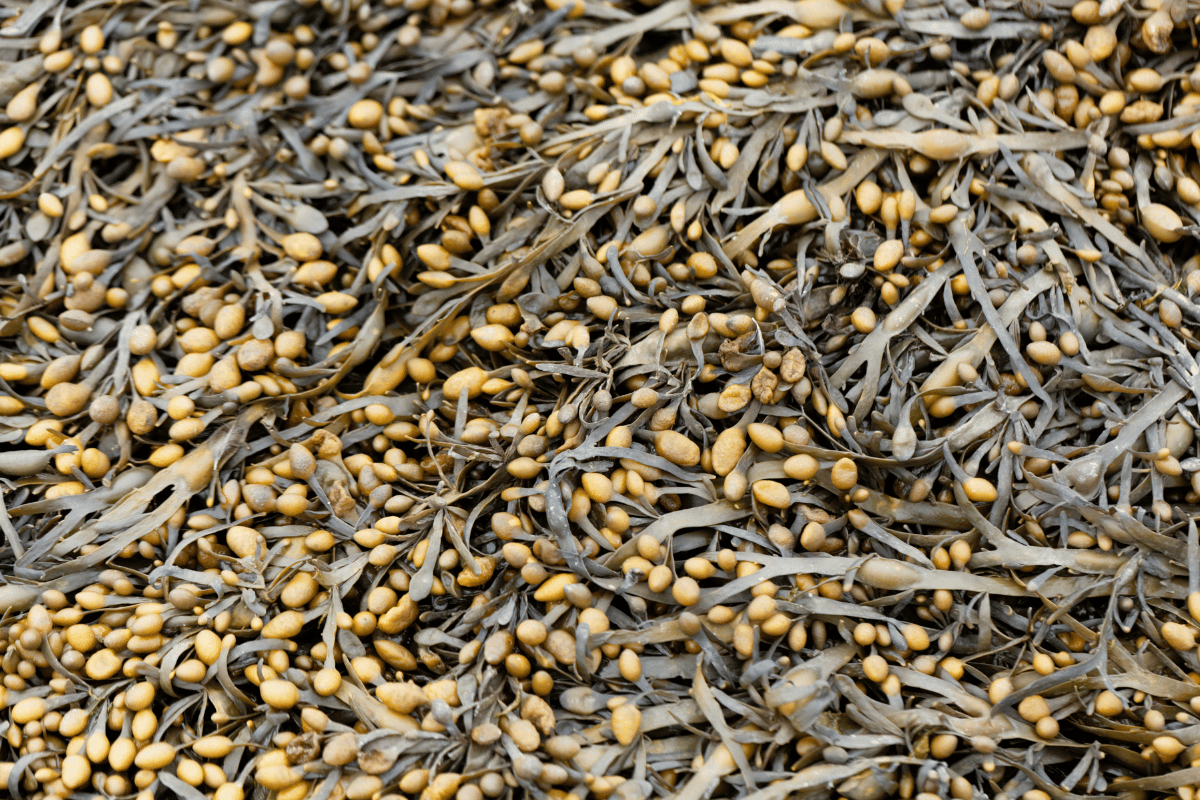
The brown seaweed Ascophyllum nodosum, the raw material of most seaweed biostimulants.
How it works in the plant
Rather than supplying nutrients, the seaweed extract activates the plant's signalling pathways, in particular those of auxins, cytokinins, and salicylic acid. Under drought, the osmotic regulation provided by mannitol and betaines helps the plant hold water and keep its tissues turgid, while polyphenols limit oxidative damage. At the same time, the plant increases the expression of stress-protective genes, such as the heat shock proteins and aquaporins that control water flow, resulting in better water-use efficiency and maintained photosynthesis.
Beyond abiotic stress
The benefits are not limited to heat and drought. Applying a seaweed extract can prime the plant against pathogens by switching on defence enzymes and genes before an attack develops. In grapevine, the combination of an Ascophyllum nodosum extract with a beneficial bacterium strengthened the defence mechanisms against downy mildew, raising the activity of enzymes such as peroxidase and the levels of phenolics. This defence priming does not replace plant protection, but it can complement it within an integrated programme.
What the research shows in olive and grapevine
In olive plants under water deficit, the preventive application of the extract gave an increase of 15% in height and 34% in photosynthesis in the Galega cultivar, regulating stomatal aperture and keeping the protective genes active. In grapevine, the same extract improved leaf thermoregulation, reducing the sensitivity of the stomata to vapour pressure deficit and helping the plant cope better with heat. Under high temperatures during the reproductive stage, the application strengthened flower development, pollen viability, and fruit set. Similar gains in drought tolerance have been recorded in citrus, which is why seaweed extracts are used across a wide range of tree crops.
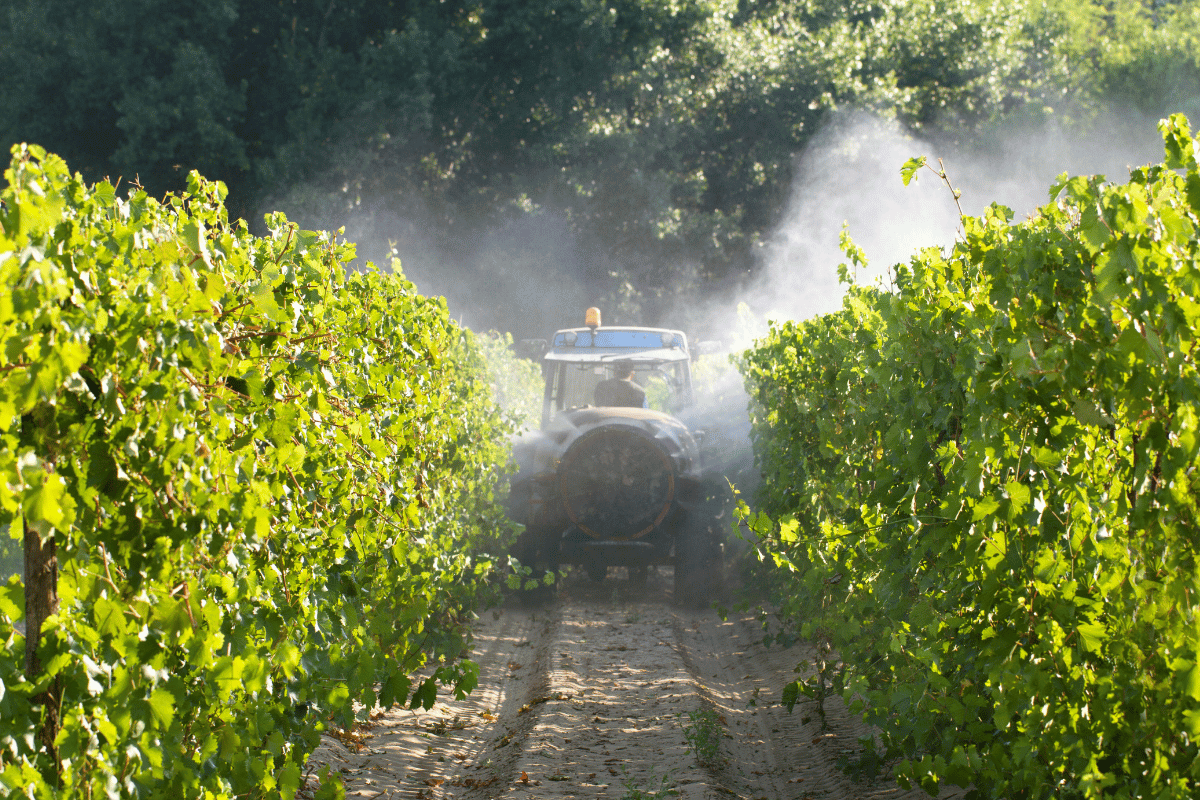
Foliar application is the most common way of using seaweed extracts.
When and how to apply it
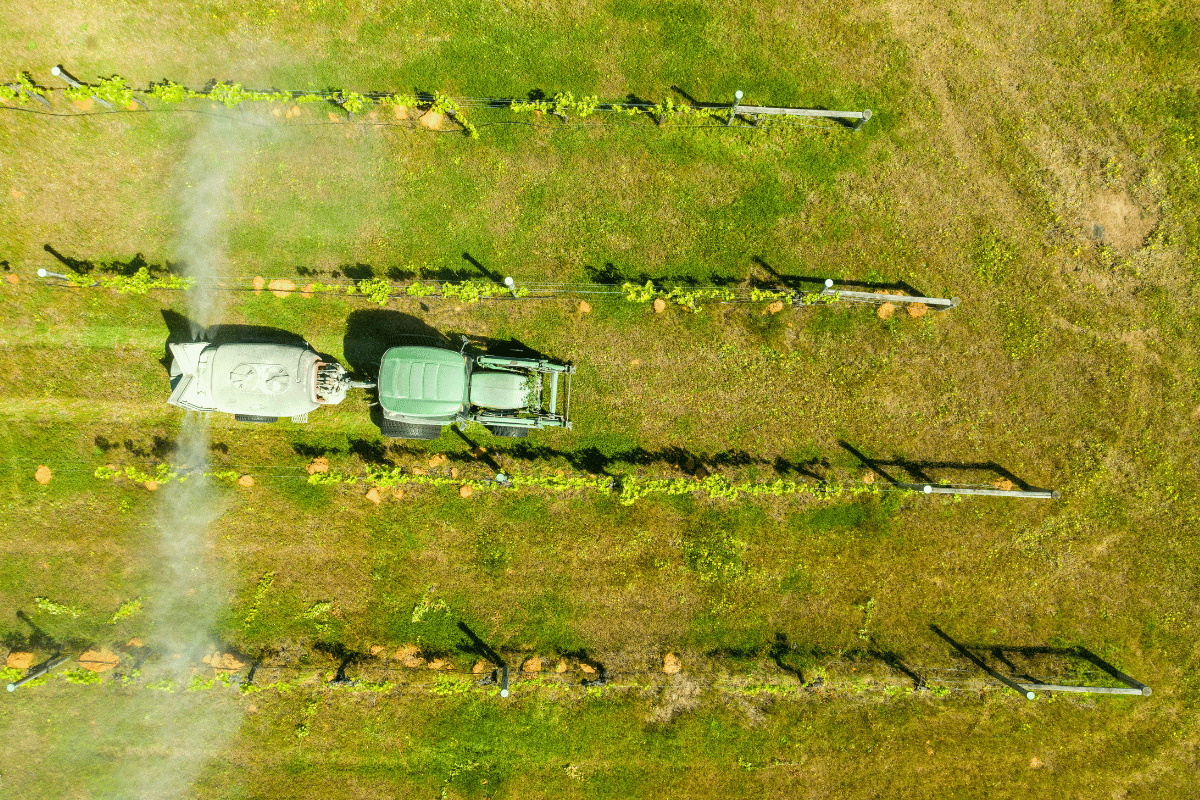
The seaweed extract does not replace fertilisation but complements it at critical stages. It is applied as a foliar spray or through the irrigation system, often combined with amino acids for a stronger effect on stress, always at the dose set on the label. Not all products are the same, because the processing method of the seaweed affects the activity of the final extract. Under European law these products are classified as plant biostimulants, a separate category from fertilisers and from plant protection products.
| Application stage | What we aim for |
|---|---|
| Before flowering | Better flowering and fertilisation |
| Fruit set | A higher proportion of fruit setting |
| Periods of heat or drought | Less stress and maintained photosynthesis |
| After stress, such as frost or hail | A faster recovery of the plant |
Which biostimulant to choose for each crop and stage is covered in our guide on choosing a biostimulant for your crop, and the wider picture of summer stress in our guide on protecting olive trees from heat and drought.
Sources
- Dias, M.C. et al. (2024), Ascophyllum nodosum Extract Improves Olive Performance Under Water Deficit, Plants (MDPI).
- Carmody, N. et al. (2020), Ascophyllum nodosum Extract Biostimulant Processing and Heat Stress Tolerance During Fruit Set, Frontiers in Plant Science.
- Journal of Applied Phycology (2020), Ascophyllum nodosum extract improves leaf thermoregulation in Vitis vinifera.
- Chemical and Biological Technologies in Agriculture (2024), The plant growth-promoting effect of an Ascophyllum nodosum extract.
- Synergistic activation of grapevine defense against downy mildew by Ascophyllum nodosum extract (2025).
- European Union, Regulation (EU) 2019/1009 on fertilising products, EUR-Lex.