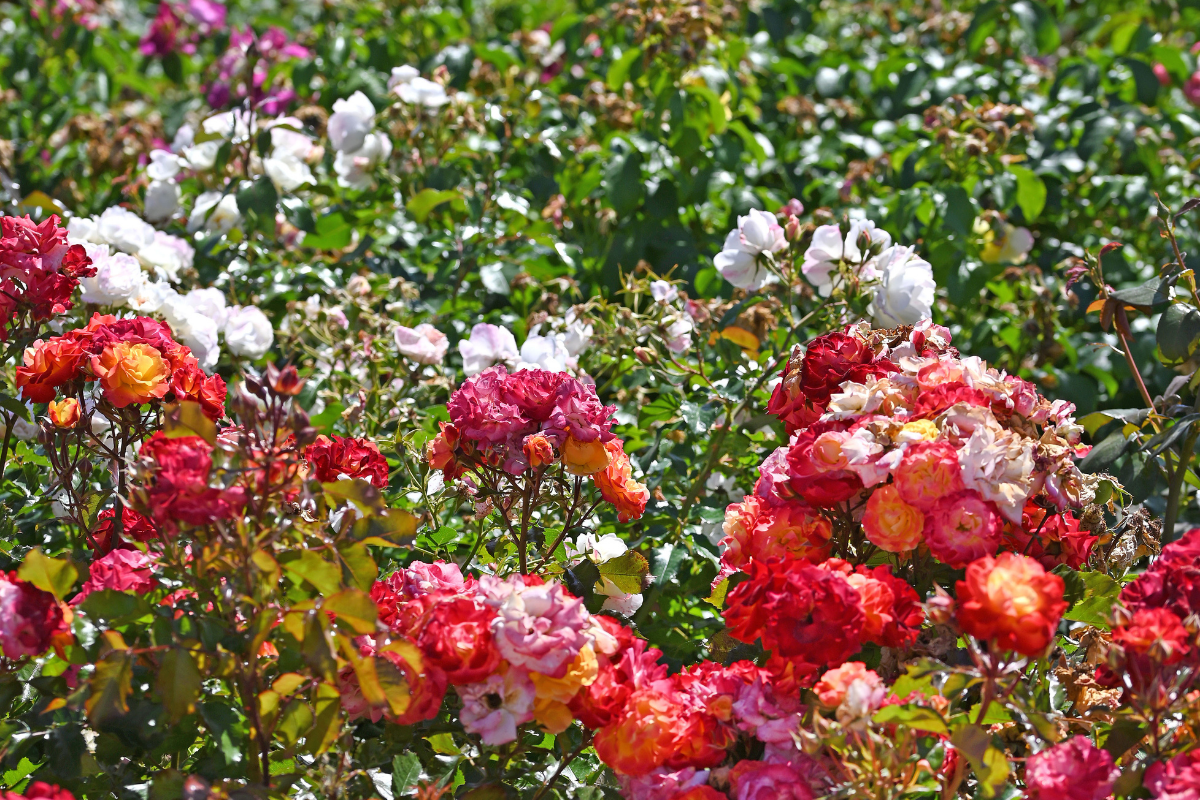
The genus Rosa holds roughly 100 to 150 wild species and more than 30,000 cultivated varieties, yet the choice at the nursery is far simpler than those numbers suggest. Garden roses fall into six main groups defined by how the plant grows, and the group decides where it goes, how much room it needs and how it is pruned. The variety, meaning the name on the label, decides the colour, the scent and how often it flowers. This guide covers the six groups and what sets them apart, how to choose by position and purpose, the difference between once-flowering and repeat-flowering roses, and what the terms on a plant label actually mean.
The six groups of roses
| Group | Height | Character and use |
|---|---|---|
| Hybrid tea and shrub roses | 70 cm to 1.5 m | Large single blooms on long stems, often strongly scented. The classic choice for beds and for cutting |
| Floribunda | 60 cm to 1.2 m | Clusters of smaller flowers on every stem and near-continuous flowering. Best for blocks of colour in borders |
| Climbers and ramblers | 2 to 5 m | Long flexible canes tied onto pergolas, arches, fences and walls. They need support from day one |
| Standard or tree roses | 1.5 to 2 m | Grafted high on a clear stem, with a rounded head. They add height and symmetry to paths and large containers |
| Groundcover | Up to 30 cm | Dense spreading growth that covers the ground. Tough plants for banks, slopes and large areas |
| Miniature and patio | 20 to 50 cm | Small plants with flowers scaled to match, made for pots, window boxes and balconies |
Hybrid teas and shrub roses
The hybrid tea is the rose most people picture when they hear the word. Each stem carries one large bloom with a high, pointed centre, and that structure is exactly what makes it the first choice as a cut flower. Hybrid teas repeat-flower from spring to autumn, with rest periods between the flushes.
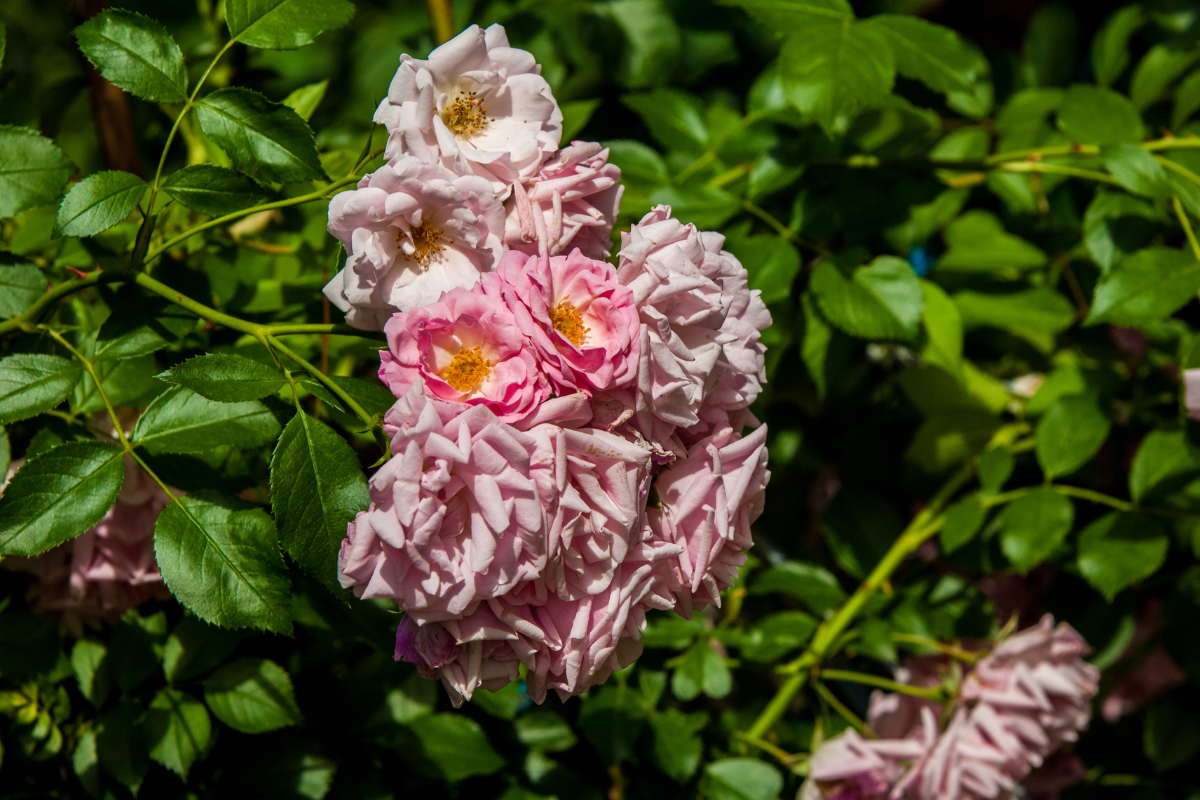
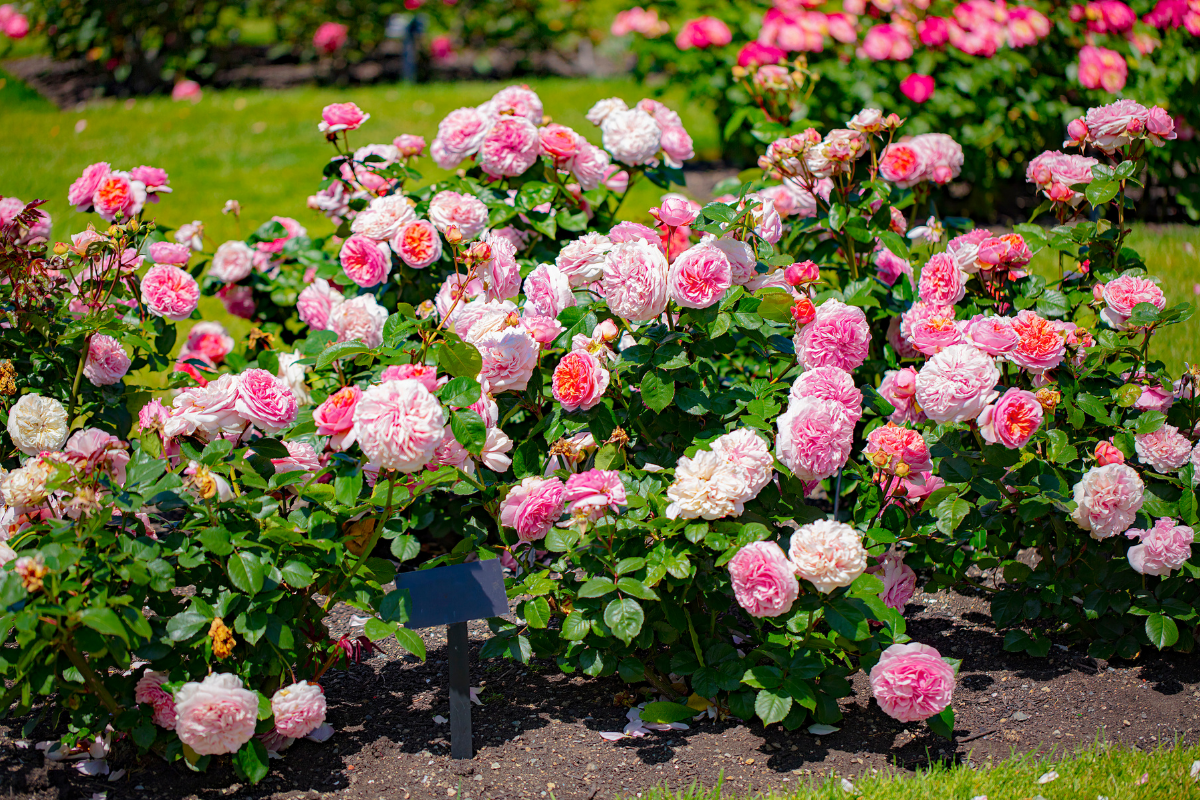
The wider shrub category also holds the modern English or romantic varieties, whose many-petalled, cupped blooms and strong fragrance combine the look of old garden roses with the repeat flowering of modern ones. It is the group with the widest choice on the market.
Floribundas
Floribundas carry clusters of smaller flowers on each stem instead of one large bloom. The individual flower is less imposing and the plant as a whole far more effective, holding colour almost without a break through the season. They are among the toughest and least demanding roses, which is why they fill public plantings and gardens that get little regular attention.
Climbers and ramblers
Climbing roses do not actually climb, since they have no tendrils or suckers to grip with. Their long canes are tied by hand onto a pergola, arch, fence or wires on a wall, and that is where the secret of their flowering lies. The more horizontally the main canes are trained, the more flowering side shoots break along their whole length.

The important distinction within the group is when the flower buds form. Ramblers, usually the very vigorous varieties that cover large surfaces, flower on last year's wood in one big early-summer wave, while modern climbers repeat-flower on new growth. That difference changes both the method and the timing of the work, as set out in the guide to pruning roses.
Standard roses
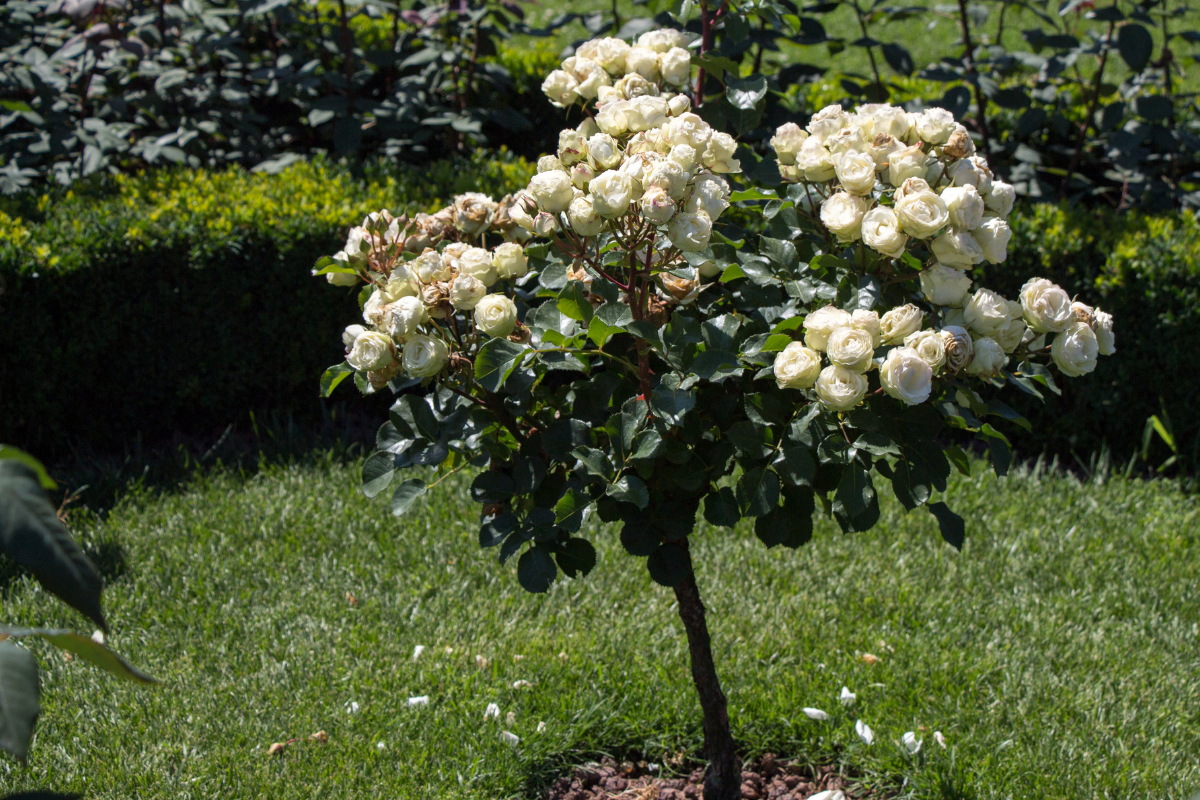
Standards, also called tree roses, are not a botanical group but a training technique. A shrub or floribunda variety is grafted on top of a straight rootstock stem, usually 80 cm to 1.4 m tall, and the head is shaped into a ball. Weeping standards use a groundcover or rambling variety grafted the same way, with the canes cascading down. Because the whole plant rests on one slim stem, standards need a firm stake and shelter from strong wind.
Groundcover and miniature roses
Groundcover roses spread horizontally with dense, low growth that rarely passes 30 cm. They cover ground quickly, suppress weeds and hold soil on banks, and they need pruning only every two to three years.
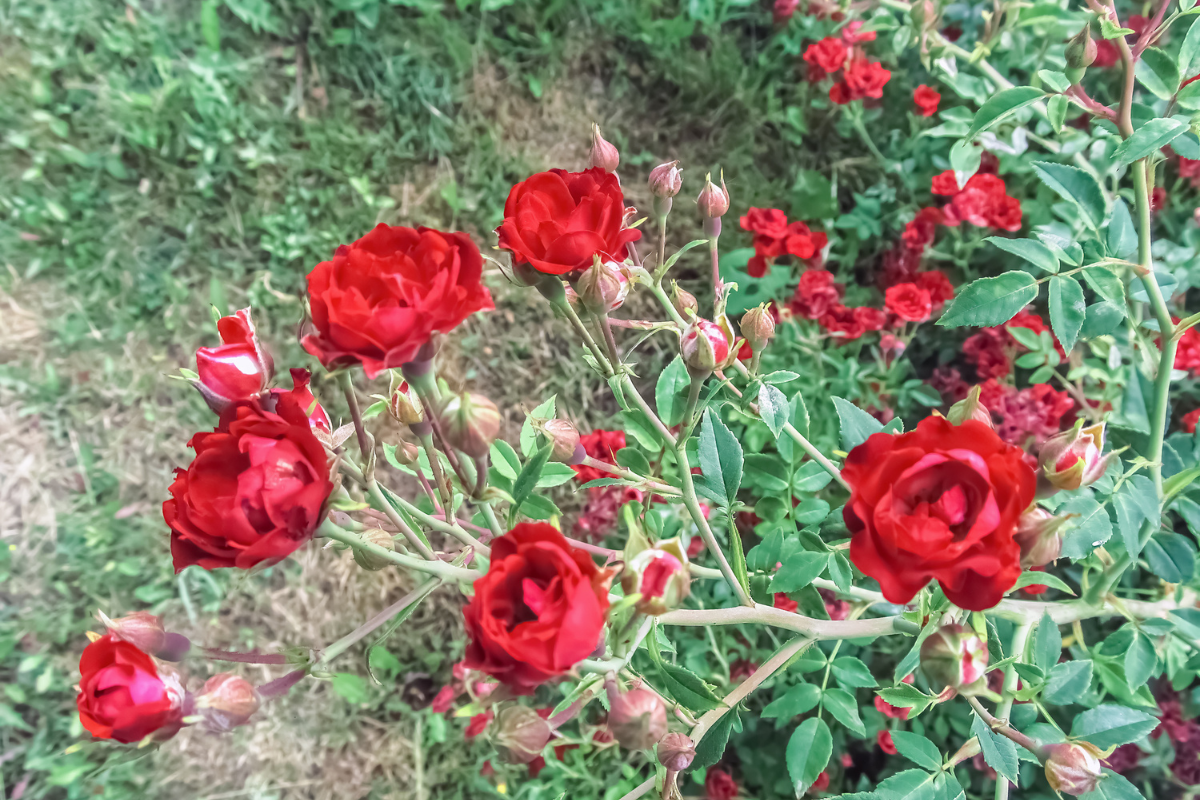
Miniature and patio roses, 20 to 50 cm tall, have small leaves and flowers in proportion and are the natural choice for pots and balconies. They want a light, free-draining potting mix, more frequent watering than roses in the ground and regular feeding, and like every rose they flower only in a genuinely sunny position.
Once-flowering and repeat-flowering
The most practical distinction when buying is not colour but how often the plant flowers. Repeat-flowering or remontant varieties produce successive flushes from spring to autumn as long as spent blooms are removed, and they cover most modern shrub roses, floribundas and miniatures. Once-flowering varieties, mainly old garden roses, species roses and many ramblers, give one spectacular wave in early summer and nothing after, though often with a stronger scent and with ornamental hips in autumn.
Old garden roses
Alongside the modern varieties, nurseries still sell roses that have been grown for centuries. The damask rose is the one distilled for rose oil and rose water, the centifolia or cabbage rose carries the dense, many-petalled blooms used in preserves and perfumery, and gallicas and albas remain in cultivation for their scent and hardiness. These roses usually flower once a year, carry the strongest perfumes in the genus, and suit anyone who wants a rose for use rather than for display alone.
How to choose a rose
- Start from the space and the purpose: a balcony means a miniature or compact shrub, a pergola means a climber, a border of colour means a floribunda, a vase means a hybrid tea
- Count the hours of sun: every group needs at least 6 hours of direct light, and no variety solves the problem of a shady spot
- Favour disease-resistant varieties: this is usually stated on the label and cuts the trouble from black spot and mildew dramatically
- Check the scent yourself: many modern cut-flower varieties were bred for shipping and have almost no fragrance
- Read the final height and spread: a vigorous rambler reaching 5 m has no place in a small courtyard
Bare-root or containerised
Roses are sold in two forms. Bare-root plants are shipped in winter without soil, with the roots packed in damp material. They cost less and offer far more variety, but they must go in the ground while the plant is dormant. Containerised roses can be planted almost year round and are the safer option for beginners, as covered in the guide to rose care. Almost all commercial roses are grafted onto a wild rootstock, which gives faster establishment and better tolerance of difficult soils, and the graft union is the swollen point at the base that must sit at the right depth at planting.
Frequently asked questions
What are the main types of roses
Six groups cover almost everything on sale. Hybrid teas and shrub roses, floribundas, climbers and ramblers, standards, groundcover roses and miniatures.
Which roses flower all summer
Repeat-flowering varieties, meaning most modern shrub roses, floribundas and miniatures. They produce successive flushes from spring to autumn provided spent blooms are removed regularly.
Is there a thornless rose
Yes, several varieties carry few or no thorns, the best known being Rosa banksiae, a very vigorous climber with small white or yellow flowers and a single spring flowering.
What is the difference between a climber and a rambler
Climbers repeat-flower on new growth and stay more manageable, while ramblers are more vigorous, flower once on last year's wood and are pruned right after flowering rather than in winter.
Which roses grow best in pots
Miniature and patio varieties 20 to 50 cm tall are the easiest, while shrub and standard roses succeed in large containers at least 40 cm deep with excellent drainage.
What does bare-root mean
A bare-root rose is sold in winter without soil, with its roots packed in damp material. It costs less and comes in more varieties, but it has to be planted while the plant is still dormant.
Important notes
Variety names and availability differ widely between countries, so use the group descriptions above as the framework and check local labels for final height, hardiness and disease resistance before buying.