

Olive Oil Prices & Market Digest | Week 8, 2026
The global olive oil market is under pressure as adverse weather and supply constraints push prices upward. Severe storms in Spain and selective selling behaviour in Greece are creating tension across the sector, setting the stage for a challenging nine months before the next harvest.
Stay up to date with our Weekly Olive Oil Digest
Spain’s olive oil market
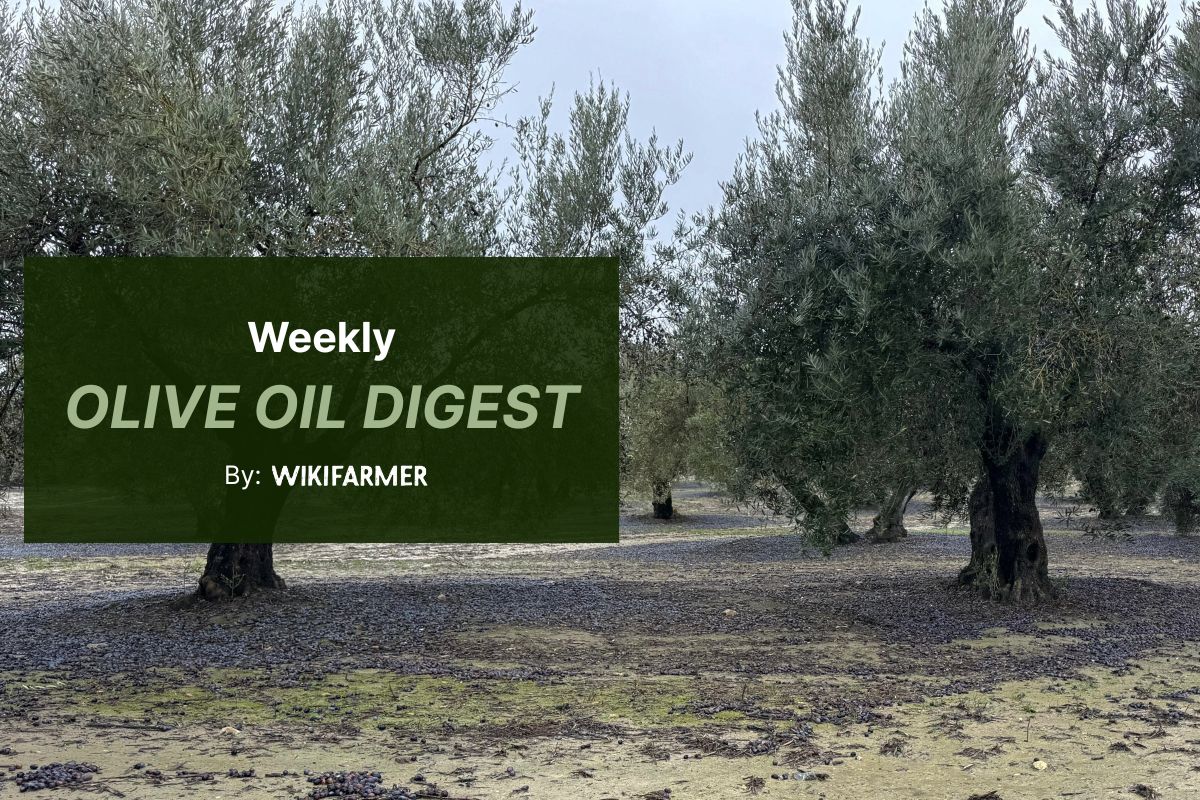
Spain’s olive oil sector is under pressure after storms, heavy winds, and persistent rain during the peak December–January harvest damaged groves and disrupted picking.
- Production drop: Forecasts now point to around 1.12 million tons, down from initial estimates of 1.4–1.44 million tons. Total losses could exceed 140,000 tons, with many olives lost or unrecoverable. By the end of January, cumulative production reached just 1,044,116 tons, representing only 73-75% of the projected total.
- Quality concerns: Weather damage is increasing the share of lower-quality olive oil. Olives washed away or buried in mud will likely further reduce the availability of EVOO.
- Tight stocks: As of January, national stocks stood at 943,688 tons. With peak harvest output averaging 95,000 tons per month, Spain will enter the new season with virtually no buffer stock.
- Rising prices: Premium EVOO trades at €4.40–€4.50/kg, while lower-quality EVOO is around €4.10/kg. Limited supply and selective buyers are pushing prices higher, with high-quality EVOO below €4.40/kg becoming increasingly hard to find. Farmers are holding back stock in anticipation of further gains.
- Market responses: Traders are increasingly using futures and hedging contracts to manage price risks.
The government has stepped in: the Ministry of Agriculture, Fisheries, and Food (MAPA) approved a €2.87 billion aid plan, and the Andalusian regional government will mobilise over €1.78 billion for recovery efforts.
Greece’s olive oil market
Greece is experiencing tight availability of high-quality EVOO, while virgin and lampante oils remain more widely available. Scarcity is prompting producers to adopt selective selling practices.
Market behaviour:
- Small volumes sold at high prices, often above €5/kg.
- Buyers, especially in Italy, are hesitant to commit, limiting transactions.
- Price increases are driven more by seller strategy than supply shortages.
- Potential standoff could last until July.
Outlook:
- Buyers are expected to limit purchases until the new harvest.
- Short-term price increases may occur, but overall activity is likely to remain subdued.
- Current weather conditions raise optimism for the next crop.
.jpg)
Market outlook
Expect olive oil prices to remain elevated in the short term, while trading volumes may stay subdued as buyers adopt cautious strategies.
According to the International Olive Council (IOC), global olive oil consumption is projected to reach 3.25 million tons in the 2025/26 crop year, up 1% from the previous year. This steady rise in demand adds further pressure to already tight supplies
Key recommendations for traders and end-users include:
- Strategic buying: Manage stock carefully to avoid overexposure.
- Hedging: Use futures and contracts to mitigate price risk.
- Regional monitoring: Track variations in supply and quality across Spain, Greece, and other Mediterranean producers.
The next nine months will test the resilience of the global olive oil market, with supply and pricing dynamics likely to dominate until the 2026 harvest.
Source olive oil with confidence on Wikifarmer's Marketplace:
Looking for gold standard EVOO?
Disclaimer: The information provided on this website, including market prices, insights, and projections, is for general informational purposes only. While we strive to ensure accuracy and timeliness, we make no guarantees regarding the completeness, reliability, or suitability of the information presented. Users are solely responsible for independently verifying the data and assessing its relevance to their specific circumstances before making any decisions. Wikifarmer and its operators shall not be held liable for any losses, damages, or consequences arising from the use of the information provided herein.