
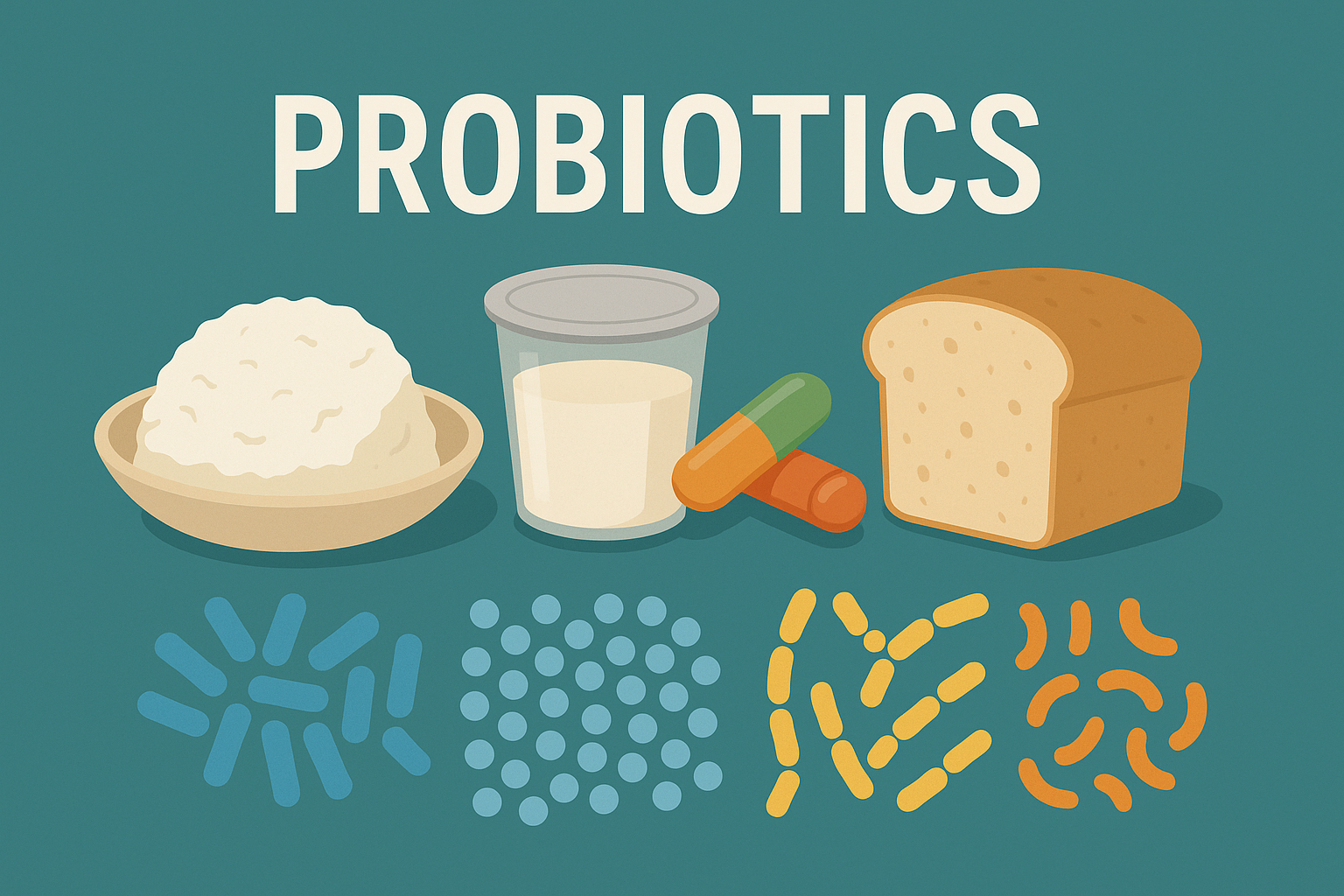
Introduction: The Rise of Probiotic Specialty Foods
The emergence of probiotic-based specialty foods has become an increasingly significant trend within the expansive realm of the food industry, capturing the attention of both consumers and producers alike. These innovative food products are meticulously crafted to contain live microorganisms that are beneficial to human health, specifically certain strains of bacteria that have been shown to impart various health advantages when consumed. One can conceptualize these foods as not only palatable but also as delicious means through which individuals can enhance their intake of beneficial gut microbiota, thereby promoting better digestive health. Examples of such probiotic-rich foods encompass a diverse array of items, including yogurt, which is often consumed as a breakfast staple, fermented beverages like kombucha that have gained popularity for their unique flavour profiles, and even snacks that have been fortified with probiotics to provide additional health benefits.
Despite the myriad health benefits these probiotic-enhanced foods may offer, significant challenges exist in their production and marketing in a competitive marketplace. It is crucial to ensure that the live probiotics are preserved and remain viable throughout the entire manufacturing process, as any lapse in this could diminish their effectiveness and overall health benefits. Additionally, engaging in consumer education/information regarding the advantages of these foods is imperative, as a well-informed consumer base is essential for the successful adoption and sustained demand for probiotic-based specialty foods.
1. Introduction to Probiotics: Benefits, Foods & Definitions
1.1. Definition - What Are Probiotics? - Which foods are probiotic?
Probiotics are live microorganisms, mainly beneficial bacteria, that provide health benefits when consumed in adequate amounts. They help maintain gut health, improve digestion, and support immune function. Common probiotic-rich foods include yogurt, kefir, kombucha, and fermented vegetables.
More specifically, the term “probiotic” was first presented by Werner Kollath in 1953, which is known to be a derivative of the Latin word pro and the Greek word βιο meaning “for life." Kollath defined probiotics as active bodies with essential functions for promoting various health aspects (Gasbarrini et al., 2016).
The Food and Agriculture Organization (FAO) and World Health Organization (WHO) described them as “live microbes that confer health benefits on host organisms when administered in adequate quantities” (Munir et al., 2022).
1.2. General properties of probiotics
| Properties | Effects |
|---|---|
| Human origin | Ability to maintain viability, species-specific effects on health |
| Acid and bile stability | Maintenance of viability in the intestine |
| Adherence to human intestinal cells | Maintenance of mild activity in the intestine, antagonism against pathogens, competitive |
| Immune response | Ability to modulate immune response and provide resistance to disease through improved immunity |
| Colonization of the human gut | Maintenance of colonizing properties, antagonism against pathogens, competitive exclusion |
| Antagonistic activity | Antagonism against pathogens, competitive exclusion (in intestinal tract and oral cavity) |
| Technological properties | For commercial viability – stability of desired characteristics during processing, storage, and transport |
| Safety in human use | Tested safety in animal models and human use, accurate strain identification (genus, species) |
(T.Krishnakumar 2020)
2. Specialty Foods: Definitions, Examples & Market Insights
2.1. Definition and Examples of Specialty Foods
The term specialty foods has been used widely by food manufacturers, vendors, and distributors, and has been used for quite some time at retail stores.
However, the definition of specialty foods is vague. There is no universal and standard definition of specialty foods, or regulations different from those of conventional foods by the U.S. Food and Drug Administration (FDA) and the U.S. Department of Agriculture (USDA). Several organizations have given their own definition of specialty foods. The best-known and most cited one is probably by the National Association for the Specialty Food Trade (NASFT), the leading specialty food association in the United States. NASFT defines specialty foods as “foods and beverages that exemplify quality and innovation, including artisanal, natural, and local products that small manufacturers, artisans, and entrepreneurs often make.
The specialty food market has been divided into more than 40 leading segments, in which condiments; cheese or cheese alternatives; chips, pretzels, and snacks; functional juice, tea, and beverages; coffee, coffee substitutes, and cocoa; and entrées, pizza, and conventional foods have been the leading categories. (Yanyun Zhao 2012).
3. Probiotics in Specialty Foods
3.1. Popular Probiotic Strains Used in Specialty Foods
Top Probiotic Strains in Specialty Foods You Should Know
| Food Industry | Product | Probiotic Strain(s) | Storage Time & Temp | Viability at End of Storage | References |
|---|---|---|---|---|---|
| Dairy | Ricotta cheese | B. animalis subsp. lactis (Bb-12), L. acidophilus (La-05) | 7 days at 7°C | ~10⁶ CFU/g | Meira et al. (2015) |
| Yogurt | B. lactis | 29 days at 4°C | 10⁶–10⁷ CFU/g | Danielle (2015) | |
| Yogurt | L. acidophilus, B. animalis subsp. lactis | 45 days at 5±1°C | 8.84 log CFU/g, 8.01 log CFU/g | Lucatto et al. (2020) | |
| Cheddar cheese | L. lactis subsp. lactis, L. helveticus, S. thermophilus, L. rhamnosus | 4 weeks at 16°C | 10⁸ CFU/g | Ulpathakumbura et al. (2016) | |
| Mango juice enriched dairy drink | L. acidophilus | 5 weeks at 4°C | 7.72 log CFU/mL | Leaf et al. (2016) | |
| Beverages - Fruit Based | Pineapple juice | L. acidophilus, L. plantarum, L. lactis | 60 days at 4°C | 9–10 log CFU/mL | Nguyen et al. (2019) |
| Orange juice | P. acidilactici | 35 days at 4°C and 30°C | 7.2–8.5 log CFU/mL | Cristiny de Oliveira Vieira et al. (2020) | |
| Pomegranate juice | L. plantarum ATCC 14917 | 28 days at 4°C | 8.8 log CFU/mL | Mantzourani et al. (2018a) | |
| Cornelian cherry juice | L. plantarum | 4 weeks at 4°C | 9.95 log CFU/mL | Mantzourani et al. (2018b) | |
| Beverages - Vegetable Based | Carrot blended with orange juice | L. plantarum CECT 220 | 30 days at 4°C | 10⁸–10⁹ CFU/mL | Al-Sheraji et al. (2013) |
| Beet juice | L. plantarum | 21 days at 4°C | 7–8 log CFU/mL | Barbu et al. (2020) | |
| Melon, carrot juice | L. plantarum CICC22696, L. acidophilus CICC20710 | 28 days at 4°C | 10⁸–10⁹ CFU/mL | Do and Fan (2019) | |
| Bakery | Pan bread | L. rhamnosus GG (with sodium alginate and 2% whey protein concentrate) | 7 days at room temp | 7.57–8.98 and 6.55–6.91 log CFU/portion | Lu et al. (2018) |
| Bread | L. acidophilus, L. casei (encapsulated in calcium alginate) | 4 days at ambient temp | 7.2×10⁸ CFU/g | Seyedain Ardabili et al. (2016) |
4. Probiotic Specialty Foods: Key Regulatory Considerations
Specialty foods are not regulated differently from other foods. Common food processing standards and practices should be applied in specialty food processing. This section briefly introduces the state and federal agencies involved, their roles, and some important regulations to follow to commercialize specialty food products.
The following primary agencies are responsible for regulating food establishments:
- U.S. Food and Drug Administration (FDA)
- U.S. Department of Agriculture (USDA)
- Food Safety and Standards Authority of India
- CODEX
(Yanyun Zhao 2012).
5. Consumer Awareness of Probiotics: Insights & Statistics
One study shows that 43.9% of the participants reported that probiotics are dead microorganisms that provide health benefits to the host when administered in sufficient quantities. About 36% (36.6%) disagreed that probiotics are substances that make food taste sweeter. Almost one-third (30.8%) of participants agreed that probiotics can be used to prevent or to cure viral infections, and 39.2% and 52.8% agreed that milk and yogurt might contain a probiotic, respectively. Approximately 31% (31.2%) of respondents agreed that probiotics can be administered to children.
Of the participants with a history of probiotics use (No.: 336), the most common form used was natural sources, such as dairy products and Active yogurt (66.1%). The most common reason cited for use was to relieve bowel disturbances (diarrhea, intestinal inflammation, inflammatory bowel disease) (51.1%). For those who had never used probiotics previously (No.: 333), the most common cause for not using probiotics was a lack of knowledge about probiotics' benefits and applications (72.7%). Only 29.7% of these respondents indicated a willingness to use probiotics in the future. (Ruba Zaid Alotaibi et al, 2024).
6. Health & Nutrition Benefits of Probiotics Backed by Research
Probiotics have been proven to provide numerous vital health benefits. These benefits mainly stem from the maintenance of a healthy balance of gut microbiota (Craig et.al., 2021; Marquez Morales et al., 2021; De Oliveira et al., 2023), which minimizes disease risks and alleviates disease symptoms, such as those from irritable bowel syndrome (IBS) (Satish Kumar et al., 2022). Probiotics also enhance the body’s immune response, making it more effective in fighting infections (Al-Ghazzewi & Tester, 2014; Lee et al., 2017). A study by Wei et al.
(2024) explored the potential of fermented tomatoes to combat obesity in mice with a high-fat diet.
7. Future Trends and Innovations in Probiotic Specialty Foods
This growth is expected to drive the market to reach US$ 1.7 billion by the end of 2032. In the current and short-term period (2022 Q2 to 2025), consumer awareness of the health benefits and disease mitigation potential of PBPFs is predicted to increase significantly, which is likely to drive market expansion in the short term. At a medium-term scale (2025–2028), the market for plant-based probiotics is set to be fuelled by an even further increase in awareness, rising disposable incomes, and improved quality of life.
Concurrently, higher consumer spending and an expansion in product logistics and distribution due to the ongoing optimization of manufacturing activities in the food and beverage industry are also expected to drive the market expansion. In the longer term (2028–2032), investments by key market players in Research and Development (R&D) activities to develop efficient plant-based probiotics are expected to play a significant role in this expansion. (Alan et al., 2024).
References
Al-Ghazzewi, F. H., & Tester, R. F. (2014). Impact of prebiotics and probiotics on skin health. Beneficial Microbes, 5(1), 99–107. https://doi.org/10.3920/BM2013.0031
Alan, M., et al. (2024). Future trends in plant-based probiotics and specialty foods. Journal of Functional Food Innovations, 11(2), 145–158.
Alotaibi, R. Z., et al. (2024). Public knowledge and attitudes toward probiotics: A cross-sectional survey. International Journal of Health Sciences Research, 14(1), 27–39.
Al-Sheraji, S. H., et al. (2013). Fermentation of carrot and orange juice blends using Lactobacillus plantarum and their probiotic potential. Food Bioscience, 3, 1–8.
Barbu, V., et al. (2020). Probiotic beetroot juice: Fermentation and functionality. Nutrients, 12(2), 348. https://doi.org/10.3390/nu12020348
Craig, W. J., et al. (2021). Probiotics and the gut microbiome: Nutritional health implications. Nutrition Reviews, 79(5), 489–500.
Cristiny de Oliveira Vieira, C., et al. (2020). Survival of Pediococcus acidilactici in orange juice: A study on probiotic viability and sensory evaluation. LWT - Food Science and Technology, 118, 108796.
Danielle, M. (2015). Viability of Bifidobacterium lactis in fermented dairy products. Journal of Dairy Science, 98(4), 2203–2211.
De Oliveira, A. C., et al. (2023). Gut microbiota modulation by functional foods and probiotics: A therapeutic strategy. Frontiers in Nutrition, 10, 1145213.
Do, T. V., & Fan, Y. M. (2019). Probiotic stability in vegetable juice blends: A study on viability of Lactobacillus strains. Asian Journal of Food and Agro-Industry, 12(3), 122–131.
Gasbarrini, A., et al. (2016). Probiotics and prebiotics in gastrointestinal disorders. Gastroenterology & Hepatology, 12(11), 668–679.
Krishnakumar, T. (2020). Probiotics: Biological properties and health benefits. In Probiotics and Prebiotics in Food, Nutrition and Health (pp. 45–66). Springer.
Lee, N. K., et al. (2017). Health benefits of fermented foods: Microbial and metabolic perspectives. Current Opinion in Biotechnology, 44, 103–109.
Leaf, A., et al. (2016). Development of probiotic mango dairy beverages: A shelf-life study. Journal of Functional Foods, 25, 471–478.
Lucatto, J. N., et al. (2020). Evaluation of probiotic viability and physicochemical characteristics in yogurt. LWT - Food Science and Technology, 117, 108601.
Lu, W. J., et al. (2018). Survival of Lactobacillus rhamnosus GG in probiotic bread during storage. Food Research International, 106, 706–712.
Mantzourani, I., et al. (2018a). Fermented pomegranate juice as a functional beverage with probiotic properties. Food Chemistry, 248, 176–185.
Mantzourani, I., et al. (2018b). Evaluation of Lactobacillus plantarum viability in Cornelian cherry juice. International Journal of Food Microbiology, 269, 68–76.
Marquez Morales, E., et al. (2021). Clinical benefits of probiotics in gastrointestinal health. Nutrients, 13(8), 2702.
Meira, S. M. M., et al. (2015). Incorporation of probiotics in dairy products: Viability and functional properties. LWT - Food Science and Technology, 63(1), 141–149.
Munir, K., et al. (2022). Probiotics: Definitions, health benefits, and future trends. Probiotics and Antimicrobial Proteins, 14(3), 532–548.
Nguyen, H. T., et al. (2019). Stability of probiotic bacteria in pineapple juice during storage. Beverages, 5(3), 44.
Satish Kumar, R., et al. (2022). Probiotics in the management of irritable bowel syndrome: Current evidence. World Journal of Gastroenterology, 28(24), 2632–2643.
Seyedain Ardabili, S. M., et al. (2016). Encapsulation of probiotics in bread for functional food development. Iranian Food Science and Technology Research Journal, 12(1), 33–42.
Ulpathakumbura, C. P., et al. (2016). Functional cheddar cheese with added probiotics: Production and shelf-life study. Dairy Science & Technology, 96(4), 493–507.
Yanyun Zhao. (2012). Specialty foods: Definitions, categories, and regulations. In Specialty Foods Processing and Marketing (pp. 9–32). CRC Press.
Wei, Y., et al. (2024). Anti-obesity effects of probiotic fermented tomatoes in high-fat diet-fed mice. Journal of Nutritional Biochemistry, 115, 109318.
Further reading
The revolution of functional foods: Trends, markets, and opportunities
Can AI Help You Eat Smarter with Functional Foods?
Bamboo Shoots: Sustainable Superfood for Next-Gen Functional Foods
What Are Probiotics and Why Are They Beneficial?