


Food recalls in Europe | January 2026 monthly analysis
The European Union's Rapid Alert System for Food and Feed (RASFF) recorded 361 food safety notifications in January 2026, representing a 29% decrease compared to December 2025's 510 alerts. This significant drop reflects the typical post-holiday inspection slowdown.
While overall alert volumes declined, the structural patterns that defined 2025 remained: Turkish dried figs continued their mycotoxin crisis with 24 separate alerts, Polish poultry maintained its endemic Salmonella problem with 10 notifications, and Egyptian produce emerged as a growing concern with 9 pesticide-related rejections. For farmers and wholesale buyers, January's data confirms that seasonal dips do not always indicate lower risk —they often reflect reduced testing during the holiday period.
Highlights at a glance
- Total notifications: 361 alerts (328 food, 21 feed, 11 food contact materials)
- Month-over-month change: -29.2% compared to December 2025 (510 alerts)
- Fresh produce: 77 alerts (21.3% of total), dominated by Turkish dried figs
- Top origin country: Turkey with 34 alerts (9.4%), followed by China (24) and the United States (22)
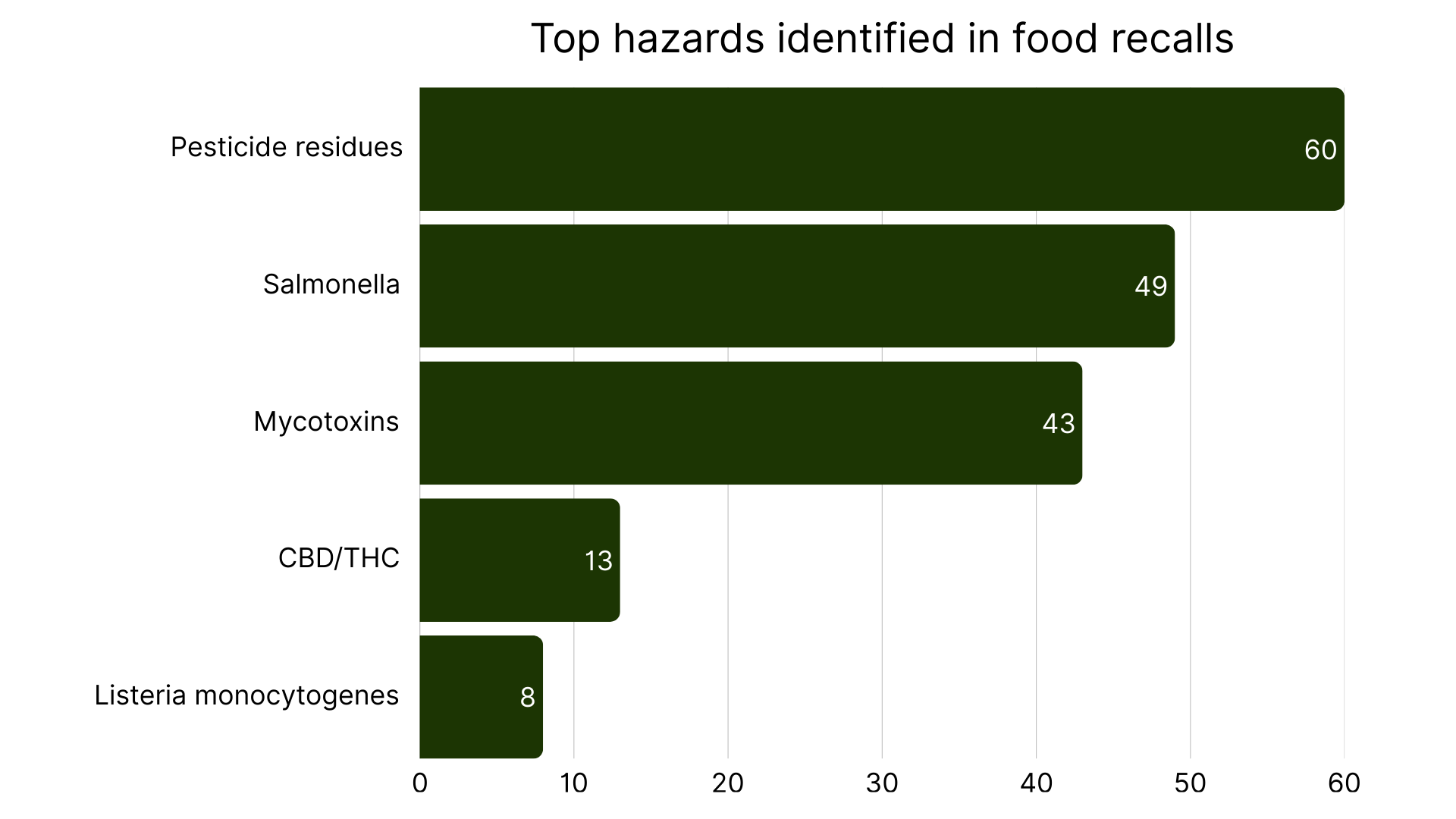
- Primary hazards: Pesticide residues (60), Salmonella (49), Mycotoxins (43)
- EU vs non-EU: 61.8% of alerts from non-EU origins; fresh produce 84.4% non-EU
- Key concern: Egyptian peppers showed multiple pesticide violations including banned chlorpyrifos
Top product categories affected
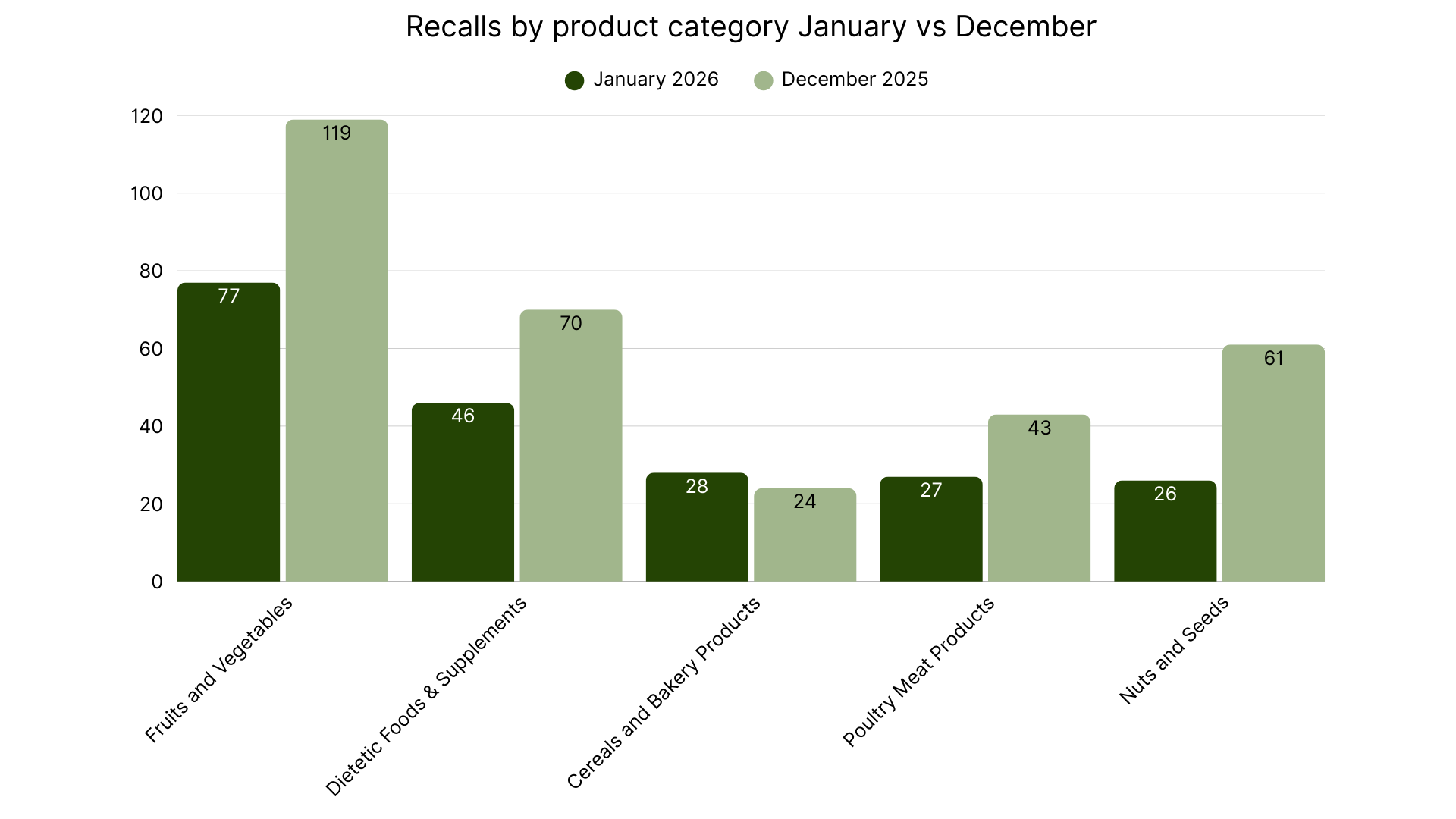
Fresh produce categories continued to face the highest scrutiny from EU food safety authorities. The distribution of alerts across product types reveals where supply chain vulnerabilities remain most acute:
|
Rank |
Category |
Jan 2026 |
Dec 2025 |
Change |
|
1 |
Fruits and Vegetables |
77 (21.3%) |
119 |
-35.3% |
|
2 |
Dietetic Foods & Supplements |
46 (12.7%) |
70 |
-34.3% |
|
3 |
Cereals and Bakery Products |
28 (7.8%) |
24 |
+16.7% |
|
4 |
Poultry Meat Products |
27 (7.5%) |
43 |
-37.2% |
|
5 |
Nuts, Nut Products and Seeds |
26 (7.2%) |
61 |
-57.4% |
The decline in nuts and seeds alerts (-57.4%) stands out as particularly significant. This drop likely reflects the seasonal end of the harvest period rather than a genuine improvement in contamination rates. The aflatoxin contamination that dominated this category throughout late 2025 will likely resurface as new harvest stocks enter European supply chains.
Fresh produce focus
Fresh produce accounted for 77 of 361 alerts in January 2026, maintaining its position as the most scrutinised category. The concentration of risk in this sector reflects both the vulnerability of perishable goods and the intensity of EU border controls on agricultural imports.
Turkish dried figs
The single most striking pattern in January's data is the continued dominance of Turkish dried figs in RASFF alerts. 24 separate notifications involved dried figs from Turkey, representing 31% of all fresh produce alerts and 71% of Turkey's total notifications. The hazards were almost exclusively mycotoxins: ochratoxin A (the majority) and aflatoxins (B1 and total).
This is not a new problem. Our tracking data shows Turkish fig alerts have remained elevated since September 2025, with peaks of 45-47 alerts per month in October-December. January's figure of 24 represents a reduction in absolute terms, but when adjusted for the overall 29% decline in total notifications, figs remain disproportionately represented. The root causes—inadequate drying facilities, poor storage conditions, and insufficient sorting before export—remain unaddressed at scale.
Egyptian produce
Egypt emerged as a notable concern in January with 9 fresh produce alerts, compared to just 5 in December. The products affected included sweet peppers, oranges, frozen strawberries, and vine leaves. The hazards were predominantly pesticide residues, with several particularly serious findings:
- Chlorpyrifos (banned in the EU since 2020) in table olives
- Oxamyl (unauthorised) in frozen strawberries
- Multiple pesticide cocktails in sweet peppers: chlorfenapyr, chlorpyrifos, and acetamiprid
- Chlorpropham residues in both oranges and peppers
- Propargite exceedance in sliced frozen peppers
For buyers sourcing from Egypt, these findings underscore the need for rigorous third-party testing protocols. The detection of multiple banned substances in a single shipment suggests systematic failures in pesticide management, not isolated incidents.
Geographic risk patterns
The geographic distribution of January's alerts reveals distinct risk profiles by region and origin country:
|
|
Origin |
Alerts |
Fresh Produce |
Primary Risk |
|
1 |
Turkey |
34 |
29 (85%) |
Mycotoxins in dried figs |
|
2 |
China |
24 |
2 (8%) |
Supplements, pesticides |
|
3 |
United States |
22 |
0 |
Supplements (CBD, novel foods) |
|
4 |
Poland |
20 |
2 (10%) |
Salmonella in poultry |
|
5 |
India |
18 |
2 (11%) |
Pesticides, spices, documentation |
The interesting shift
China’s share rose from December to January, even though total notifications dropped. That usually happens when focus shifts from seasonal dried commodities to a broader mix of categories, in which China is a frequent origin in EU monitoring.
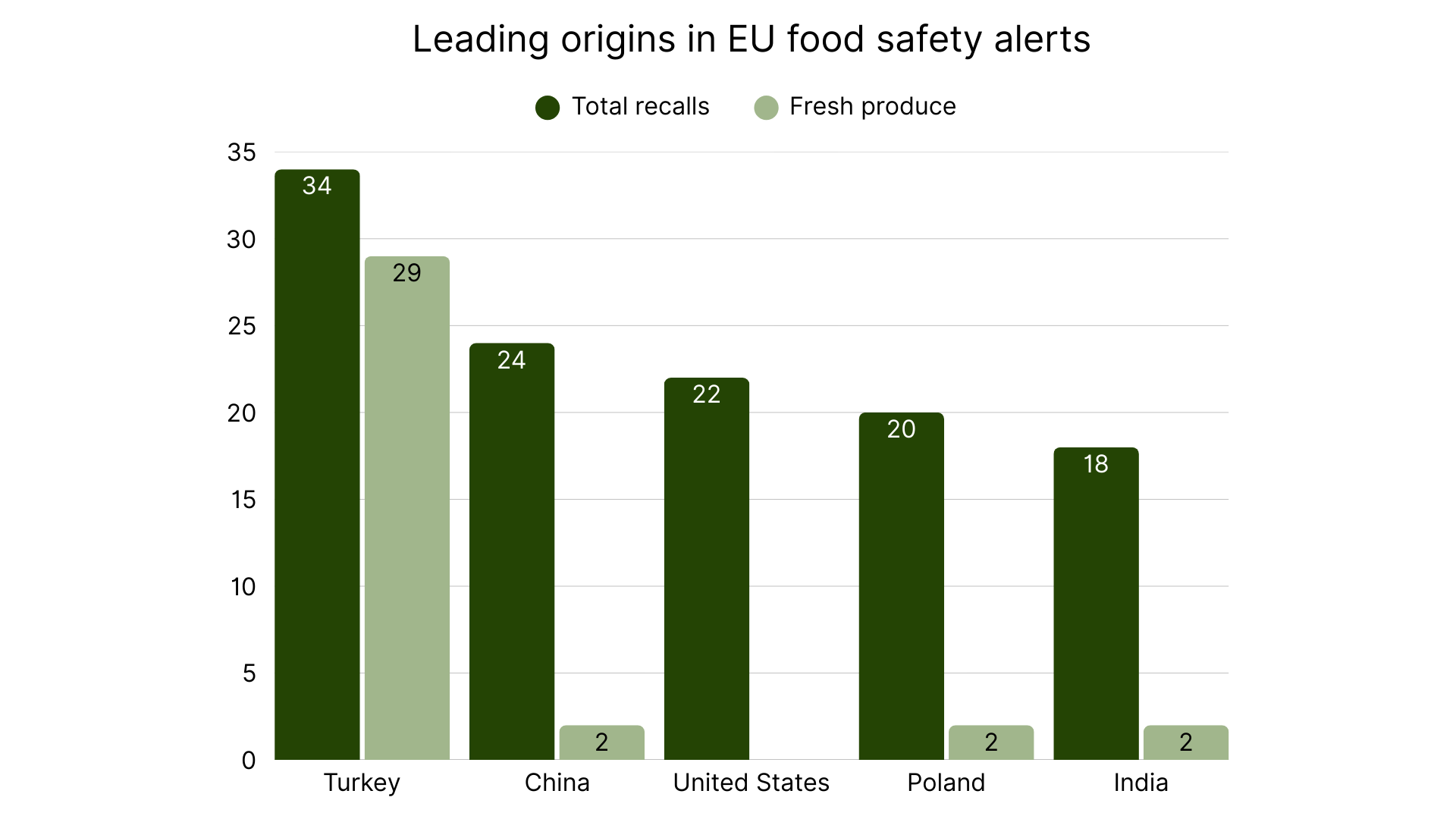
Turkey remains the most consistent driver, especially in the fruits and vegetables category:
- Fruits and vegetable origins in January: Turkey 29 of 77
- Fruits and vegetables origins in December: Turkey 57 of 119
Polish poultry
Poland recorded 20 total alerts in January, with 10 specifically involving poultry products—all Salmonella contamination. This concentration (50% of Poland's alerts in a single product category with a single hazard type) confirms that the country's poultry processing sector continues to face systemic biosecurity challenges. The serovars detected (Enteritidis, Infantis, Newport) are consistent with patterns observed throughout 2025.
Top hazard analysis
|
|
Hazard |
Count |
Key Findings |
|
1 |
Pesticide residues |
60 |
Chlorpyrifos (19), acetamiprid, oxamyl |
|
2 |
Salmonella |
49 |
43% in poultry; Poland dominant origin |
|
3 |
Mycotoxins |
43 |
Ochratoxin A (16), aflatoxins (27) |
|
4 |
CBD/THC (novel foods) |
13 |
Unauthorized in US, NL supplements |
|
5 |
Listeria monocytogenes |
8 |
Ready-to-eat foods |
Pesticide residues overtook Salmonella as the top hazard category in January, driven by the continued detection of chlorpyrifos across multiple origins despite its EU ban since 2020. The 19 chlorpyrifos findings affected produce from Egypt, India, Ecuador, China, and Morocco—indicating that this banned substance remains in active use across major agricultural exporting regions.
What this month should tell farmers and buyers
January’s data sends a clear message: Even though the total number of notifications fell, the same risk points keep appearing. Lower volume does not mean lower exposure.
For growers and exporters
The market continues to reward consistency. Documented spray programs, awareness of residue limits, and solid post-harvest moisture control are no longer administrative details. They increasingly determine whether a product moves smoothly or gets stopped.
For wholesale buyers
Risk management is about focus, not blanket testing. January’s data points clearly to two priorities: routine residue screening on winter fruit and vegetable flows, and strict mycotoxin control on dried products, with dried figs remaining the most sensitive line.