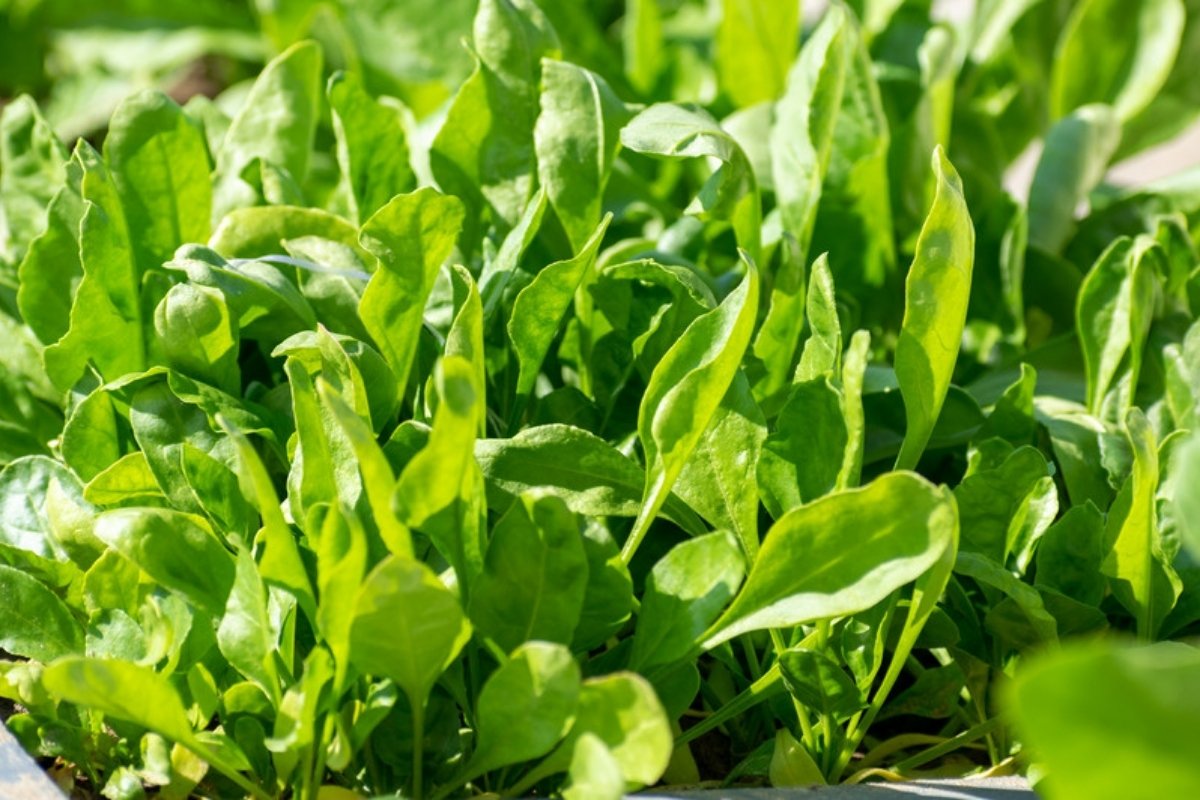
Spinach is sown directly into the soil, in Mediterranean climates mainly from September to March, about 2 cm deep, in rows 20 to 30 cm apart. At soil temperatures of 15 to 30°C it germinates in 5 to 7 days, but above 30°C it struggles to germinate at all, which explains failed sowings in late summer heat. Plants are thinned once they have 3 to 4 leaves and harvested 40 to 50 days after sowing, when they carry 5 to 6 large leaves. Because each sowing crops for only a few weeks, successive sowings every 10 to 15 days keep spinach coming all winter. This guide covers when to sow, what seeds need to germinate, how to care for the plants, when and how to harvest, why spinach bolts, the main varieties, and how to grow spinach in pots.
When to sow spinach
| Period | What to watch for |
|---|---|
| Autumn, September to November | The ideal season, with the highest yields. Sunny position |
| Winter, December to February | In mild regions. Germination and growth slow down in the cold |
| Spring, March to April | With slow-bolting varieties, in partial shade, because long days bring early flower stalks |
| Summer | Difficult for true spinach. Heat-tolerant alternatives such as New Zealand spinach work instead |
Spinach is a cool-weather crop. It grows at temperatures from 5 to 24°C, produces most leaves at 15 to 18°C, and tolerates frost down to −10°C. In colder climates, the same logic applies: sow in early spring as soon as the soil can be worked, and again in late summer for an autumn crop. Autumn sowing goes in alongside the other autumn sowing jobs in the vegetable garden.
Position and soil
In autumn and winter, spinach goes in a sunny spot, while in spring partial shade keeps the plants cooler. It thrives in medium or light soil, rich in organic matter and free-draining, with a pH of 6.5 to 7.5. According to the RHS, it needs fertile soil that does not dry out. Before sowing, dig the soil and enrich it with compost or rotted manure. Spinach is sensitive to salinity, so in coastal areas with brackish water growth may be poor.
Sowing step by step
- Drills: shallow drills 20 to 30 cm apart
- Depth: sow seeds about 2 cm deep and cover lightly with soil
- Seed spacing: 2 to 3 cm apart, so there are enough plants even if not all germinate
- Watering: water lightly straight after sowing, and keep the soil moist until germination
- Thinning: when plants have 3 to 4 leaves, thin to 8 to 12 cm apart, or 15 to 20 cm for large plants. The thinnings go into salads
- Successive sowing: a fresh sowing every 10 to 15 days gives a continuous harvest
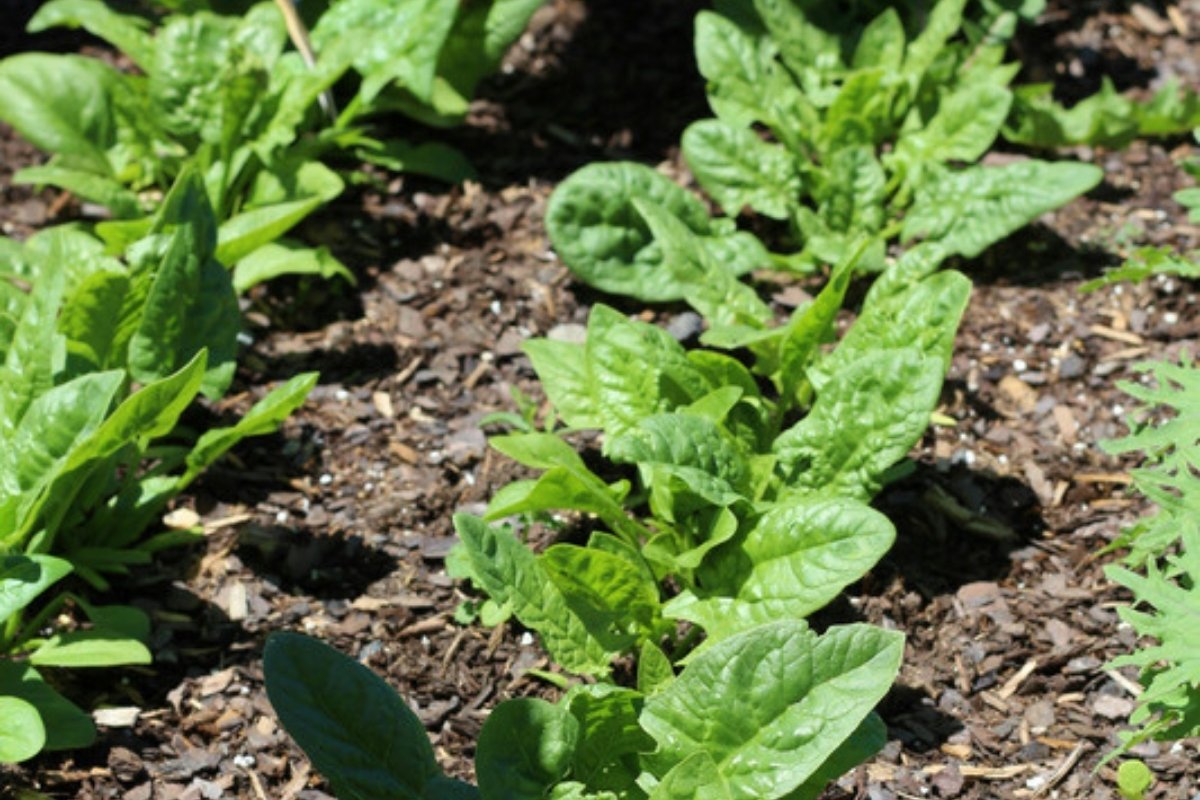
After thinning, plants stand 8 to 12 cm apart, and the thinnings go into salads.
How long spinach takes to germinate
Germination speed depends almost entirely on soil temperature. According to the Greek Ministry of Rural Development integrated crop protection guidelines:
| Soil temperature | Days to emergence |
|---|---|
| 5°C | About 23 |
| 10°C | About 12 |
| 15 to 30°C | 5 to 7 |
| Above 30°C | Germination sharply reduced |
Why spinach seeds fail to germinate
- Hot soil: in late summer sowings, the soil surface often exceeds 30°C. Sowing in the evening, shading the drill with netting or a light mulch, and steady watering that cools the soil all help
- Cold soil: at 5°C germination takes over three weeks, so winter sowings need patience
- Dry soil: seed needs steady moisture until it emerges. Even a single day with a dry surface can stop it
- Old seed: good spinach seed germinates at about 75%, and the rate falls with age
- Deep sowing or crusting: seed sown too deep or covered by a hard soil crust struggles to emerge
Many gardeners soak seeds in water for a few hours and keep them in the fridge for a few days before sowing, to germinate faster and more evenly, especially for late summer sowings.
Why spinach bolts
Once day length exceeds 13 hours, spinach forms a flower stalk, and high temperatures speed this up. The plant then grows tall, stops producing tender leaves, and leaf quality declines. This is bolting, and it is the reason spinach is grown mainly in autumn and winter. For spring sowings, slow-bolting varieties and partial shade buy a few more weeks of harvest.
Watering
Spinach has a shallow root system, so it needs small, frequent waterings that keep the soil evenly moist but not soggy. In autumn and winter rain is often enough, while in spring watering becomes more frequent. Water at the base and early in the morning, so the foliage dries quickly, because moisture on the leaves favours downy mildew.
Feeding
With a good base of compost or manure, garden spinach needs only one or two light nitrogen feeds, organic or conventional, while it grows. More is not better. Heavy nitrogen feeding causes nitrates to accumulate in the leaves, which is worth bearing in mind particularly for anyone cooking spinach for young children.
When to harvest spinach
Spinach is ready 40 to 50 days after sowing, when plants have developed 5 to 6 large leaves, and it is always picked before the leaves start to yellow and before a flower stalk appears. Harvest in the cool hours of the day, early morning or late afternoon, when the leaves are crispest, using one of two methods:
- Whole plant: cut with a knife just below the leaf rosette, at the crown. This is the quickest method, but the plant does not regrow
- Leaf by leaf: pick only the large outer leaves and leave the heart, so the plant keeps producing new leaves for a few weeks
Growing spinach in pots
Spinach is one of the easiest vegetables for pots and window boxes, because its root system is shallow:
- Container: a pot or trough 20 to 30 cm deep, with drainage holes and a layer of gravel or expanded clay at the bottom
- Growing medium: rich, free-draining potting compost
- Sowing: sow about 2 cm deep, sparsely, and thin after germination. With ready-grown plants, leave 10 to 20 cm between them
- Position: a sunny south- or west-facing balcony in autumn and winter, and a shadier spot in spring
- Watering: more often than in the ground, keeping the compost lightly moist, without water standing in the saucer
Growing from seed is by far the most reliable method. Some gardeners try to root store-bought spinach stems in water, but seed gives much more dependable results.
Varieties and "false" spinaches
Spinach varieties divide into smooth, savoy and semi-savoy leaf types, and into winter and summer varieties. Widely grown winter varieties include large-leaved, cold-hardy types such as 'Giant Winter' and 'Viroflay', as well as hybrids with downy mildew resistance.
Two vegetables sold as "summer spinach" are not true spinach at all. New Zealand spinach (Tetragonia tetragonioides) belongs to a different family, has triangular, fleshy leaves, thrives in heat and does not tolerate frost. Malabar spinach (Basella alba) is a climbing plant of warm climates. Both are cooked like spinach and fill the summer gap, when true spinach bolts. When buying seed labelled "summer spinach", check the scientific name on the packet.
Saving spinach seed
Spinach is dioecious, meaning it has separate male and female plants, and it is wind-pollinated. To save your own seed, let a few plants bolt in spring without picking their leaves, and collect the seed once it has ripened and dried on the female plants. Because pollination is by wind, varieties cross easily with one another.
Common problems
- Downy mildew: yellow patches on older leaves and greyish fuzz underneath, in cool, damp weather. Correct spacing, watering at the base and resistant varieties help
- Aphids: colonies on the undersides of leaves. Controlled by washing off, insecticidal soap and the methods for aphids
- Slugs and snails: eat the leaves, especially on moist soil
- Poor germination: usually from hot or dry soil in the first days after sowing
- Early bolting: from the long days of spring and heat
Frequently asked questions
What is the best month to plant spinach
In Mediterranean climates, September to November is ideal, with sowings possible until March in mild areas. In colder climates, sow in early spring and again in late summer. In spring, choose slow-bolting varieties and partial shade.
How long does spinach take to germinate
5 to 7 days at soil temperatures of 15 to 30°C, about 12 days at 10°C and about 23 days at 5°C. Above 30°C germination drops sharply.
Why is spinach hard to germinate
Usually because the soil is too warm, above 30°C, as in late summer sowings, or because it dried out before emergence. Other causes are old seed, sowing too deep and a crusted soil surface.
Does spinach regrow after cutting
Yes, if you pick only the outer leaves and leave the heart, the plant keeps producing new leaves for a few weeks. If the whole plant is cut at the crown, it does not regrow.
Why does my spinach bolt
Because once day length exceeds 13 hours spinach forms a flower stalk, and heat speeds this up. That is why it is grown mainly in autumn and winter.
How deep does a pot need to be for spinach
About 20 to 30 cm, with good drainage. Spinach has a shallow root system, so window boxes and troughs work very well.
Important notes
Every garden differs, and sowing dates shift with region, altitude and each year's weather. For persistent disease problems, a local agronomist can help with an accurate diagnosis.
For larger areas, commercial spinach production covers seed rates per hectare, fertilisation and yields.
References
- Plant Protection, Spinach cultivation guide (in Greek), based on the Greek Ministry of Rural Development integrated crop protection guidelines for spinach.
- lf.gr, Spinach cultivation guide (in Greek).
- Royal Horticultural Society, How to grow spinach.
- UC Master Gardeners, Malabar spinach, anyone.