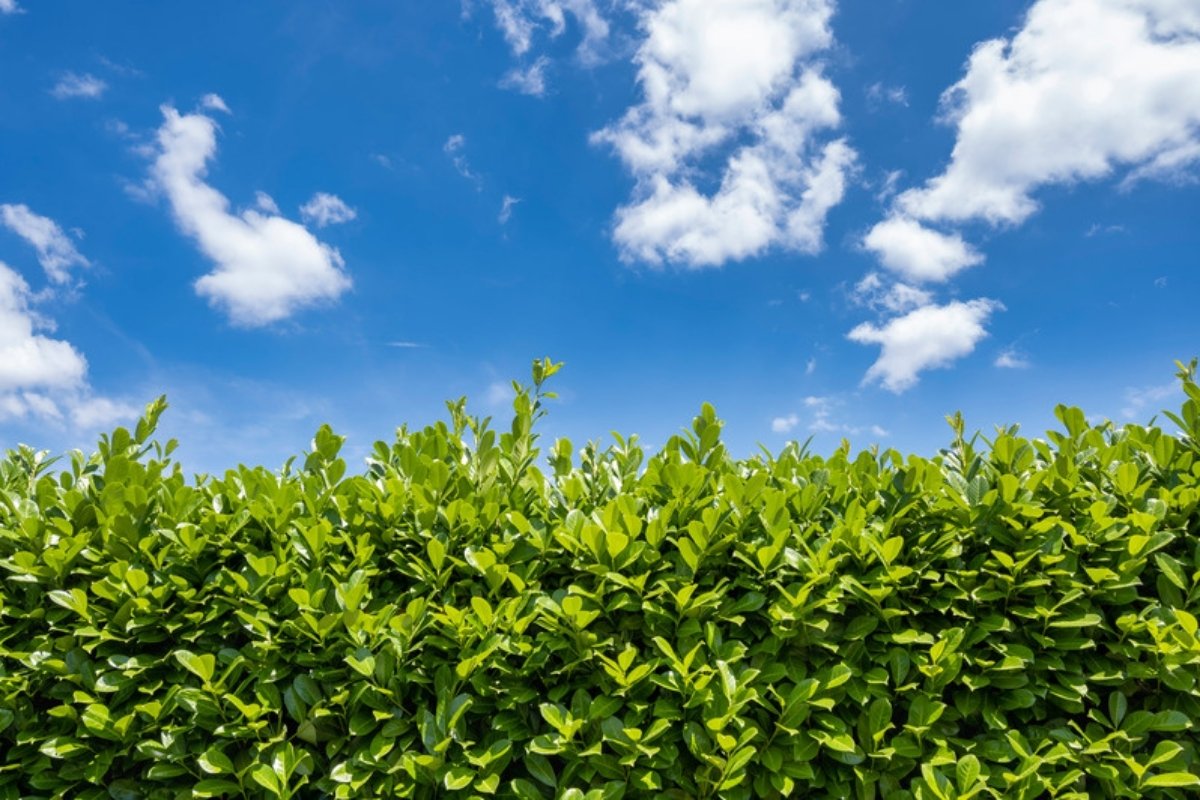
Cherry laurel, also called common or English laurel (Prunus laurocerasus), is an evergreen shrub or small tree in the rose family, Rosaceae, with large, glossy, dark green leaves, and one of the most popular plants for tall, dense hedges. It grows fast, up to 60 cm a year, thrives anywhere from full sun to deep shade in almost any well-drained soil, and is planted mainly from autumn to spring. It is best pruned after flowering, in late spring, and tolerates pruning very well. Despite its name, it is not a bay laurel and is highly toxic: its leaves and seeds must never be used in cooking like bay leaves. This guide covers how to tell it apart from bay and oleander, varieties, growth rate, planting a hedge, roots, watering and feeding, pruning, propagation, holes in the leaves, and safety.
How cherry laurel differs from bay and oleander
The name often causes confusion with two other plants. The distinction matters, because only bay is edible.
| Plant | How to recognise it | Edible |
| Cherry laurel (Prunus laurocerasus) | Large, glossy, leathery leaves that smell of cherries when bruised. Fragrant white flower spikes in spring, black cherry-like fruits | No, highly toxic |
| Bay laurel (Laurus nobilis) | Smaller, aromatic leaves with the familiar bay scent, small yellowish flowers | Yes, the leaves are used in cooking |
| Oleander (Nerium oleander) | Long, narrow leaves and showy pink, white or red summer flowers | No, also toxic |
According to NC State Extension, cherry laurel leaves and twigs give off a cherry odour when bruised, which helps with identification. Never use cherry laurel leaves in food or burn them indoors as you might bay leaves.
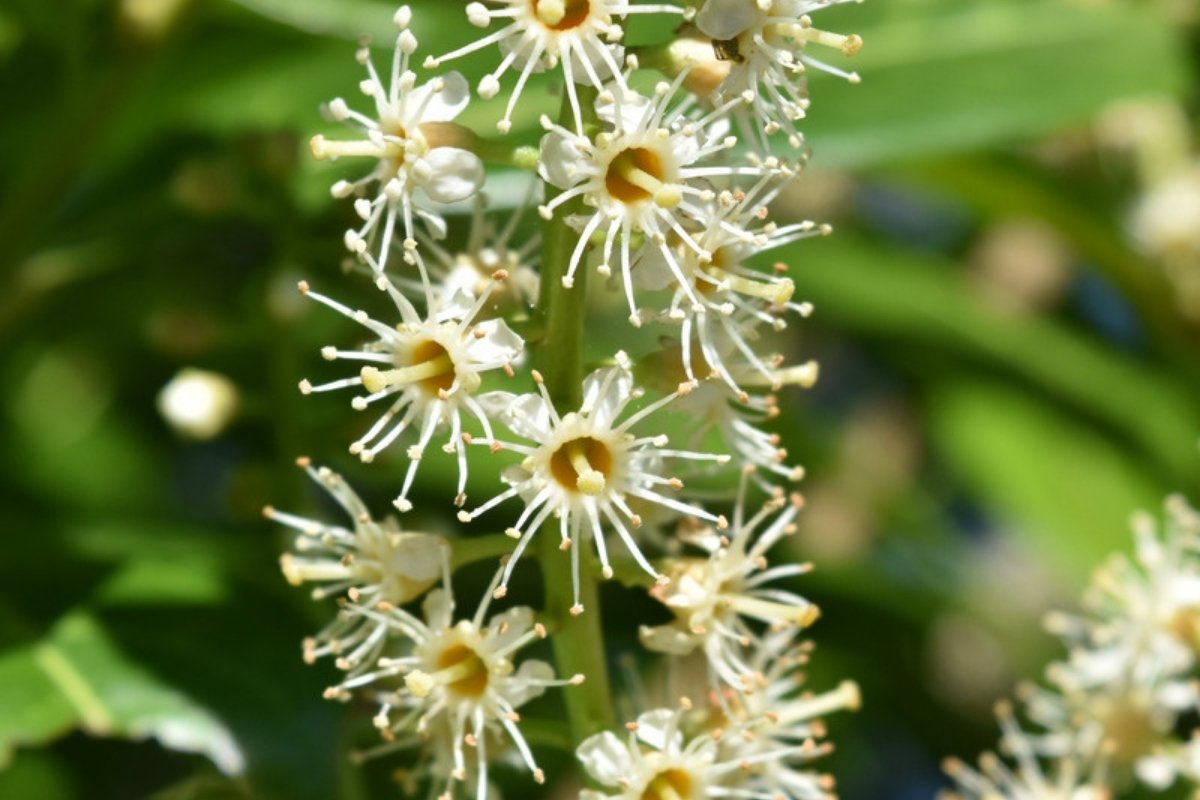
Cherry laurel flowers in spring, with small white flowers in upright spikes
Cherry laurel varieties
Cherry laurel is native to south-eastern Europe and Asia Minor. Left unpruned it reaches 4 to 8 m and spreads even wider, but as a hedge it is easily kept to the height you want. Common varieties include:
- 'Rotundifolia': the classic variety for tall hedges, with large leaves and vigorous growth
- 'Caucasica' and 'Novita': upright growth that closes a hedge quickly
- 'Otto Luyken': compact, according to NC State about 0.9 to 1.2 m tall, for low hedges and edging
- 'Zabeliana': narrow leaves and branches that angle outwards, but according to NC State it tolerates pruning less well than others
How fast cherry laurel grows
According to BBC Gardeners' World, cherry laurel can grow up to 60 cm a year and is easily kept as a hedge from 1 to 5 m tall, though some varieties can reach 8 m. That speed is why it is chosen for quick privacy screens, and also why it needs regular pruning.
The right position and soil
Cherry laurel grows in full sun, partial shade or even deep shade, though it flowers more in sun. According to NC State, it accepts most soil types but grows best in rich soil high in organic matter. Good drainage is essential, because according to the University of Delaware Botanic Gardens it does poorly in wet areas, and standing water rots the roots. It is hardy, wind tolerant and copes well with coastal conditions.
Planting a cherry laurel hedge
Container-grown plants can be planted almost all year round with regular watering, while root-balled and bare-root plants are planted from late autumn to early spring. In Mediterranean climates autumn is best, because winter rain helps roots establish before the first summer.
- Hole: twice the width of the root ball, with well-rotted manure or compost mixed into the soil
- Spacing: nursery recommendations for hedges usually range from 70 to 100 cm between plants, depending on variety and plant size
- Distance from buildings: keep the hedge away from walls and the house, because it grows wide
- After planting: water well and mulch around the plants
For a mixed hedge, cherry laurel is often combined with viburnum and privet.
Cherry laurel roots
According to BBC Gardeners' World, cherry laurel has a large, fibrous root system that spreads out and draws moisture from the soil, and it can potentially damage nearby foundations or pipes if planted too close. Regular pruning also keeps the root system from growing too large. Lawns and smaller plants right next to a laurel hedge may need extra watering.
Watering and feeding
Water young plants regularly for their first two years, especially in hot summers, so they develop deep roots. Once established, cherry laurel is fairly drought tolerant, though a deep watering in long dry spells keeps the foliage dense. Overwatering is more dangerous than drought: according to University of Maryland Extension, waterlogging and poor drainage turn leaves yellow and kill branch tips.
A general-purpose fertiliser in spring and an annual layer of organic matter support fast growth and deep green leaves.
Pruning cherry laurel
Cherry laurel is best pruned in late spring and early summer, after flowering, with a second light trim in late summer. Avoid heavy pruning in late autumn, because new growth is damaged by cold.
- In the first years: shorten the tops of upright shoots by a few centimetres, so the plant branches and thickens from the base
- Hedge shape: keep the base slightly wider than the top, so light reaches the lower branches
- Tools: the large leaves are best cut with secateurs rather than a powered hedge trimmer, which slices them in half and leaves brown edges
- Renovation: an old or neglected hedge can be cut back hard in spring, even into old wood, because cherry laurel regrows readily
Wear gloves when pruning, because the sap contains toxic compounds.
Growing cherry laurel from cuttings
Cherry laurel is propagated from semi-ripe cuttings 10 to 15 cm long, taken from the current season's growth in late summer or early autumn. Remove the lower leaves, and according to the RHS, cut the remaining leaves of large-leaved plants in half to reduce water loss. Insert the cuttings in free-draining compost, because they rot easily in wet conditions. They will also root in water, though compost is more reliable.
Holes in the leaves and other problems
Small round holes in the leaves, as if made by shotgun pellets, are the most common cherry laurel problem. According to the RHS, they are caused by leaf spot fungi and a bacterium (Pseudomonas syringae): the spots dry out and the dead tissue falls away, leaving a hole. The RHS does not recommend fungicides, because there is no evidence they work, and according to NC State Extension the disease does no real harm to the plant. Watering at the base rather than over the leaves, good air flow and clearing fallen leaves all help.
- Powdery mildew: a white, powdery coating, mainly on the undersides of the leaves
- Root rot: in waterlogged, poorly drained soil, with yellow leaves and dieback
- Scale insects and vine weevil: vine weevil adults notch the leaf edges, while their grubs eat the roots
Drawbacks of cherry laurel
Cherry laurel is easy to grow, but it has drawbacks. It is highly toxic, its fast growth means regular pruning, its roots compete for moisture and can harm structures planted too close, and its large leaves look ragged when cut with powered trimmers.
Cherry laurel is highly toxic
According to NC State Extension, cherry laurel has high severity poison characteristics. All parts of the plant, especially the leaves and seeds, contain cyanogenic glycosides, which release hydrogen cyanide when chewed. It is dangerous to people, pets and livestock such as horses. Take care where young children play, and never give clippings to animals.
Frequently asked questions
Can you eat cherry laurel berries
No. Although they look like small cherries, the fruit and especially the seed contain toxic compounds, as do the leaves.
What is the difference between cherry laurel and bay laurel
Cherry laurel has larger, glossy leaves that smell of cherries when bruised and is highly toxic. Bay laurel has smaller, aromatic leaves that are used in cooking.
When should cherry laurel be pruned
In late spring and early summer, after flowering, with a second light trim in late summer. Hard renovation pruning is done in spring.
How fast does cherry laurel grow
Up to 60 cm a year, according to BBC Gardeners' World, which is why it makes a quick privacy hedge.
Do cherry laurel roots damage foundations
They can, if planted too close. Cherry laurel has a large, fibrous root system that spreads and draws moisture from the soil, so keep hedges away from buildings and pipes.
Why does my cherry laurel have holes in the leaves
Usually leaf spot fungi or bacterial shot hole, which kill small spots that then fall out. They rarely harm the plant, and good air flow and watering at the root help.
Important notes
For persistent pest or disease problems, a local agronomist can help with an accurate diagnosis, and any treatment should use only registered products, following the label.
References
- NC State Extension, Prunus laurocerasus.
- NC State Extension, Prunus laurocerasus 'Otto Luyken'.
- NC State Extension, Pest alert, shothole disease on cherries.
- Royal Horticultural Society, Laurel, leaf diseases.
- BBC Gardeners' World, Cherry laurel hedging.
- University of Delaware Botanic Gardens, Prunus laurocerasus.