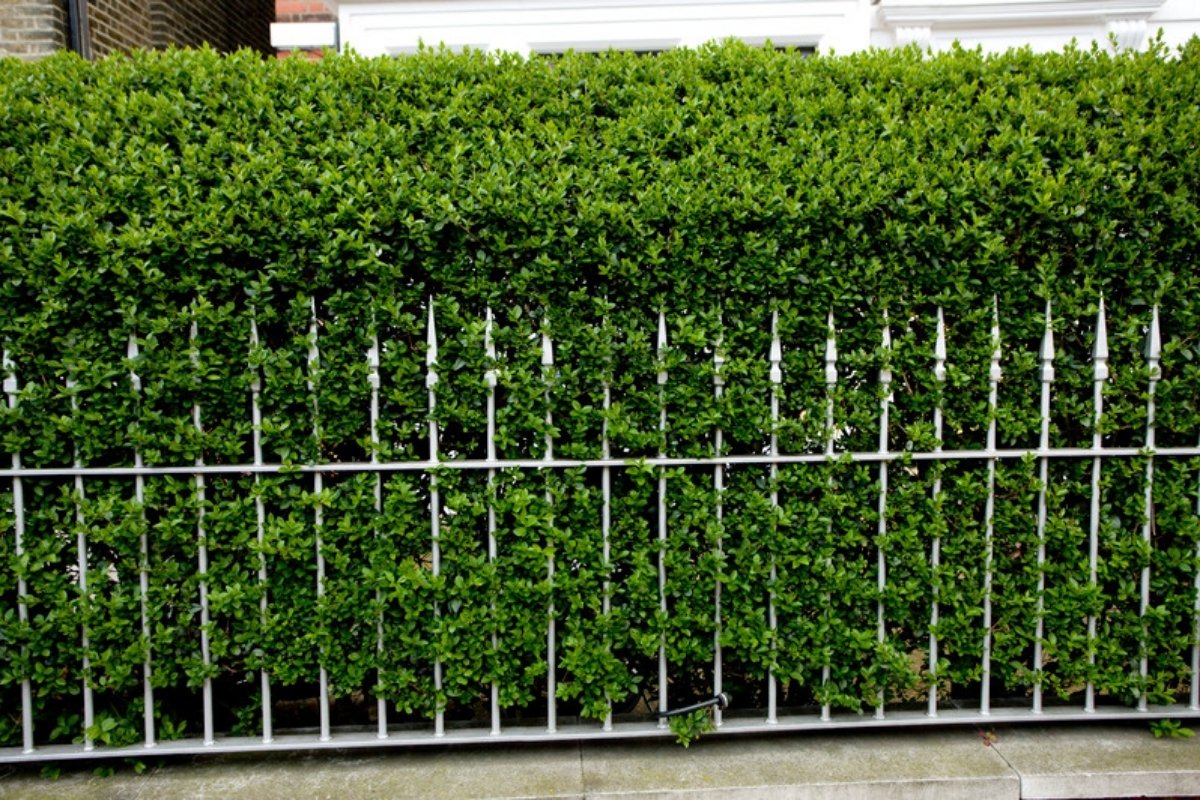
Privet (Ligustrum) is a genus of about 50 species of evergreen, semi-evergreen or deciduous shrubs and small trees in the olive family, Oleaceae, and one of the most widely used plants for living hedges. The best known are Japanese privet (Ligustrum japonicum), with cultivars such as 'Texanum', and oval-leaved or California privet (Ligustrum ovalifolium). Privet is planted in autumn or early spring, in sun or partial shade, in almost any well-drained soil, and for a hedge plants usually go 30 to 45 cm apart. It grows fast, tolerates pollution, wind and coastal conditions, and according to the Royal Horticultural Society a formal privet hedge is trimmed two or three times during the growing season. Its berries and leaves are toxic. This guide covers privet types, planting and spacing, watering and feeding, pruning for a dense hedge, propagation, pots, drawbacks and safety.
Types of privet
| Species or cultivar | Foliage | What sets it apart |
| Japanese privet (Ligustrum japonicum) | Evergreen | Large, glossy, dark green leaves, eventual height 2 to 4 m. The most common hedge privet in Mediterranean gardens |
| 'Texanum' (Ligustrum japonicum 'Texanum') | Evergreen | Dense and compact, for hedges, edging and containers |
| Oval-leaved privet (Ligustrum ovalifolium) | Semi-evergreen | Small oval leaves, very fast growth, takes frequent clipping well. Also available in golden or variegated forms |
| Common or wild privet (Ligustrum vulgare) | Deciduous or semi-evergreen | Native to Europe, with fragrant white flowers and black berries |
| Glossy privet (Ligustrum lucidum) | Evergreen | Grows into a tree, far taller than the others, used for shade and avenues |
All privets bear small, white, strongly scented flowers in clusters from spring into summer, followed by small blue-black berries eaten by birds. For a flowering hedge, privet is often combined with viburnum.
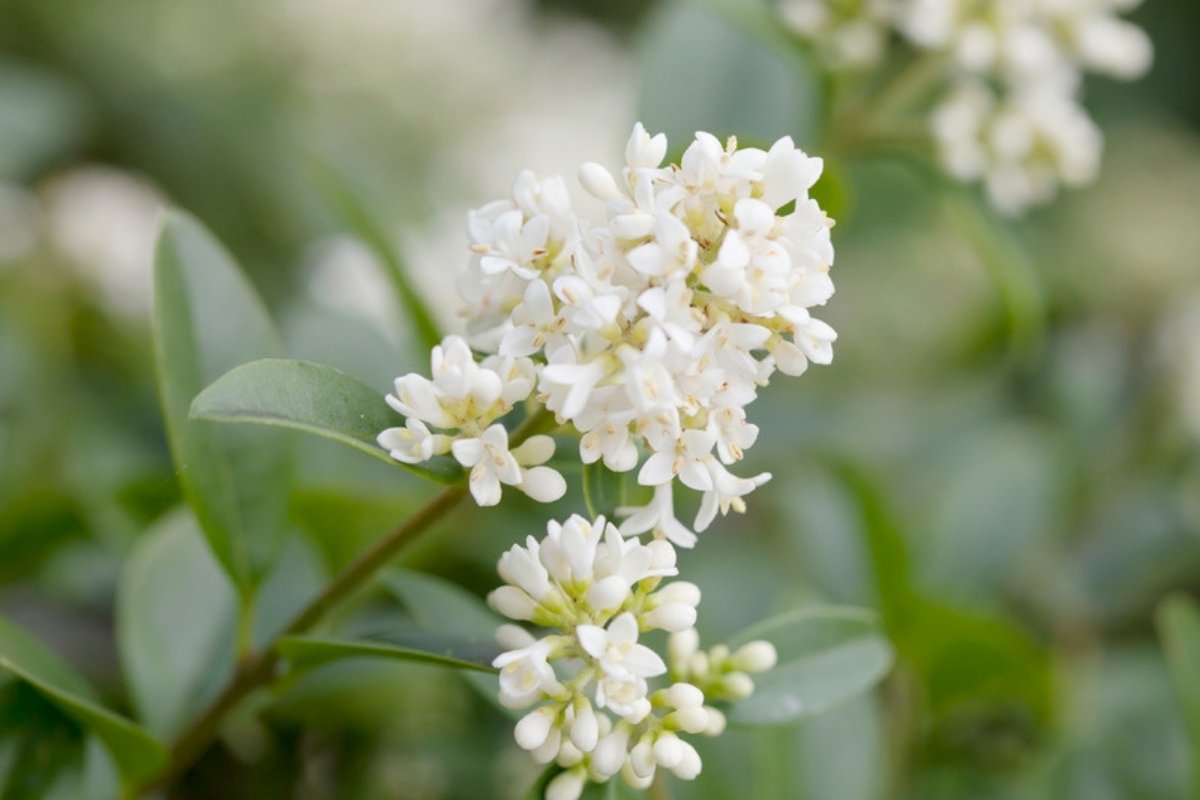
Privet bears small, strongly scented white flowers in clusters from spring into summer, followed by blue-black berries
Where to plant privet
Privet grows in sun or partial shade, and according to BBC Gardeners' World it will grow almost anywhere, even in shade, though it is denser in sun, and variegated forms keep brighter colour. It is not fussy about soil as long as it drains well, because roots rot in waterlogged ground. It tolerates urban pollution, wind and coastal soils, which is why it is common in town gardens and near the sea.
When to plant privet
The best time is autumn or early spring, so the plants root before extreme temperatures. Bare-root plants, the cheapest way to create a long hedge, are planted from November to March, while container-grown plants can go in almost any time of year, as long as the ground is not frozen or waterlogged and heatwaves are avoided.
How to plant a privet hedge
- Preparation: dig a trench or individual holes twice the width of the root ball, mixing compost or well-rotted manure into the soil
- Spacing: in a single row, plants usually go 30 to 45 cm apart, about three plants per metre. Smaller plants go closer together and larger ones further apart
- Double row: for a thicker hedge, plant two staggered rows in a zig-zag, about 30 cm apart
- Depth: plant at the same depth as in the pot
- After planting: water well and add a 5 to 7 cm layer of mulch, keeping it clear of the stems
Watering and feeding
According to BBC Gardeners' World, water a privet hedge in dry spells for the first two years after planting and keep the area around the plants free of weeds, which compete with young plants for water. In hot, dry summers, young plants need watering several times a week. Once established, privet is fairly drought tolerant, though a deep watering in heatwaves helps it keep dense foliage.
In most soils, a layer of compost each spring is enough, with a general-purpose fertiliser in early spring if growth needs a boost.
How to make a privet hedge thicker
Privet grows fast, typically 30 to 60 cm a year once established. Left to grow unchecked in its first years, it becomes tall, thin and bare at the base, so early pruning decides how dense the hedge will be.
According to the RHS, new hedges benefit from formative pruning for the first two years after planting. On evergreen privets such as Japanese privet, trim back long, straggly side shoots in spring to make the plant branch. On deciduous and semi-evergreen privets, such as common and oval-leaved privet, cut the leading upright shoots back by about a third in winter after planting and again the following winter.
Once the hedge has formed, trim it two or three times during the growing season, from spring to early autumn. Keep the base slightly wider than the top, so light reaches the lower branches and the hedge does not go bare at the bottom. Leave the main spring trim until birds have finished nesting. An old, overgrown hedge is easily renovated by hard pruning in spring, because privet regrows even from thick, old stems.
How tall does privet grow
As a hedge, privet is usually kept at 1.5 to 3 m, depending on trimming. Unpruned, most shrubby privets reach 2 to 5 m, while glossy privet grows into a much taller tree.
Growing privet from cuttings
Privet is easy to propagate from cuttings. According to BBC Gardeners' World, simply cut healthy stems about 10 cm long on a warm autumn day. Semi-ripe cuttings in late summer and autumn root most easily, though softwood cuttings in spring and hardwood cuttings in winter also work. Remove the lower leaves, insert the cuttings in a free-draining mix with sand or perlite, and keep them in a bright, humid spot out of scorching sun until they root, usually within a few weeks.
Growing privet in pots
Privet grows well in containers if you choose a compact cultivar such as 'Texanum'. It needs a large pot with drainage holes and good compost, a sunny or partly shaded spot, and more frequent watering than in the ground, because compost in pots dries out quickly. With regular trimming, it is easily shaped into a ball, cone or small standard tree.
Disadvantages of a privet hedge
- Frequent trimming: fast growth means two or three trims a year to keep the hedge neat
- Greedy roots: they compete with nearby plants for water and nutrients
- Semi-evergreen types: oval-leaved privet may drop some leaves in a hard winter
- Strong flower scent: some people dislike it, though frequent trimming removes most flowers
- Toxic berries: take care where young children or pets play
- Spread: according to Rutgers University and Penn State Extension, some species, such as Chinese and common privet, have become invasive in North America, because birds spread their seeds. Trimming before the berries ripen and pulling up seedlings limit spread. Before planting, check whether the species you want is considered invasive in your area
Is privet poisonous
Yes. Privet berries and leaves are toxic if eaten, and according to The Wildlife Trusts the black berries of wild privet are very poisonous to people. Take care where young children play or pets roam, while birds eat the berries without harm. Because the leaves and berries are also poisonous to livestock, BBC Gardeners' World advises never planting a privet hedge alongside a field with livestock.
Frequently asked questions
How far apart should privet be planted for a hedge
In a single row, usually 30 to 45 cm apart, about three plants per metre. For a thicker hedge, plant two staggered rows in a zig-zag.
When is the best time to plant privet
Autumn or early spring. Bare-root plants go in from November to March, while container-grown plants can be planted almost any time of year, avoiding heatwaves and frost.
How fast does privet grow
Typically 30 to 60 cm a year once established. Oval-leaved privet is one of the fastest.
When should privet be trimmed
An established formal hedge is trimmed two or three times during the growing season, from spring to early autumn. In the first two years, formative pruning makes it bushy from the base.
Why is my privet hedge bare at the bottom
Usually because it was allowed to grow tall without pruning in its first years, or because the top is wider than the base and shades the lower branches. Harder pruning and a shape with a wider base help.
Does privet do well in pots
Yes, especially compact cultivars such as 'Texanum', in a large pot with good drainage and regular watering.
Important notes
Before planting privet, check whether the species is considered invasive in your area, and for persistent problems a local agronomist can help with an accurate diagnosis.
References
- Royal Horticultural Society, Pruning hedges.
- BBC Gardeners' World, How to grow a privet hedge.
- New York Botanical Garden, How do I prune a privet and other hedges?.
- The Wildlife Trusts, Wild privet.
- Rutgers Environmental Stewards, July invasive species of the month, privet.
- Penn State Extension, Privet.